Artwork
Oh Heigh Oh or A View of the Back Settlements
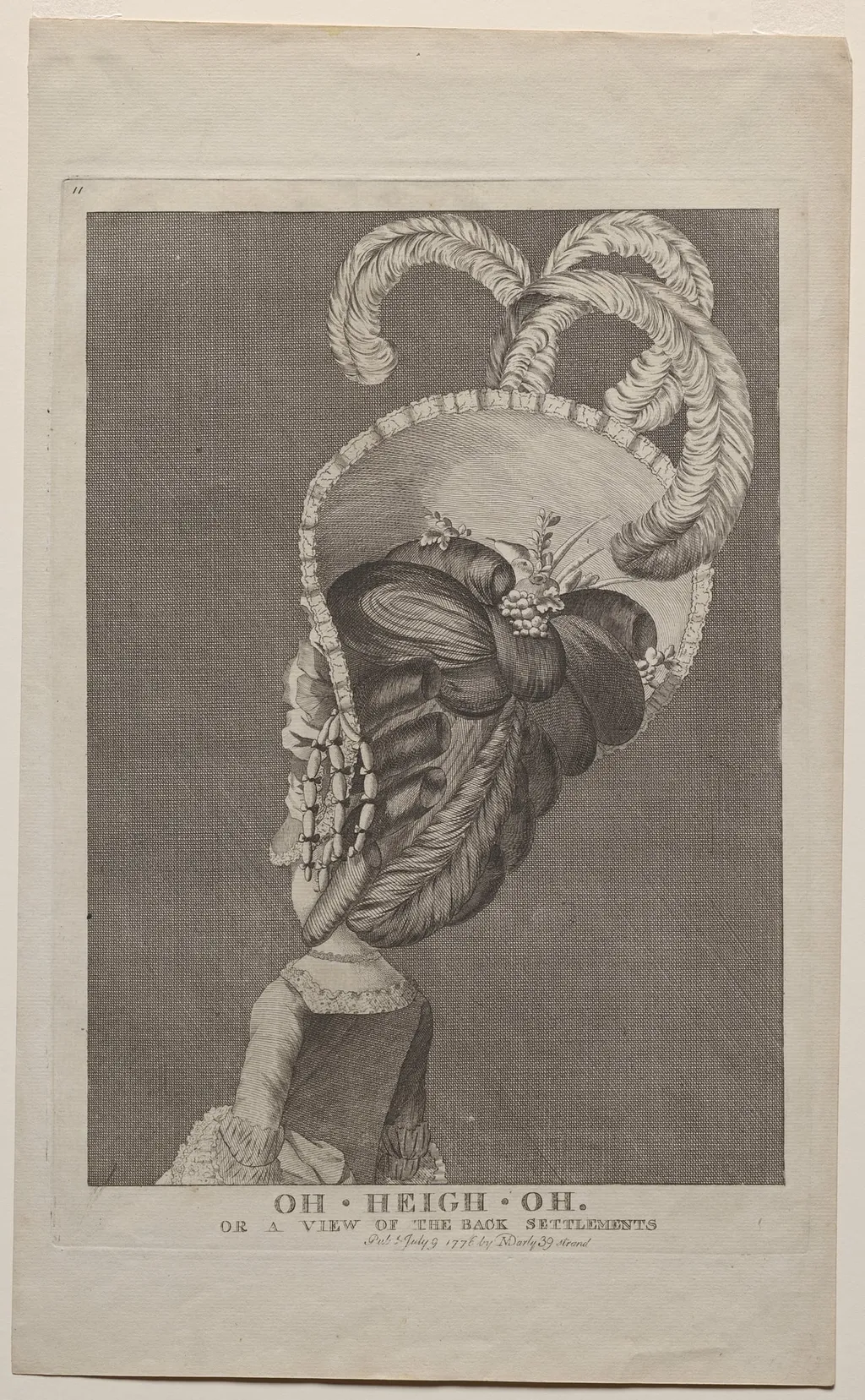
Oh Heigh Oh or A View of the Back Settlements is a print by the Romanticist artist Matthew Darly. It dates from 1776 and is held in the collection of the Cleveland Museum of Art. This satirical print, dated 1776, depicts life in a remote frontier settlement, likely in the region now known as Ohio.
About this work
This painting shows a scene of daily life in a settlement.
It's interesting because satirical prints like this were very popular in 18th-century England. The fact that it was made in 1776, when the region that is now Ohio was part of New France, adds another layer of meaning.
You can learn more about similar works by visiting the museum where this painting is held, The Cleveland Museum of Art.
Overview
This satirical print, dated 1776, depicts life in a remote frontier settlement, likely in the region now known as Ohio.
This satirical print, dated 1776, depicts life in a remote frontier settlement, likely in the region now known as Ohio. Created during a period when British audiences had a strong appetite for political and social satire, the work uses humor to comment on colonial expansion and the perceived chaos of life beyond the established thirteen colonies. Its tone is critical rather than documentary, reflecting contemporary British attitudes toward distant territories.
Subject & Meaning
The scene portrays a loosely organized frontier community, emphasizing disorder and makeshift living conditions. Figures are engaged in mundane or absurd activities, suggesting a critique of French colonial efforts. Unlike the structured settlements of the British colonies, the depiction implies a lack of governance and permanence. The title, 'Oh Heigh Oh,' evokes a mocking tone, reinforcing the print’s intent to ridicule the perceived ineffectiveness of New France’s presence in North America.
Technique & Style
Executed as a hand-colored etching, the print employs exaggerated figures and simplified forms to heighten its satirical effect. Lines are bold and expressive, with minimal detail in the background to focus attention on the human activity. The use of light washes of color adds a playful, almost caricatured quality. The composition is deliberately unbalanced, mirroring the instability the artist associates with the settlement’s existence.
History & Provenance
Produced in England in 1776, the print circulated among urban audiences familiar with colonial affairs. It was likely published by a commercial printmaker capitalizing on public interest in the American Revolution and competing European claims in the Ohio Valley. The work entered the collection of the Cleveland Museum of Art in the 20th century, where it is now preserved as an example of British visual commentary on North American territorial disputes.
Context
In 1776, the Ohio region was nominally under French claim but largely unoccupied, with only scattered trading posts and Indigenous communities. British colonists viewed these areas as lawless and underdeveloped. The print reflects this perception, contrasting the French presence with the more organized settlements of the eastern colonies. It also coincides with the American Declaration of Independence, adding political weight to its depiction of colonial failure.
Legacy
The print survives as a rare visual record of how British viewers imagined distant colonial frontiers. It contributes to the broader archive of 18th-century satirical prints that shaped public opinion on empire and expansion. While not widely known today, it remains a valuable artifact for understanding the intersection of propaganda, geography, and popular culture during a pivotal moment in North American history.
Artist & collection

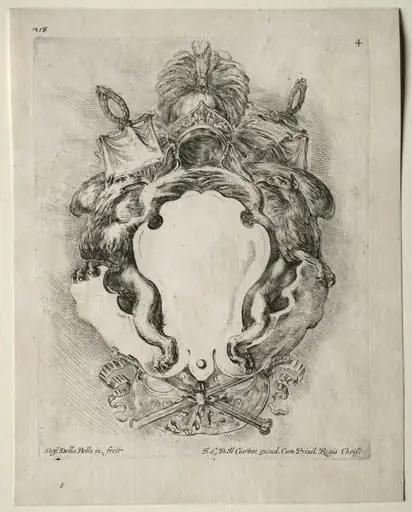 Collection of Various Caprices and New Designs of Cartouches and Ornaments: No. 4
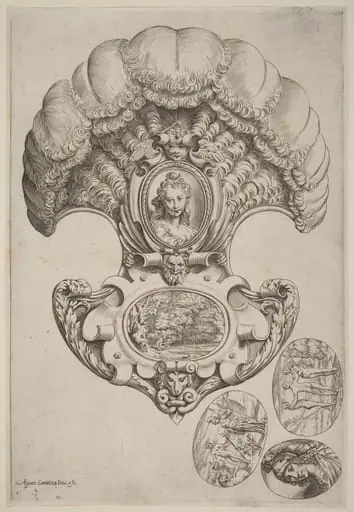 A Headpiece in the Form of a Fan
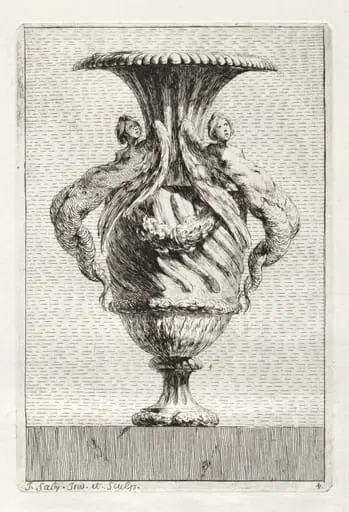 Suite of Vases: Plate 4
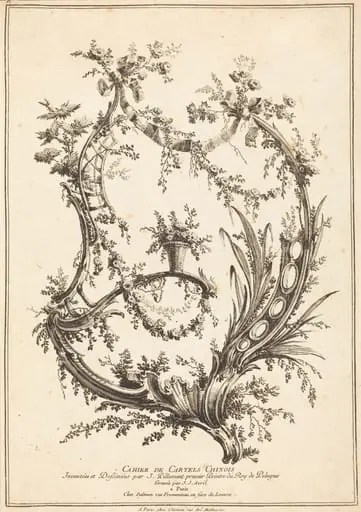 Title Page
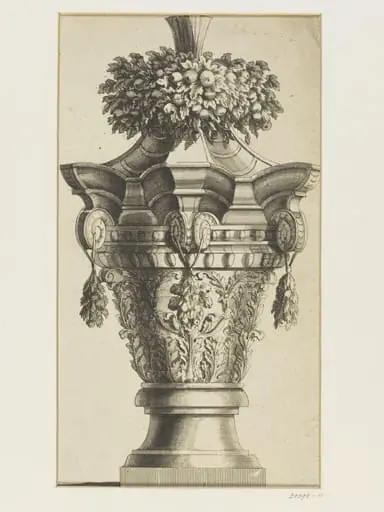 Untitled
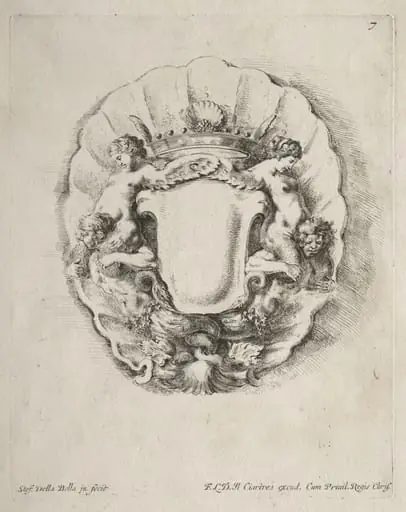 Collection of Various Caprices and New Designs of Cartouches and Ornaments: No 7
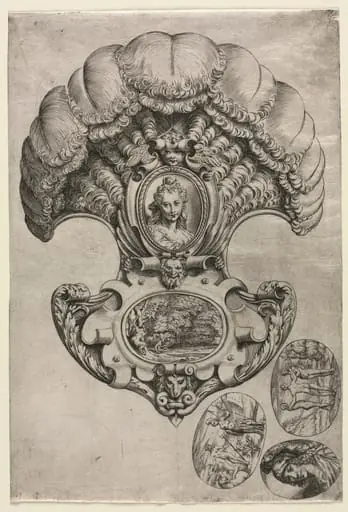 The Fan (L'Eventail)
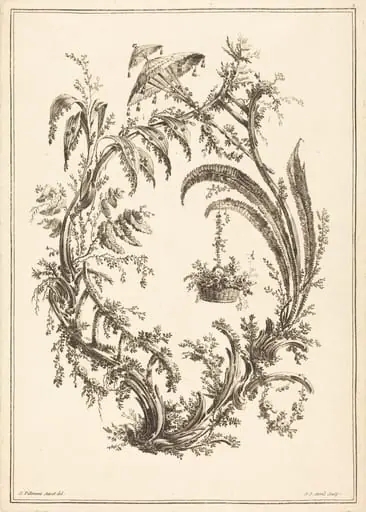 Ornament with Parasol and Hanging Basket
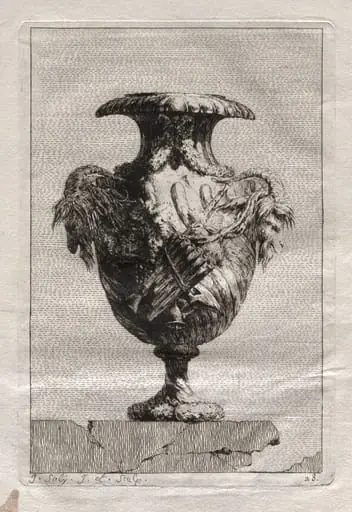 Suite of Vases: Plate 28
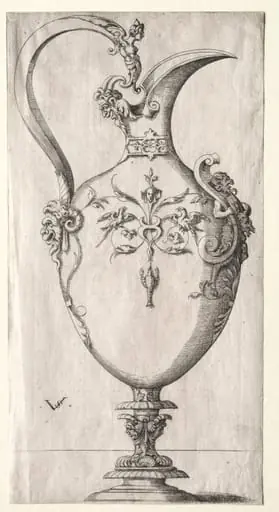 Design for a Ewer
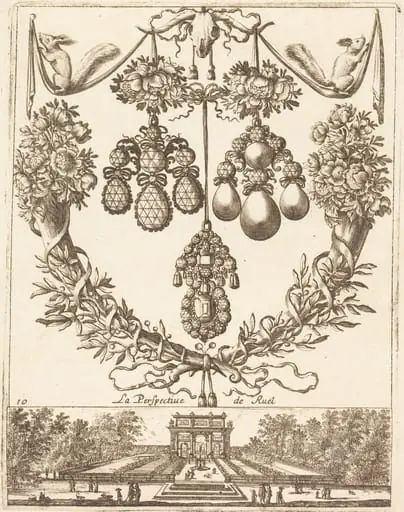 Perspective de Ruel
 l'Officieux Valet