Artwork
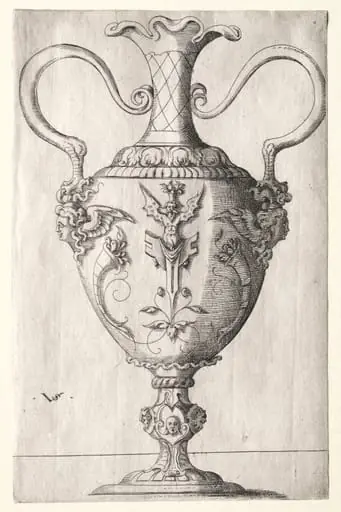
Design for a Ewer
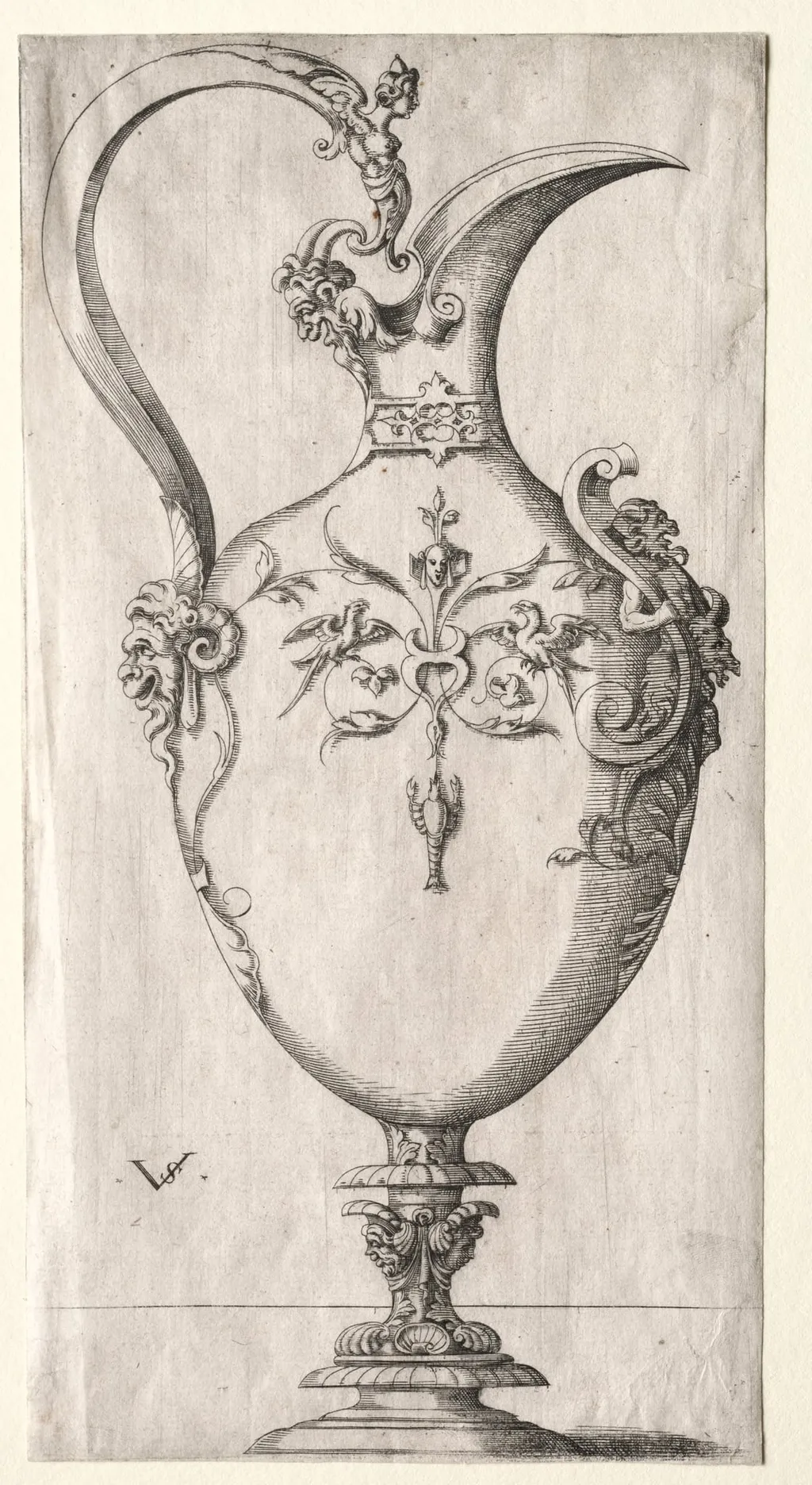
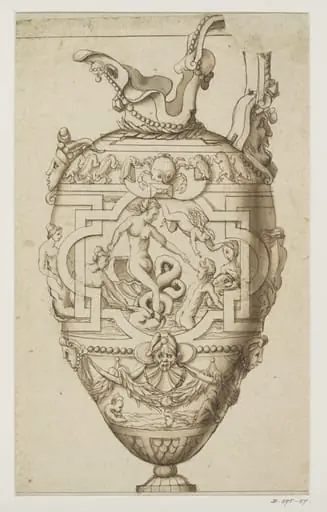
Design for a Ewer is a print by the Renaissance artist Virgil Solis. It dates from 1546 and is held in the collection of the Cleveland Museum of Art.
About this work
Look up Virgil Solis (German, 1514–1562) if you want to see more of his work.
You see a detailed design for a fancy wine jug. It's covered in mythical creatures like satyrs and birds. The handle and lip have satyr heads too.
This print was used like a blueprint by other artists. They copied its shapes for real metal jugs. Solis ran a big print workshop in Germany.
It shows how prints helped spread art ideas in the 1500s. Look up Virgil Solis (German, 1514–1562) if you want to see more of his work.
Overview
This print by Virgil Solis serves as a design template for a ceremonial ewer, a type of wine jug. Created in mid-16th century Nuremberg, it was not a finished object but a reproducible image intended for use by metalworkers and craftsmen. Its detailed imagery provided a visual guide for translating graphic motifs into three-dimensional silverware, reflecting the growing role of printed designs in artisanal production.
Subject & Meaning
The vessel’s decoration draws from classical mythology associated with Bacchus, the god of wine. Satyrs, creatures of revelry, adorn the handle and spout, while birds and crayfish—symbols of nature’s abundance—line the sides. These elements collectively evoke the festive, untamed spirit of Dionysian rituals, aligning the object’s form with the cultural symbolism of wine consumption in Renaissance Europe.
Technique & Style
Executed in fine line engraving, the print exhibits the precision characteristic of Solis’s workshop. Delicate cross-hatching and rhythmic contours define the figures, creating clarity even at small scale. The composition is densely packed yet balanced, with mythological and natural motifs arranged to guide the eye along the vessel’s contours, demonstrating an understanding of how flat images translate to curved surfaces.
History & Provenance
Produced in Solis’s active Nuremberg print studio, this design circulated widely among goldsmiths and silversmiths across Germany and beyond. As a reproductive print, it was likely included in pattern books or sold individually. Its survival in collections today reflects its utility as a reference tool rather than as a standalone artwork, underscoring its role in the transmission of visual culture.
Context
In the 1500s, printed designs became essential intermediaries between artists and craftsmen. Solis’s workshop met demand for classical-inspired motifs as interest in antiquity grew. This print exemplifies how printmaking democratized access to sophisticated imagery, enabling regional artisans to incorporate Renaissance aesthetics into functional objects without direct training in fine art.
Legacy
Solis’s designs influenced the decorative vocabulary of metalwork for decades. His prints, including this ewer model, helped standardize mythological iconography in domestic and ceremonial vessels. Though the original silver ewer may not survive, the persistence of similar forms in museum collections attests to the lasting impact of his graphic output on European craft traditions.
Artist & collection

Artist
Virgil Solis or Virgilius Solis (1514 – 1 August 1562), a member of a prolific family of artists, was a German draughtsman and printmaker in engraving, etching and woodcut who worked in his native city of Nuremberg.

 Design for a Vase
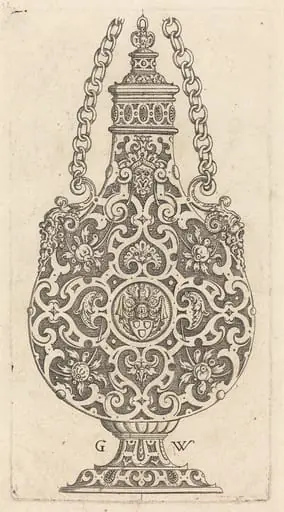 Flask
Flask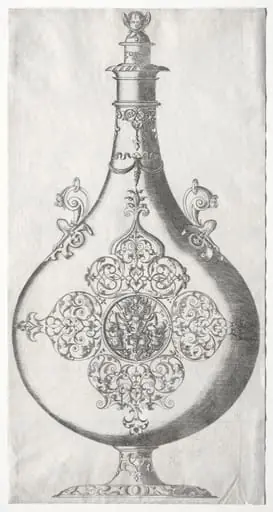 Pear-shaped Bottle with Trophy of Arms
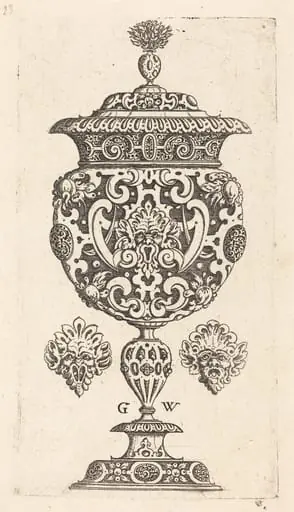 Goblet, rim decorated with masque with gaping mouth
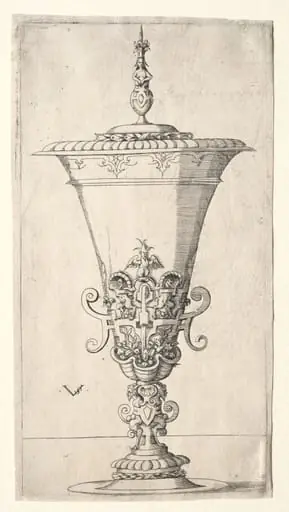 Covered Cup with Satyrs
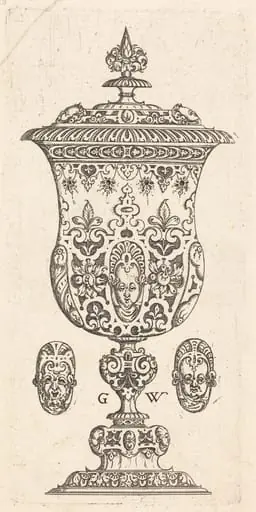 Goblet with two Masques on lid
 Untitled
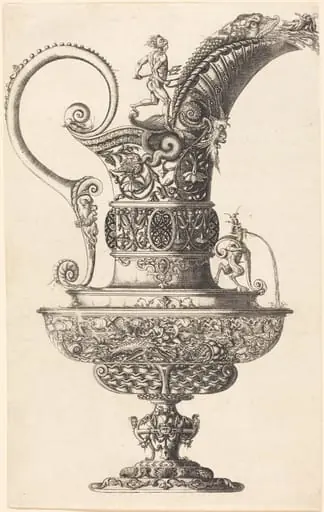 Jar with Neptune
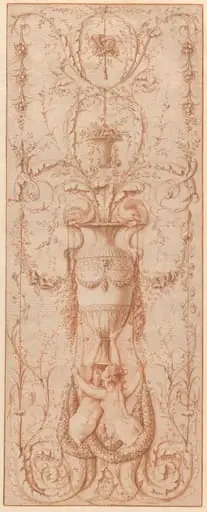 Design for a Decorative Panel with Two Sirens Holding a Vase Embellished with Dolphins and other Decorative Motifs
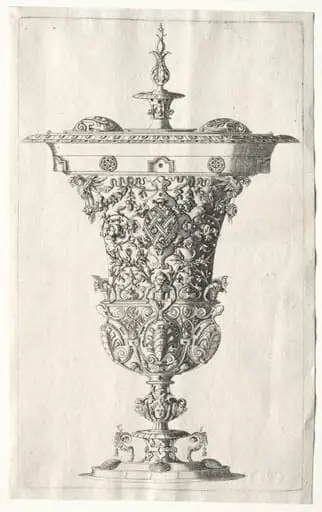 Ornamental Vase
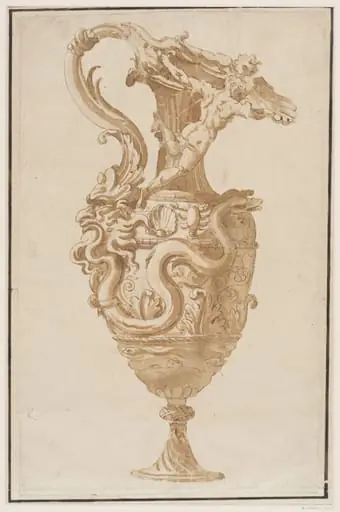 Design for a ewer with nude figures and serpents
 Copy of a design for a ewer