Artwork
Vocation of the Apostle Matthew
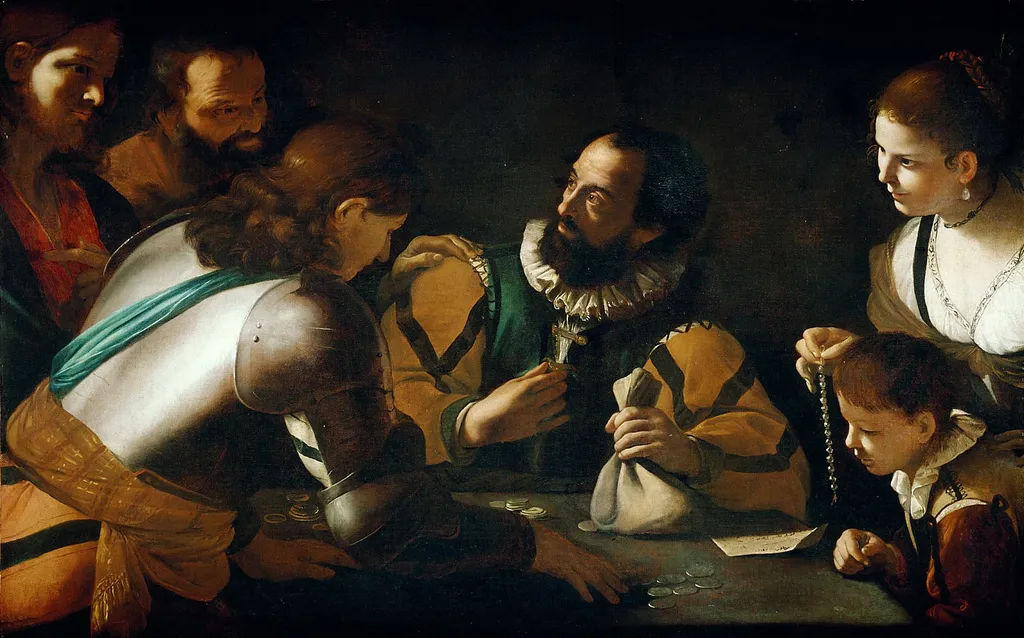
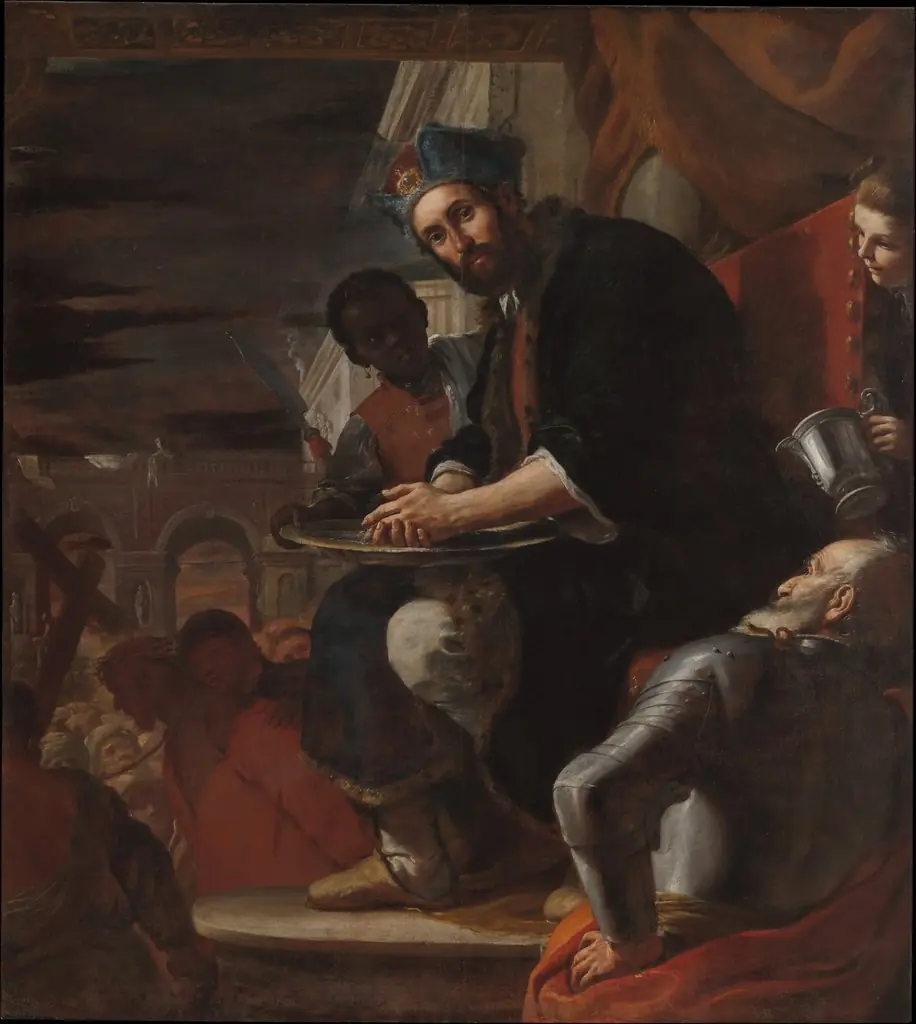
Vocation of the Apostle Matthew is an oil painting by the Early Baroque Italian artist Mattia Preti. It dates from 1637 and is held in the collection of the Kunsthistorisches Museum.
About this work
Overview
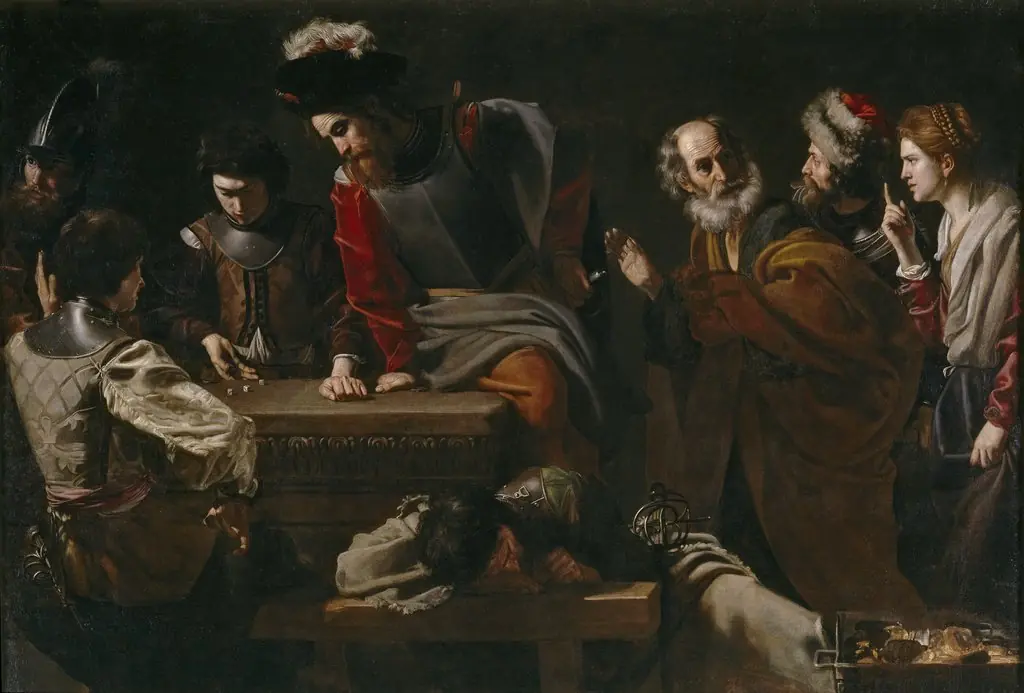
Painted in 1637 by Mattia Preti, this oil on canvas work depicts a quiet, pivotal moment in the life of Saint Matthew. It resides in the Kunsthistorisches Museum in Vienna, where it stands as an example of early Baroque religious narrative. The scene unfolds in a modest interior, rendered with intense focus on gesture and illumination.
Subject & Meaning
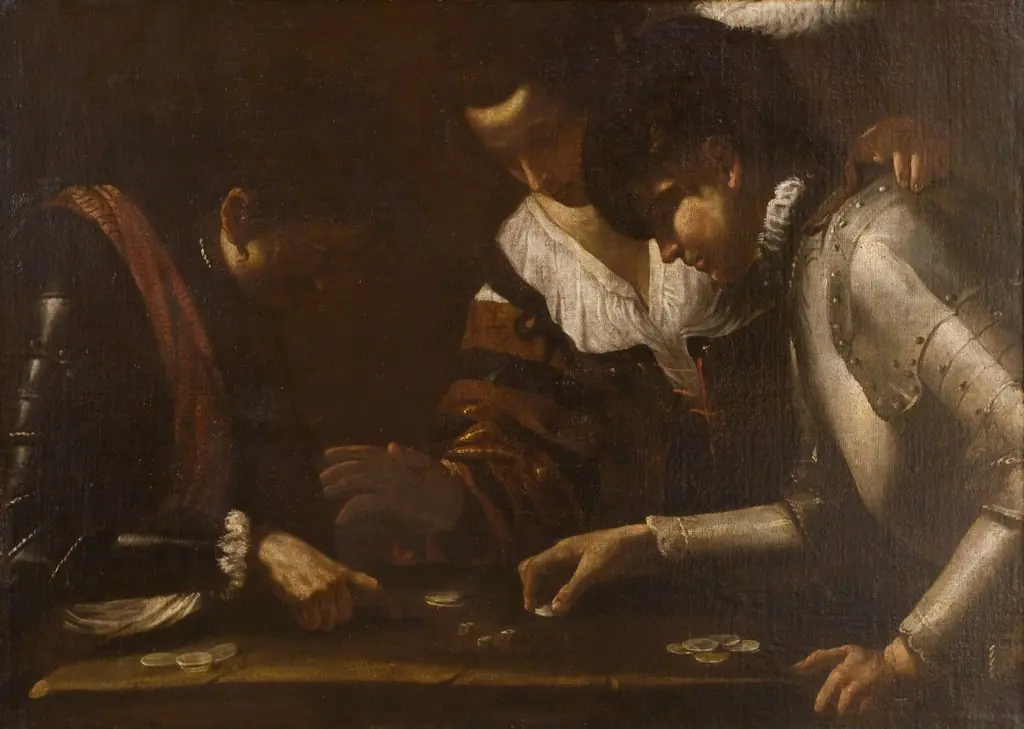
The painting captures the moment Matthew, seated at a table, is called by divine authority to abandon his life as a tax collector.
The painting captures the moment Matthew, seated at a table, is called by divine authority to abandon his life as a tax collector. The bearded figure points upward, signaling a spiritual summons, while the young boy beside him gazes at scattered coins, symbolizing the worldly wealth being left behind. The attentive figures around them suggest the weight of this turning point, framing the act as both personal and sacred.
Technique & Style
Preti employs strong chiaroscuro to model forms and direct attention: light falls sharply on faces, hands, and coins, while surrounding areas recede into deep shadow. The contrast heightens the drama of the moment without theatricality. Brushwork is precise yet unobtrusive, emphasizing texture in fabric and skin, and the table’s clutter lends realism to the sacred encounter.
History & Provenance
Commissioned during Preti’s early career in Italy, the painting entered the Habsburg collection before 1700. It has remained in Vienna since, housed in the Kunsthistorisches Museum since its founding in 1891. Its continuous presence in imperial collections underscores its recognized artistic merit, though it has never been widely exhibited outside Austria.
Context
Created during the Counter-Reformation, the work aligns with Catholic efforts to depict biblical moments with emotional immediacy. Preti, influenced by Caravaggio’s naturalism, avoids idealization, grounding divine intervention in ordinary settings. The focus on a tax collector’s conversion reflects contemporary theological emphasis on repentance and grace accessible to all, even the morally compromised.
Legacy
Though less known than Caravaggio’s version of the same subject, Preti’s painting demonstrates the spread of tenebrist techniques beyond Rome. Its restrained drama and psychological nuance influenced later Neapolitan painters. It remains a quiet but significant example of how Baroque artists used light and gesture to convey spiritual transformation without overt spectacle.
Artist & collection

Artist
Mattia Preti was an Italian Baroque artist who worked in Italy and Malta. He was appointed a Member of the Order of Saint John.