Artwork
The Pilgrims at Emmaus
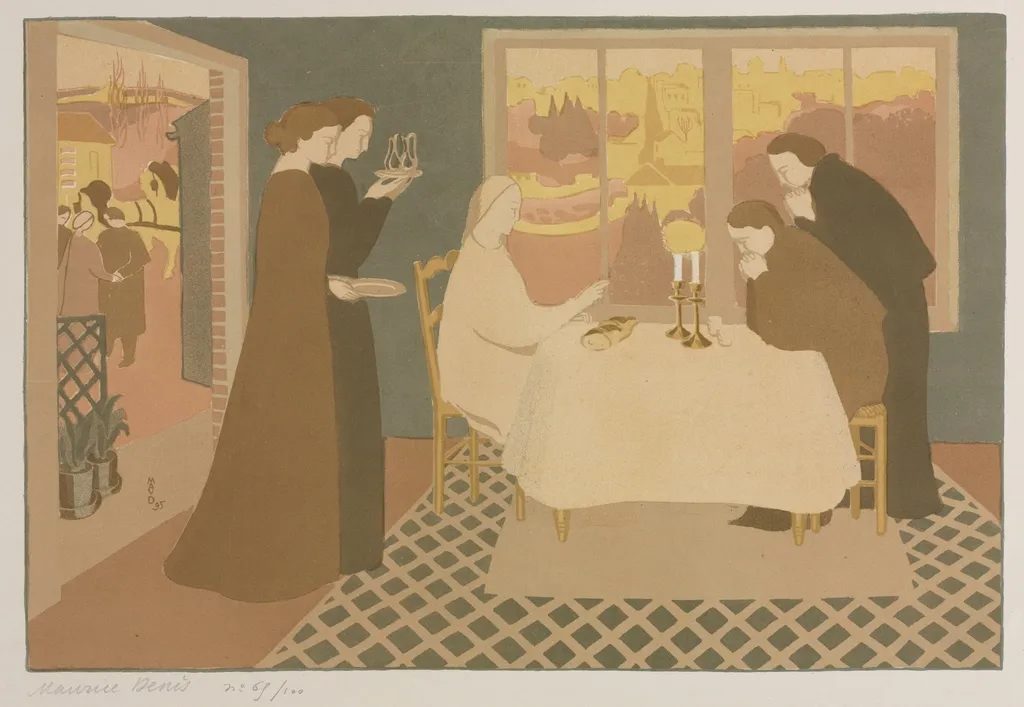
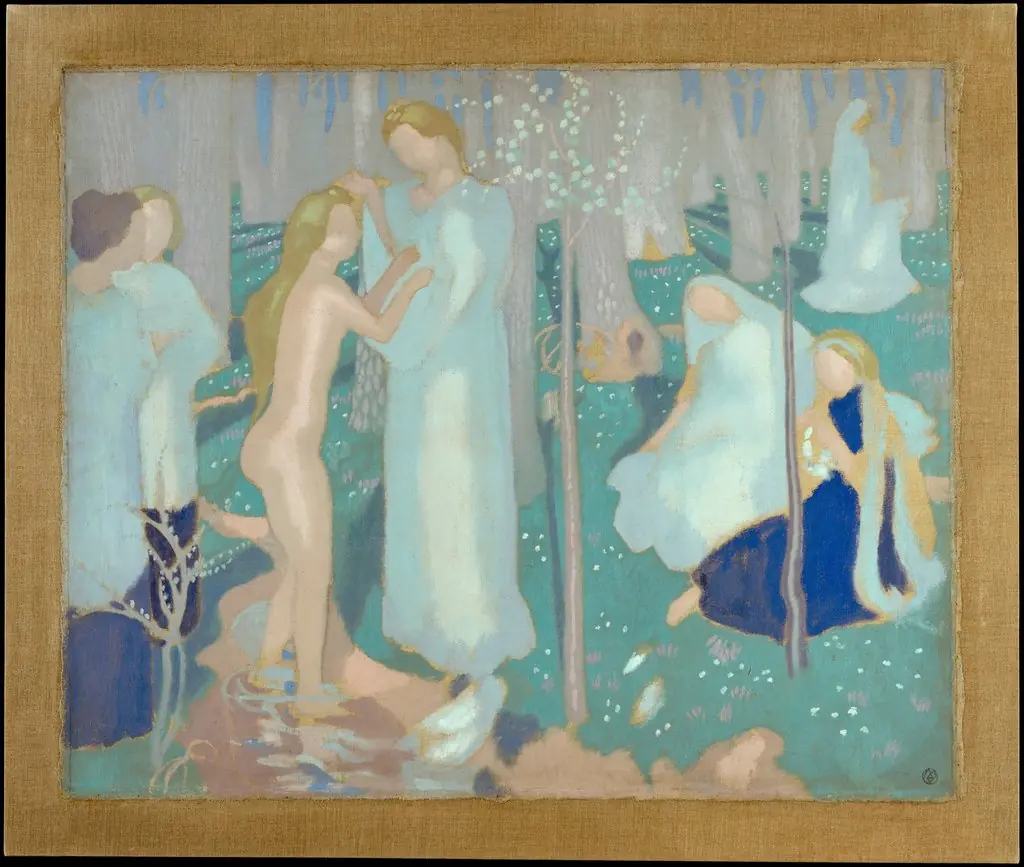
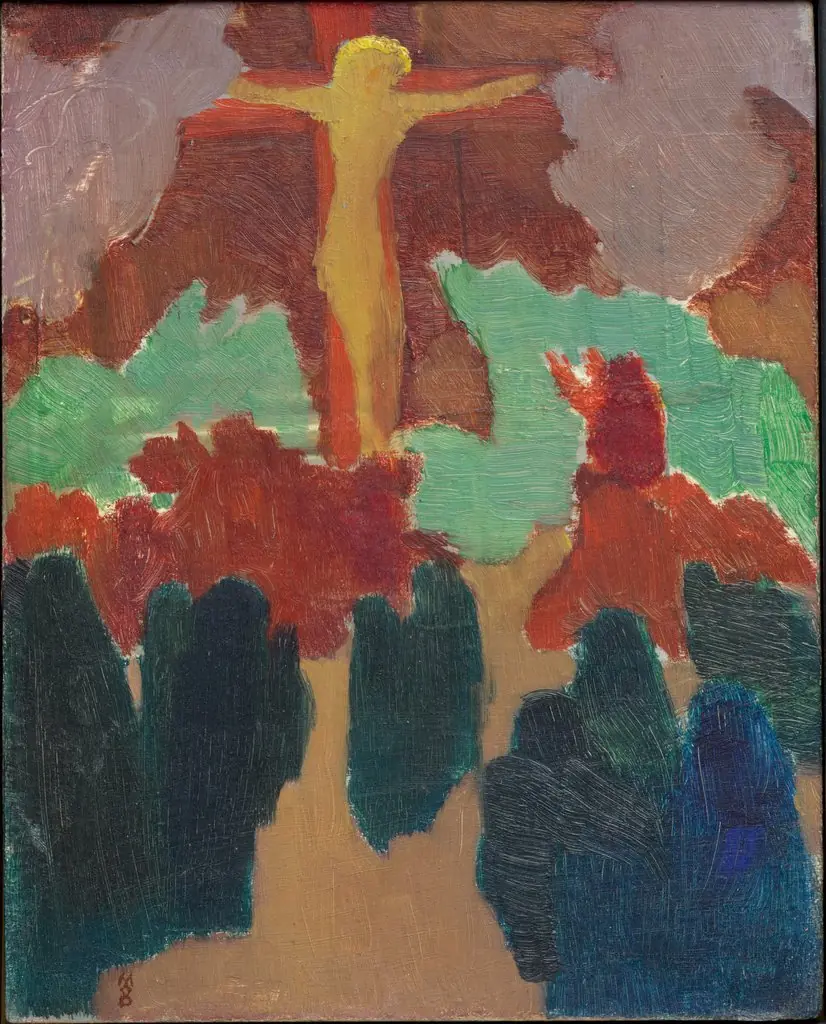
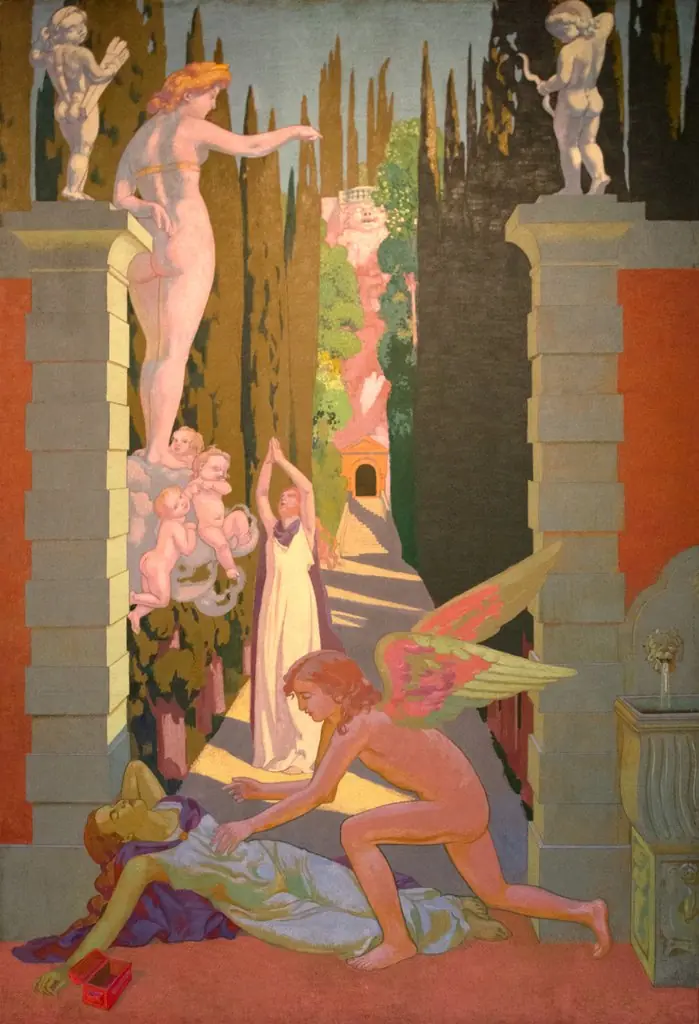
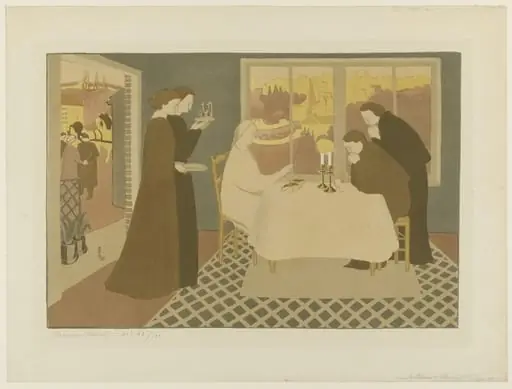
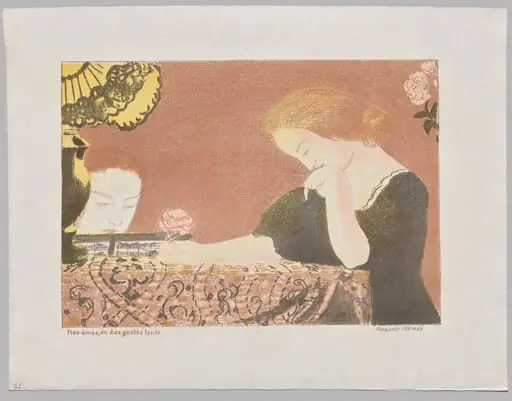
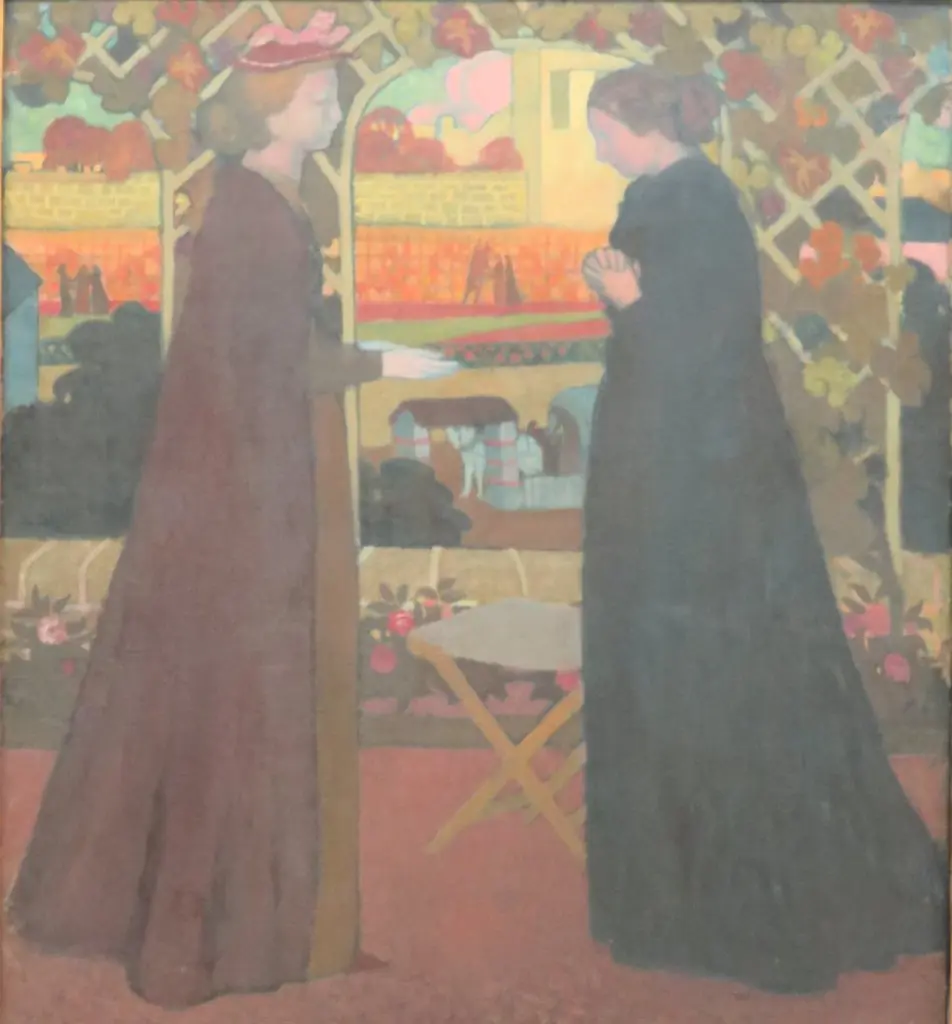
The Pilgrims at Emmaus is a print by the Impressionist artist Maurice Denis. It dates from 1895 and is held in the collection of the Cleveland Museum of Art.
About this work
Overview
This work captures a moment from the Gospel of Luke, in which the resurrected Christ is recognized by his followers during a shared meal.
Maurice Denis painted *The Pilgrims at Emmaus* in 1895, during a period when he was deeply engaged with spiritual themes and the theoretical foundations of modern art. Associated with the Nabis group, Denis moved beyond naturalism to explore symbolic expression. This work captures a moment from the Gospel of Luke, in which the resurrected Christ is recognized by his followers during a shared meal. The painting resides in the Cleveland Museum of Art’s collection.
Subject & Meaning
The scene illustrates the biblical moment when two disciples realize the identity of their traveling companion as the risen Christ, triggered by the breaking of bread. Denis emphasizes inner revelation over dramatic action, portraying figures in stillness and quiet recognition. The composition avoids theatricality, instead inviting contemplation of faith’s subtle manifestations. The shared meal becomes a vessel for spiritual awakening, rendered with restrained emotional intensity.
Technique & Style
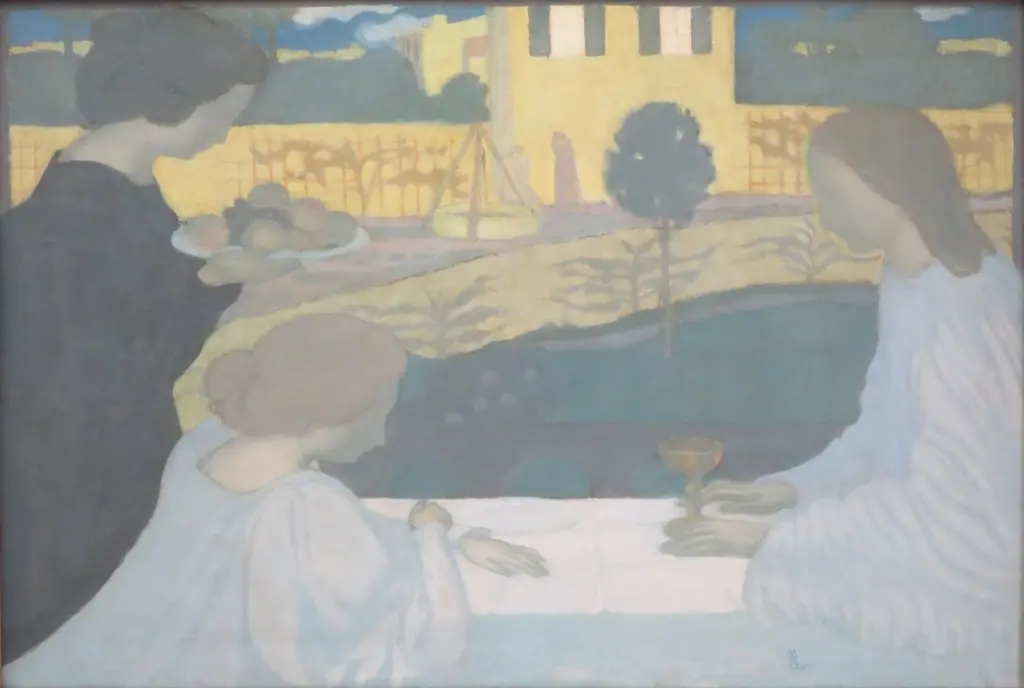
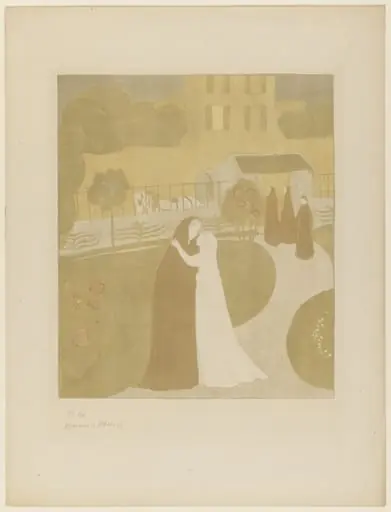
Denis employed flattened forms, simplified contours, and a muted palette of earth tones and soft grays to create a sense of stillness. Light enters gently through a window behind the figures, casting a diffuse glow that unifies the space without casting sharp shadows. The figures are arranged in a rhythmic, almost decorative pattern, reflecting Denis’s belief in painting as a surface of harmonious arrangement rather than illusionistic depth.
History & Provenance
Created in 1895, the painting emerged from Denis’s early mature phase, when he was refining his synthesis of religious subject matter and modernist aesthetics. It entered the Cleveland Museum of Art’s collection in the 20th century, likely through a private acquisition or donation. Its presence there reflects broader American interest in European Symbolist works during the early 1900s.
Context
Denis worked amid the decline of academic painting and the rise of movements like Symbolism and Post-Impressionism. While Impressionism focused on light and perception, Denis sought to convey inner truths through form and color. His theoretical writings, particularly the idea that 'a painting is essentially a flat surface covered with colors assembled in a certain order,' underpin this work’s deliberate stylization and spiritual intent.
Legacy
Though less widely known than his contemporaries, Denis’s approach influenced later generations seeking to reconcile religious themes with modernist abstraction. *The Pilgrims at Emmaus* exemplifies his effort to renew sacred imagery through formal discipline rather than narrative spectacle. The work remains a quiet testament to his belief that art could serve as a vehicle for spiritual experience without relying on traditional iconography.
Artist & collection
Artist
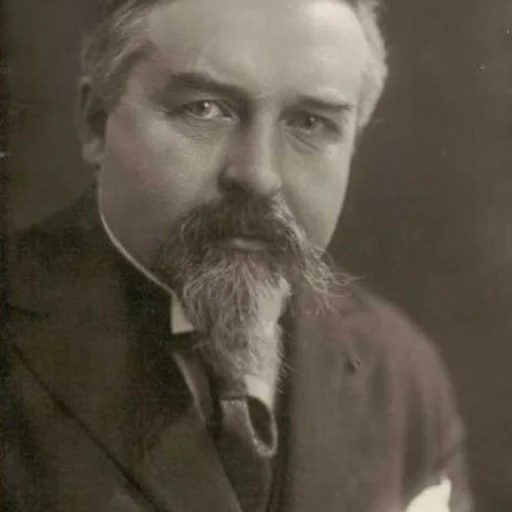
Maurice Denis (French: ; 25 November 1870 – 13 November 1943) was a French painter, decorative artist, and writer.