Artwork
Motherhood (Maternite)
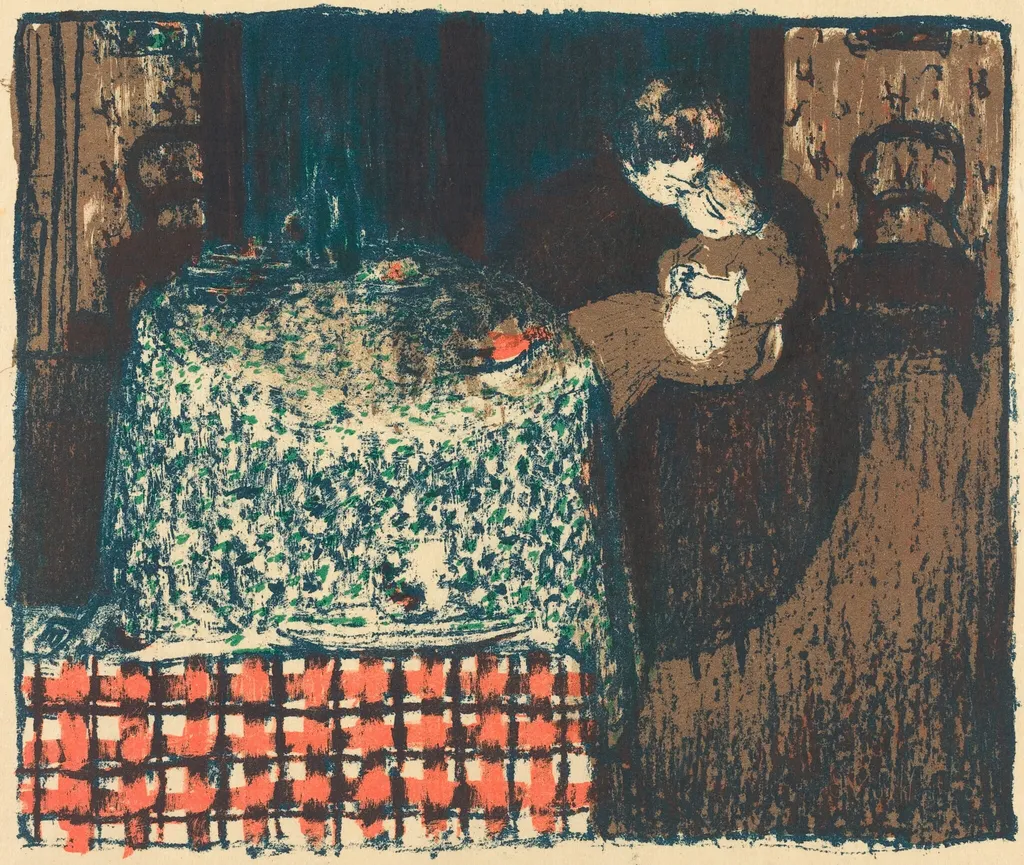
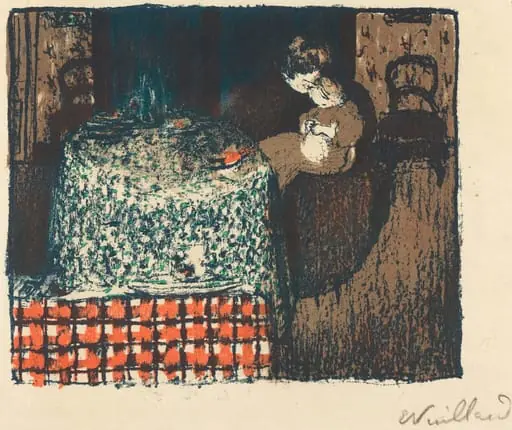
Motherhood (Maternite) is an ink print by the Impressionist artist Édouard Vuillard. It dates from 1896 and is held in the collection of the National Gallery of Art.
About this work
Overview
Created in 1896, *Motherhood (Maternité)* is a color lithograph on Japanese paper by Édouard Vuillard.
Created in 1896, *Motherhood (Maternité)* is a color lithograph on Japanese paper by Édouard Vuillard. It belongs to a series of intimate domestic scenes produced during his time with Les Nabis, a group of post-Impressionist artists who sought to break from naturalism. The work’s delicate printing technique and restrained palette reflect the group’s interest in decorative harmony and subtle emotional tone, rather than dramatic narrative.
Subject & Meaning
The image portrays a mother seated in a quiet interior, cradling her infant. Neither face is rendered in detail, emphasizing anonymity and universality over individual identity. The focus lies in the quiet physical connection between the two figures, framed by the surrounding patterns of fabric and furnishings. The scene conveys tenderness through stillness, avoiding sentimentality in favor of a contemplative, almost meditative atmosphere.
Technique & Style
Vuillard employed color lithography to achieve soft, layered tones on thin Japanese paper, enhancing the print’s intimacy. Forms are simplified and flattened, with patterns—like the checkered tablecloth and upholstered furniture—dominating the composition. The lack of perspective and emphasis on surface design echo Japanese woodblock prints, a key influence on the Nabis. Color is used expressively, not descriptively, to structure space and mood.
History & Provenance
Made during Vuillard’s most active period with Les Nabis, the print was likely produced in small editions for private collectors or art societies. It was not widely exhibited at the time, reflecting the group’s preference for intimate, non-commercial circulation. Its survival in good condition suggests careful preservation by early 20th-century collectors interested in modern graphic art.
Context
In the mid-1890s, Parisian artists were redefining the boundaries of painting and printmaking. Les Nabis rejected academic realism in favor of symbolic form and decorative unity. Vuillard’s domestic subjects, including this print, aligned with broader cultural shifts toward valuing private life and feminine spheres. The work stands apart from Impressionism by prioritizing structure and pattern over light and movement.
Legacy
Though less known than Vuillard’s paintings, *Motherhood* exemplifies the Nabis’ contribution to modern printmaking. Its quiet intensity influenced later artists exploring psychological depth through simplified form and domestic themes. The print remains a quiet testament to how everyday moments, rendered with restraint, can carry enduring emotional weight without overt drama.
Artist & collection
Artist
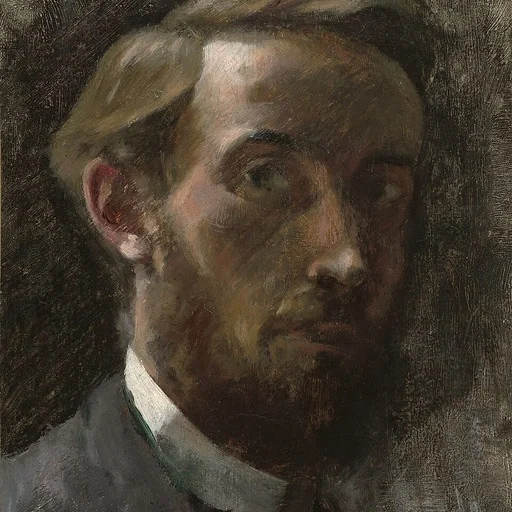
Jean-Édouard Vuillard (French: ; 11 November 1868 – 21 June 1940) was a French painter, decorative artist, and printmaker.

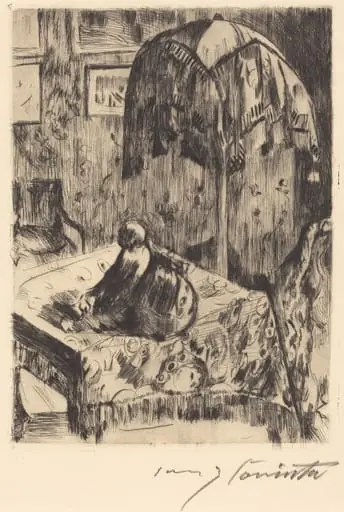 Interieur mit Stehlampe (Interior with Floor Lamp)
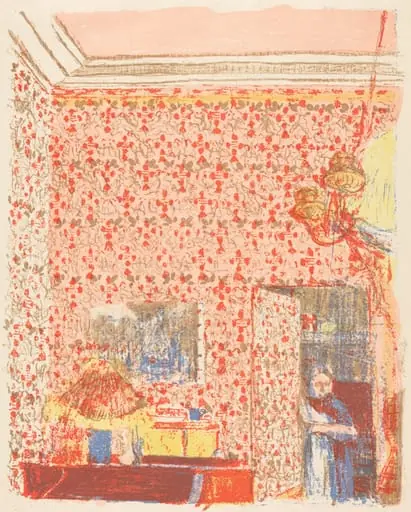 Interior with Pink Wallpaper I (Interieur aux tentures roses I)
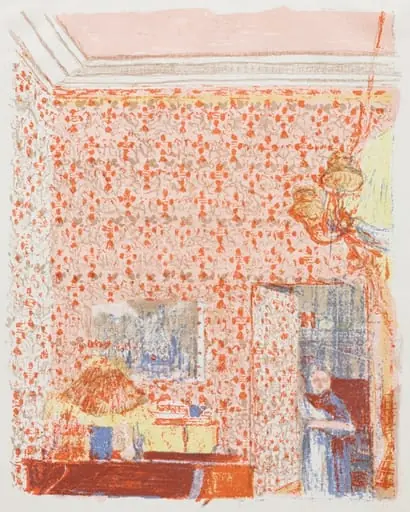 Interior with Pink Wallpaper I
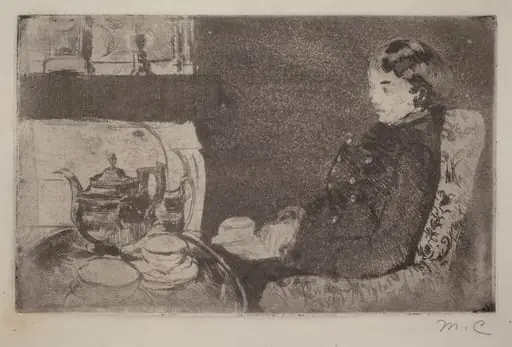 Lydia at Afternoon Tea
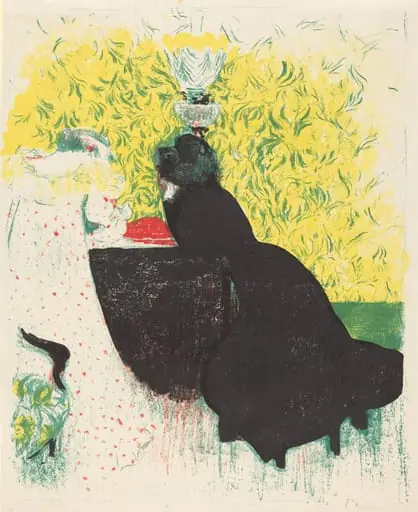 Two Sisters-in-Law (Les deux belles-soeurs)
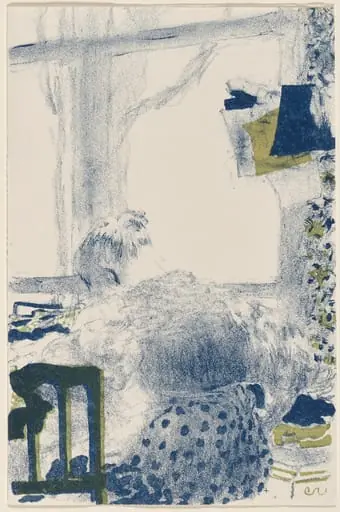 Dressmaker (La Couturière)
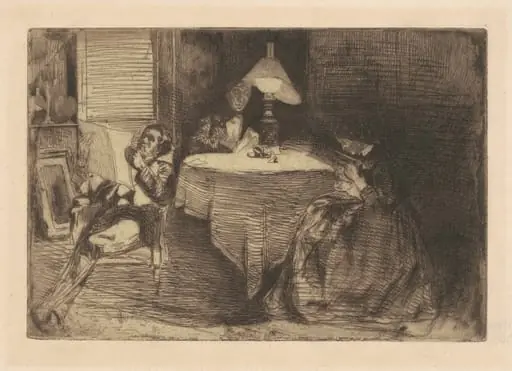 The Music Room
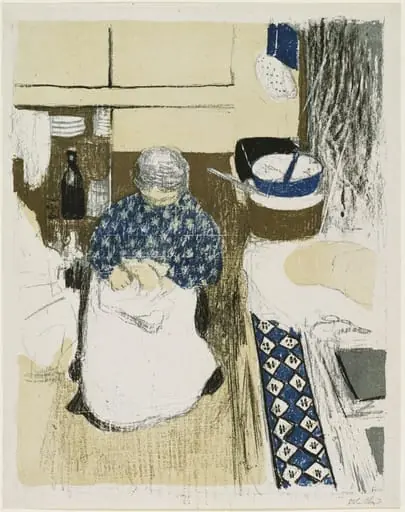 Untitled
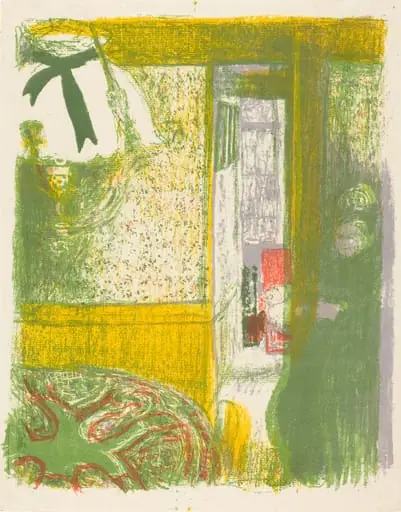 Interior with Hanging Lamp (Interieur à la suspension)
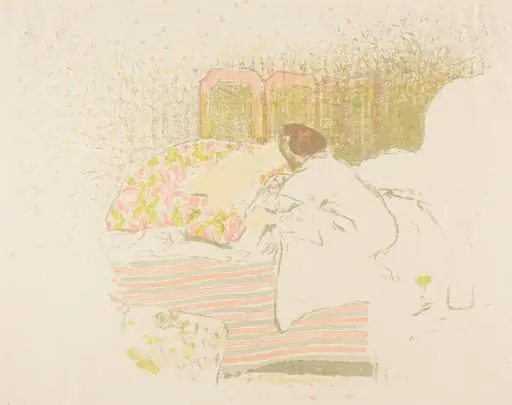 The Birth of Annette (La naissance d'Annette)
 Still Life
 Motherhood (Maternité)