Artwork
Village Scene
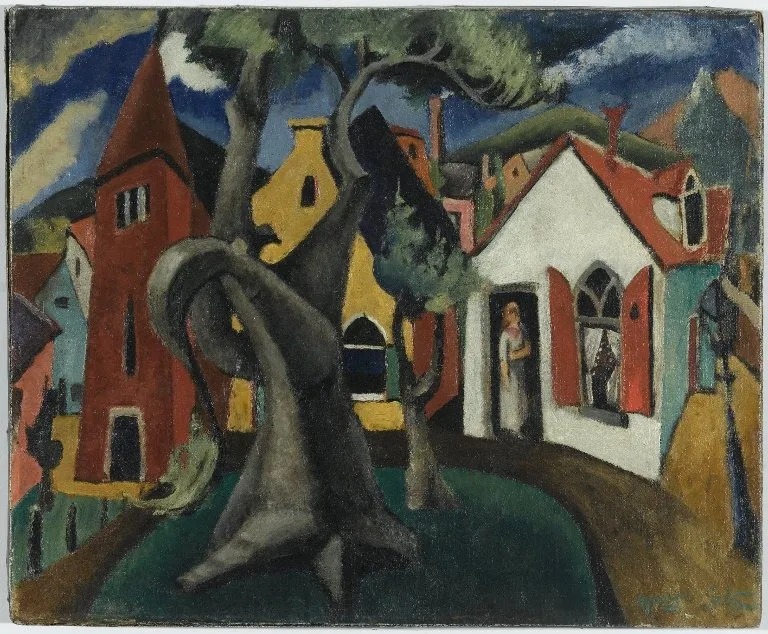
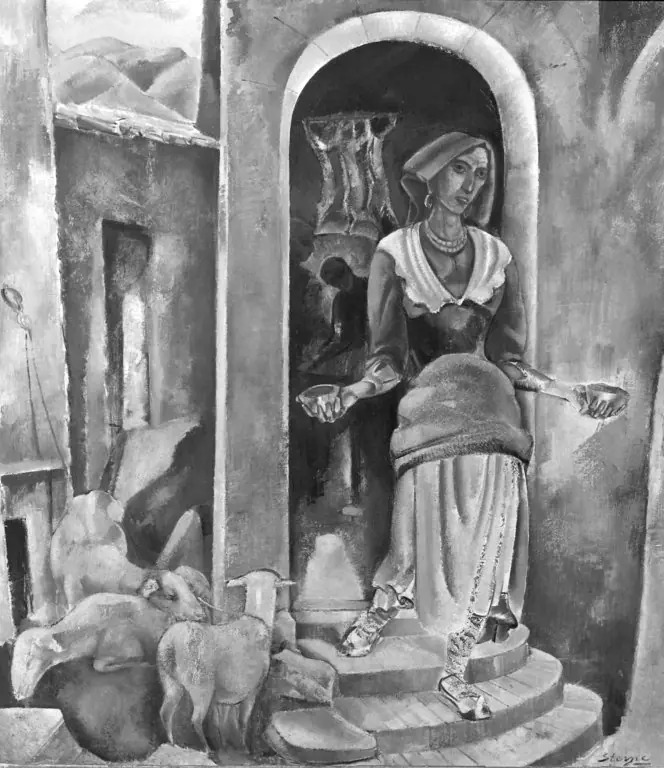
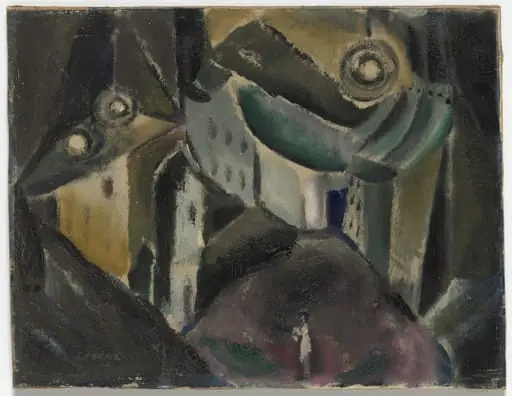
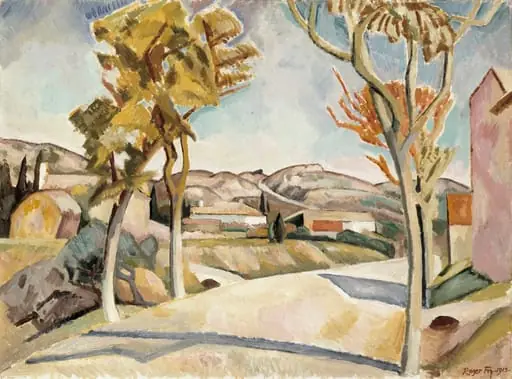
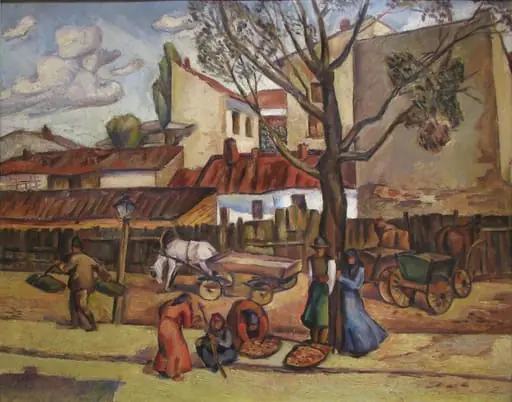
Village Scene is an oil painting by the American Impressionist artist Maurice Sterne. It dates from 1915 and is held in the collection of the Brooklyn Museum.
About this work
Overview
The piece resides in the Brooklyn Museum’s collection and reflects his engagement with early 20th-century American artistic trends.
Painted in 1915, *Village Scene* is an oil on canvas work by Maurice Sterne, an American artist originally from Latvia. Though primarily known as a sculptor, Sterne produced a modest body of paintings during this period, often capturing rural life with a focus on light and structure. The piece resides in the Brooklyn Museum’s collection and reflects his engagement with early 20th-century American artistic trends.
Subject & Meaning
The composition centers on a solitary woman standing in a doorway, her white dress contrasting with the warm tones of the architecture behind her. She faces the viewer directly, creating a quiet moment of stillness amid the village setting. The absence of narrative action invites contemplation rather than storytelling, emphasizing presence over event. The architectural forms and natural elements suggest a place grounded in daily life, not idealized or romanticized.
Technique & Style
Sterne employs bold, visible brushwork and a restrained palette dominated by reds, whites, and blues. Chiaroscuro is used subtly to model forms, particularly in the building’s archway and the woman’s figure, lending volume without dramatic contrast. The sky and foliage are rendered with loose, energetic strokes, balancing structure with spontaneity. These choices align with American Impressionist tendencies while retaining a sculptor’s sensitivity to form.
History & Provenance
Created during Sterne’s early years in the United States, the painting predates his marriage to Mabel Dodge Luhan, a key figure in New York’s avant-garde circles. It was acquired by the Brooklyn Museum in the 20th century and has remained in its collection since. No record of public exhibition prior to its museum acquisition exists, suggesting it may have been privately held before entering institutional care.
Context
In 1915, American artists were increasingly turning away from European academic traditions toward more personal, light-based approaches. Sterne’s work reflects this shift, yet his background in sculpture informed a structural rigor uncommon in pure Impressionism. Rural subjects like this were popular among artists seeking authenticity outside urban centers, though Sterne’s focus on quiet solitude distinguishes his vision from more bustling village scenes of the era.
Legacy
*Village Scene* remains a representative example of Sterne’s lesser-known painting practice, illustrating his ability to merge sculptural form with painterly light. While not widely exhibited, it contributes to understanding the breadth of American art between 1910 and 1920 — a period when artists negotiated modernism, regionalism, and personal expression. The work endures as a quiet testament to his multidisciplinary approach.
Artist & collection
Artist
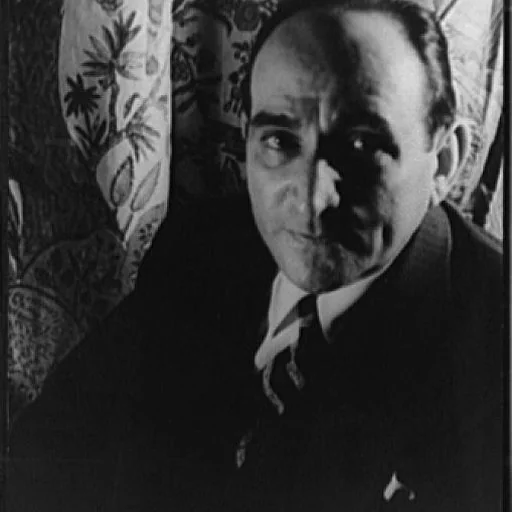
Maurice Sterne (Latvian: Moriss Šterns, 1877 or 1878 – July 23, 1957) was an American sculptor and painter remembered for his association with philanthropist Mabel Dodge Luhan, to whom he was married from 1916 to 1923.