Artwork
Peisaj cu biserică
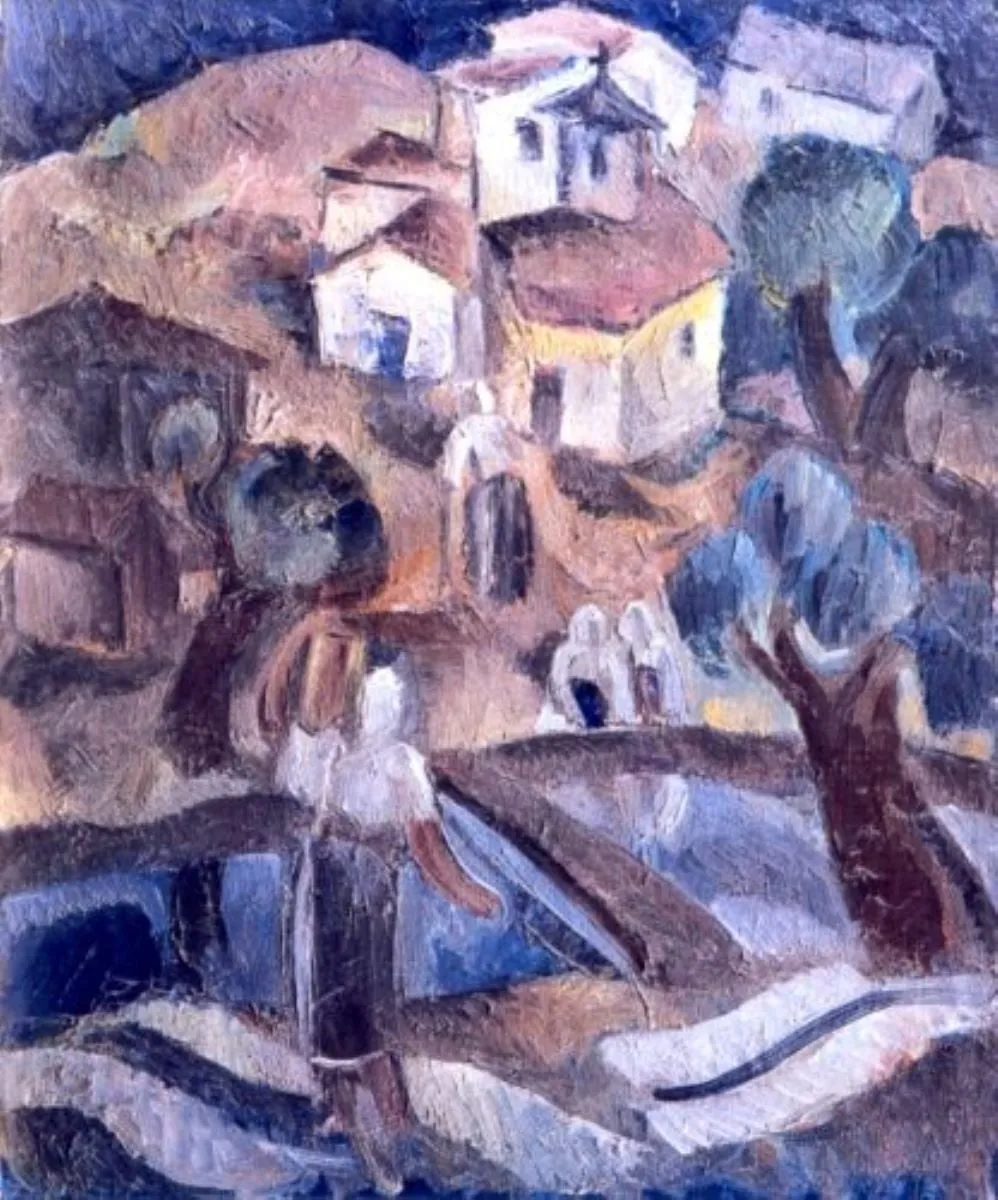
Peisaj cu biserică is an unspecified painting by Corneliu Michăilescu. It dates from 1936 and is held in the collection of the National Museum of Art of Romania.
About this work
Overview
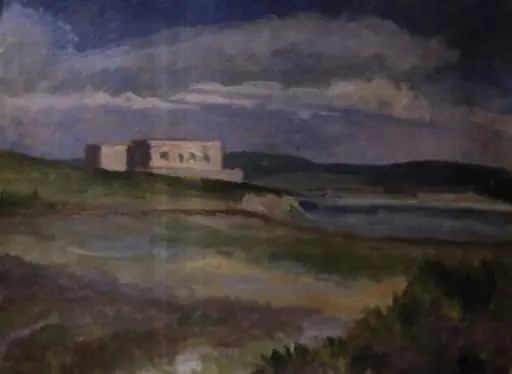
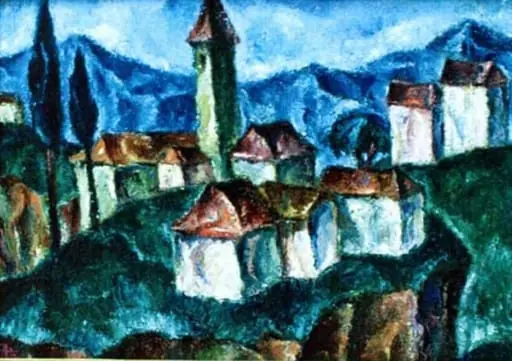
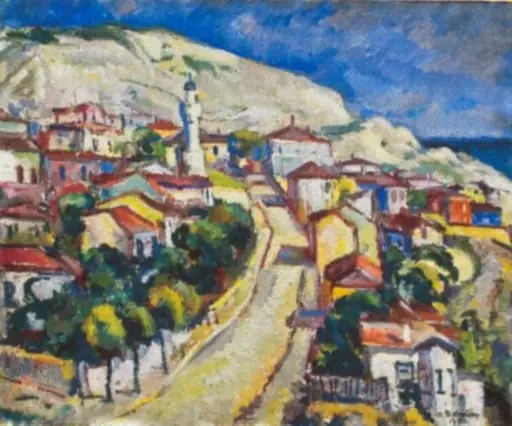
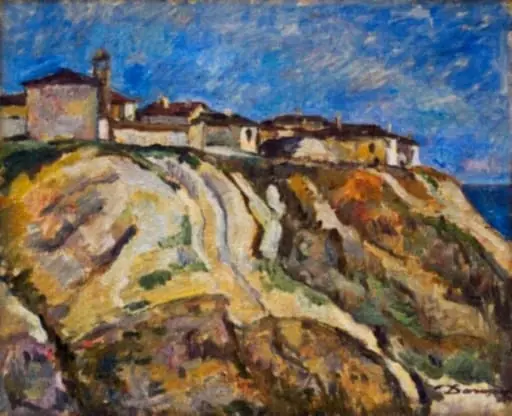
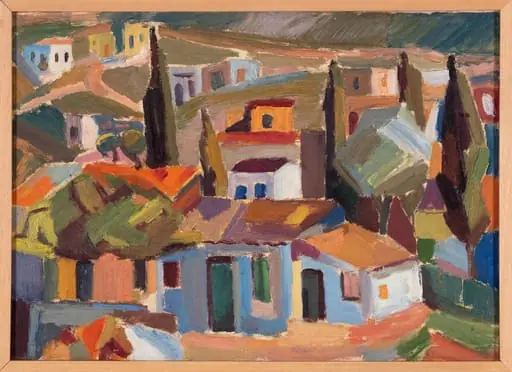
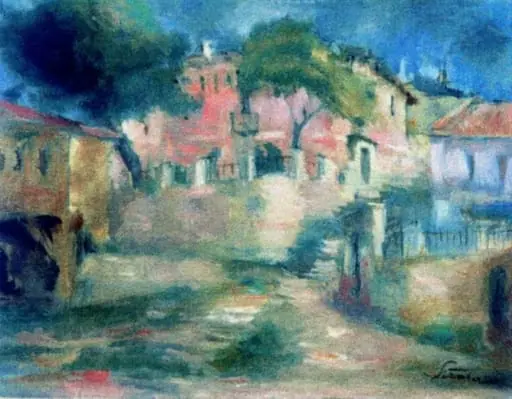
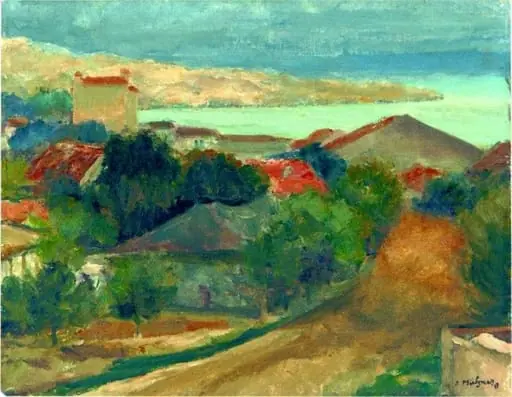
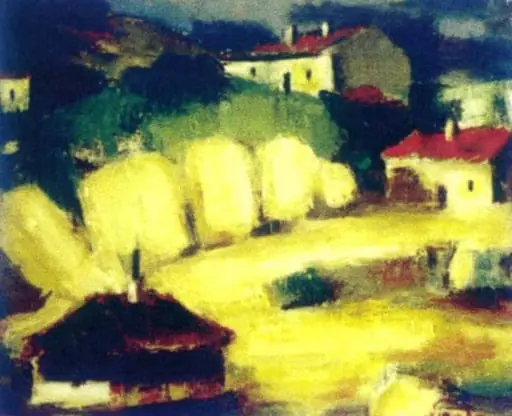
Corneliu Michăilescu’s Peisaj cu biserică, executed around 1936, depicts a modest settlement perched on a rugged hillside. The composition is dominated by a small cluster of dwellings and a solitary church with a bright yellow roof, set against a backdrop of craggy terrain and a winding path that leads the eye through the landscape.
Subject & Meaning
The work captures a moment of rural life, emphasizing the relationship between human habitation and a harsh natural environment. The solitary church, highlighted by its vivid roof, serves as a focal point of community and spiritual refuge amid the stark, earthy surroundings, while the few diminutive figures suggest daily activity within this isolated setting.
Technique & Style
Michăilescu employs thick impasto, applying paint in dense, textured strokes that echo the roughness of the rocky hillside. The palette is restrained, dominated by muted browns and blues, punctuated by touches of white and yellow that draw attention to the church and sky. The tactile surface creates a sense of physicality, as if the paint itself were part of the terrain.
History & Provenance
Created in the mid‑1930s, Peisaj cu biserică reflects the artist’s interest in Romanian rural scenery during a period of national cultural consolidation. The painting’s provenance traces back to private collections before entering the museum’s holdings, where it is displayed as part of a broader survey of interwar Romanian landscape painting.
Artist & collection