Artwork
Peasant girl
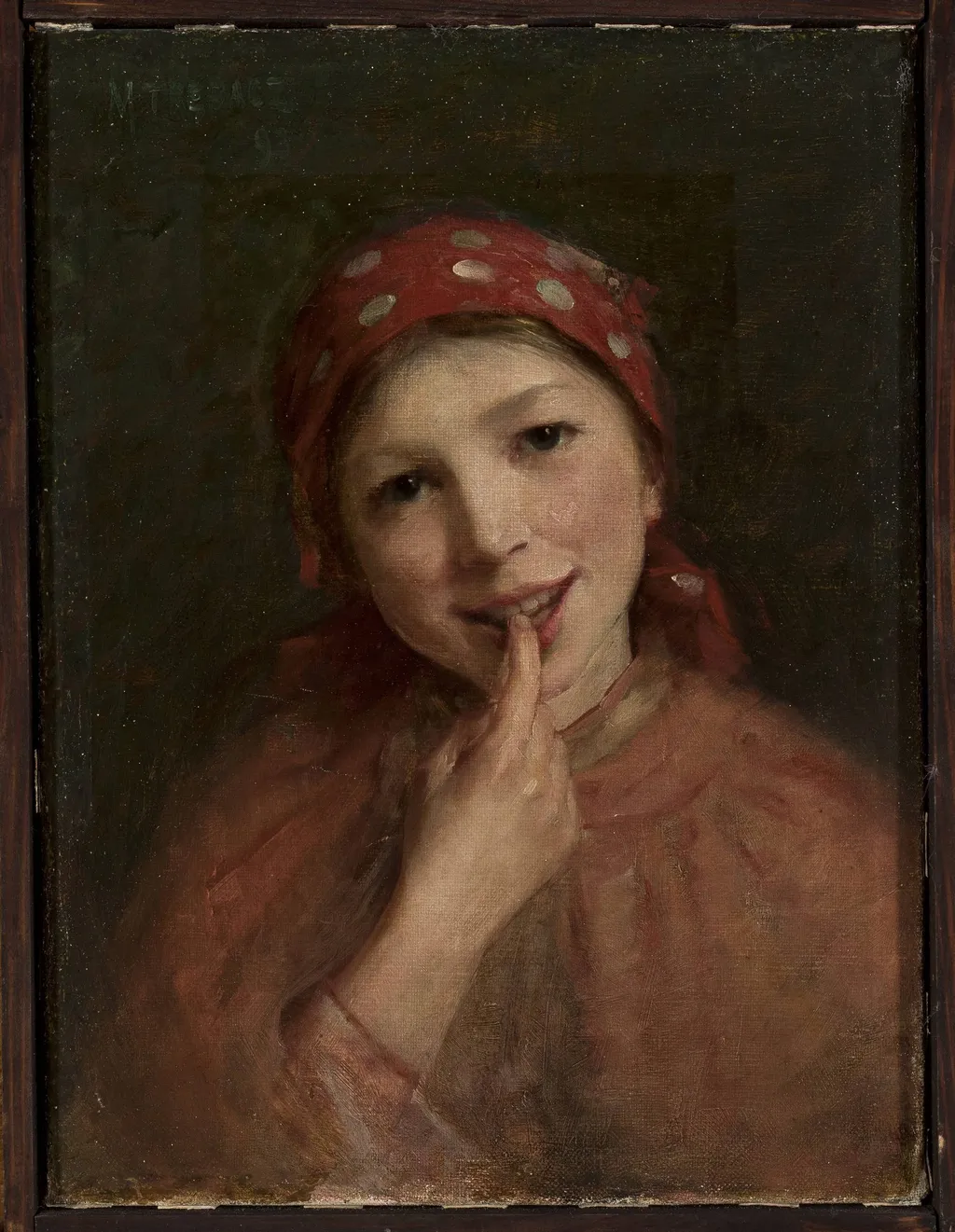
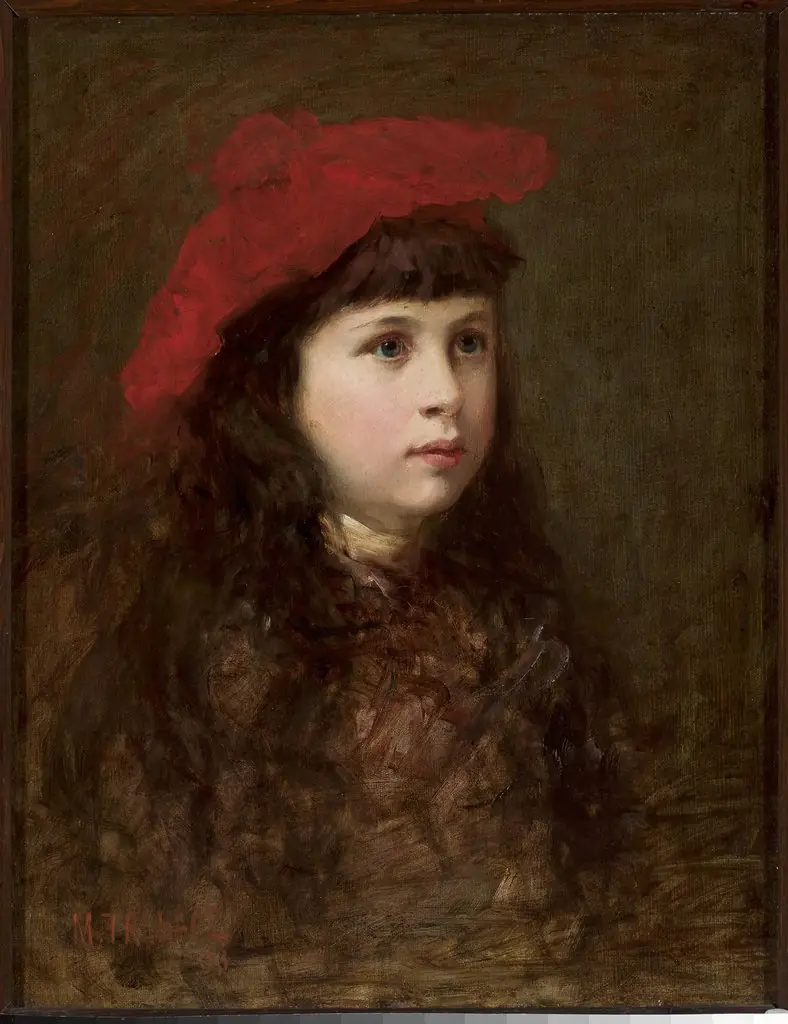
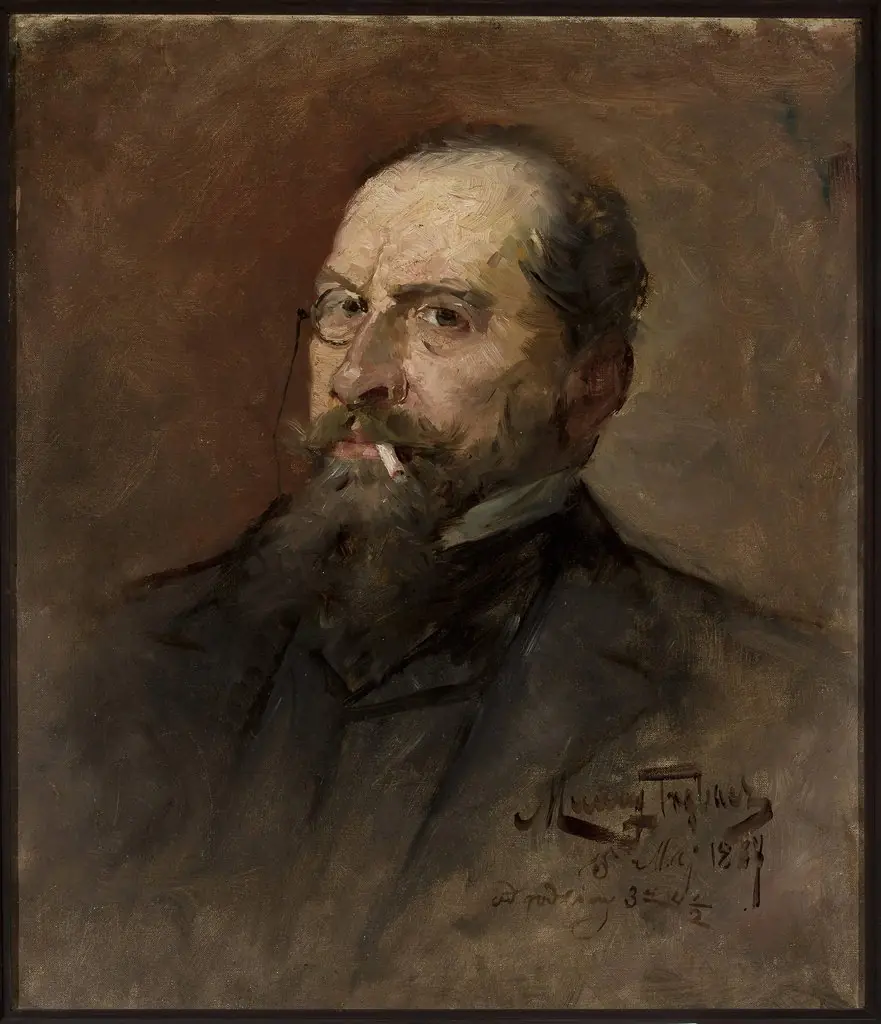
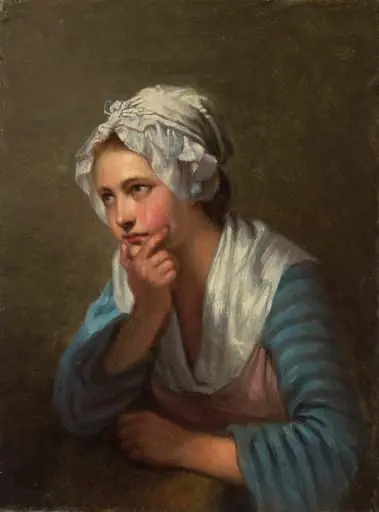
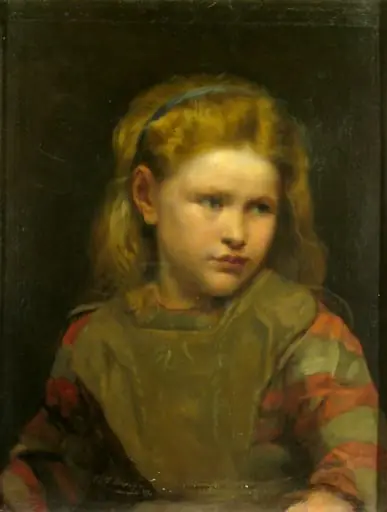
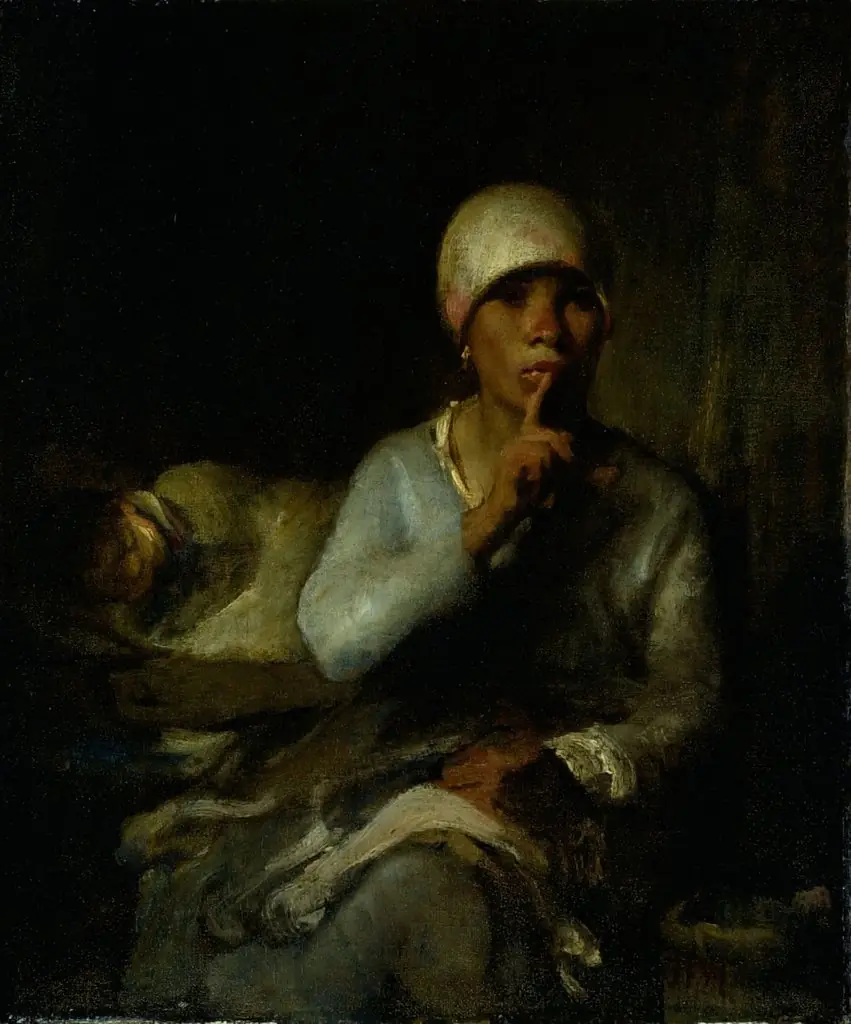
Peasant girl is an oil painting by the Post-Impressionist artist Maurycy Trębacz. It dates from 1897 and is held in the collection of the National Museum in Warsaw.
About this work
Overview
Peasant Girl is an oil painting created by Maurycy Trębacz in 1897, associated with the post-impressionist movement. The work depicts a young girl in contemplative pose, characterized by the artist's use of chiaroscuro to evoke depth and mood.
Subject & Meaning
The subject, a young peasant girl, is portrayed in a moment of quiet introspection, her eyes cast downward and finger to her lips. Her attire, including a red headscarf with white polka dots and a matching top, adds contextual detail without distracting from her serene, contemplative expression.
Technique & Style
Trębacz employed chiaroscuro to create a sense of volume and depth in the painting, juxtaposing light and dark to enhance the overall introspective mood. This technique aligns with post-impressionist explorations of light and shadow.
History & Provenance
Part of Trębacz's oeuvre, this painting survived the significant loss of his works during the Holocaust. It is now held in a collection like the National Museum in Warsaw, testifying to the artist's contribution to Polish art.
Context
Created by one of Poland's first Jewish artists to focus on figure painting, alongside contemporaries Samuel Hirszenberg and Leopold Pilichowski, Peasant Girl reflects the artist's place within early 20th-century Polish artistic movements.
Legacy
Maurycy Trębacz's life was tragically cut short in the Litzmannstadt Ghetto in 1941. Despite the loss of many of his works, surviving pieces like Peasant Girl preserve his artistic legacy and contribution to Polish post-impressionism.
Artist & collection
Artist
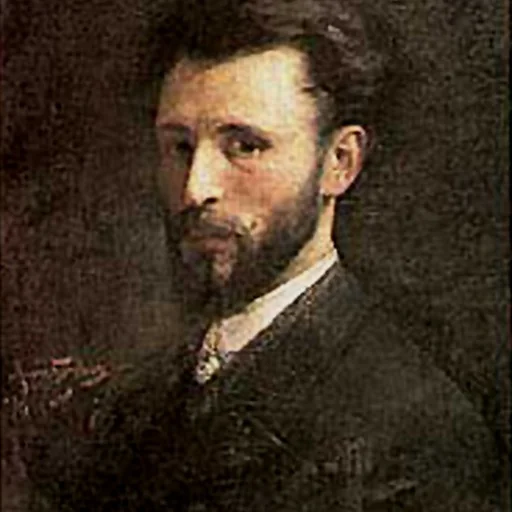
Maurycy Trębacz (May 3, 1861 – January 29, 1941) was one of the most popular Jewish painters in Poland in the late 19th and early 20th century.