Artwork
Η έπαυλη Τρικούπη στην Κηφισιά
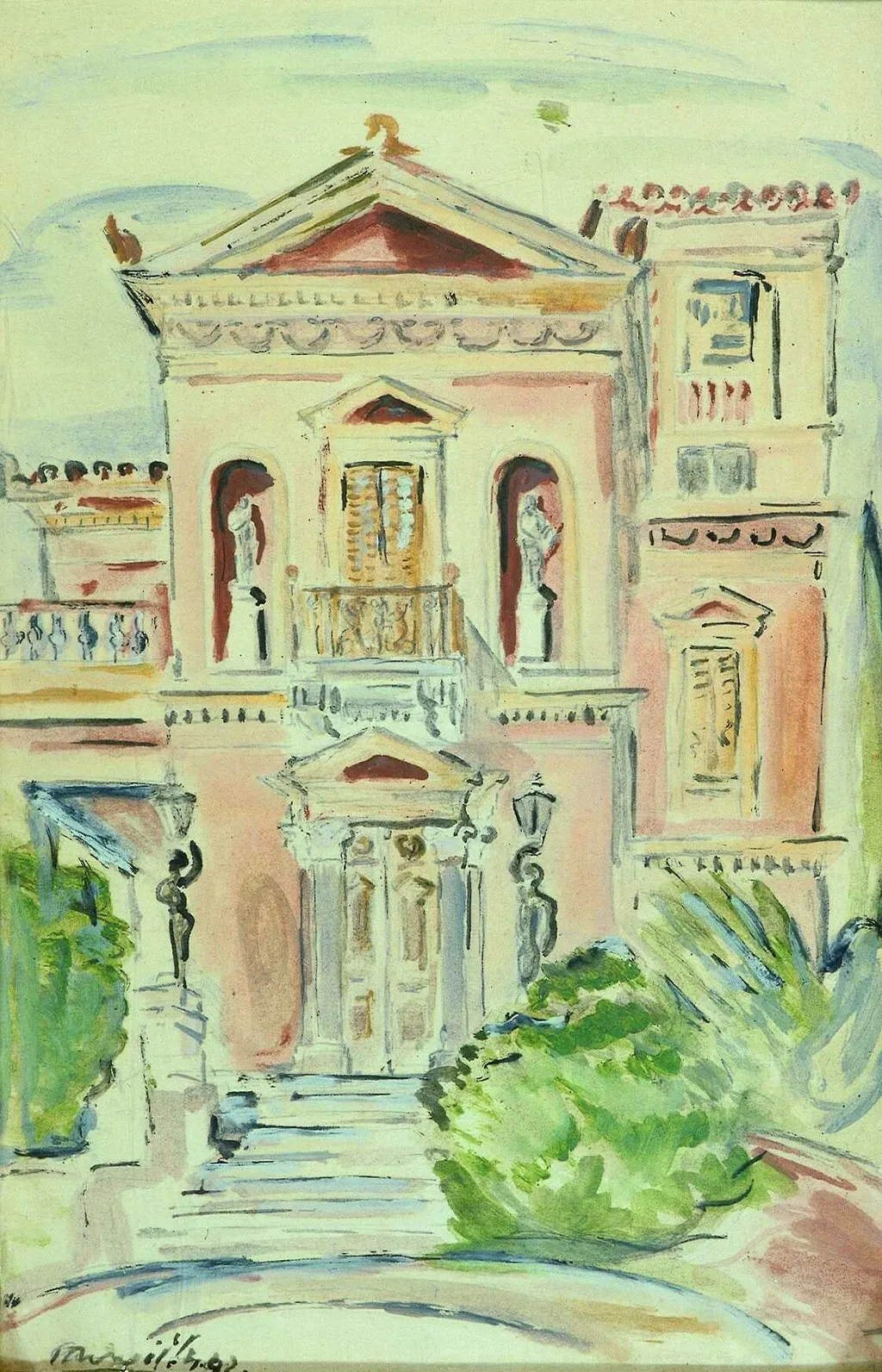
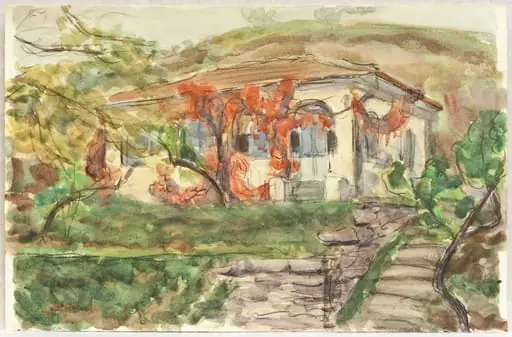
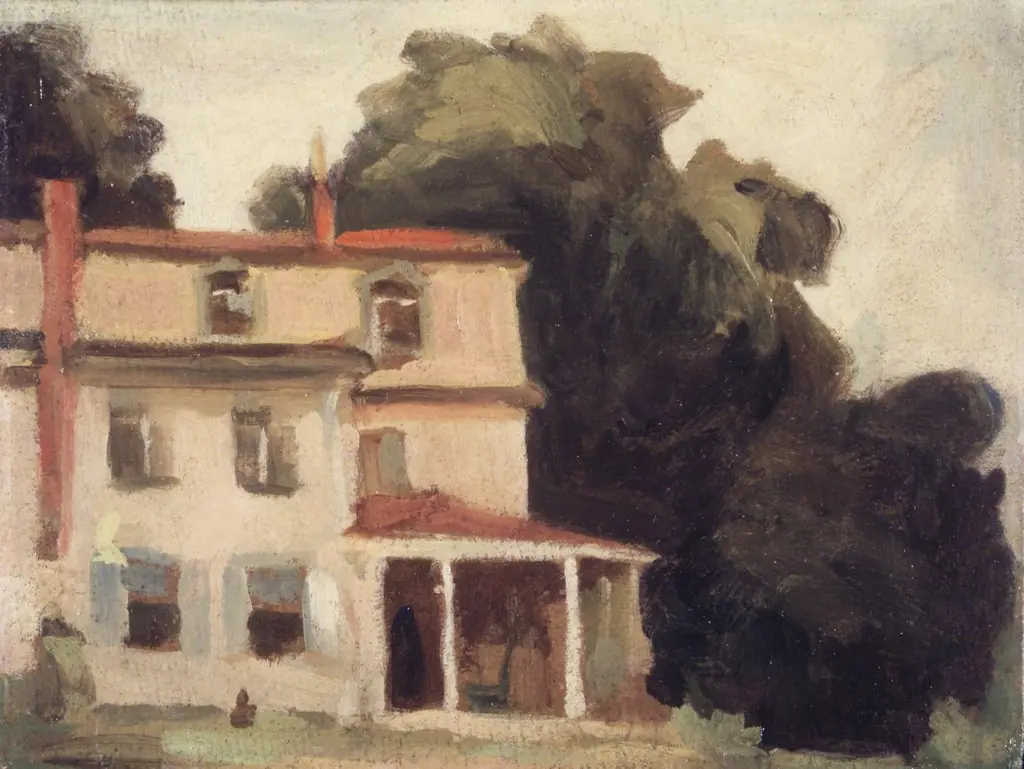
Η έπαυλη Τρικούπη στην Κηφισιά is an unspecified painting by Yorgos Mavroidis. It dates from 1942 and is held in the collection of the Metropolitan Organisation of Museums of Visual Arts of Thessaloniki – MOMus.
About this work
Overview
The scene is rendered not as a serene snapshot but as a charged visual experience, where pigment is applied thickly and with deliberate unrest.
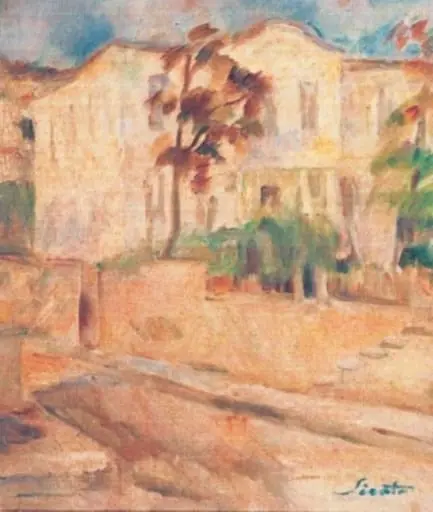
Yorgos Mavroidis depicts the Trikoupis villa in Kifisia, a quiet Athenian suburb, through a vigorous, emotionally charged lens. The scene is rendered not as a serene snapshot but as a charged visual experience, where pigment is applied thickly and with deliberate unrest. The house, framed by dark cypresses, glows under late afternoon light, its pink walls vibrating against the surrounding greens and shadows. Mavroidis’s approach resists calm representation, favoring tactile intensity over photographic accuracy.
Subject & Meaning
The villa, a modest residence in a residential neighborhood, becomes a vessel for emotional resonance rather than architectural documentation. Its isolation between towering cypresses and the dry, sun-baked lawn suggest quietude tinged with tension. The open shutters hint at absence or pause, while the absence of human figures amplifies a sense of stillness charged with unspoken presence. The scene reflects an inner landscape as much as an external one.
Technique & Style
Mavroidis employs impasto techniques, building paint into thick, textured ridges that catch light and cast subtle shadows. His brushwork is agitated, choppy, and rhythmic, creating a sense of movement within stillness. Color is not descriptive but structural—pinks, ochres, and deep greens interact through emotional association rather than naturalistic fidelity. The edges of forms blur and pulse, as if the scene itself is breathing under the weight of the artist’s gesture.
History & Provenance
Painted in the mid-20th century, this work belongs to a series of Greek landscapes and domestic scenes Mavroidis produced during a period of personal and national redefinition. The Trikoupis villa, a real location in Kifisia, was one of several suburban residences he returned to as subject matter. The painting’s survival in private collections suggests its resonance within Greek modernist circles, though it never entered major institutional holdings.
Context
Mavroidis worked amid Greece’s postwar artistic shifts, where expressionism offered a counterpoint to academic realism. His landscapes diverged from the idealized island vistas common in Greek painting, instead focusing on the subdued, often overlooked outskirts of Athens. The dry lawn and muted light reflect a regional climate and mood, grounding his emotional intensity in the tangible realities of suburban life during a time of social transition.
Legacy
Mavroidis’s approach to landscape—rooted in psychological immediacy rather than picturesque convention—influenced later generations of Greek painters seeking to express inner states through material texture. His use of color as emotional architecture, and brushwork as a record of presence, remains distinct within 20th-century Greek art. Though less widely known outside Greece, his work continues to be studied for its raw, unmediated engagement with place and perception.
Artist & collection
Museum
Metropolitan Organisation of Museums of Visual Arts of Thessaloniki – MOMus
Continue through works from the same source collection.