Artwork
Cleopatra
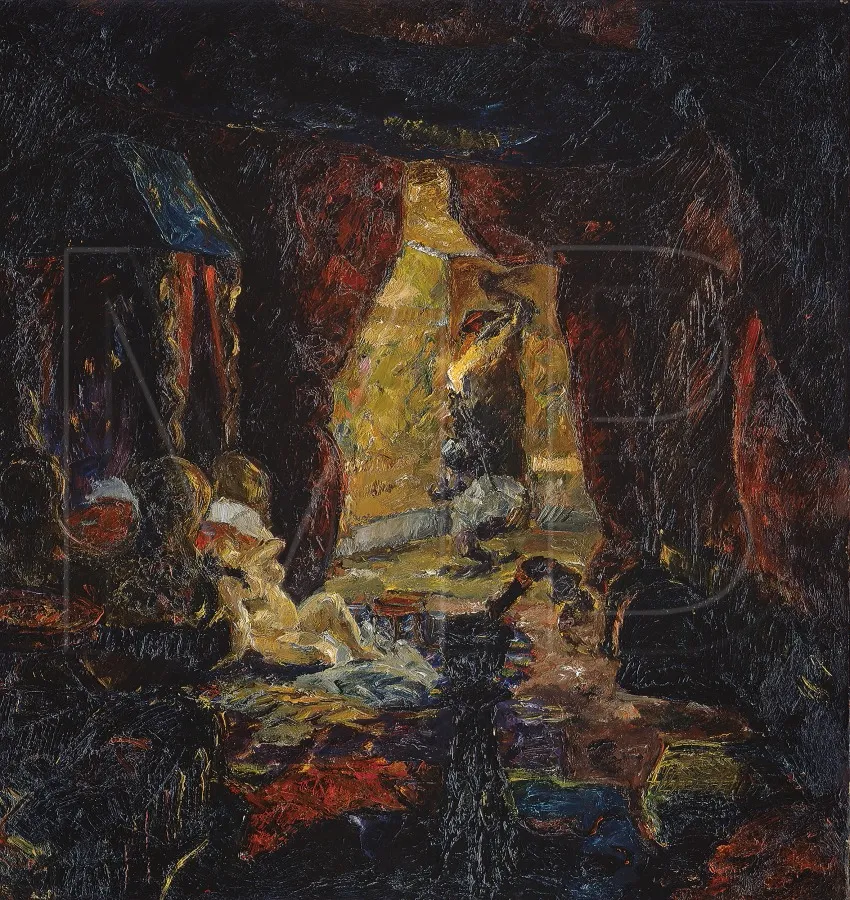
Cleopatra is an oil painting by Max Beckmann. It dates from 1910 and is held in the collection of the Kunsthaus Zürich.
About this work
Overview
Max Beckmann completed *Cleopatra* in 1910 using oil on canvas. Though associated with German Expressionism, Beckmann distanced himself from the movement’s emotional rhetoric. The painting is part of the Kunsthaus Zürich collection and reflects his early engagement with mythological and historical figures, before his later shift toward the restrained realism of New Objectivity in the 1920s.
Subject & Meaning
The painting portrays Cleopatra VII in a moment of quiet repose, not as a ruler in crisis but as a figure of contained power.
The painting portrays Cleopatra VII in a moment of quiet repose, not as a ruler in crisis but as a figure of contained power. Dressed in rich, layered garments and adorned with a gold headdress, she exudes authority through stillness. The setting suggests a private chamber, emphasizing introspection over spectacle, inviting contemplation of identity, legacy, and the performative nature of sovereignty.
Technique & Style
Beckmann employed bold, deliberate brushwork and saturated hues to construct a sense of theatrical opulence. The contrast between the pale robe and the deep red and blue drapery heightens visual tension. Warm ambient light from behind the figure casts subtle shadows, enhancing volume without full chiaroscuro. The composition’s stillness is balanced by energetic strokes, suggesting inner turbulence beneath surface calm.
History & Provenance
Created during Beckmann’s formative years, *Cleopatra* predates his wartime experiences and stylistic evolution. It entered the Kunsthaus Zürich collection in the mid-20th century, where it remains today. The work reflects his early interest in classical themes and the psychological depth of historical figures, offering insight into his artistic development before his exile and mature period.
Context
In 1910, European art was shifting between Symbolist idealism and emerging modernist experiments. Beckmann, influenced by Renaissance portraiture and contemporary psychological inquiry, used Cleopatra as a vehicle to explore femininity and power beyond cliché. His approach diverged from the overt emotionalism of Expressionist peers, foreshadowing his later alignment with New Objectivity’s focus on observed reality.
Legacy
Though less known than Beckmann’s later works, *Cleopatra* illustrates his early command of symbolic composition and psychological nuance. It stands as a bridge between his academic training and the intensified, fragmented style of his postwar paintings. The work continues to be studied for its complex portrayal of historical women and its quiet subversion of traditional heroic narratives.
Artist & collection
Artist
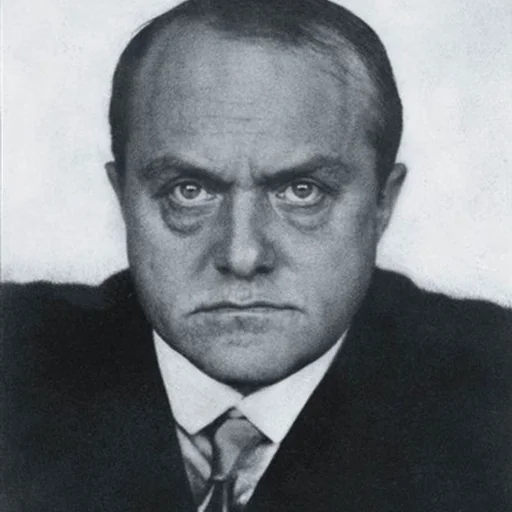
Max Carl Friedrich Beckmann (February 12, 1884 – December 27, 1950) was a German painter, draftsman, printmaker, sculptor, and writer.

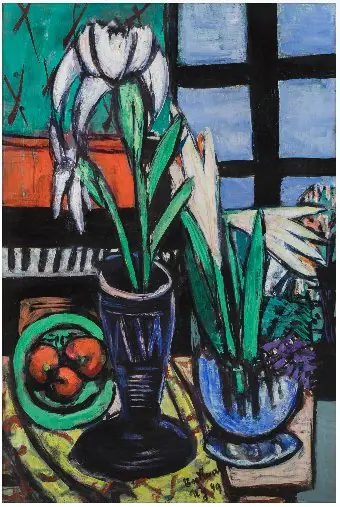
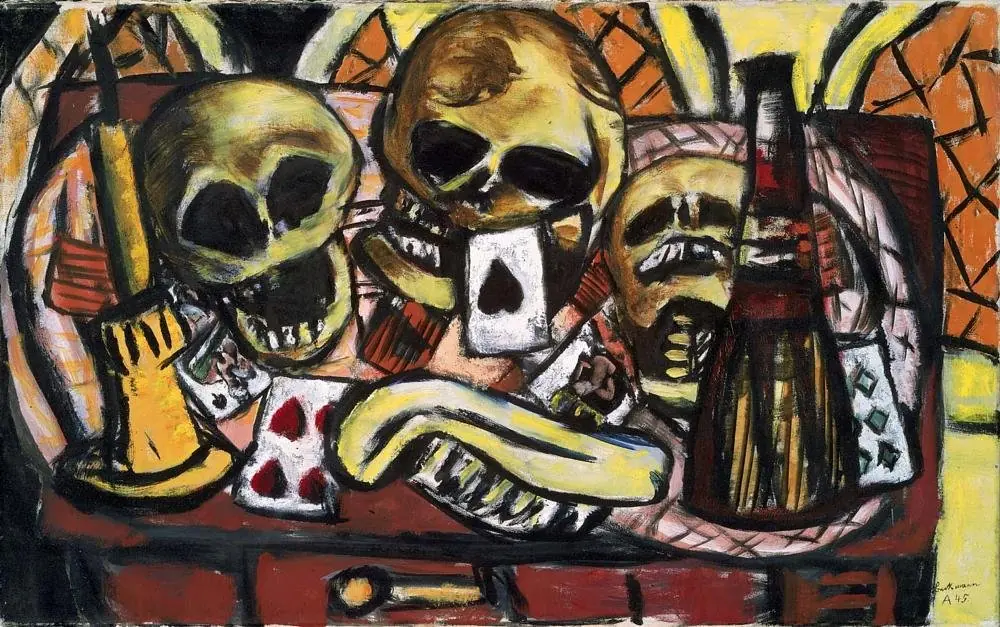
 Untitled
 The Forest Minister
 The Interior of the Tomb of King Casimir the Great
 Vrouwen in een bos
 Smoked Herrings
 Vânat (Natură moartă)
 Păsări moarte cu cocoș de munte; pandant; Păsări și iepure mort
 Vânătorul
 Nubian Woman
 Ian Holm as Henry V in <i>Henry V</i> by William Shakespeare
 Miner în ocnă
 Aan het altaar