Artwork
Untitled
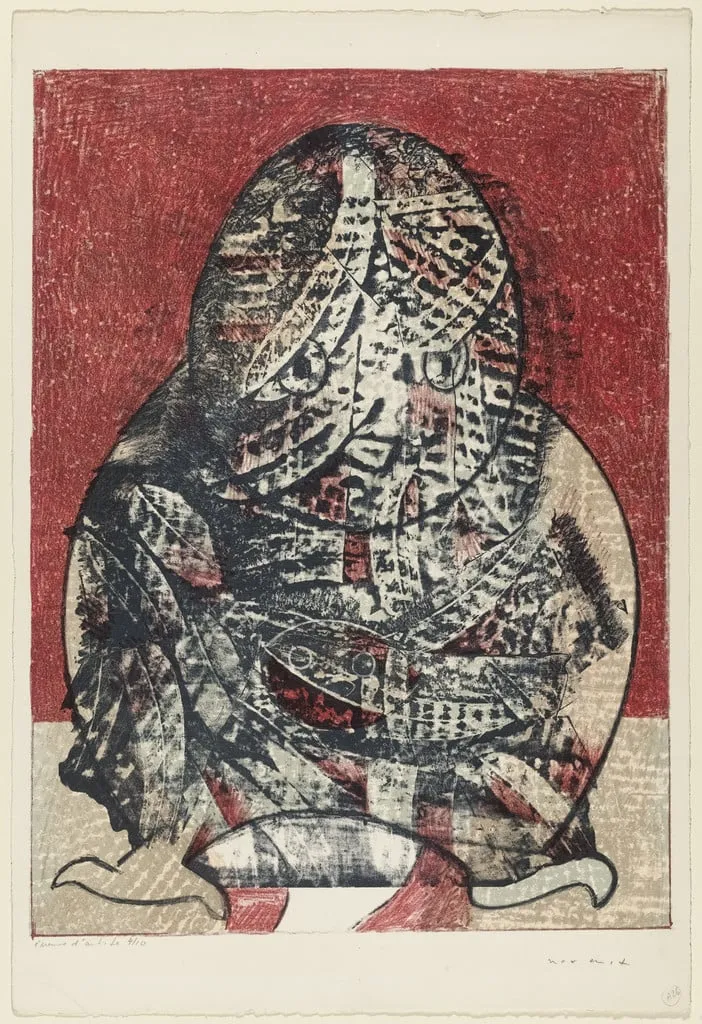
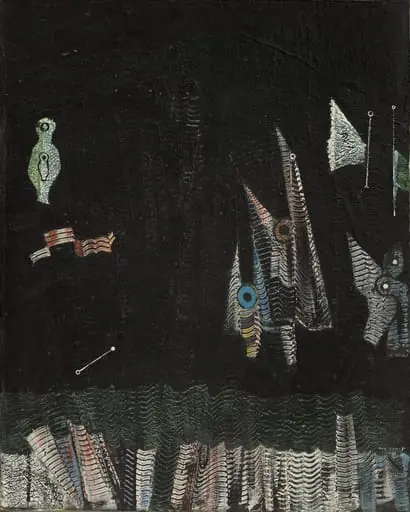
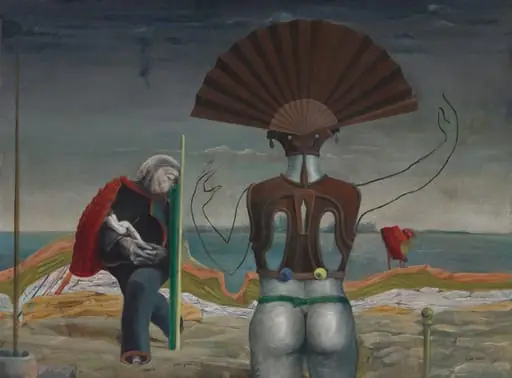
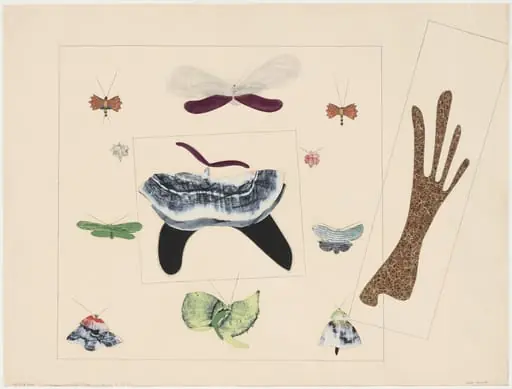
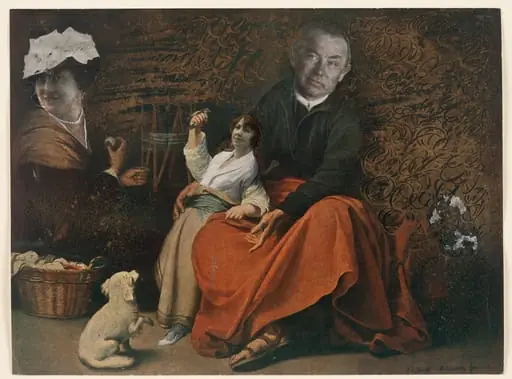
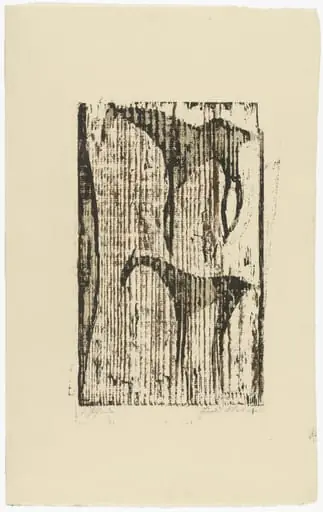
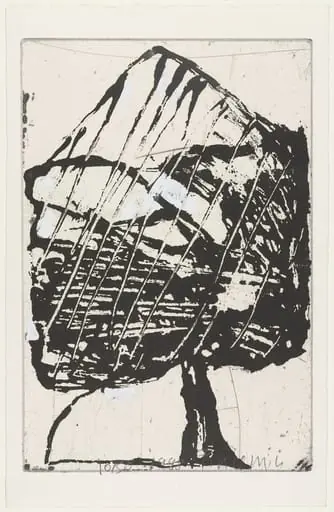
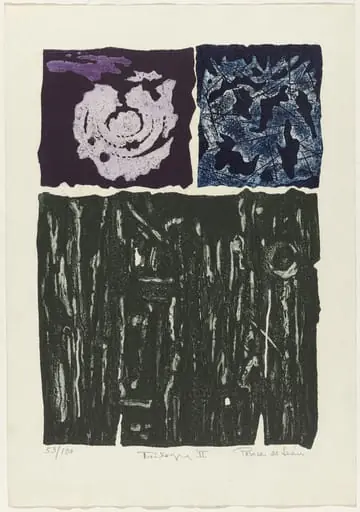
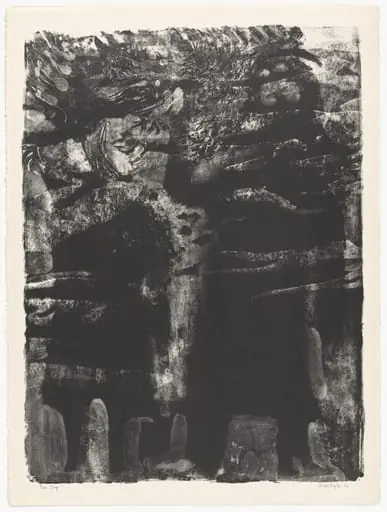
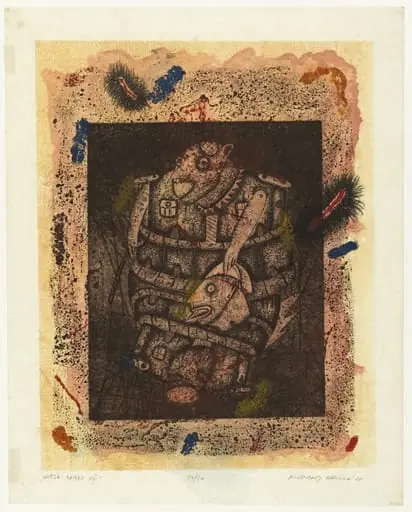
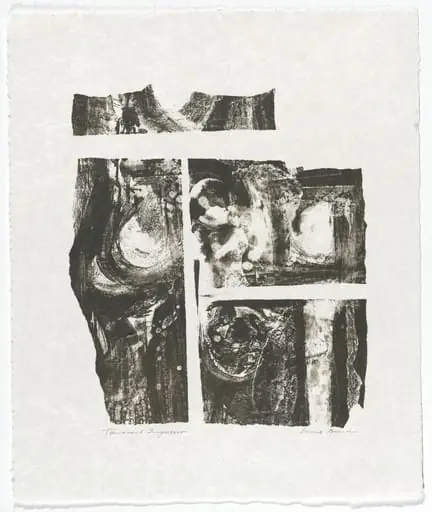
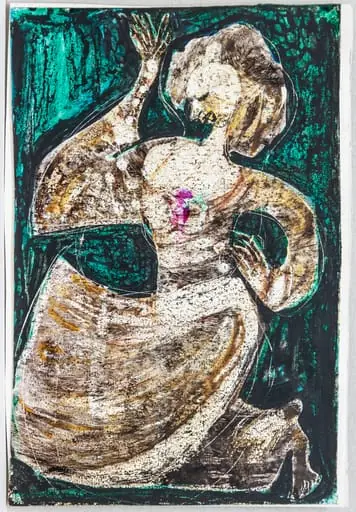
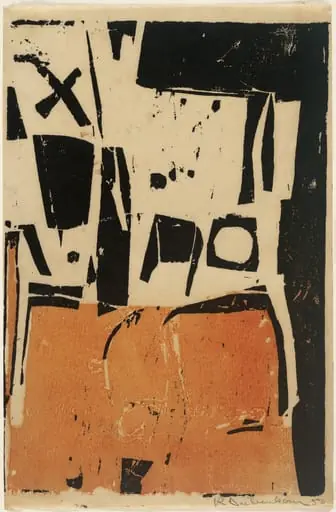
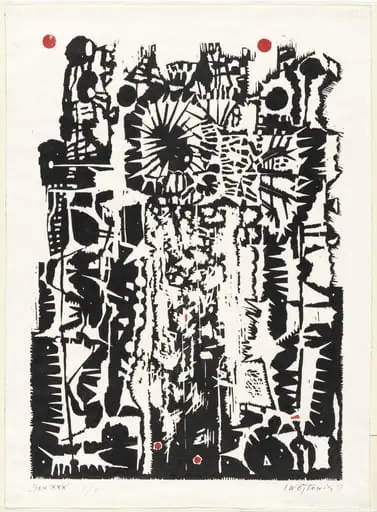
Untitled is an ink print by Max Ernst. It dates from 1955 and is held in the collection of the Museum of Modern Art.
About this work
Overview
Ernst’s approach emphasized process over premeditated form, aligning with his broader interest in automatism and the unconscious.
Max Ernst produced this lithograph in 1955 as part of his ongoing exploration of printmaking. Though self-taught, he developed unconventional techniques that challenged traditional methods. The work belongs to The Museum of Modern Art’s collection, reflecting its significance within 20th-century print culture. Ernst’s approach emphasized process over premeditated form, aligning with his broader interest in automatism and the unconscious.
Subject & Meaning
The image depicts an anonymous, hooded figure shrouded in a textured, bark-like cloak, its hands concealed and face obscured. The form evokes mystery rather than narrative, suggesting a presence emerging from or dissolving into the ground. The dark red background and lack of spatial cues amplify an atmosphere of ambiguity, inviting interpretation as a psychological or mythic entity rather than a literal subject.
Technique & Style
Ernst employed lithographic methods to generate dense, irregular textures through scraping and pressure, mimicking natural erosion. The contrast between rough, shadowed areas and thin white borders creates a sense of weightlessness. The surface appears carved or pressed, not painted, reinforcing his preference for tactile, chance-driven processes. This aligns with his earlier inventions like grattage, where materiality dictated form.
History & Provenance
Created in 1955, the lithograph emerged during Ernst’s mature period in France and the United States, following his exile from Nazi Germany. It entered The Museum of Modern Art’s collection as part of its commitment to documenting Surrealist print practices. No prior ownership records are publicly documented, but its inclusion in MoMA’s holdings confirms its recognition within institutional art history.
Context
This work reflects Ernst’s sustained engagement with Surrealism’s interest in the subconscious and the uncanny. While Dada’s anarchic spirit had waned by the 1950s, his continued experimentation with texture and form kept his practice aligned with its disruptive ethos. The piece resonates with contemporaneous explorations of abstraction and materiality in postwar European art.
Legacy
Ernst’s use of lithography to evoke organic, almost geological forms influenced later generations of printmakers seeking alternatives to conventional illustration. His emphasis on process over representation helped expand the medium’s expressive potential. This work remains a quiet but persistent example of how printmaking could convey psychological depth without figurative clarity.
Artist & collection
Artist
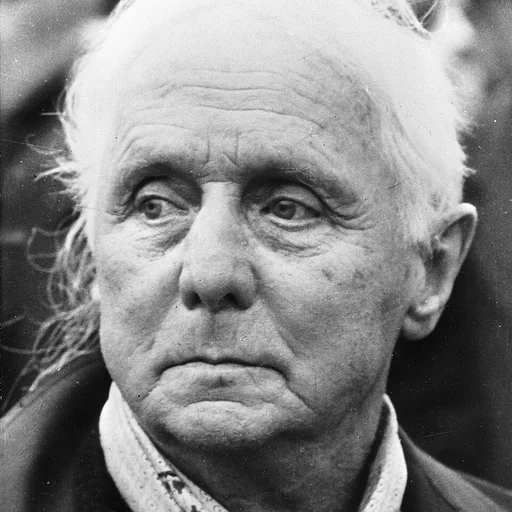
Max Ernst (; German: 2 April 1891 – 1 April 1976) was a German-born painter, sculptor, printmaker, graphic artist, and poet.