Artwork
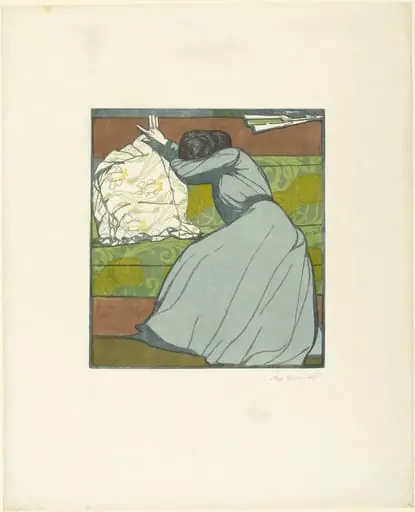
The Cushion (Martha Kurzweil Seated on a Divan)
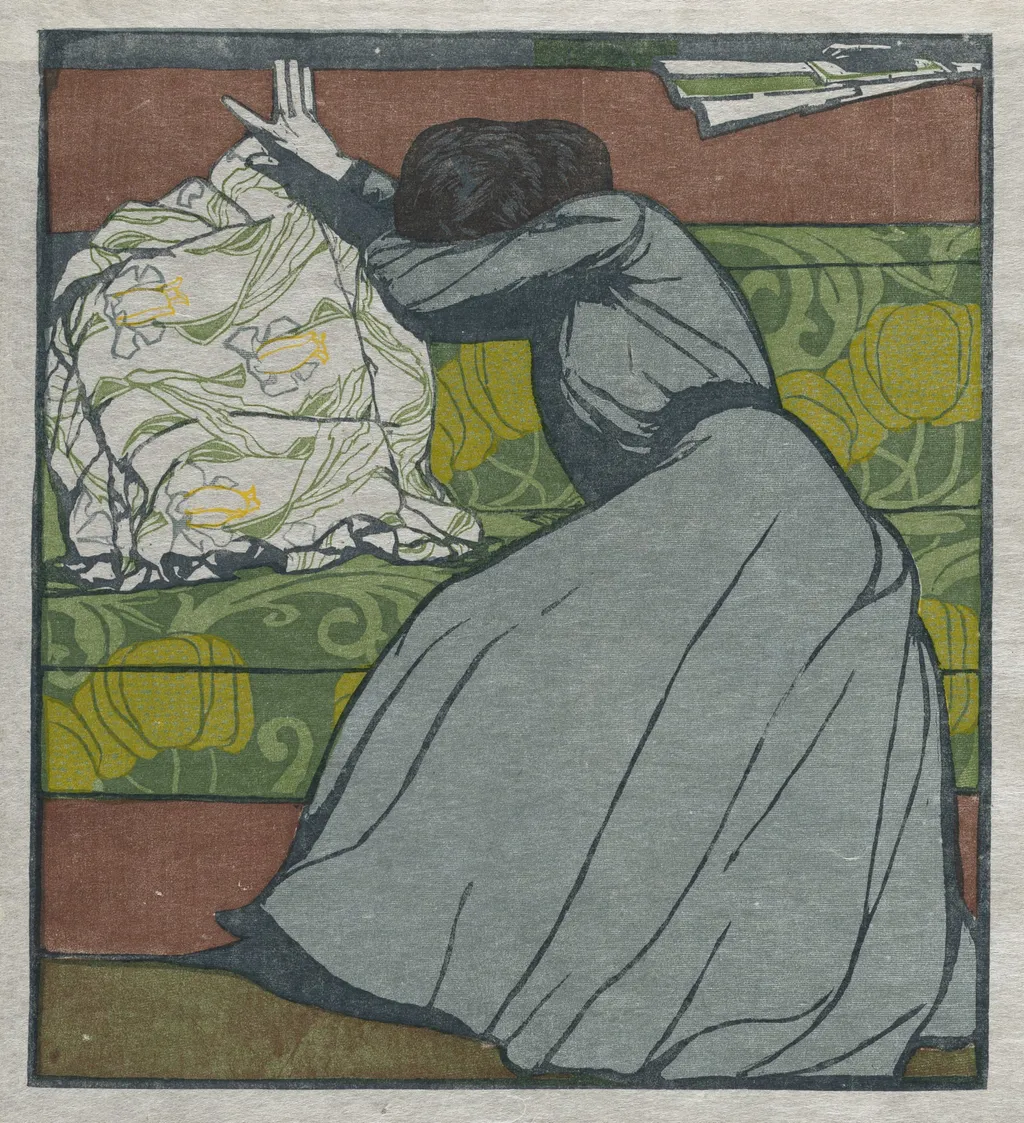
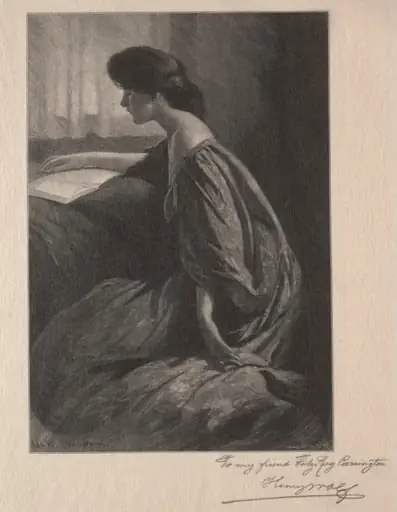
The Cushion (Martha Kurzweil Seated on a Divan) is a print by Maximilian Kurzweil. It dates from 1903 and is held in the collection of the Cleveland Museum of Art.
About this work
Overview
The work reflects his engagement with the movement’s aesthetic ideals, emphasizing intimate domestic scenes and refined surface patterns.
Created in 1903 by Austrian artist Maximilian Kurzweil, this print captures his wife, Martha, seated on a divan. As a founding member of the Vienna Secession, Kurzweil merged observational detail with ornamental sensibility. The work reflects his engagement with the movement’s aesthetic ideals, emphasizing intimate domestic scenes and refined surface patterns. Executed as a print, it aligns with the Secession’s interest in accessible, graphic art forms.
Subject & Meaning
The figure is Martha Kurzweil, portrayed in a private, contemplative moment. Her face is turned away, and her right arm is raised, suggesting a gesture of adjustment or pause rather than narrative action. The anonymity of her expression invites quiet introspection, shifting focus from identity to presence. The composition avoids theatricality, favoring a subdued, almost meditative atmosphere that reflects the Secession’s preference for psychological nuance over overt storytelling.
Technique & Style
Kurzweil employed a delicate interplay of line and tone, characteristic of early 20th-century graphic art. The floral upholstery and wall pattern are rendered with rhythmic precision, echoing Art Nouveau influences. The dress merges visually with the divan, blurring boundaries between figure and environment. Warm brown tones ground the scene, while green and yellow accents introduce subtle chromatic harmony. Chiaroscuro is restrained, used to suggest form without dramatic contrast.
History & Provenance
The print emerged during Kurzweil’s active years with the Vienna Secession, a period when he contributed to the group’s journal, *Ver Sacrum*. It was likely produced for the movement’s exhibitions or as part of its efforts to elevate printmaking as fine art. While specific early ownership records are limited, the work remains tied to the artist’s personal and professional circle, reflecting the Secession’s emphasis on art as a lived, intimate experience.
Context
In early 1900s Vienna, the Secession sought to break from academic traditions by embracing modern design and personal expression. Kurzweil’s work, including this print, exemplifies the movement’s fusion of naturalistic observation with decorative motifs drawn from nature and craft. Domestic interiors became sites of artistic innovation, where everyday moments were elevated through stylized form and attention to texture, distancing themselves from both realism and symbolism.
Legacy
Though Kurzweil’s career was cut short by his early death in 1916, his prints like *The Cushion* remain significant for their quiet innovation within the Vienna Secession. They illustrate how graphic art could convey psychological depth without narrative spectacle. The work contributes to a broader understanding of how women’s domestic presence was reimagined in modernist art—not as idealized figures, but as embodied, unposed subjects within carefully composed environments.
Own this work as a print
Artist & collection
Artist
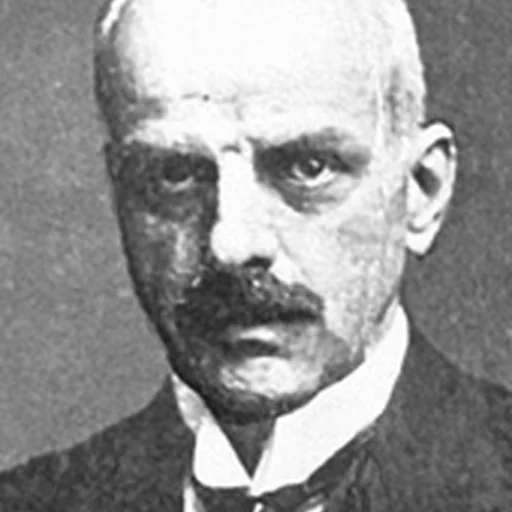
Maximilian Franz Viktor Zdenko Marie Kurzweil (12 October 1867, Bisenz – 9 May 1916, Vienna) was an Austrian painter and printmaker.