Artwork
Professor Max Eugen Hermann Dennstedt
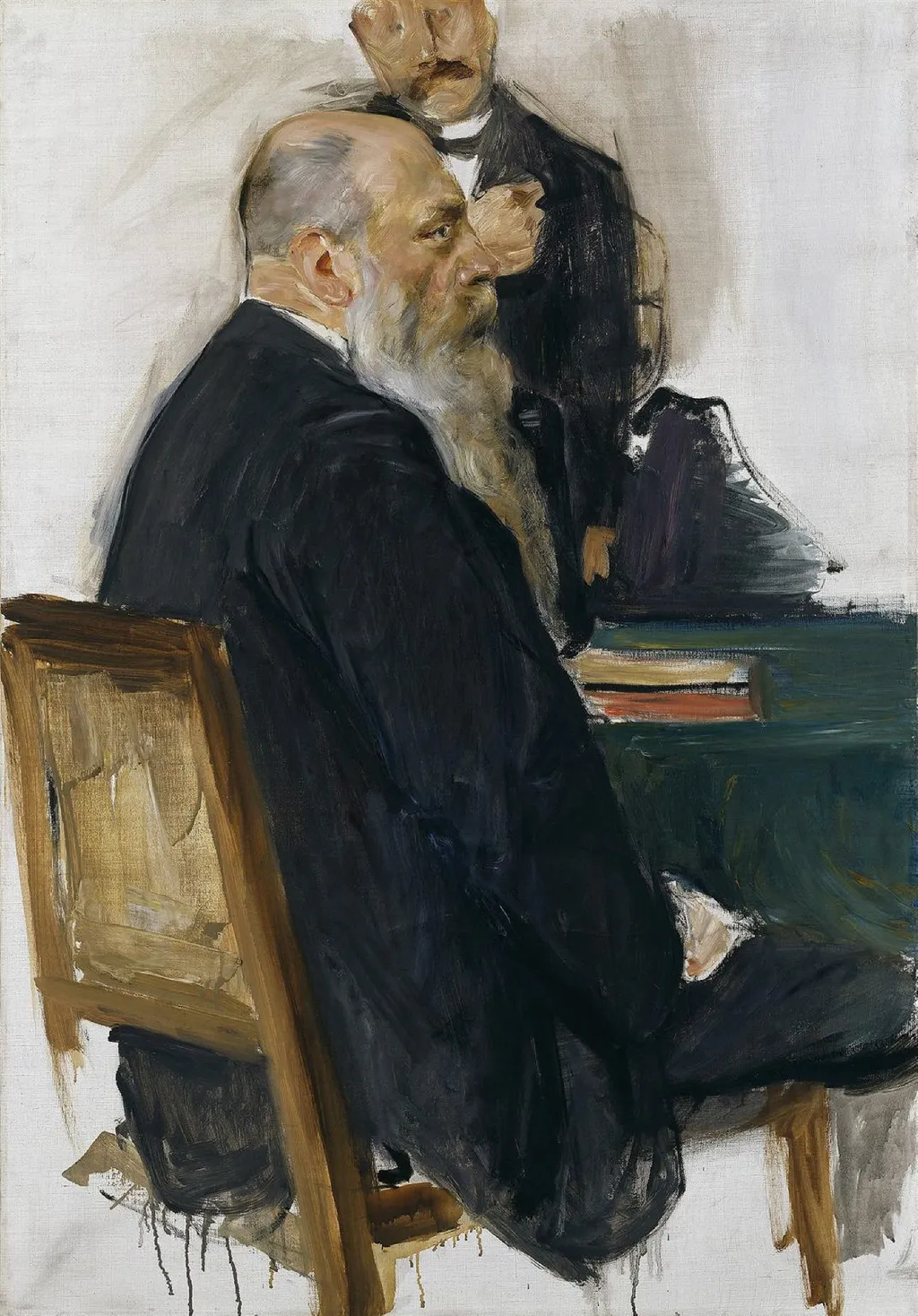
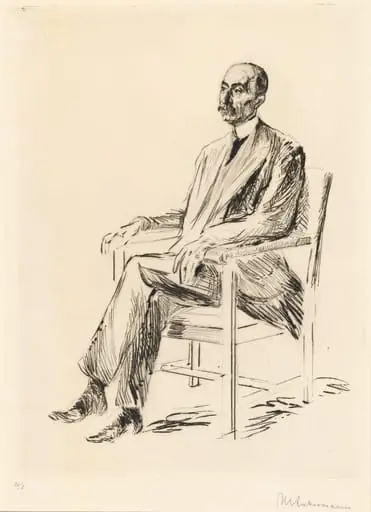
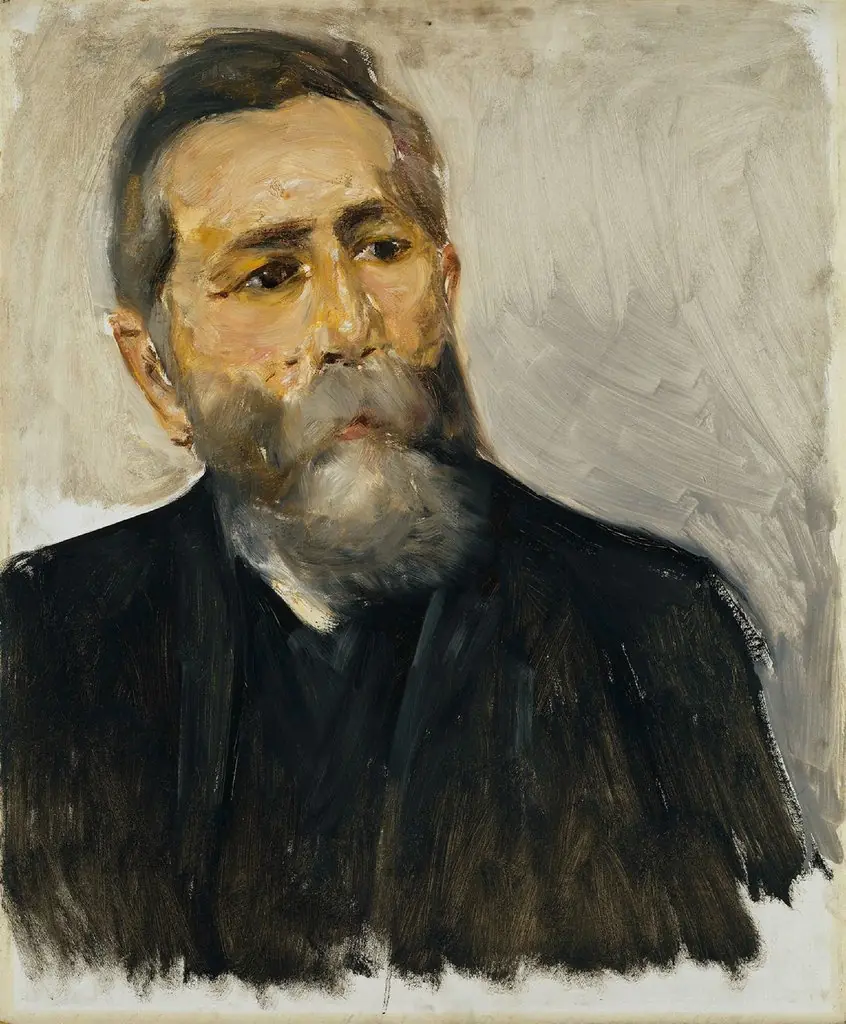
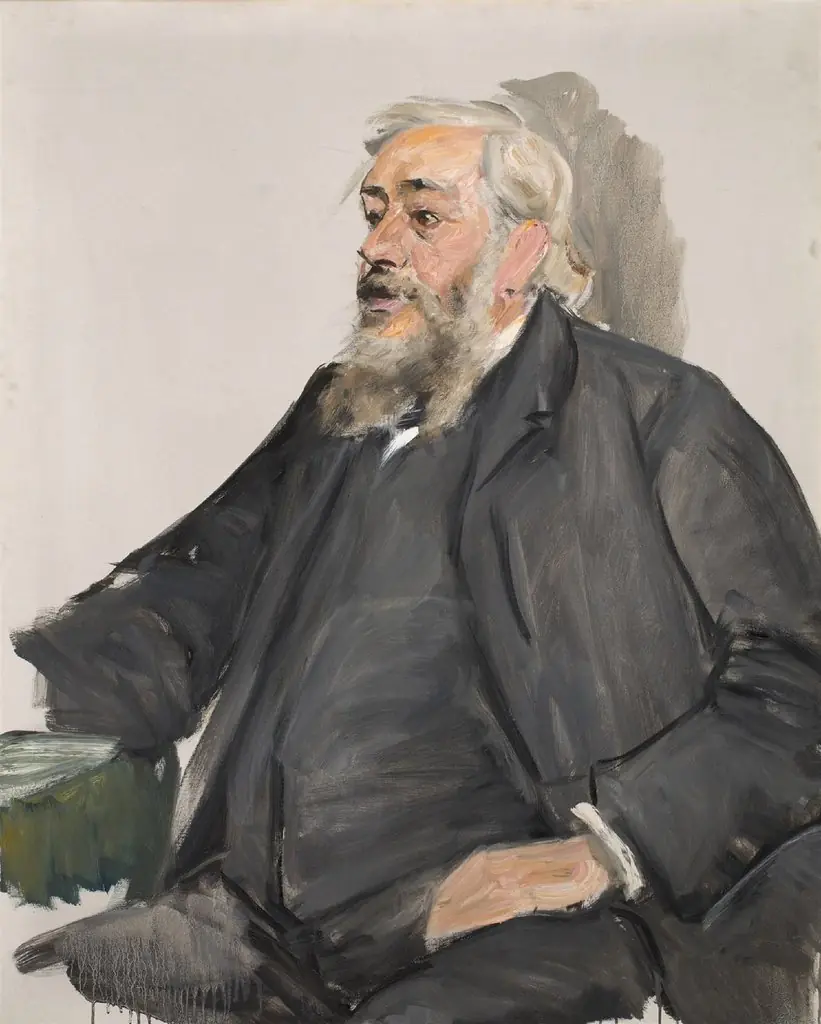
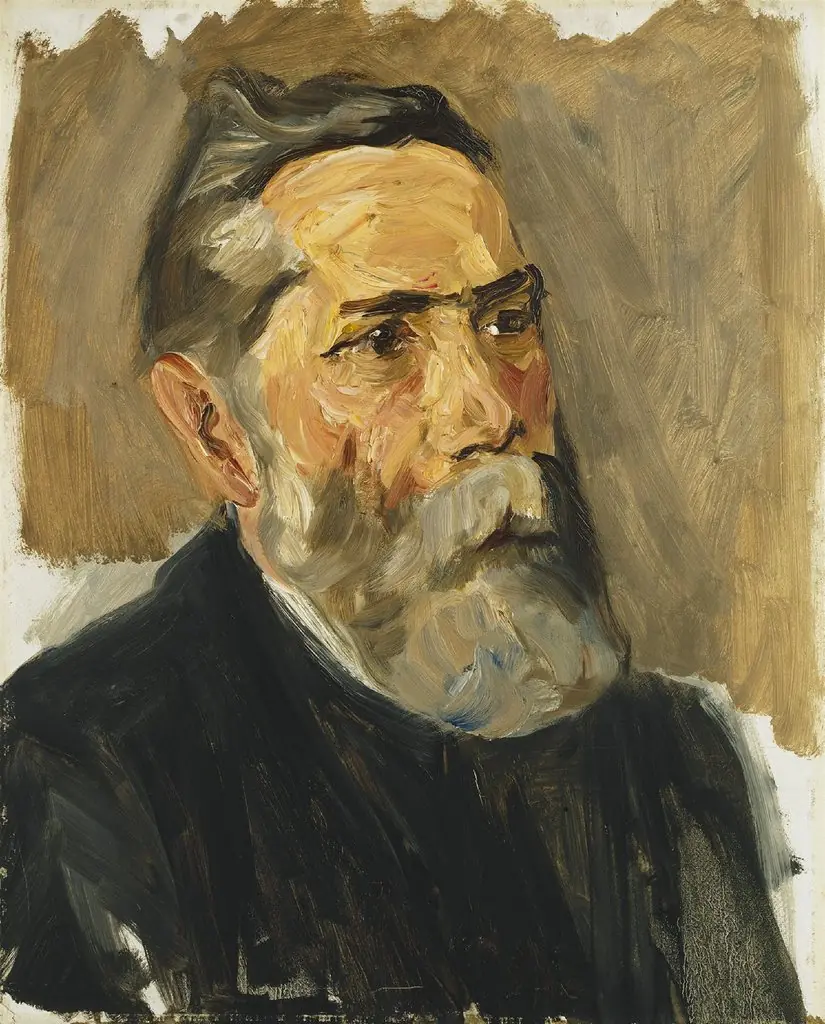
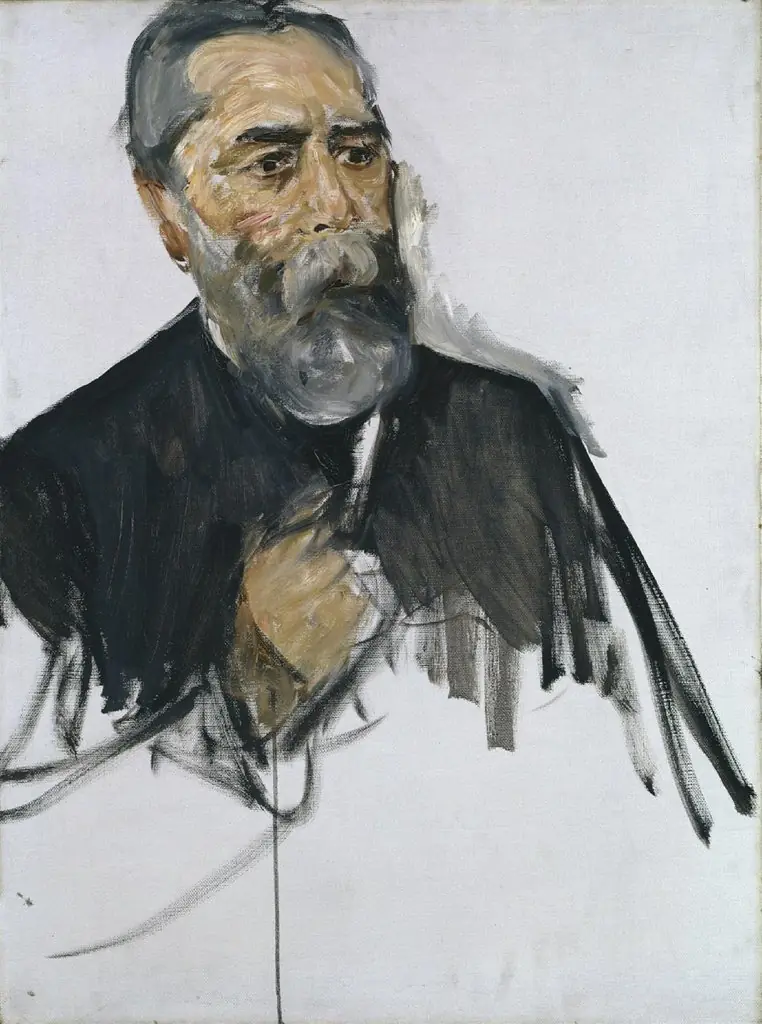
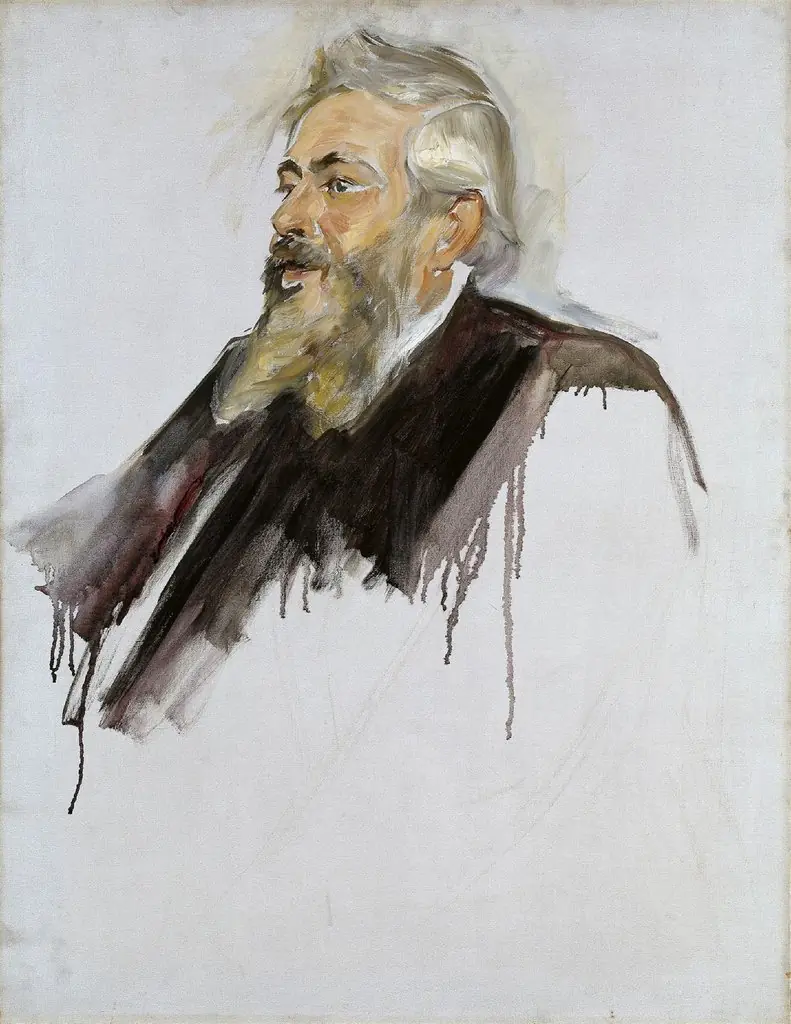
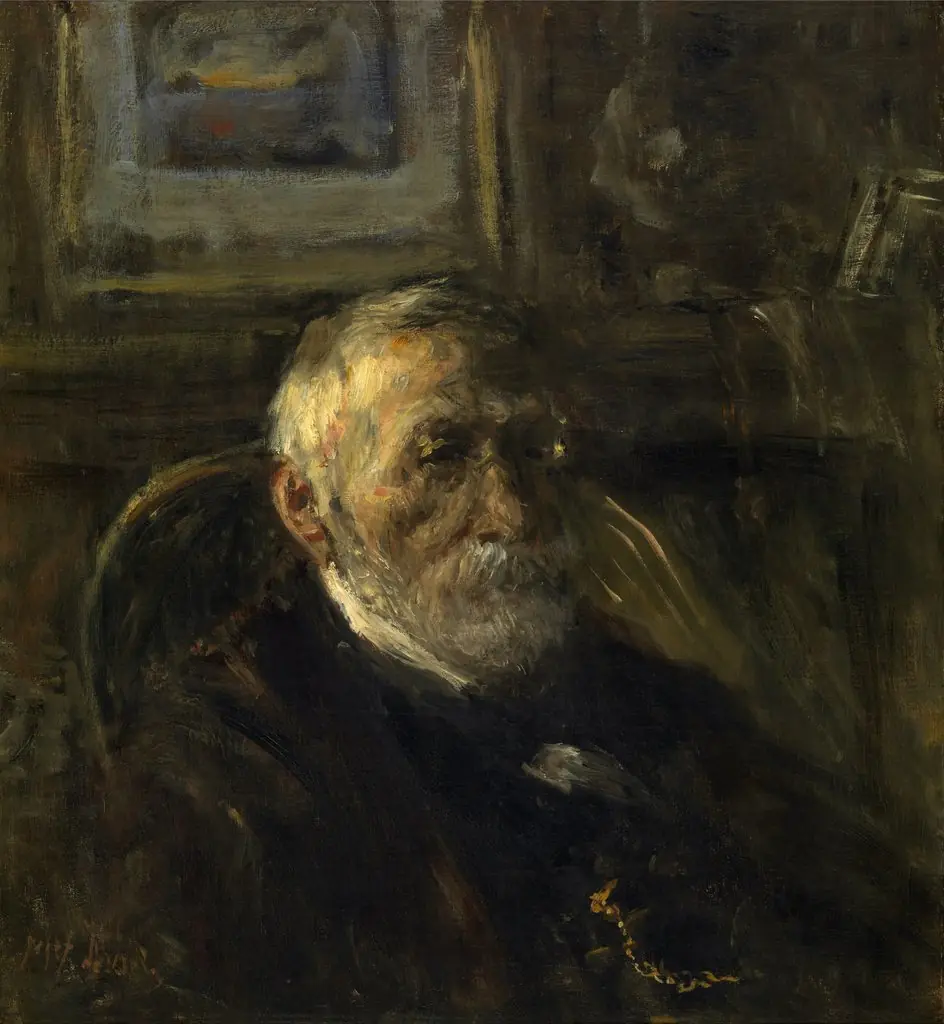
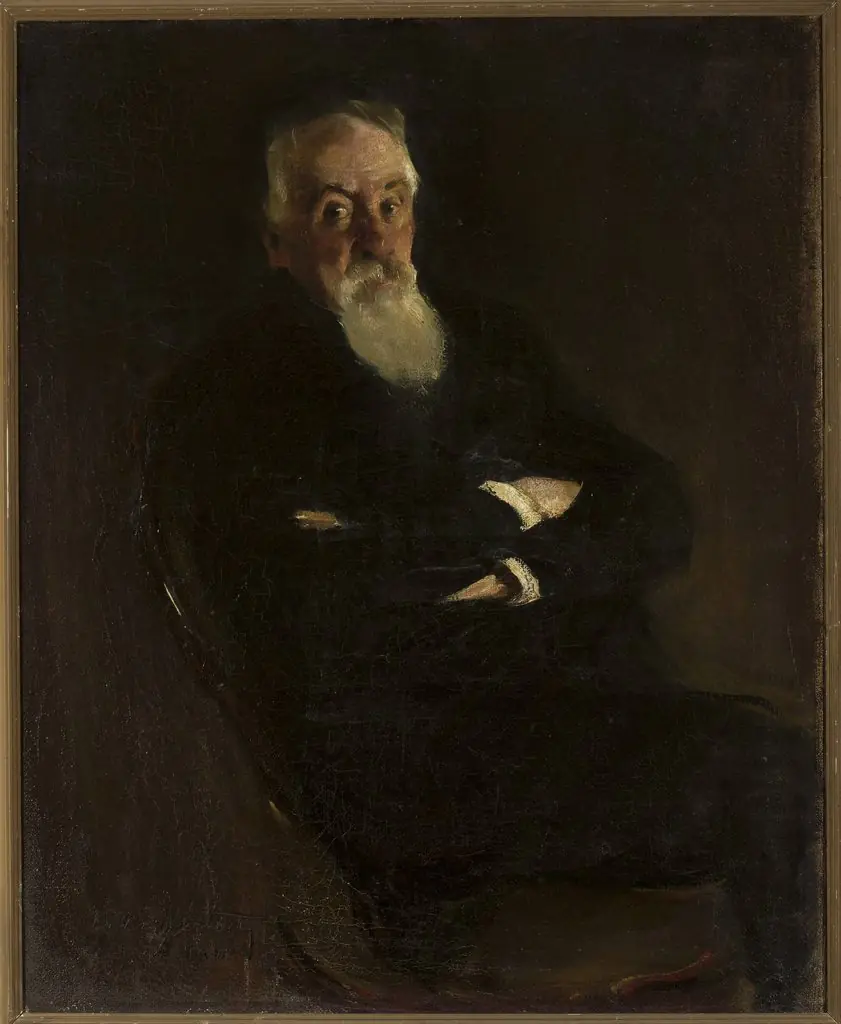
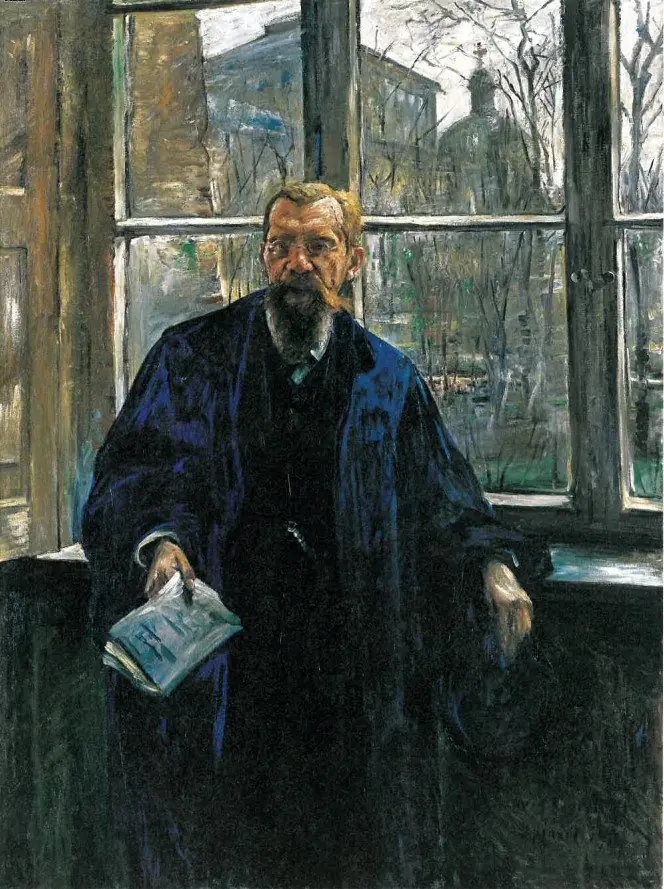
Professor Max Eugen Hermann Dennstedt is an oil painting by the Impressionist artist Max Liebermann. It dates from 1905 and is held in the collection of the Hamburger Kunsthalle.
About this work
Overview
Painted in 1905 by Max Liebermann, this portrait captures Professor Max Eugen Hermann Dennstedt in a quiet, intimate setting. Liebermann, a central figure in German Impressionism, rendered the scene with careful attention to natural light and texture. The work belongs to the Hamburger Kunsthalle’s collection and reflects his mature style—rooted in observation rather than idealization.
Subject & Meaning
The portrait shows Dennstedt seated at a desk, his white beard and formal attire suggesting academic authority. A second man stands behind him, possibly an assistant or colleague, adding a subtle layer of social context. The composition avoids theatricality, focusing instead on the dignity of everyday professional life, a recurring theme in Liebermann’s portraiture.
Technique & Style
Liebermann employed a restrained palette and loose brushwork to convey texture without overt detail. Chiaroscuro defines the figures’ forms against the plain white wall, enhancing spatial depth. The lighting falls naturally, modeling faces and fabric with soft contrasts. While rooted in realism, the handling of paint aligns with Impressionist concerns for atmosphere and immediacy.
History & Provenance
The painting entered the Hamburger Kunsthalle’s collection shortly after its completion. Liebermann, who maintained close ties with German academic and cultural circles, likely painted Dennstedt during a period of active portraiture. No record suggests the work changed hands before its institutional acquisition, indicating direct commission or donation.
Context
In early 20th-century Germany, portraiture served both personal and institutional functions. Liebermann, though associated with Impressionism, often depicted scholars and professionals, bridging modern technique with traditional subject matter. This work reflects a broader trend among artists to portray intellectual life with psychological nuance rather than ceremonial grandeur.
Legacy
The portrait remains a quiet example of Liebermann’s ability to merge observational realism with Impressionist sensitivity. It contributes to the understanding of how German artists adapted international styles to depict domestic, non-romanticized subjects. Though not widely exhibited, it endures as a representative work of his later portraiture.
Own this work as a print
Artist & collection
Artist
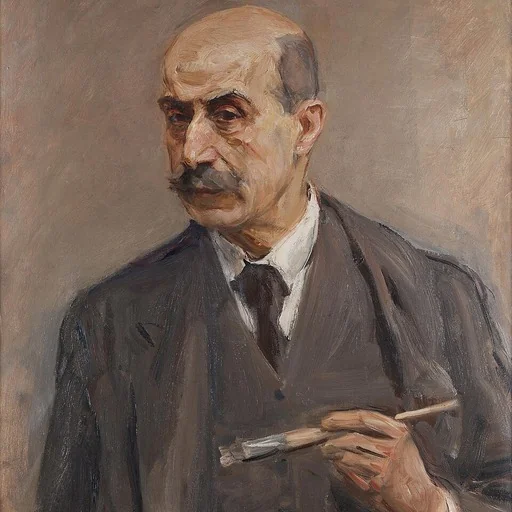
Max Liebermann (20 July 1847 – 8 February 1935) was a German painter and printmaker, and one of the leading proponents of Impressionism in Germany and continental Europe.