Artwork
The Terrace at the Hotel Louis C. Jacob in Nienstedten on the Elbe
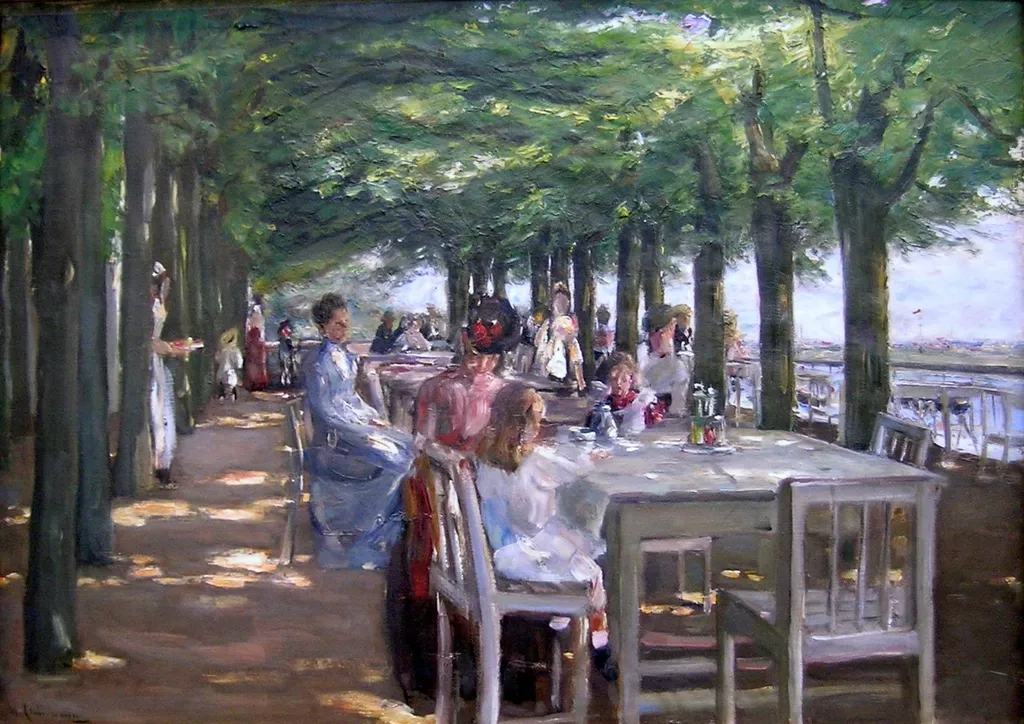
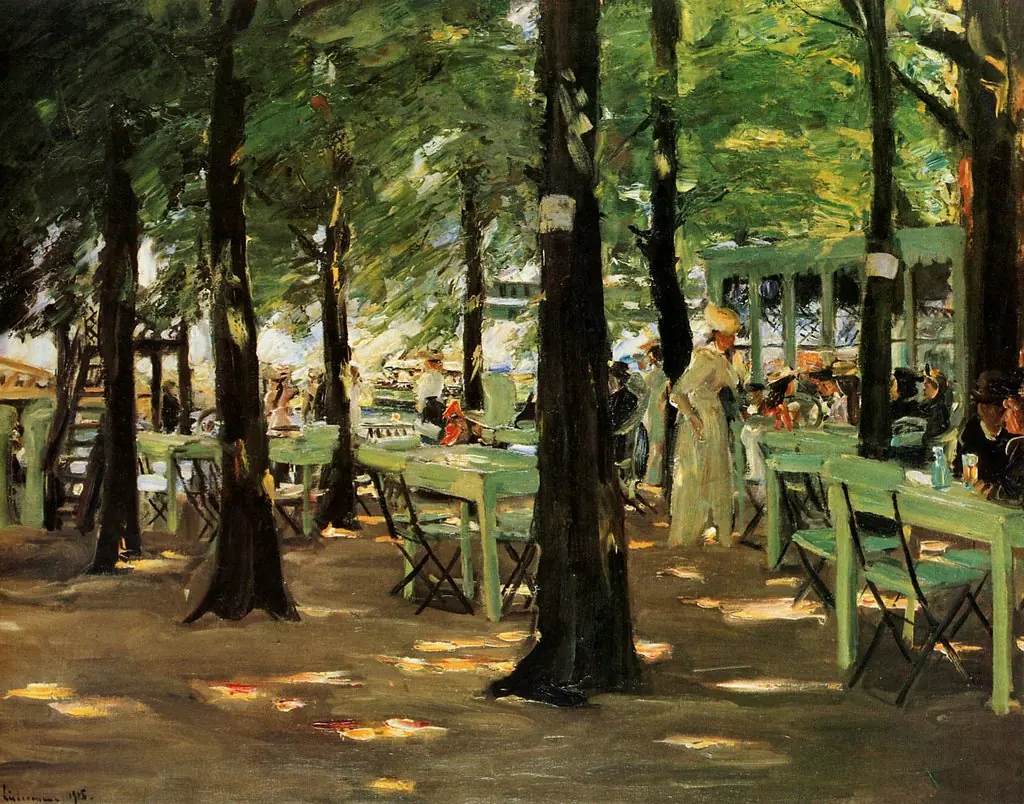
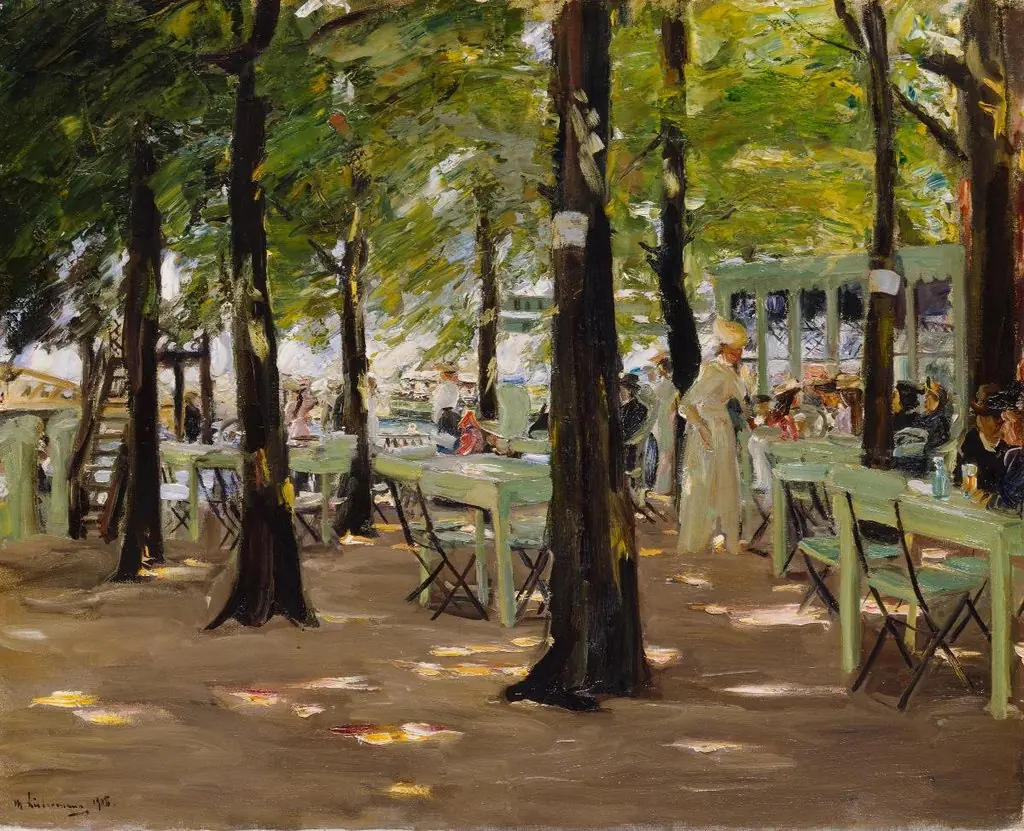
The Terrace at the Hotel Louis C. Jacob in Nienstedten on the Elbe is an oil painting by the Impressionist artist Max Liebermann. It dates from 1902 and is held in the collection of the Hamburger Kunsthalle.
About this work
Overview
Painted in 1902, this oil-on-canvas work by Max Liebermann captures a quiet afternoon on the terrace of a hotel along the Elbe River in Nienstedten. As a key figure in German Impressionism, Liebermann focused on everyday scenes of modern life, and this piece exemplifies his interest in light, leisure, and social observation. It remains part of the Hamburger Kunsthalle’s permanent collection.
Subject & Meaning
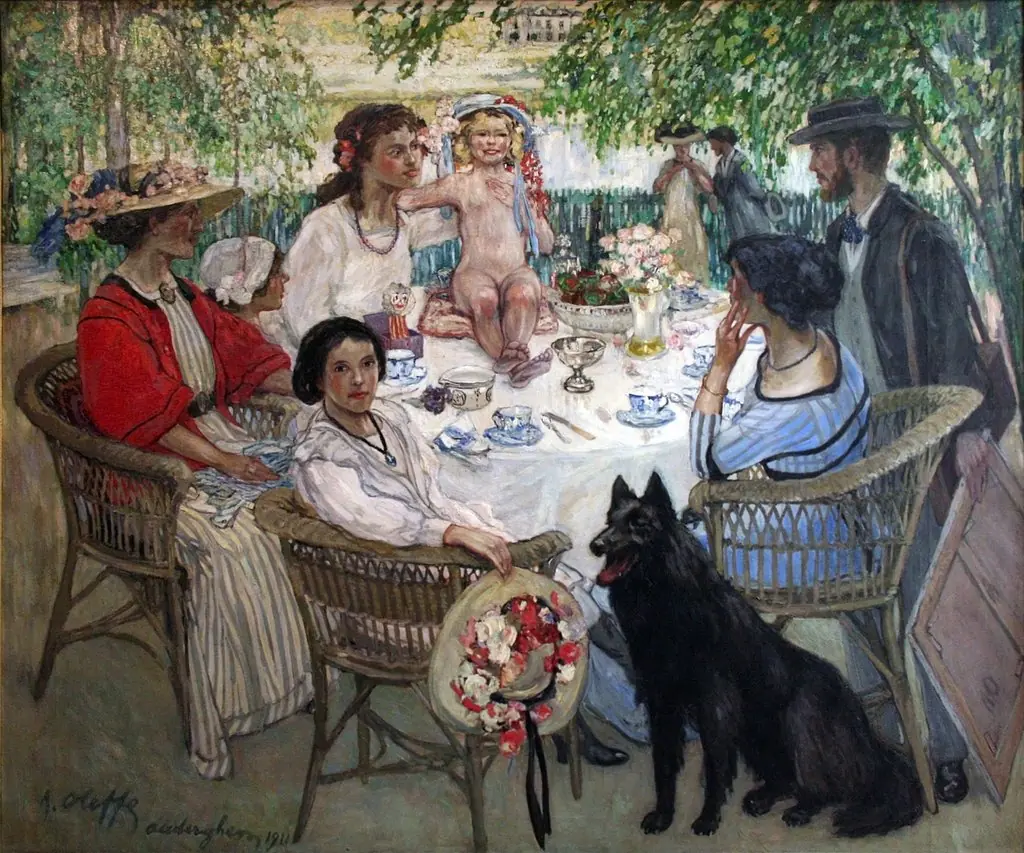
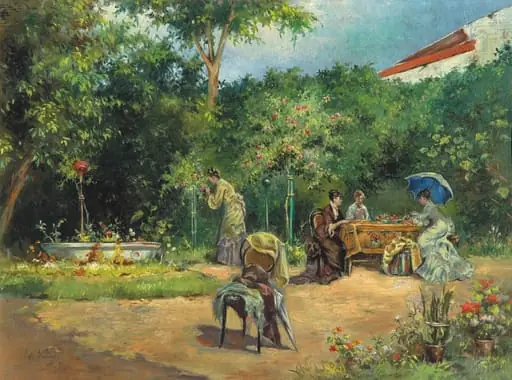
The scene portrays a group of well-dressed individuals relaxing at outdoor tables beneath shaded awnings. Their formal attire suggests a middle- or upper-class outing, while the calm posture and scattered activity convey a sense of tranquil routine. The river and distant boats frame the setting, reinforcing the connection between urban leisure and the natural landscape of the Elbe.
Technique & Style
Strong contrasts between bright highlights and deep shadows define the figures and surfaces, emphasizing the play of natural light.
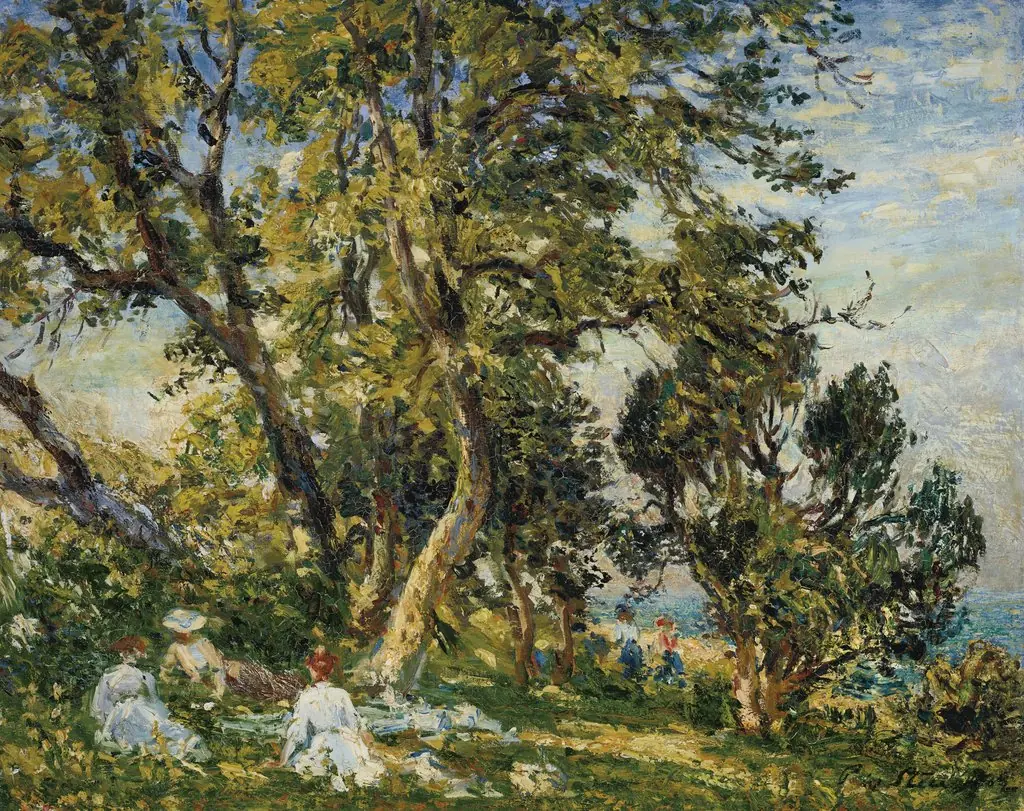
Liebermann employed loose, deliberate brushwork to render sunlight filtering through trees onto the terrace. Strong contrasts between bright highlights and deep shadows define the figures and surfaces, emphasizing the play of natural light. The white tablecloths and fabric folds are rendered with clarity, yet the background dissolves into atmospheric tones, typical of Impressionist spatial handling.
History & Provenance
Created during Liebermann’s mature period, the painting reflects his established style after years of study in Weimar, Paris, and the Netherlands. It was acquired by the Hamburger Kunsthalle in the early 20th century and has remained in its collection since, representing a significant example of German Impressionist genre painting from the pre-war era.
Context
In early 20th-century Germany, outdoor terraces along rivers like the Elbe became popular retreats for urban dwellers seeking respite from city life. Liebermann’s depiction aligns with broader cultural trends of bourgeois recreation and the growing appreciation for plein air painting, influenced by French Impressionism but adapted to German social settings.
Legacy
The painting contributes to Liebermann’s reputation as a chronicler of modern German life. While not as widely exhibited as some of his other works, it remains a quiet testament to his ability to translate ordinary moments into compositions defined by light and social nuance, influencing later generations of German realist and impressionist painters.
Artist & collection
Artist
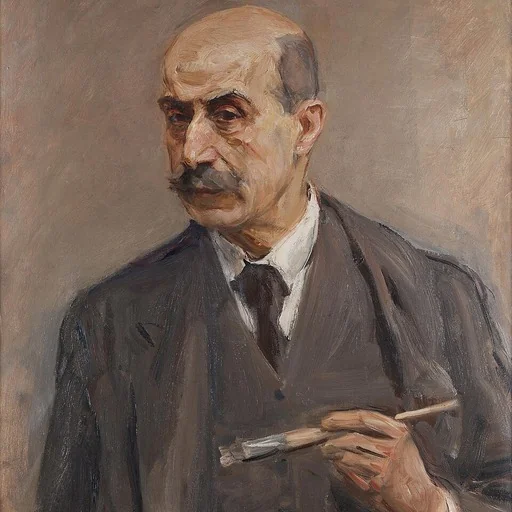
Max Liebermann (20 July 1847 – 8 February 1935) was a German painter and printmaker, and one of the leading proponents of Impressionism in Germany and continental Europe.