Artwork
Untitled
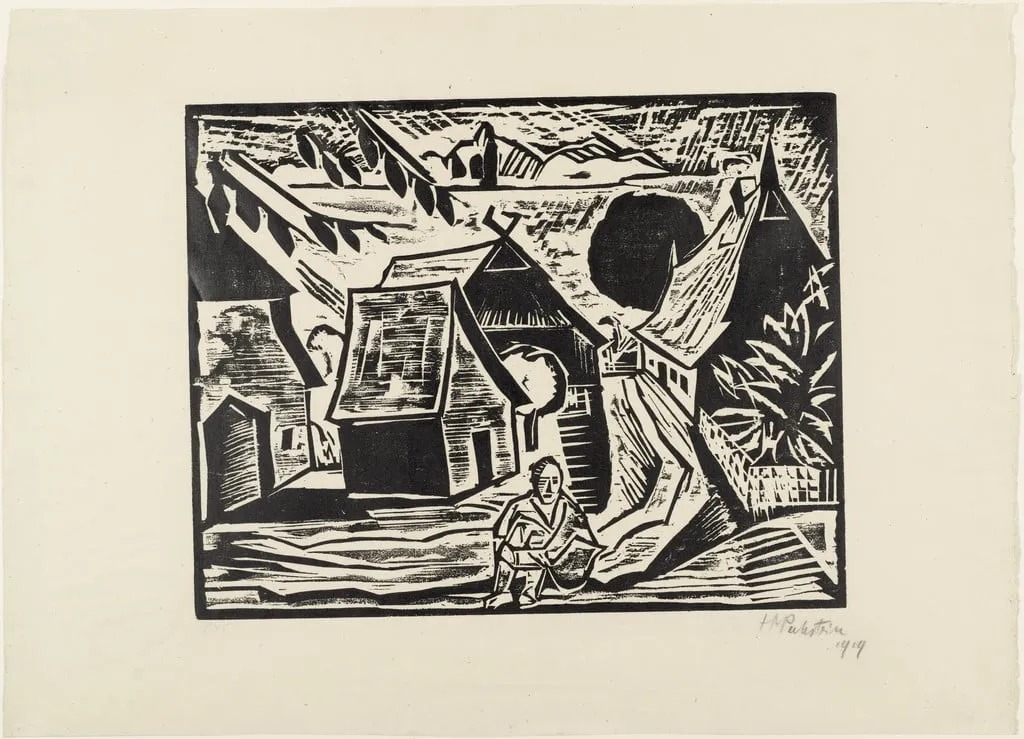
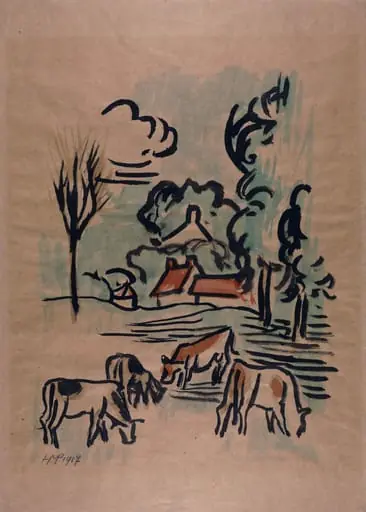
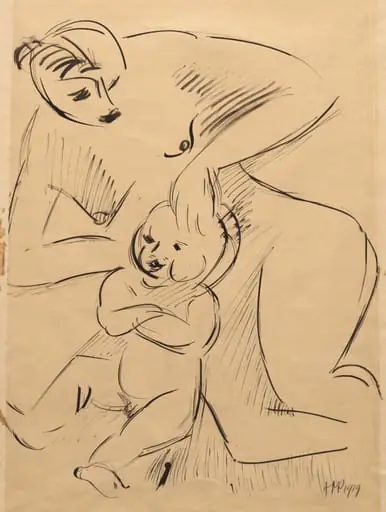
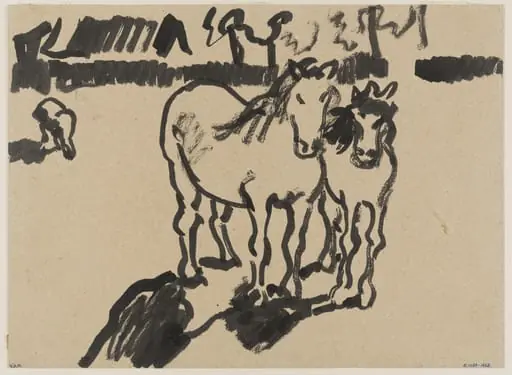
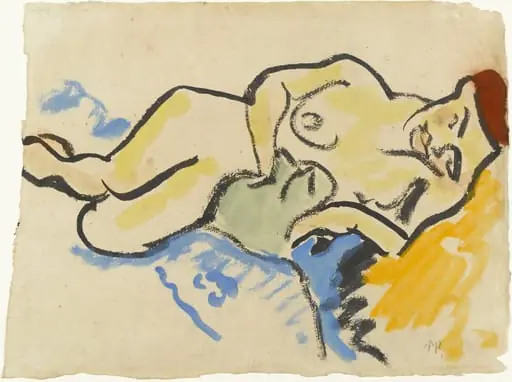
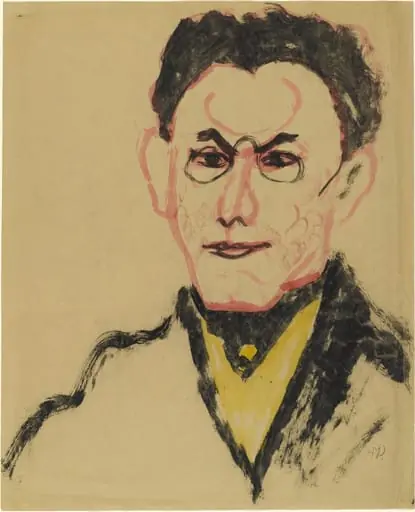
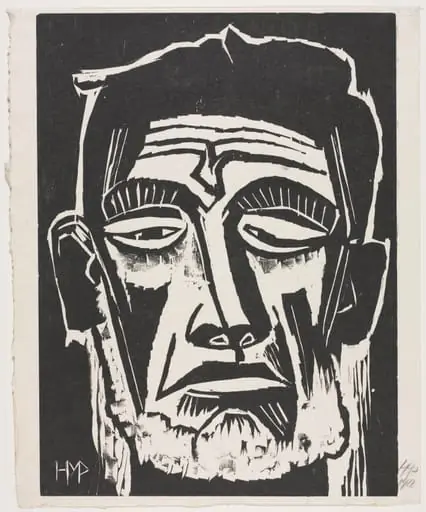
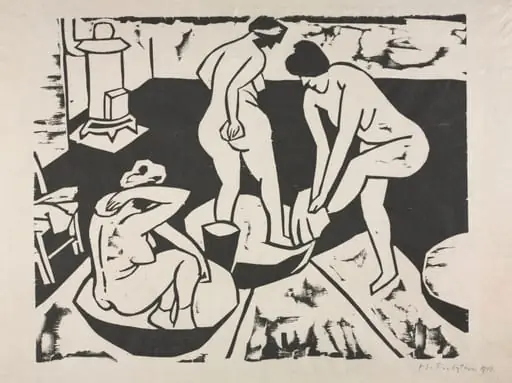
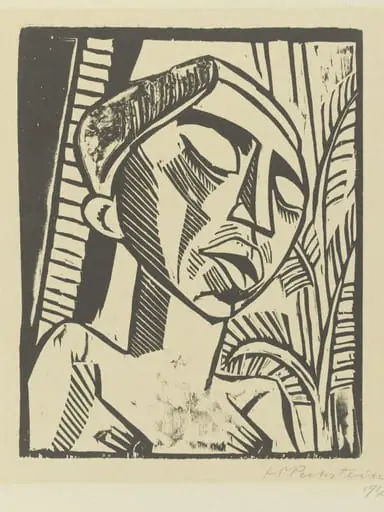
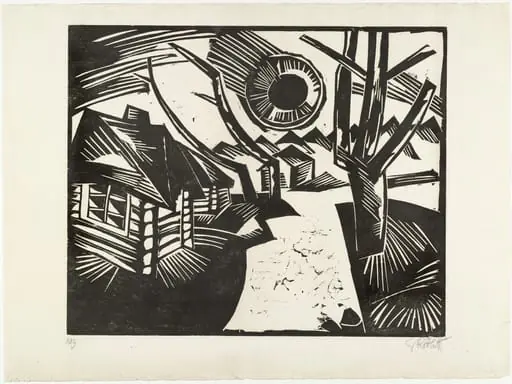
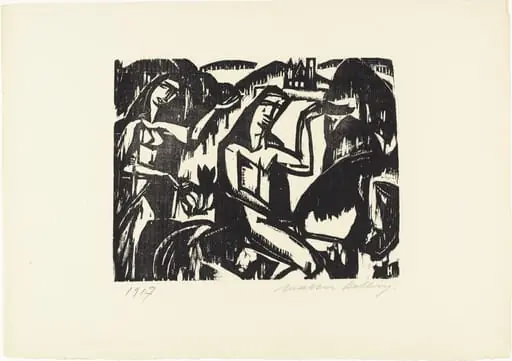
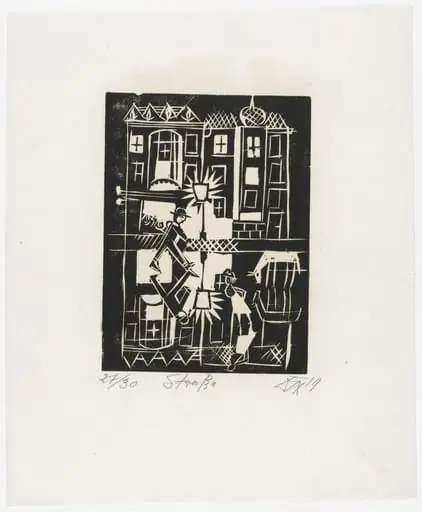
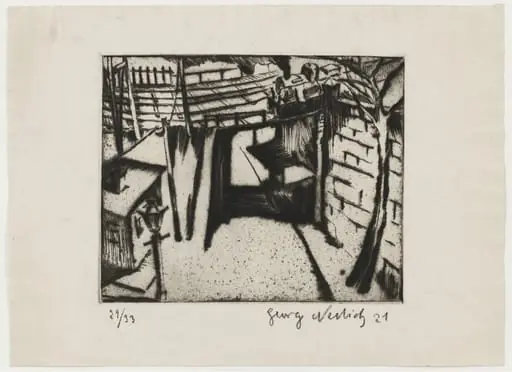
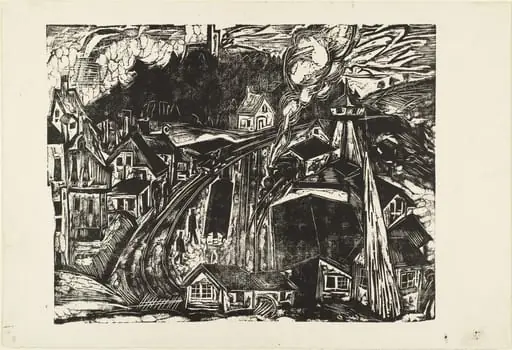
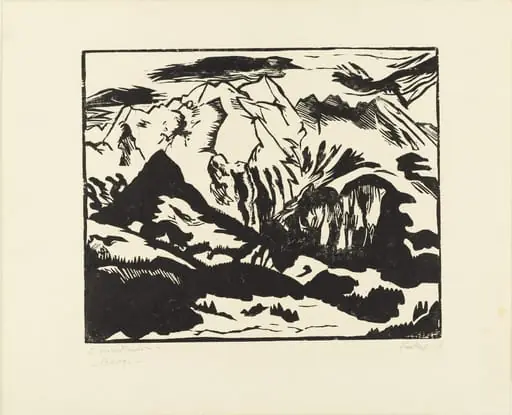
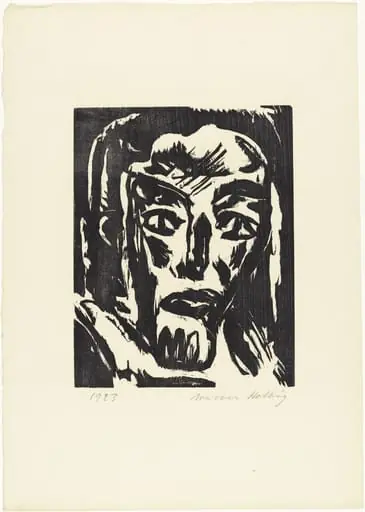
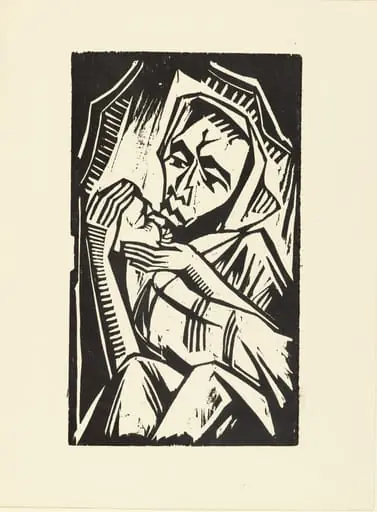
Untitled is an ink print by Max Pechstein. It dates from 1919 and is held in the collection of the Museum of Modern Art.
About this work
Overview
As a member of Die Brücke, Pechstein embraced the medium’s raw potential, using carved woodblocks to generate stark, graphic compositions.
Created in 1919, this woodcut by Max Pechstein belongs to a series of prints produced during a period of intense personal and societal transformation in Germany. As a member of Die Brücke, Pechstein embraced the medium’s raw potential, using carved woodblocks to generate stark, graphic compositions. The work’s monochromatic palette and textured surface reflect the artist’s commitment to expressive form over naturalistic detail.
Subject & Meaning
The composition centers on a solitary figure, likely a woman, dressed in a long garment, positioned before a cluster of dwellings. The figure’s stillness contrasts with the angular, repetitive architecture behind her, suggesting a tension between individual presence and the encroaching built environment. The large circular form in the sky—possibly sun or moon—adds a symbolic weight, evoking cycles of time or emotional states without literal clarity.
Technique & Style
Pechstein employed traditional woodcut methods, carving directly into the block to create bold, unmodulated black shapes against the cream paper. The visible grain and irregular incisions give the image a tactile, hand-wrought quality. Lines are deliberately uneven, emphasizing movement and emotional intensity over precision. This approach aligns with Die Brücke’s rejection of academic refinement in favor of visceral, direct expression.
History & Provenance
Produced shortly after World War I, the work emerged from a time when Pechstein, like many artists, grappled with trauma and societal upheaval. By the 1930s, his art was condemned by the Nazi regime as *Degenerate Art* and removed from public collections. The print later entered The Museum of Modern Art’s holdings, where it remains as part of a broader effort to preserve suppressed modernist voices.
Context
In postwar Germany, woodcut experienced a revival among Expressionists seeking a visual language that could convey inner turmoil and social critique. Pechstein’s work participated in this movement, drawing from folk art and non-Western sources while rejecting traditional perspective. The medium’s accessibility and immediacy made it ideal for artists challenging the cultural status quo during a period of political instability.
Legacy
Pechstein’s woodcuts, including this untitled work, helped redefine printmaking as a vehicle for emotional and political expression in early 20th-century Europe. Though marginalized under Nazism, his prints gained renewed scholarly attention after 1945. Today, they stand as key examples of how print techniques were adapted to convey psychological depth and social observation beyond conventional painting.
Artist & collection
Artist
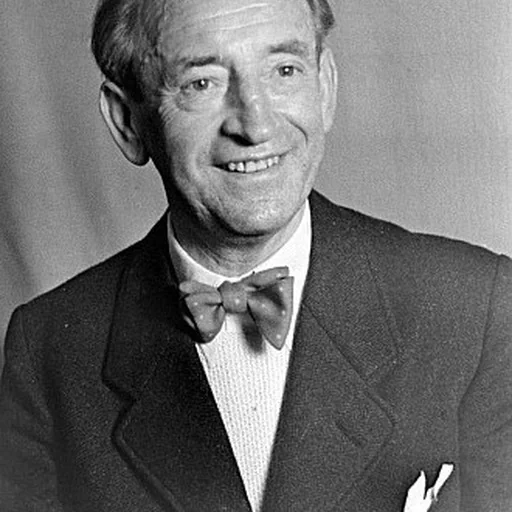
Hermann Max Pechstein (German pronunciation: ; 31 December 1881 – 29 June 1955) was a German expressionist painter and printmaker and a member of the Die Brücke group.