Artwork
Untitled
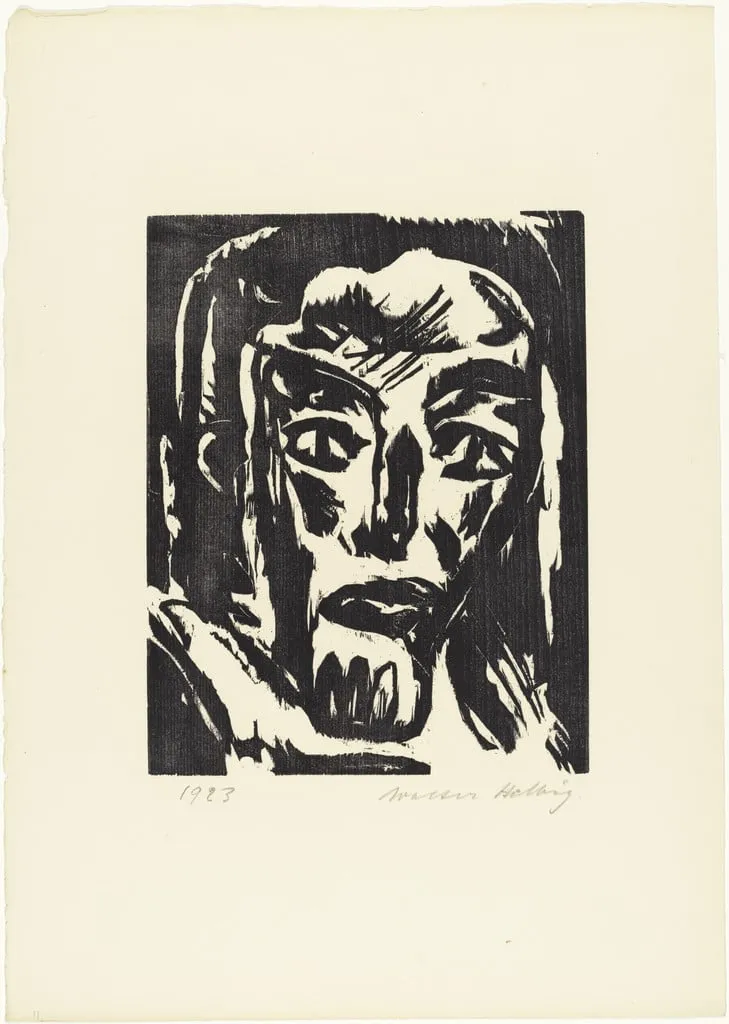
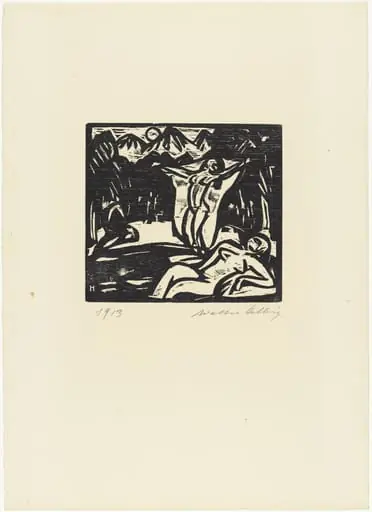
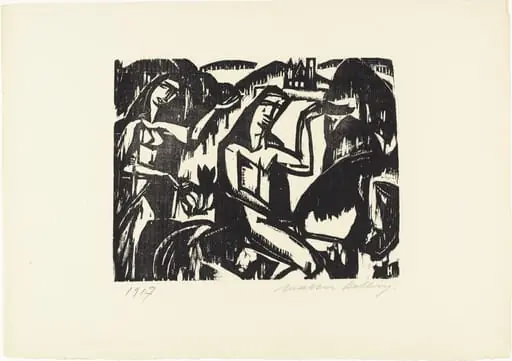
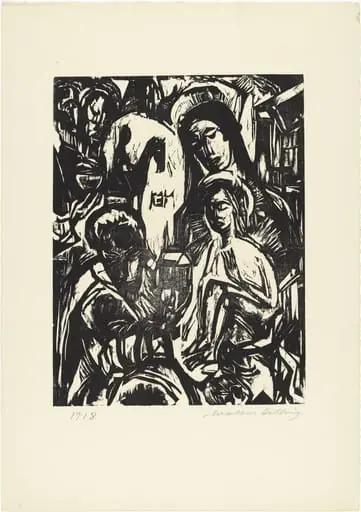
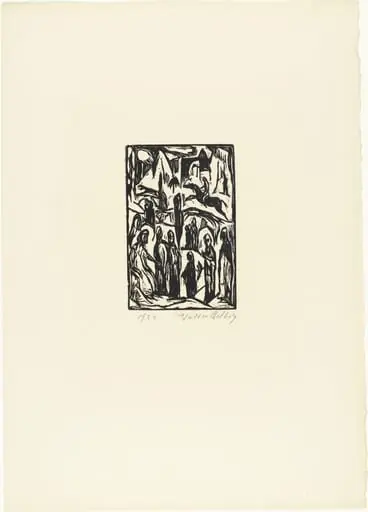
Untitled is an ink print by Walter Helbig. It dates from 1923 and is held in the collection of the Museum of Modern Art.
About this work
Overview
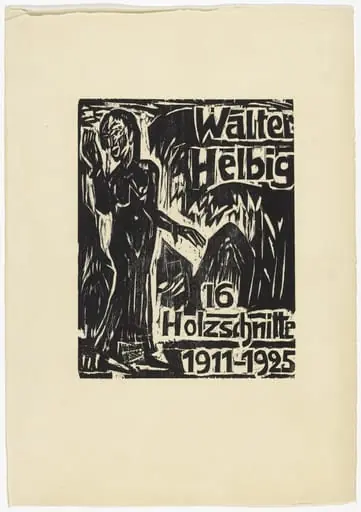
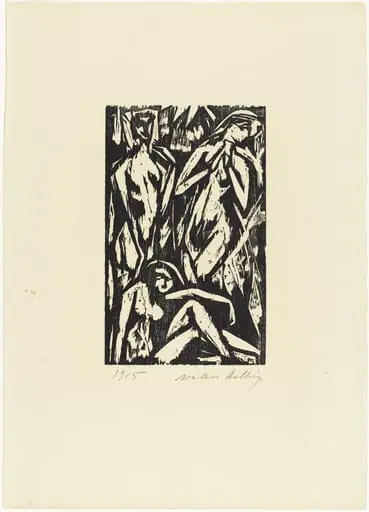
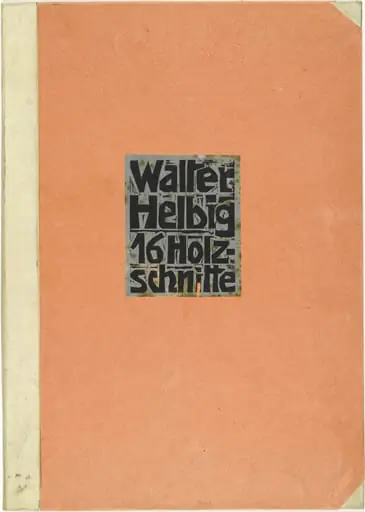
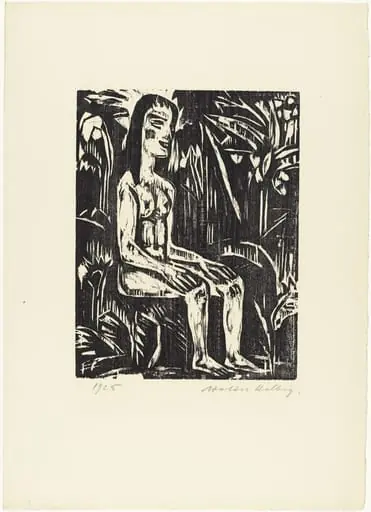
Created in 1923, this woodcut is one of sixteen prints in a portfolio by Walter Helbig. It is part of a larger set that includes a title page, table of contents, cover, and colophon, all produced using the same technique. The work is held in the collection of The Museum of Modern Art, where it represents early 20th-century German printmaking traditions rooted in direct, hand-carved imagery.
Subject & Meaning
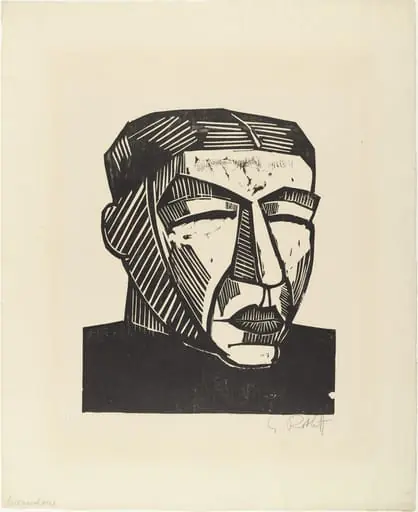
Features such as a prominent mustache, deep-set eyes, and a rigid jaw suggest a figure marked by endurance or introspection.
The image depicts a male face rendered in stark black and white, gazing directly outward. Features such as a prominent mustache, deep-set eyes, and a rigid jaw suggest a figure marked by endurance or introspection. The absence of contextual details focuses attention on the face alone, inviting interpretation as a study of character or psychological presence rather than a portrait of a specific individual.
Technique & Style
Executed as a woodcut, the image was formed by carving lines into a wooden block, then inking and pressing it onto paper. The bold, irregular strokes reflect the physicality of the carving tool, with no attempt to soften or blend edges. This direct method emphasizes texture and contrast, aligning with Expressionist tendencies that valued raw, unrefined mark-making over naturalistic detail.
History & Provenance
The woodcut was produced in 1923 as part of a limited portfolio, likely intended for distribution among collectors or fellow artists. It entered the collection of The Museum of Modern Art in the decades following its creation, where it remains as an example of interwar German printmaking. Its inclusion in a cohesive set suggests the artist viewed the portfolio as a unified artistic statement.
Context
Produced in post-World War I Germany, the work reflects a broader interest among artists in returning to handcrafted methods as a reaction against industrialization and academic conventions. Woodcut, with its historical ties to religious and political broadsheets, offered a means of expressive immediacy. Helbig’s approach aligns with contemporaries who sought emotional intensity through simplified, forceful forms.
Legacy
Though not widely known outside specialized circles, Helbig’s portfolio contributes to the understanding of early modernist printmaking in Germany. The work’s emphasis on material process and emotional directness influenced later generations of printmakers who valued the integrity of the carved surface. Its preservation in MoMA ensures its place in the documented evolution of 20th-century print media.
Artist & collection