Artwork
Old Quarter of Amsterdam
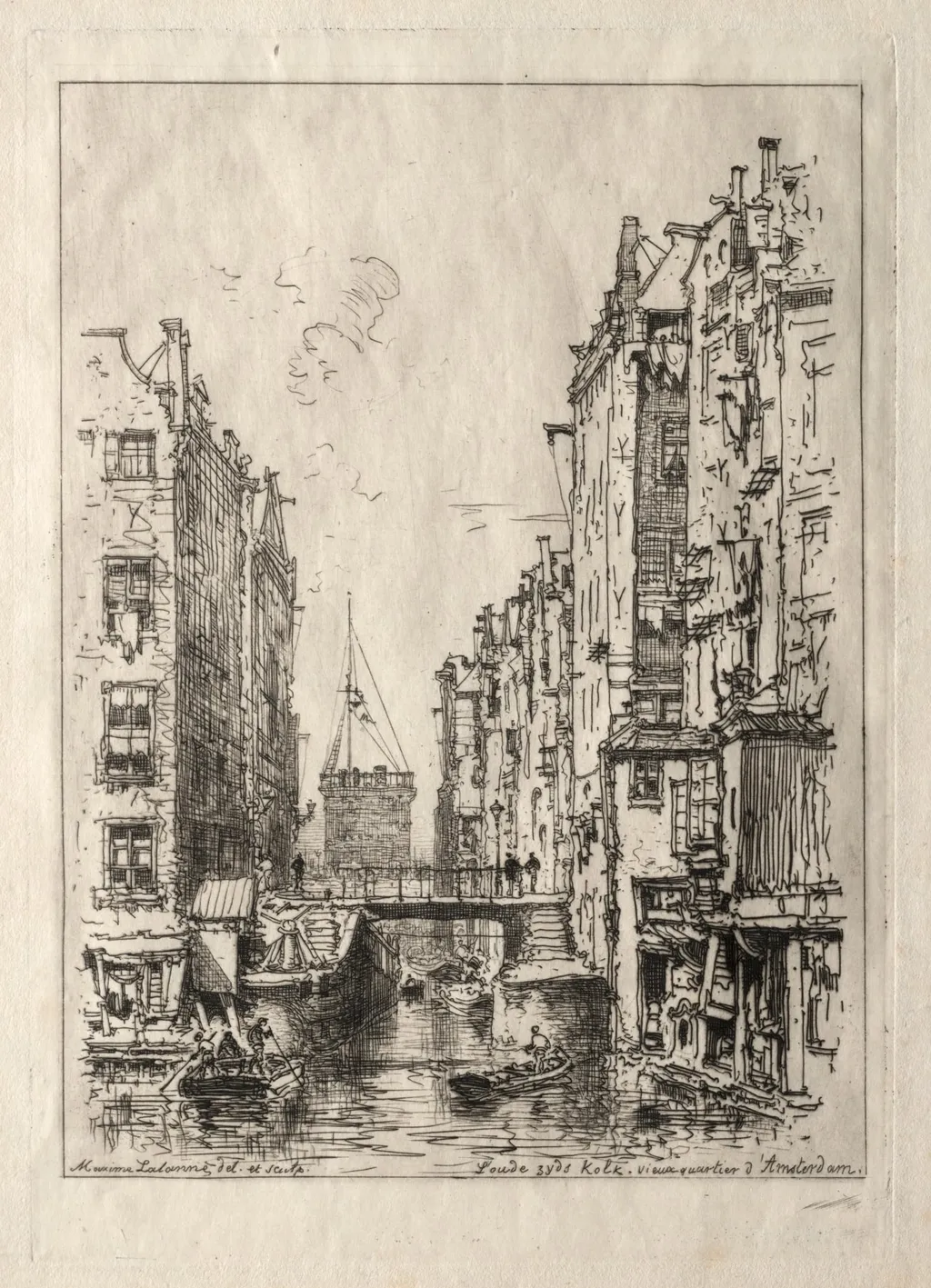
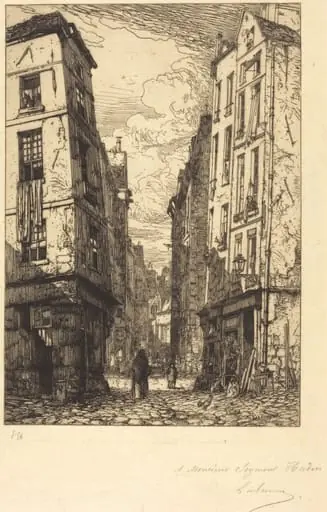
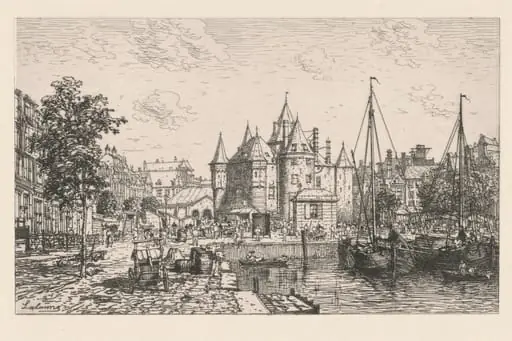
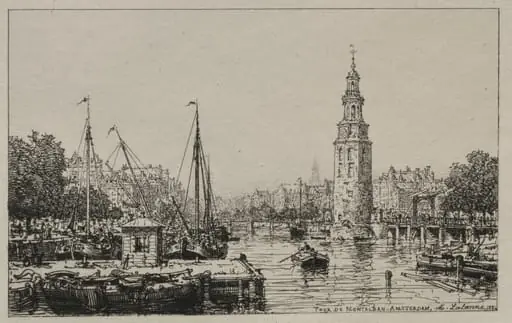
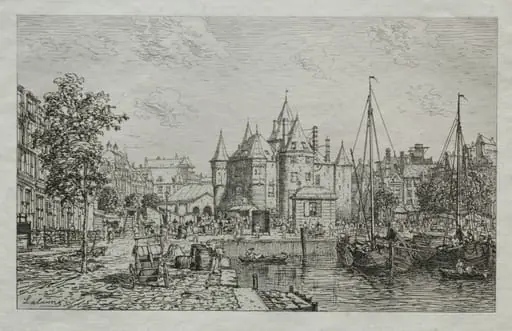
Old Quarter of Amsterdam is a print by the Impressionist artist Maxime Lalanne. It dates from 1881 and is held in the collection of the Cleveland Museum of Art.
About this work
Overview
Lalanne’s approach reflects his broader interest in capturing transient urban scenes through direct, spontaneous mark-making.
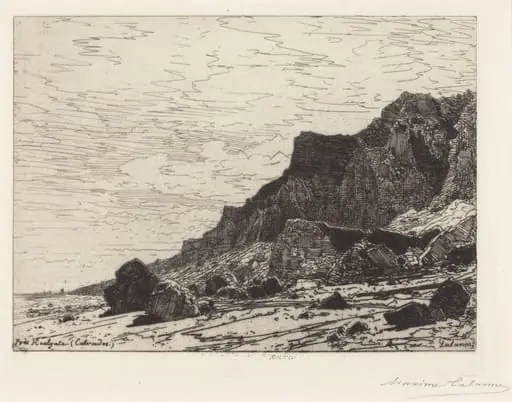
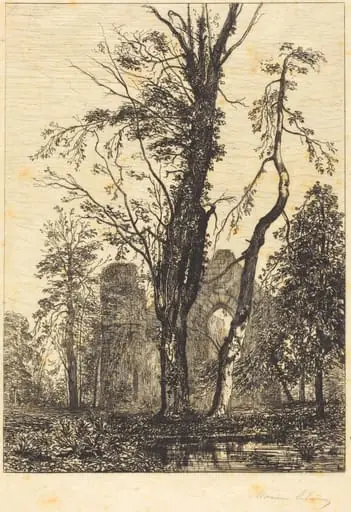
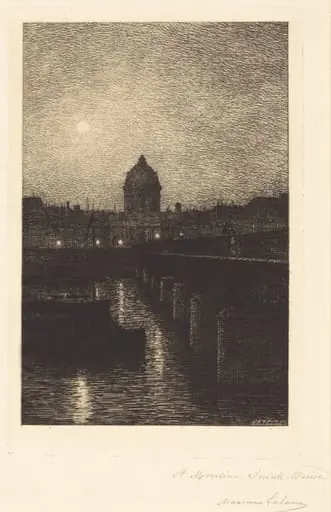
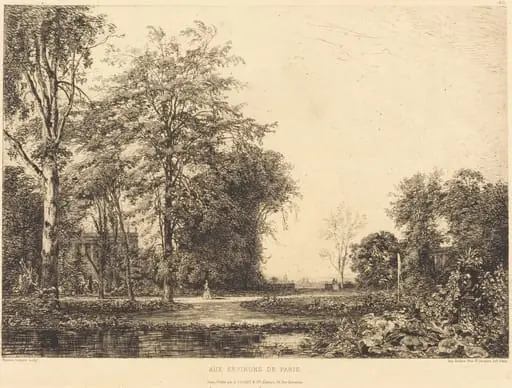
Created in 1881 by French artist Maxime Lalanne, this etching captures a quiet moment in Amsterdam’s urban landscape. Executed in ink on paper, the work belongs to The Cleveland Museum of Art’s print collection. Unlike formal cityscapes, it presents an unpolished, observational view of daily life, emphasizing atmosphere over detail. Lalanne’s approach reflects his broader interest in capturing transient urban scenes through direct, spontaneous mark-making.
Subject & Meaning
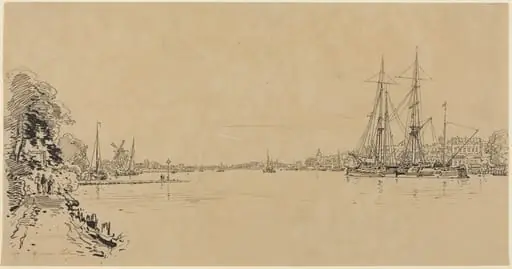
The scene depicts a narrow canal lined with tall, closely spaced buildings, their reflections shimmering on the water. Figures move along the embankment and pause on a bridge, while small boats drift lazily. No single event dominates; instead, the composition conveys the rhythm of ordinary life. Lalanne avoids theatricality, choosing to document the quiet persistence of urban routines in a working port city.
Technique & Style
Lalanne employed etching to achieve a loose, sketch-like quality, using rapid, fluid lines and dense cross-hatching to suggest shadow and volume. The inkwork is deliberately unfinished, with areas left sparse to imply light and air. This method prioritizes immediacy and mood over precision, aligning with 19th-century artistic trends that valued the artist’s hand and the authenticity of the observational sketch.
History & Provenance
The print entered The Cleveland Museum of Art’s collection through established channels of European print acquisition in the early 20th century. Lalanne’s reputation as a printmaker, particularly in France, ensured his works circulated among collectors and institutions. While the exact provenance prior to the museum’s acquisition is not fully documented, its presence in the collection reflects broader interest in French graphic art of the period.
Context
In the late 19th century, artists across Europe turned to urban scenes as subjects worthy of serious attention. Lalanne, influenced by the Barbizon school and Japanese prints, rejected idealized views in favor of unembellished glimpses of daily life. His depictions of Amsterdam, like those of Parisian streets, reflect a growing fascination with the authenticity of the modern city, captured not as spectacle but as lived experience.
Legacy
Lalanne’s etchings, including this one, contributed to the revival of etching as a medium for personal expression rather than reproduction. His emphasis on spontaneity and atmospheric effect influenced later generations of printmakers who sought to capture fleeting moments with minimal, evocative marks. Though not widely known today, his work remains a quiet testament to the value of observational drawing in an age of rapid industrial change.
Artist & collection
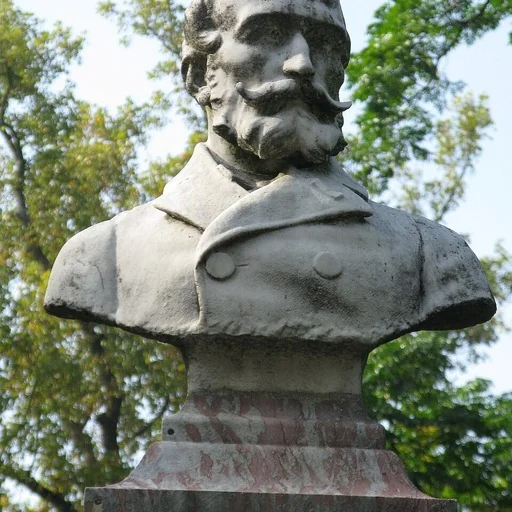
Artist
François Antoine Maxime Lalanne (November 27, 1827 – July 29, 1886) was a French artist known for his etchings and charcoal drawings (fusain).