Artwork
The Wagg-Poids, Amsterdam
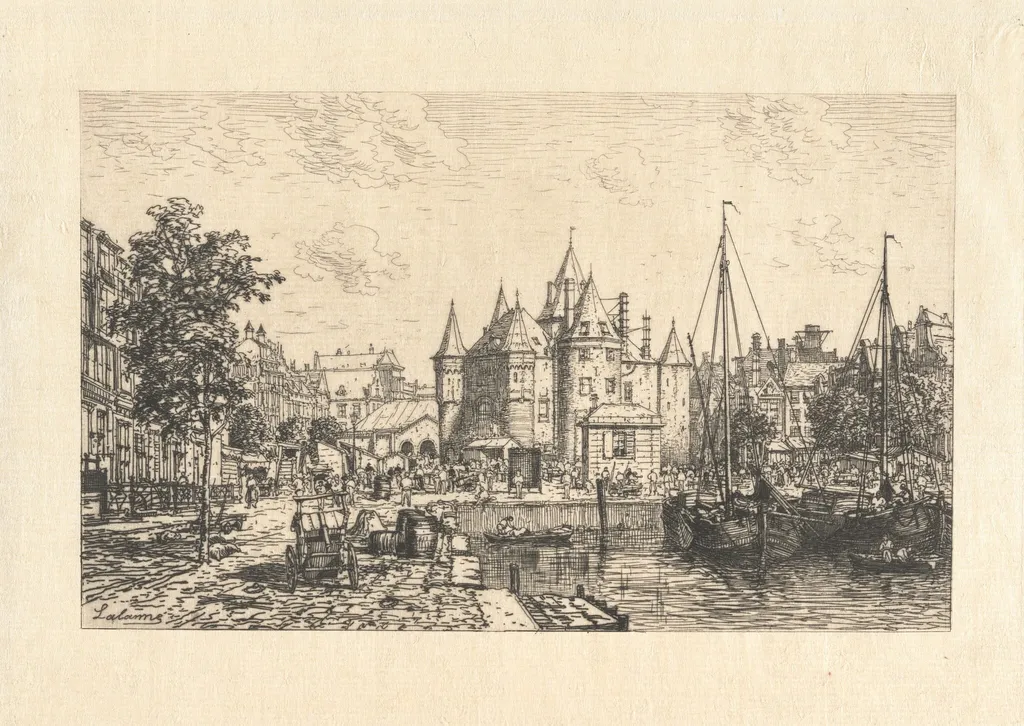
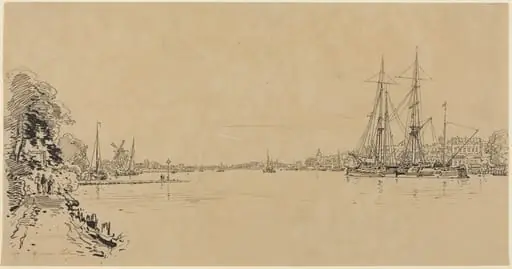
The Wagg-Poids, Amsterdam is an ink print by the Impressionist artist Maxime Lalanne. It dates from 1879 and is held in the collection of the National Gallery of Art.
About this work
Overview
His focus on urban life and atmospheric detail reflects his broader interest in capturing everyday scenes with precision and nuance.
Created in 1879 by French artist Maxime Lalanne, *The Wagg-Poids, Amsterdam* is an etching on laid paper depicting a bustling riverside locale in the Dutch city. The work is part of the National Gallery of Art’s collection in Washington, D.C., and exemplifies Lalanne’s mastery of the etching technique. His focus on urban life and atmospheric detail reflects his broader interest in capturing everyday scenes with precision and nuance.
Subject & Meaning
The scene portrays a lively waterfront in Amsterdam, with figures engaged in casual activities—walking, conversing, resting—alongside docked vessels and modest market stalls. The architecture, marked by tall, gabled buildings, anchors the composition in a recognizable urban context. Rather than idealizing the setting, Lalanne presents it as a lived-in space, emphasizing the rhythm of daily life without overt narrative or symbolism.
Technique & Style
Lalanne employed fine, controlled etching lines to render textures and movement, from the folds of clothing to the grain of wooden docks. Delicate cross-hatching and varied line weight create subtle gradations of light and shadow, lending depth to the crowded scene. The use of laid paper enhances the tactile quality of the print, complementing the hand-drawn precision and avoiding the mechanical uniformity of later printing methods.
History & Provenance
The print entered the National Gallery of Art’s collection through established acquisition channels, likely as part of a broader effort in the 20th century to document European printmaking traditions. Lalanne’s reputation as a skilled etcher ensured his works were sought after by institutions and collectors, though *The Wagg-Poids, Amsterdam* remains one of fewer documented depictions of Dutch subjects in his oeuvre.
Context
In the late 19th century, European artists increasingly turned to urban and regional scenes as subjects, moving away from grand historical themes. Lalanne, part of this trend, traveled and sketched across the continent, capturing the character of cities through intimate, observational prints. Amsterdam’s maritime commerce and dense urban fabric offered rich material for such studies, aligning with broader interests in realism and topographical accuracy.
Legacy
Lalanne’s work contributed to the revival of etching as a serious artistic medium in the 19th century, influencing later printmakers who valued handcrafted detail over mass reproduction. While not widely known today, his careful renderings of everyday life remain valued for their technical discipline and quiet observation, offering a quiet counterpoint to the more dramatic styles of his contemporaries.
Own this work as a print
Artist & collection
Artist
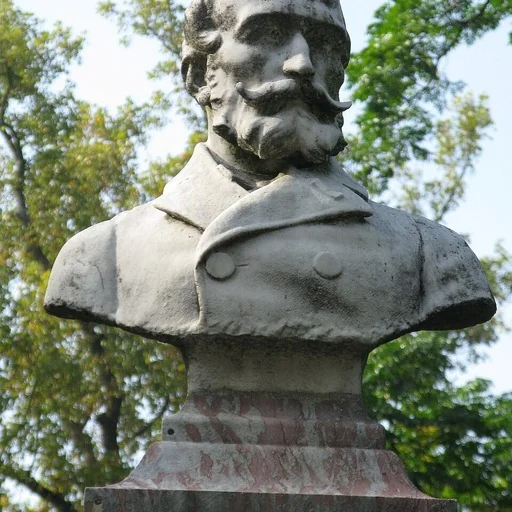
François Antoine Maxime Lalanne (November 27, 1827 – July 29, 1886) was a French artist known for his etchings and charcoal drawings (fusain).

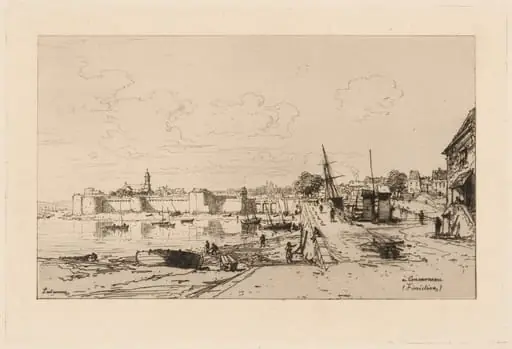
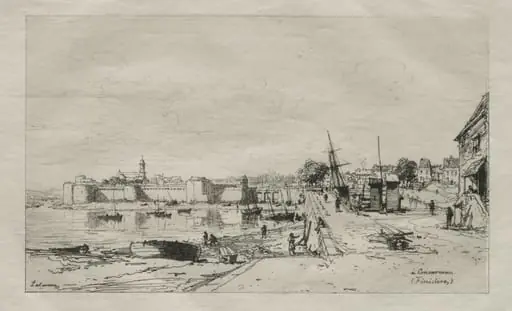 À Concarneau (Finistère)
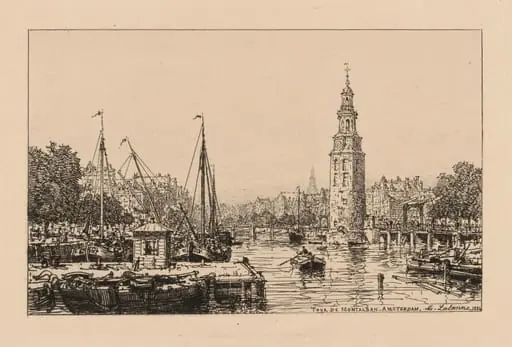 Tour de Montalban, Amsterdam
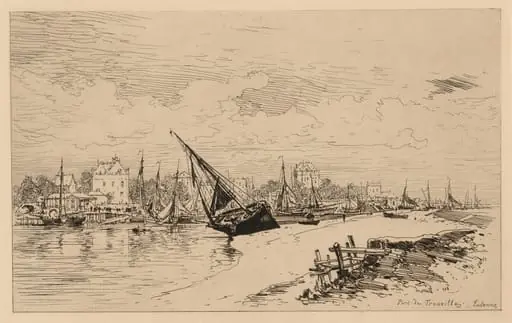 Port de Trouville
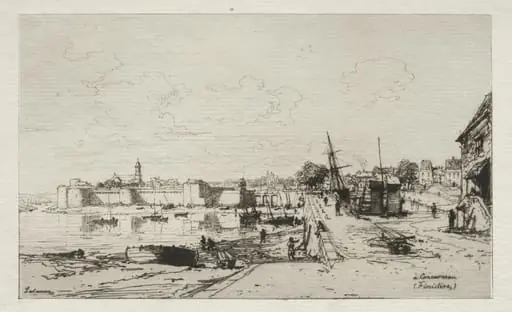 A Concarneau (Finistère)
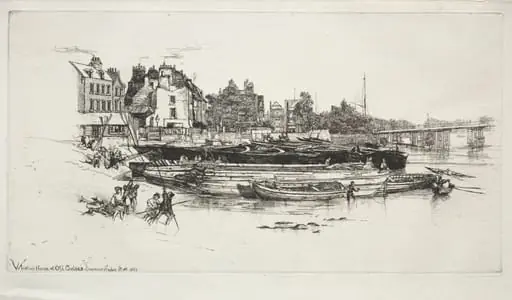 Whistler's House, Old Chelsea
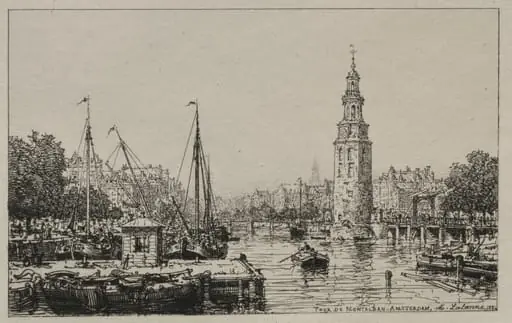 Tour de Montelban, Amsterdam
 Voyages pittoresques et romantiques dans l'ancienne France, Normandie: Église de Saint Gervais et Saint Protais à Gisors
 Banks of the Somme at Amiens (Bords de la Somme a Amiens)
 À Concarneau (Finistère)
 Fulham