Artwork
Rue Ravignan, Paris
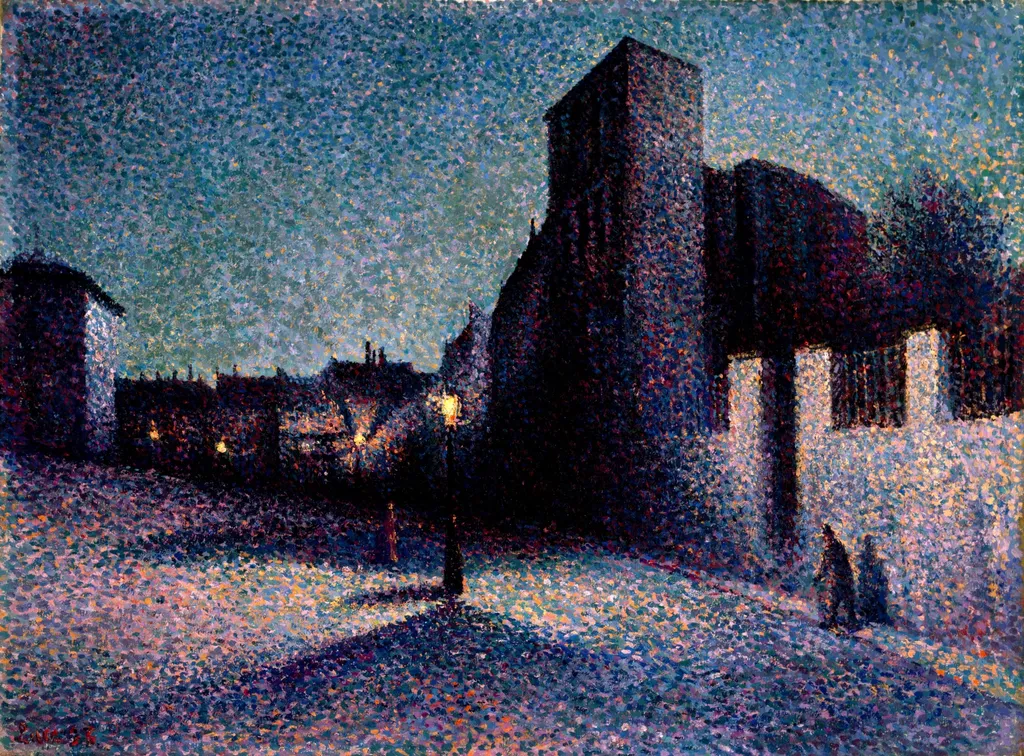
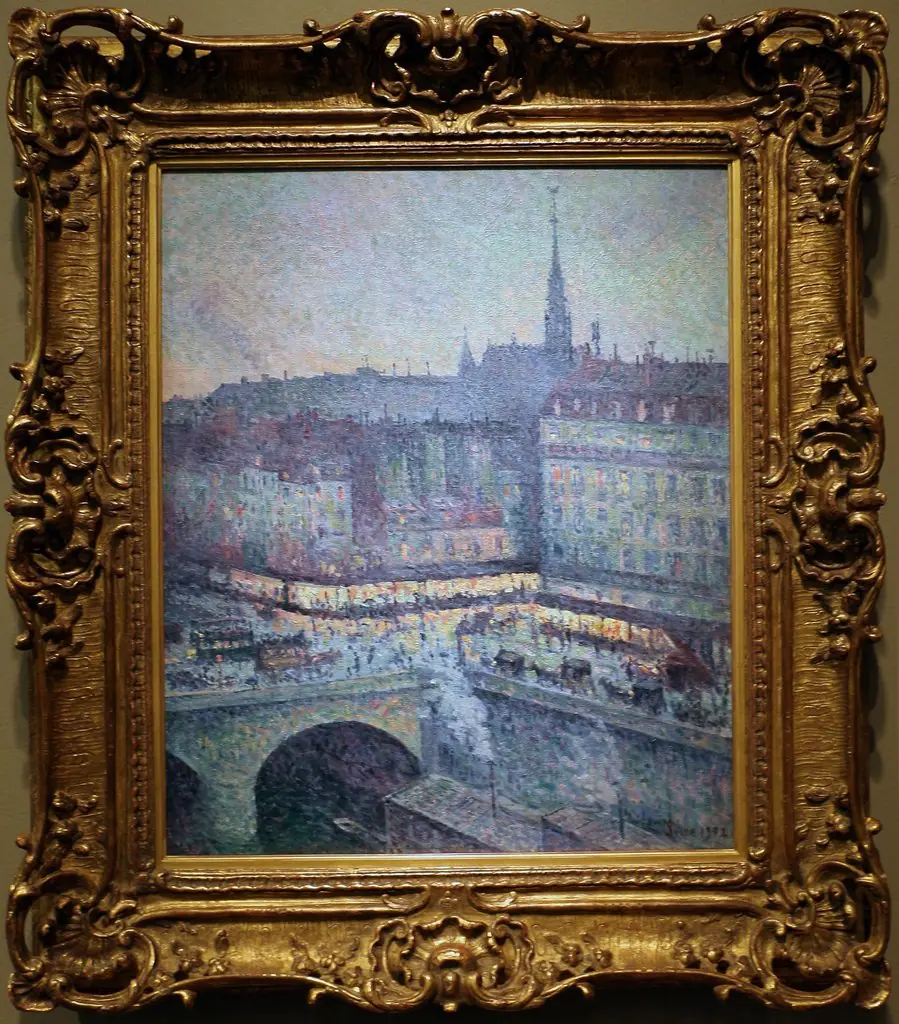
Rue Ravignan, Paris is an oil painting by the Post-Impressionist artist Maximilien Luce. It dates from 1897 and is held in the collection of the Museum of Fine Arts, Houston.
About this work
Overview
Maximilien Luce's 'Rue Ravignan, Paris' (1897) captures a twilight view of the Montmartre district, focusing on the street that runs past the artist's studio.
Maximilien Luce's 'Rue Ravignan, Paris' (1897) captures a twilight view of the Montmartre district, focusing on the street that runs past the artist's studio. Executed in oil on canvas, the work exemplifies Luce's commitment to Neo-Impressionism and Pointillism. The composition is structured by the receding perspective of the street, flanked by multi-story residential buildings that frame the scene. Luce applies the technique of divisionism, utilizing distinct dots of unblended color to construct the forms and atmosphere. The palette is dominated by cool blues and violets in the sky and shadows, contrasting with the warmer, artificial glow of gas lamps and interior lights that punctuate the facades. Small, indistinct figures traverse the sidewalk, adding a sense of daily life without narrative focus. Created during the height of Luce's Pointillist period, the painting reflects his interest in depicting the modern urban experience through a scientific approach to light and color. Unlike the vibrant, sun-drenched landscapes often associated with the movement, this work emphasizes the quiet, atmospheric transition from day to night in a working-class Parisian neighborhood, solidifying Luce's role as a key interpreter of the Neo-Impressionist aesthetic in an urban context.
Subject & Meaning
The work captures an everyday urban moment, emphasizing the calm that settles over the city as daylight fades. By focusing on ordinary architecture and modest human activity, the painting reflects a contemplative view of modern life, inviting the viewer to consider the subtle beauty of routine nocturnal scenes.
Technique & Style
Executed in a pointillist manner, the artist applies numerous small, distinct brushstrokes of pure color that blend optically when viewed from a distance. This method produces a luminous surface and a delicate atmospheric effect, with the interplay of light and shadow rendered through carefully placed chromatic dots rather than broad washes.
History & Provenance
The canvas entered the collection of the Museum of Fine Arts, Houston, where it remains on display. Its acquisition reflects the museum’s commitment to representing late 19th‑century French painting, particularly works that illustrate the transition from Impressionism to Neo‑Impressionist techniques.
Own this work as a print
Artist & collection
Artist
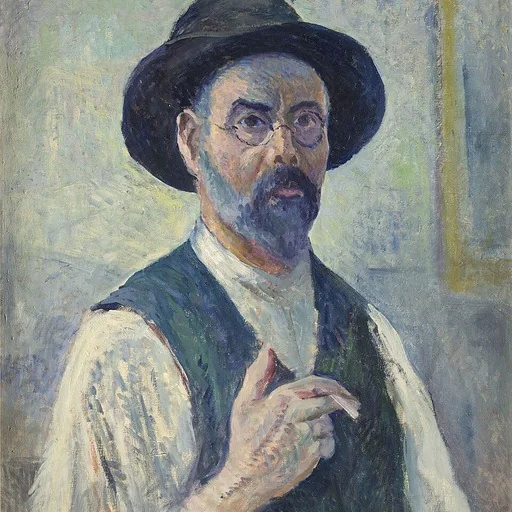
Maximilien Luce was a French Neo-impressionist artist known for his paintings, graphic art, and his anarchist activism.

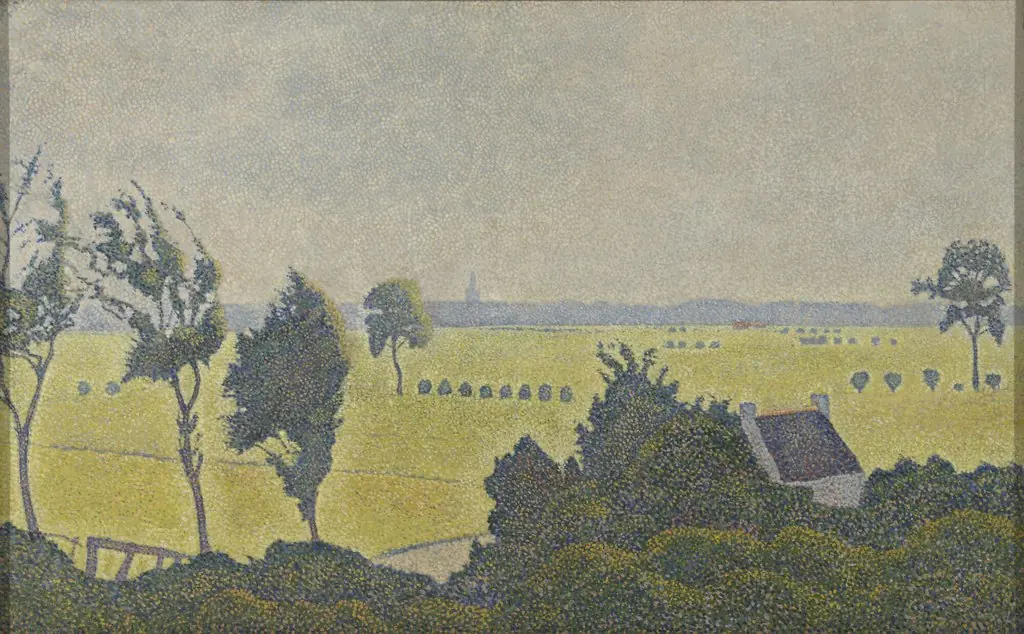 Landscape in Seneffe
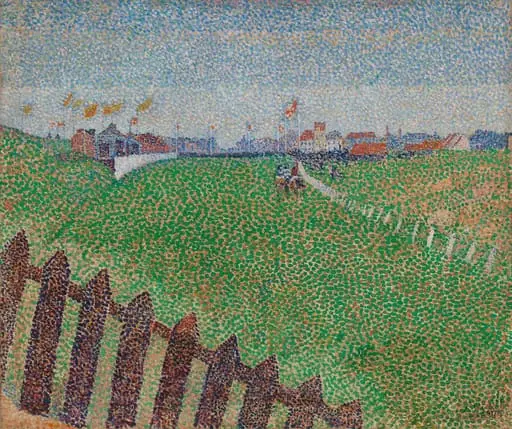 Wellingtonin kilpa-ajorata, tihkusade (Ostende)
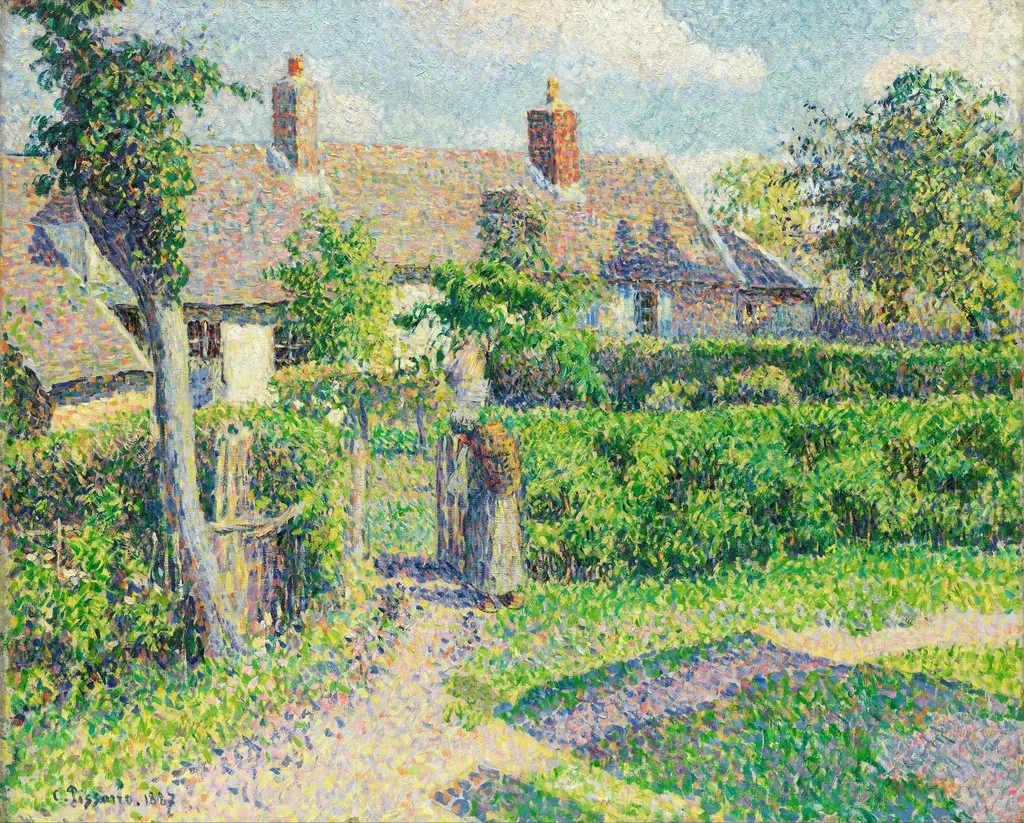 Peasants' houses, Eragny
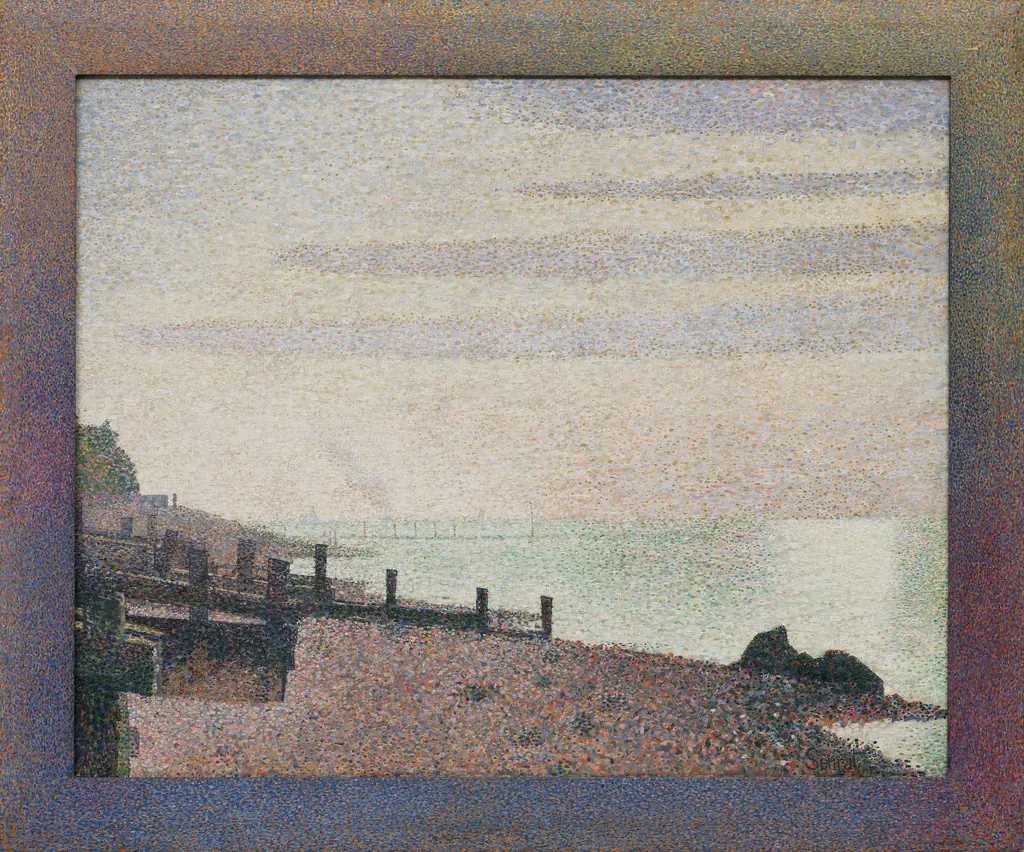 Evening, Honfleur
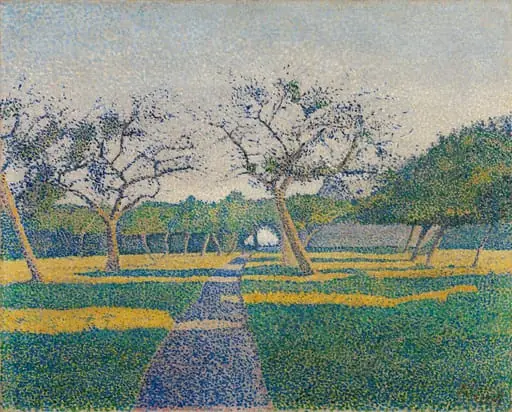 Hedelmäpuutarha La Louvièrestä
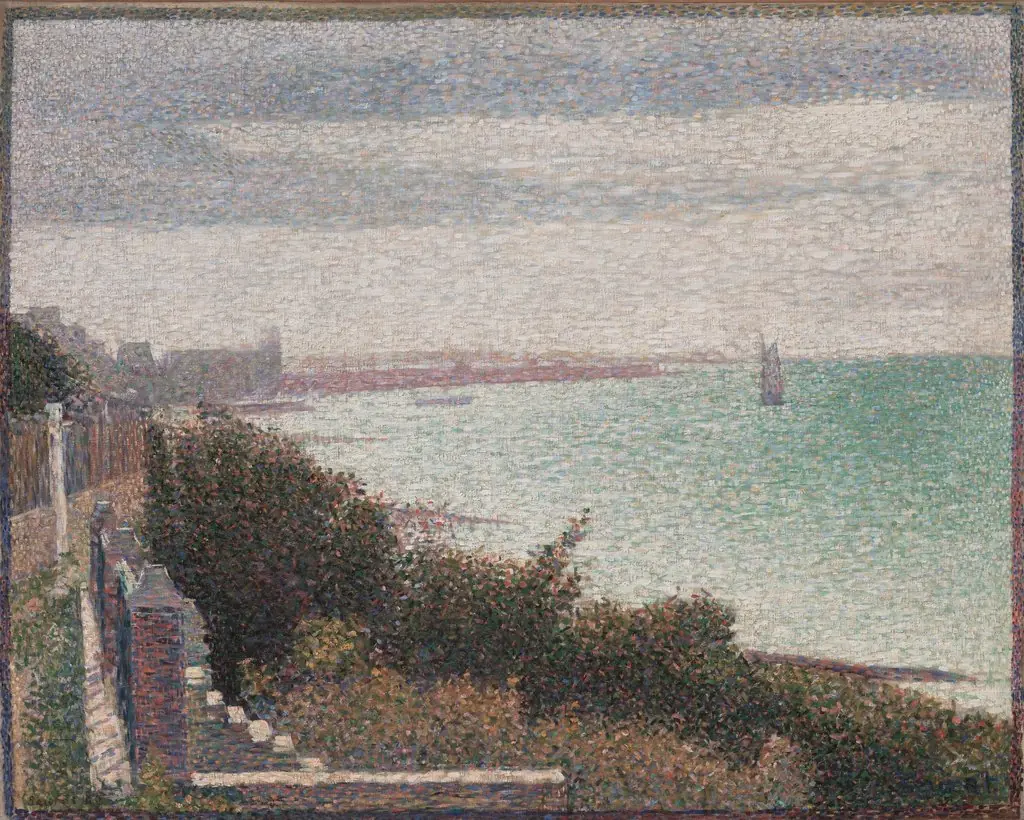 Grandcamp, Evening
 Untitled
 Entrance to the port of Marseille
 Portrieux, The jetty, grey weather
 Vedere din Giverny (seara)
 Vedere din Giverny (dimineața)
 Pont des Arts