Artwork
Auguste Delâtre au travail (Auguste Delâtre at Work)
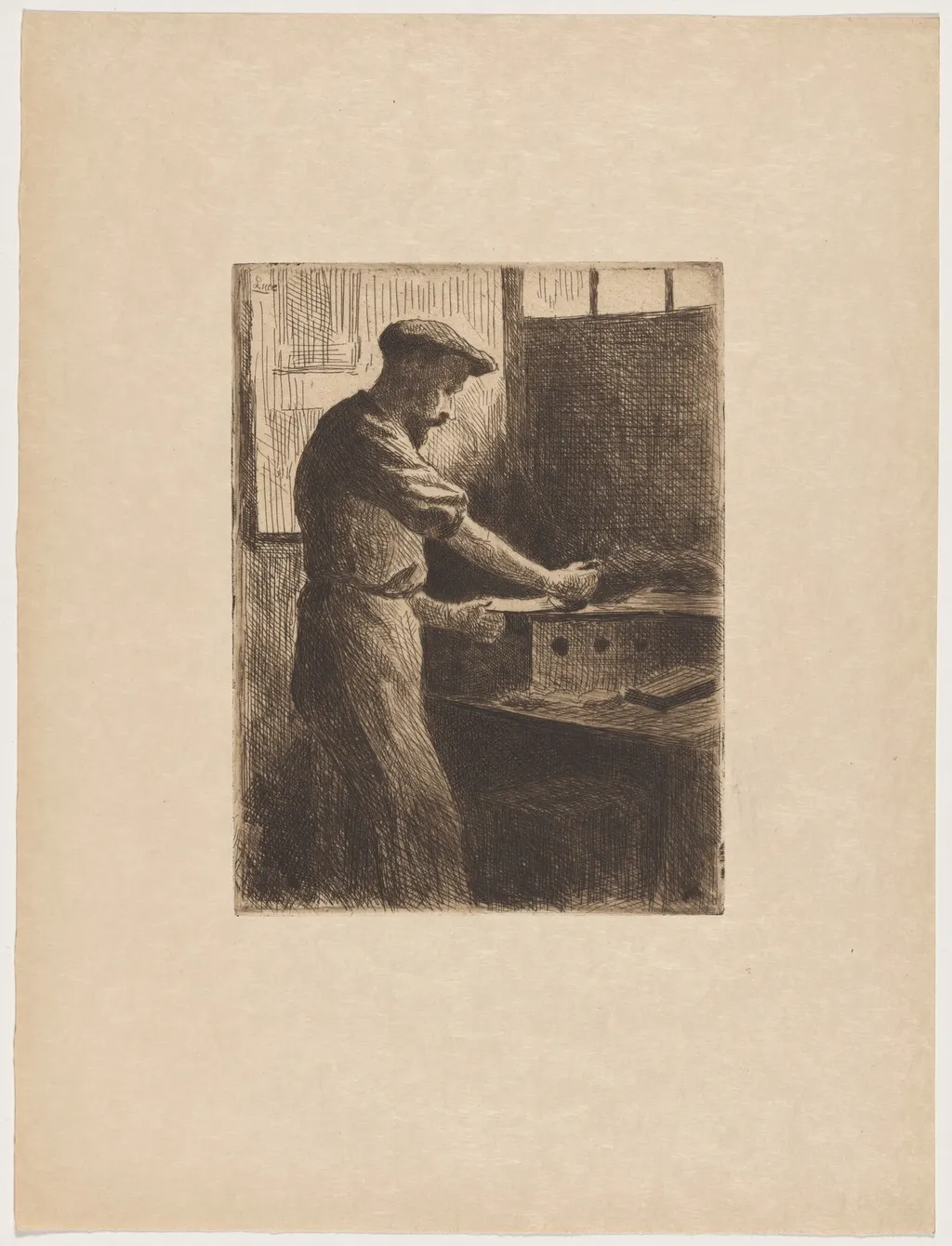
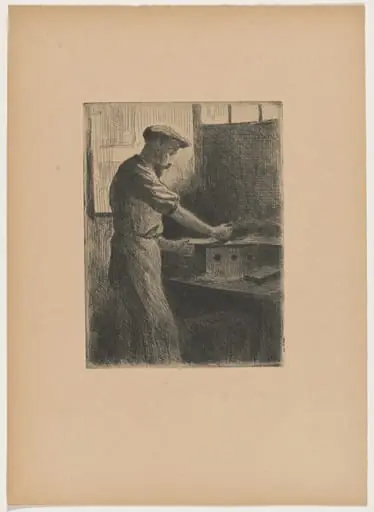
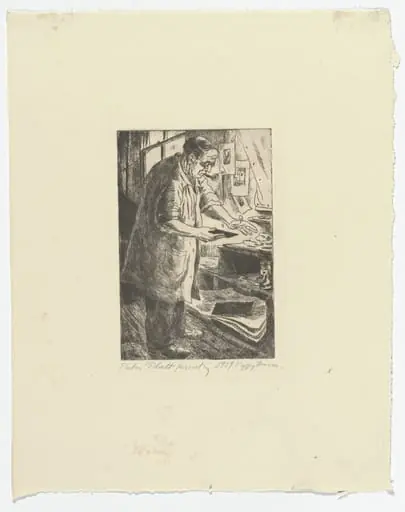
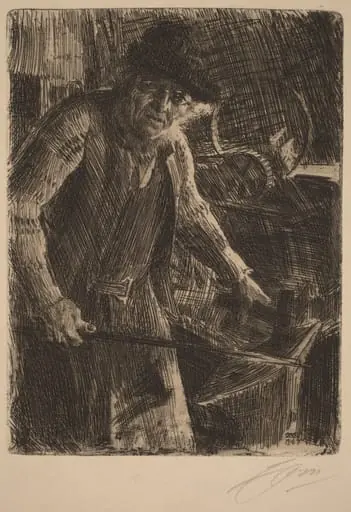
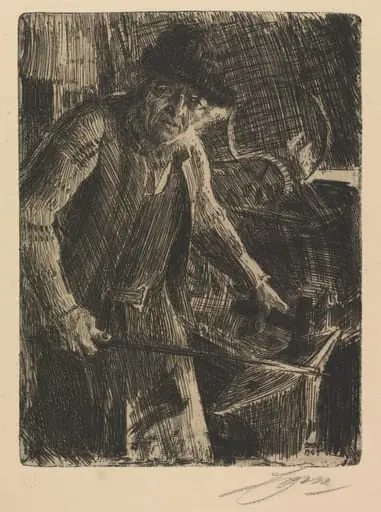
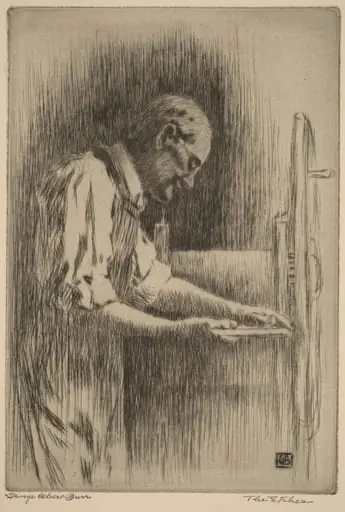
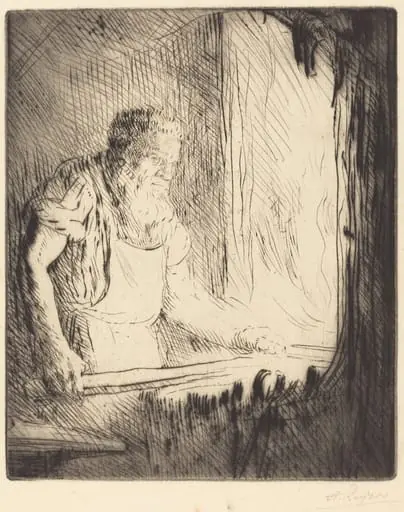
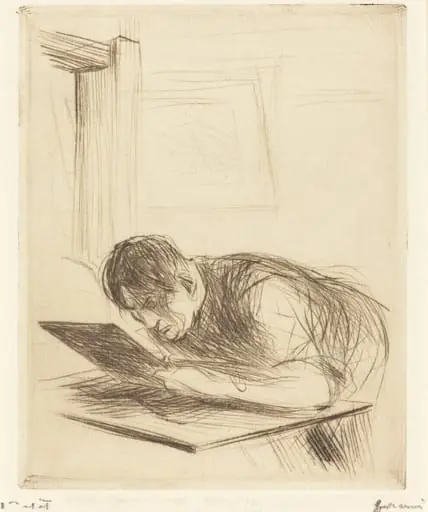
Auguste Delâtre au travail (Auguste Delâtre at Work) is an ink print by the Impressionist artist Maximilien Luce. It dates from 1895 and is held in the collection of the National Gallery of Art. Created in 1895, this brown‑ink etching on heavy Japan paper portrays the French engraver Auguste Delâtre at his workbench.
About this work
Overview
Created in 1895, this brown‑ink etching on heavy Japan paper portrays the French engraver Auguste Delâtre at his workbench. The composition centers on a solitary figure, cap and apron attire, absorbed in the act of engraving amid a cluttered studio filled with tools and materials. The image conveys a quiet, focused atmosphere of manual craft.
Subject & Meaning
The print emphasizes the dignity of labor, presenting Delâtre not as a heroic figure but as a diligent artisan engaged in his trade. By foregrounding the physicality of his hands and the concentration on his face, the work reflects a broader interest in everyday workers, aligning with the artist’s social concerns and his tendency to highlight the quiet heroism of ordinary professions.
Technique & Style
Executed as an etching, the piece utilizes brown ink to render tonal variations across the heavy, absorbent Japan paper, allowing fine lines and subtle shading. The artist’s handling of line suggests a blend of precise draftsmanship with a softer, atmospheric quality, hinting at his earlier Impressionist influences while anticipating his later return to more luminous, pointillist methods.
History & Provenance
The etching was produced by Maximilien Luce, a French painter and graphic artist noted for his involvement in anarchist circles and for navigating between Impressionism, Pointillism, and later Impressionist revivals. This 1895 work predates Luce’s stylistic shifts of the early twentieth century and stands as an early example of his printmaking practice, documenting his engagement with both medium and subject.
Context
During the 1890s, French art saw a growing interest in depicting industrial and manual labor, reflecting broader social and political currents. Luce’s choice to depict an engraver aligns with this trend, situating the work within a milieu that valued the visibility of working-class individuals and the processes of artistic production itself.
Artist & collection
Artist
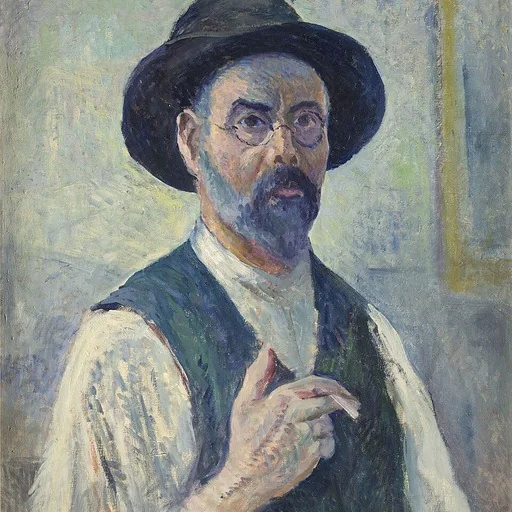
Maximilien Luce was a French Neo-impressionist artist known for his paintings, graphic art, and his anarchist activism.