Artwork
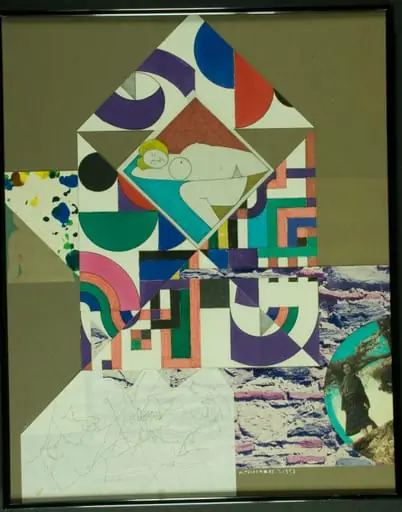
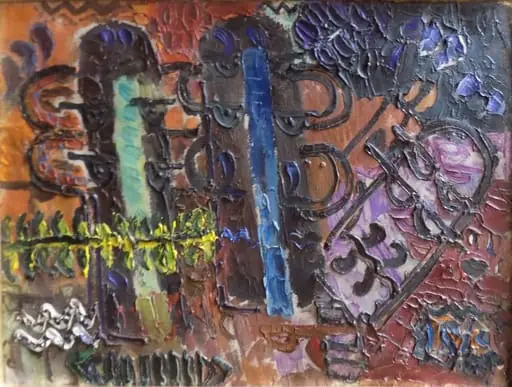
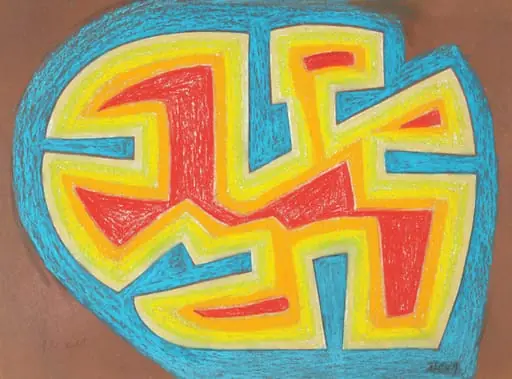
Compozitie cu autoportret/ Portret compozitional
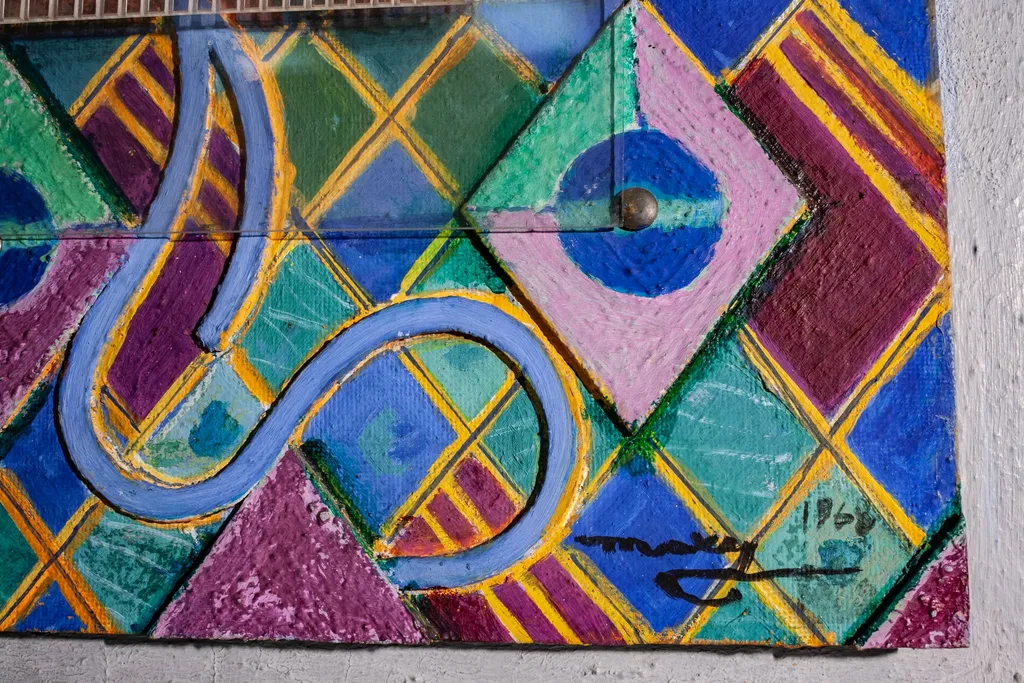
Compozitie cu autoportret/ Portret compozitional is a print by Max Herman Maxy. It is held in the collection of the Gavrila Simion Eco-Museum Research Institute Tulcea.
About this work
Overview
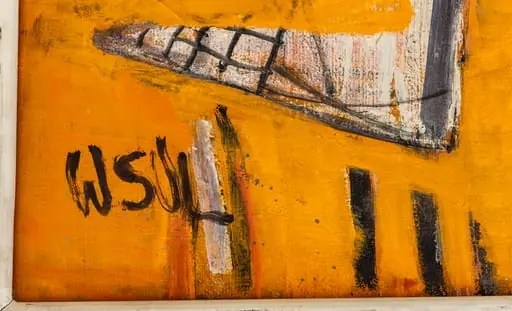
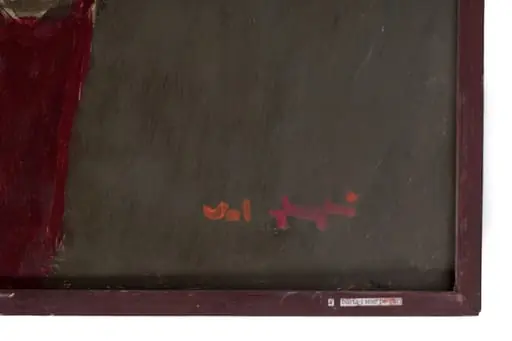
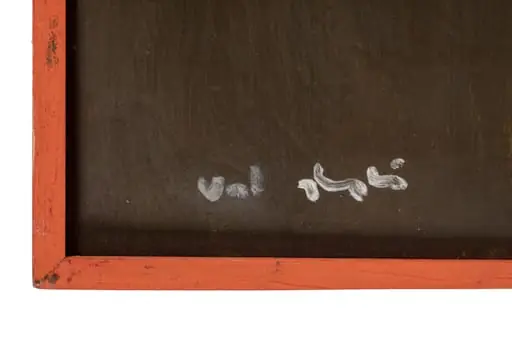
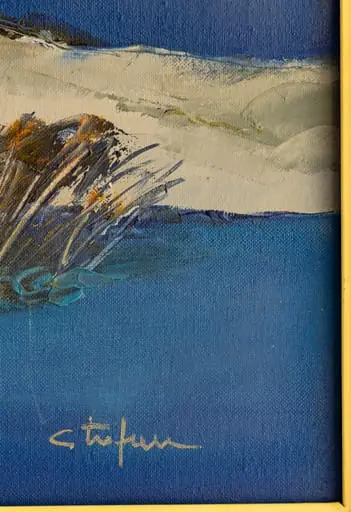
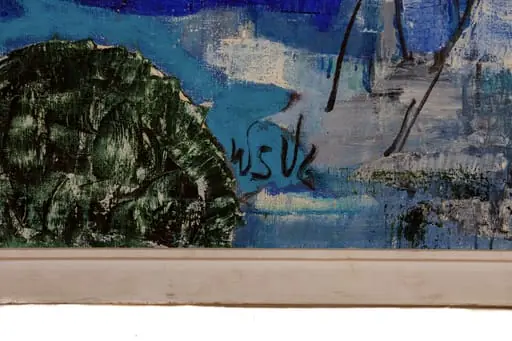
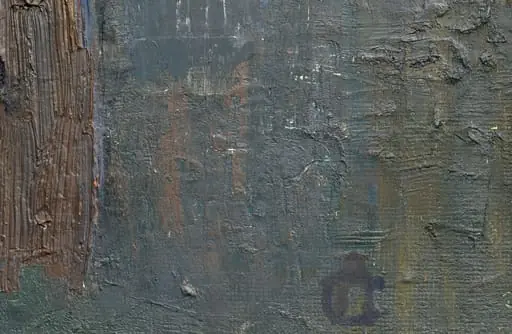
A small dark mark near the lower right may serve as an artist’s identifier, though its function remains ambiguous.
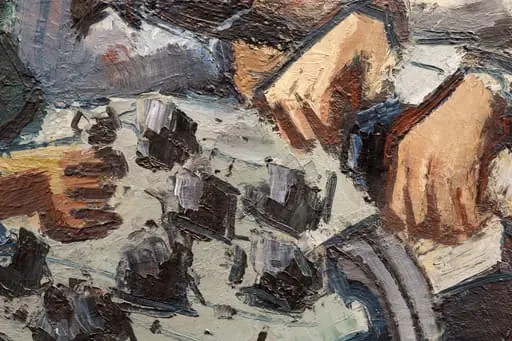
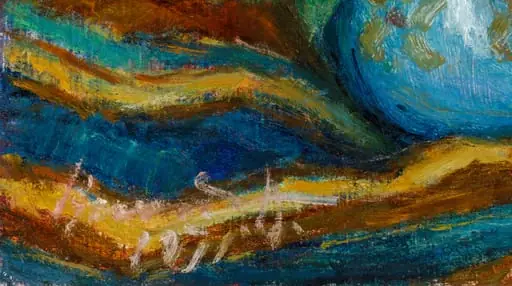
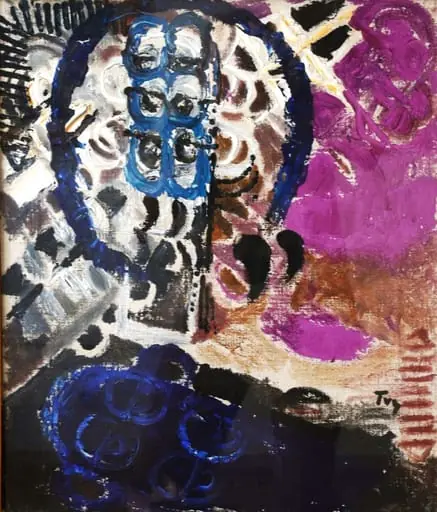
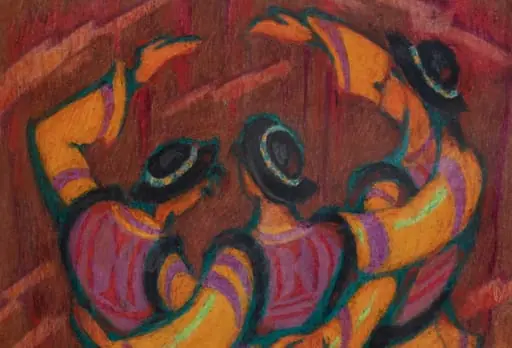
This print presents a non-representational composition built from overlapping geometric forms—circles, squares, and angular lines—in saturated hues of blue, purple, yellow, and green. The paint is applied with visible urgency, creating textured, almost tactile surfaces. No clear focal point dominates; instead, the arrangement resists conventional harmony, favoring dynamic tension. A small dark mark near the lower right may serve as an artist’s identifier, though its function remains ambiguous.
Subject & Meaning
The work avoids figurative representation, offering no identifiable person or scene. Its subject appears to be the interplay of form and color themselves. The absence of narrative or symbolic reference shifts focus to the emotional resonance of abstraction. The deliberate dissonance among hues and shapes suggests a rejection of traditional aesthetics, prioritizing expressive freedom over legibility or order.
Technique & Style
Thick, unblended applications of paint create a sense of immediacy and physicality. Colors are applied without blending, enhancing their visual impact through contrast rather than transition. The composition lacks perspective or depth, flattening space into a plane of overlapping shapes. The style defies categorization, blending elements of Expressionism and Constructivism without adhering to either movement’s formal rules.
History & Provenance
The work’s origin is undocumented in available records. No exhibition history, date, or institutional ownership is confirmed. Its attribution to Max Herman Maxy is suggested by external notes, though no verified documentation supports this link. The absence of provenance details leaves its creation context and timeline uncertain, placing it among lesser-known experimental prints of the early 20th century.
Context
Emerging in a period when European artists were redefining abstraction, this piece aligns with broader efforts to break from realism. While contemporaries like Kandinsky or Mondrian sought structured systems, this work embraces chaos as a principle. It reflects a fringe current in modernist printmaking—individualistic, unaffiliated, and unconcerned with institutional validation or stylistic purity.
Legacy
The work remains outside mainstream art historical narratives, preserved only through informal references. Its significance lies in its resistance to classification, offering a rare example of autonomous abstraction in print form. It contributes to a quieter archive of experimental artists who pursued personal expression without seeking recognition or alignment with dominant movements.
Artist & collection
Artist
Max Herman Maxy made prints and paintings that feel like snapshots from a busy street.
Museum
Gavrila Simion Eco-Museum Research Institute Tulcea
Continue through works from the same source collection.