Artwork
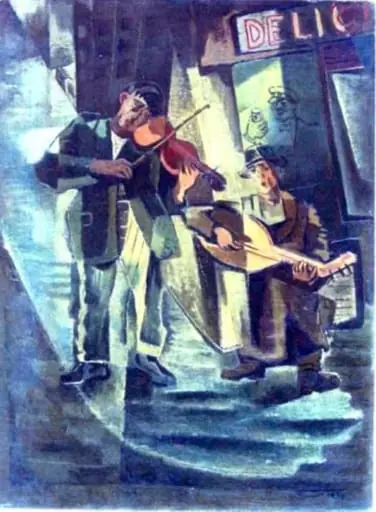
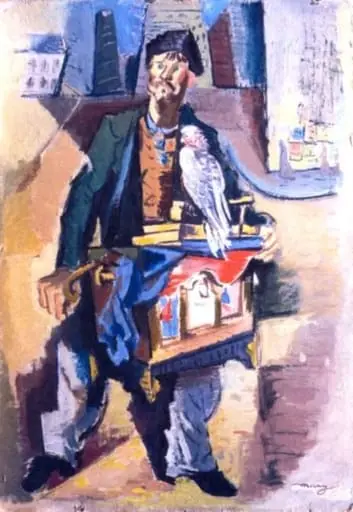
Flașnetar
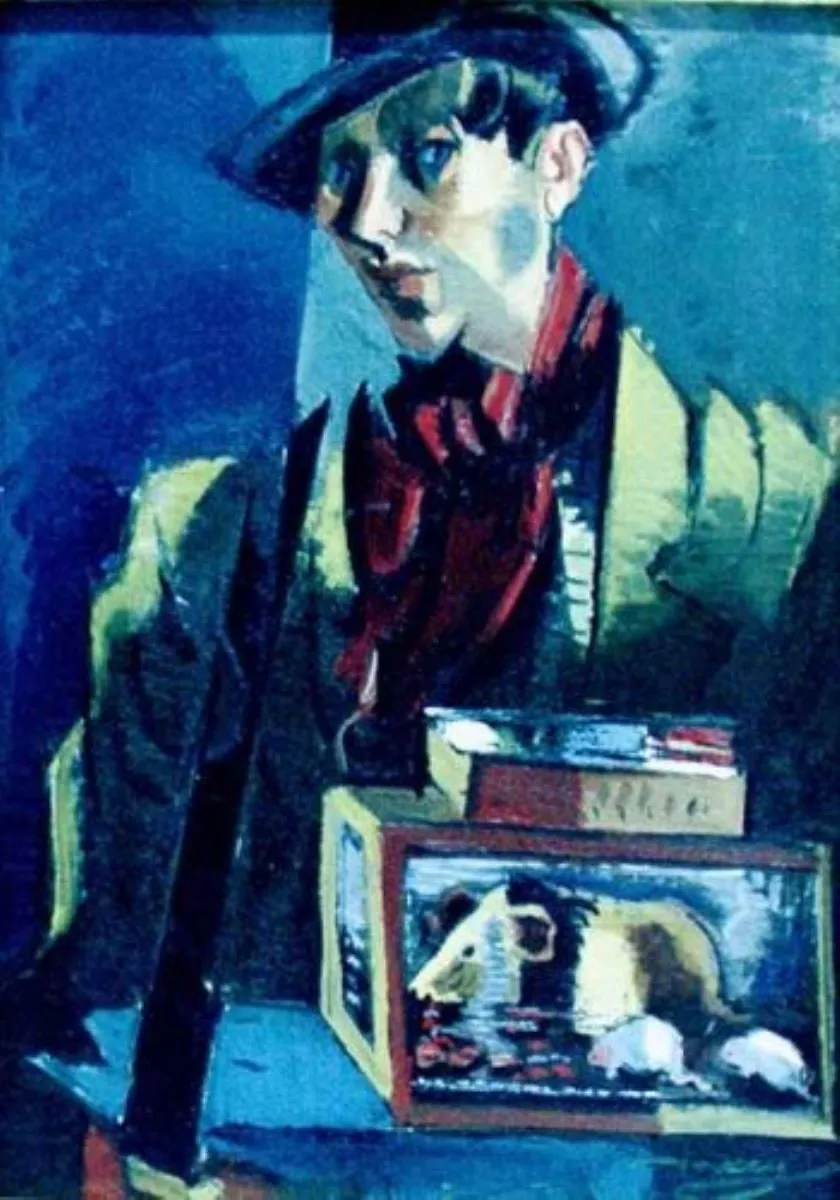
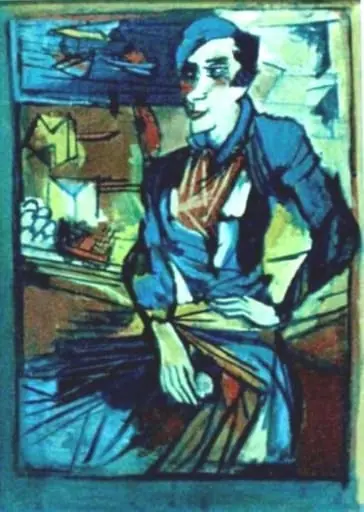
Flașnetar is a print by Max Hermann Maxy. It dates from 1940 and is held in the collection of the National Museum of Art of Romania.
About this work
Overview
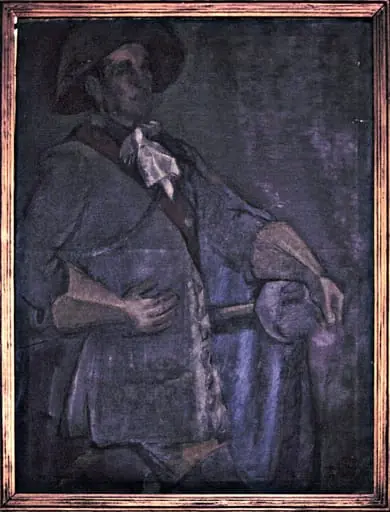
Painted in 1940 by Max Hermann Maxy, Flașnetar depicts a solitary figure seated before a modest wooden box with a glass lid. The composition is dominated by muted tones and a deep blue background, emphasizing the figure’s isolation. Thick, textured brushwork defines the surface, creating a tactile, unpolished quality that resists smooth realism.
Subject & Meaning
The solemn expression and shadowed eye convey introspection, perhaps reflecting the weight of daily labor or personal solitude.
The figure, dressed in a faded yellow coat and a red scarf, sits with quiet intensity, gazing downward. The box before them holds small, indistinct objects—possibly tools or personal items—suggesting a tradesperson or collector. The books beside it hint at quiet intellectual engagement. The solemn expression and shadowed eye convey introspection, perhaps reflecting the weight of daily labor or personal solitude.
Technique & Style
Maxy employs impasto to build the surface with dense, uneven strokes, giving form through texture rather than fine detail. The thick application of paint in the coat and scarf contrasts with the smoother, darker background, enhancing the figure’s presence. The rough handling avoids idealization, aligning with a modernist interest in raw, unrefined expression over polished finish.
History & Provenance
Created during a period of rising political tension in Europe, Flașnetar was produced in Romania, where Maxy was active in avant-garde circles. The work remained in private collections until the mid-20th century, later entering institutional holdings. Its survival through wartime upheaval reflects its modest scale and lack of overt political symbolism, allowing it to pass unnoticed by authorities.
Context
In early 1940s Romania, artists like Maxy navigated between modernist experimentation and state pressures favoring traditional forms. Flașnetar’s subdued palette and focus on an ordinary individual reflect a quiet resistance to grand narratives. It aligns with broader European trends of depicting working-class life with psychological depth, avoiding both romanticism and propaganda.
Legacy
Flașnetar remains a quiet example of interwar Romanian modernism, valued for its emotional restraint and material honesty. While not widely exhibited, it is referenced in scholarly studies of regional expressionism and the use of impasto in Eastern European painting. Its enduring presence lies in its unadorned portrayal of everyday dignity.
Artist & collection

Artist
Max Hermann Maxy was a Romanian painter, art professor, scenographer, and professor of German-Jewish descent.