Artwork
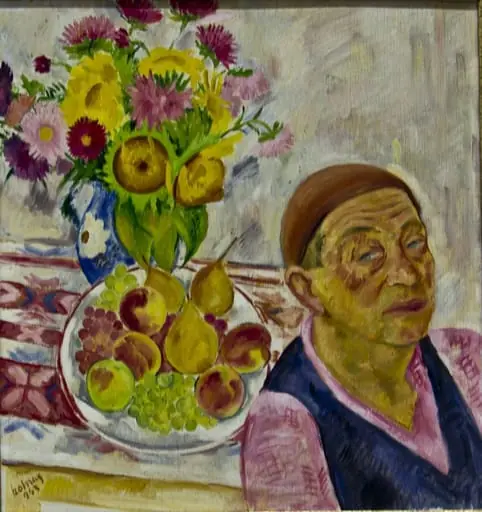
Natură statică cu autoportret
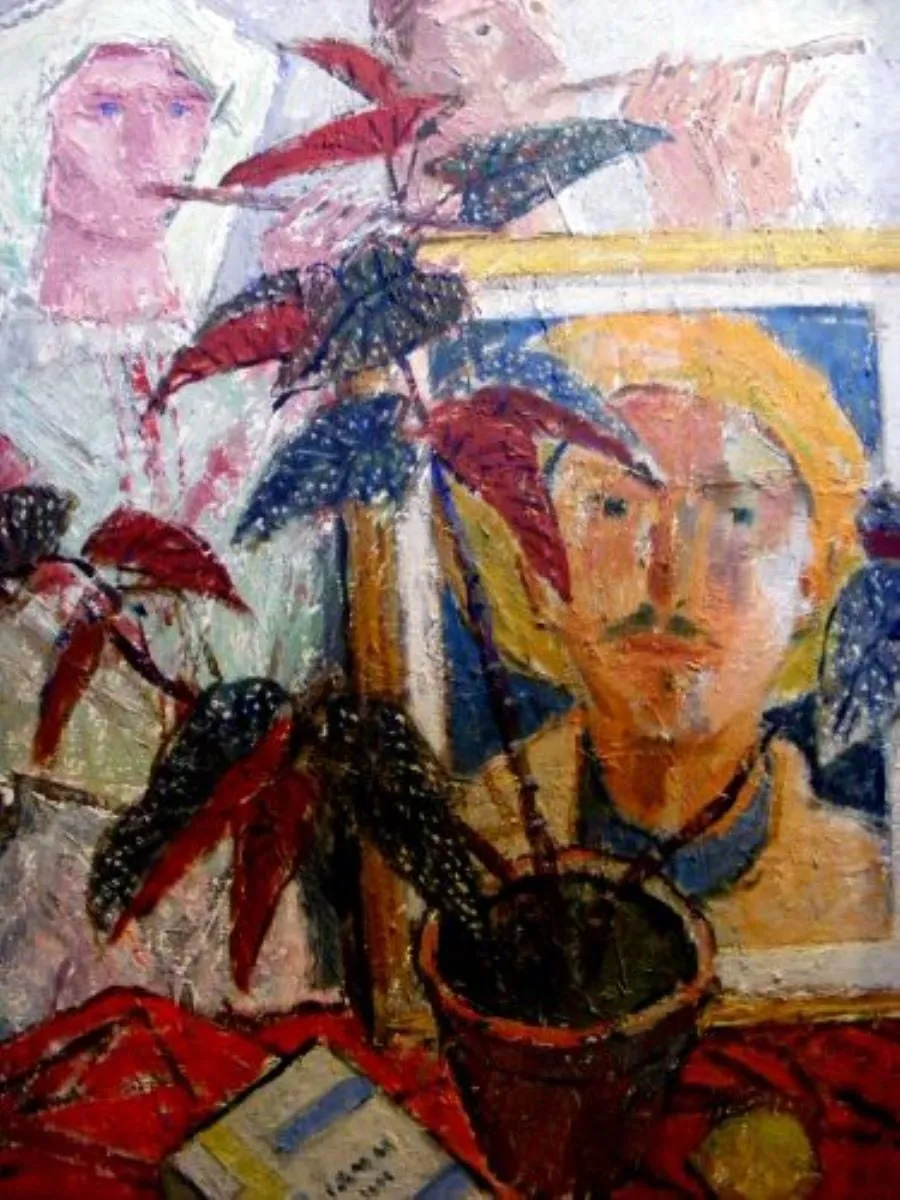
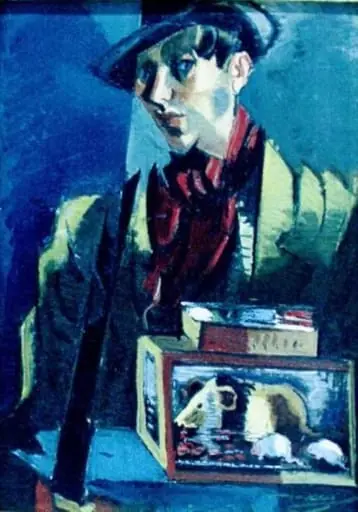
Natură statică cu autoportret is an unspecified painting by József Bene. It is held in the collection of the Székely National Museum. This still life incorporates a self-portrait, blending personal presence with arranged objects.
About this work
Overview
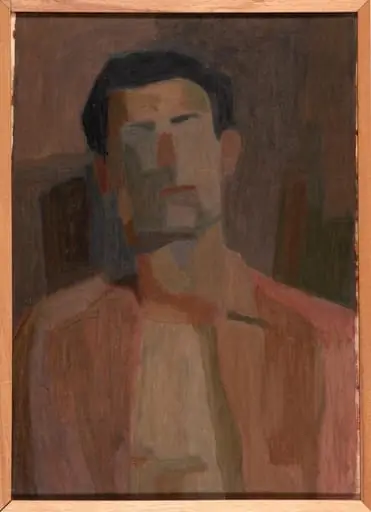
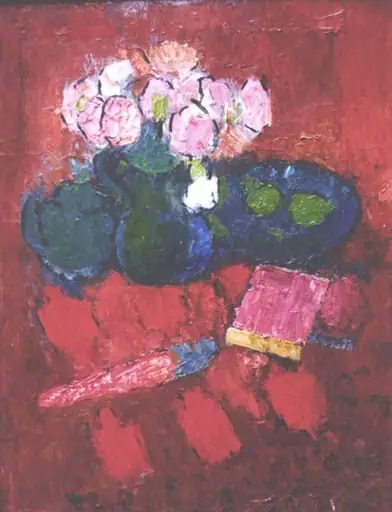
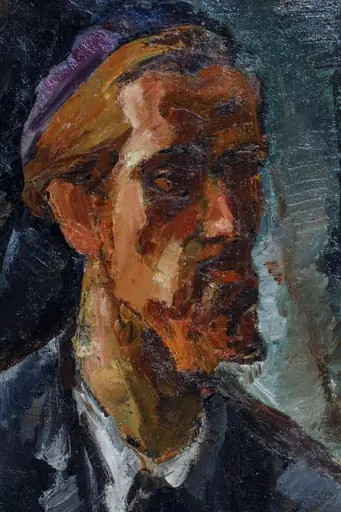
This still life incorporates a self-portrait, blending personal presence with arranged objects. The figure emerges from a cluttered, loosely rendered background dominated by vivid red leaves and indistinct forms. The painting’s composition resists traditional still-life order, instead merging the artist’s likeness with chaotic surroundings in a way that challenges genre boundaries.
Subject & Meaning
The subject is the artist’s own face, rendered with quiet intensity against a turbulent backdrop. The pale skin contrasts with the dark hair and simple collar, drawing attention to the gaze. The scattered red leaves and ambiguous objects—possibly a hat or shadowed form—suggest inner disturbance or the passage of time, hinting at introspection without overt narrative.
Technique & Style
Thick, textured brushwork known as impasto dominates the background, creating a tactile, almost sculptural surface. Paint is applied with visible, forceful strokes, giving the leaves and objects a raw, urgent quality. The face, by contrast, is smoother, allowing the texture of the surroundings to heighten its stillness and focus.
History & Provenance
The work’s origin is undocumented in public records, and its early ownership remains unclear. It has not been exhibited in major institutional collections, and its appearance in private hands suggests limited circulation. No signed or dated version has been verified, contributing to its enigmatic status.
Context
Created during a period when artists increasingly turned inward, this piece reflects a broader shift toward personal expression over idealized representation. The use of impasto and disregard for compositional harmony align with emerging modernist tendencies, even as it retains elements of traditional still-life structure.
Legacy
Though not widely reproduced or studied, the painting exemplifies how early 20th-century artists used materiality to convey psychological depth. Its unpolished surface and fusion of self-portrait with still life influenced later artists seeking to merge identity with environment through tactile, expressive brushwork.
Artist & collection
Artist