Artwork
Anbetung der Hl. Drei Könige
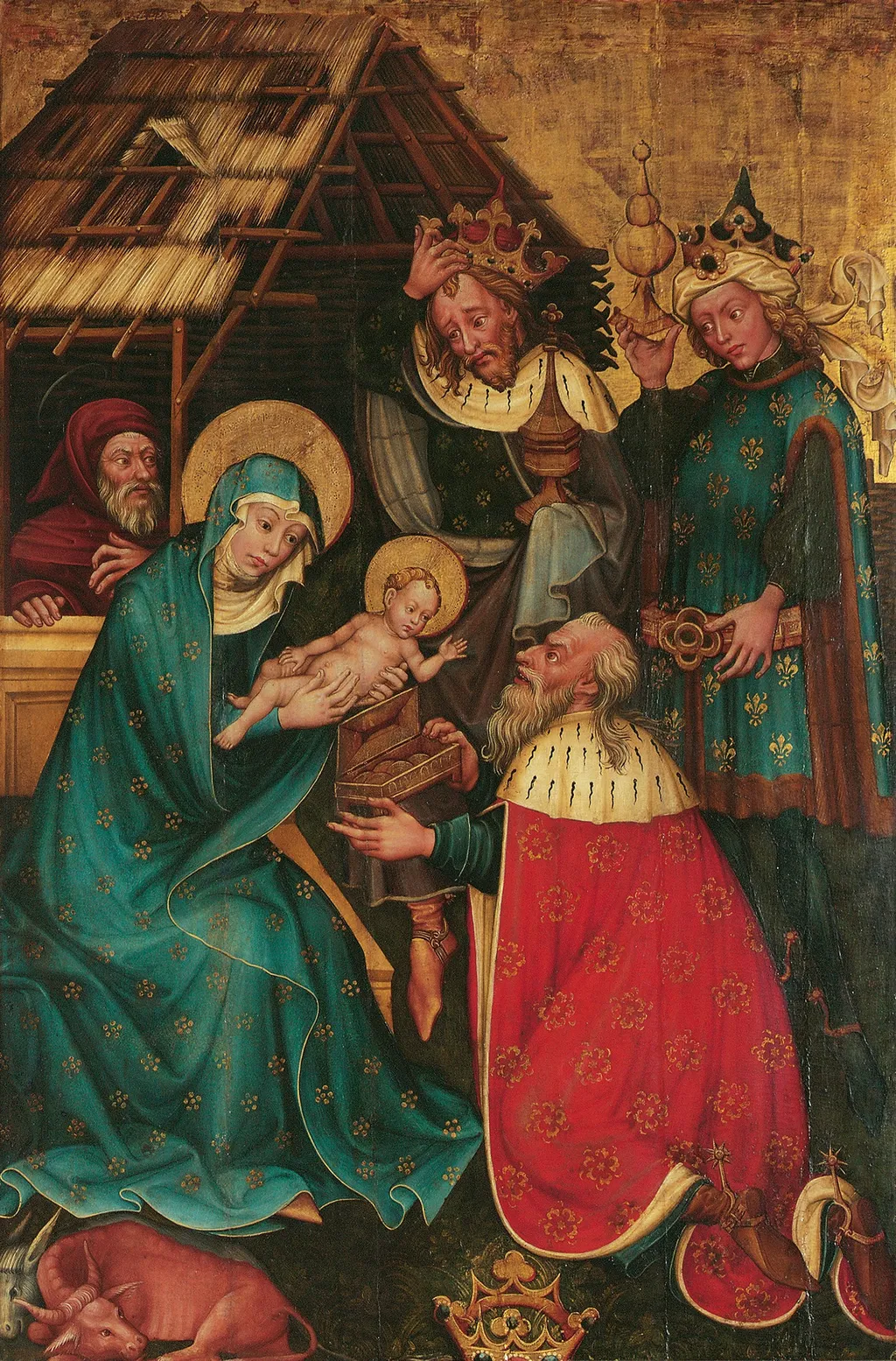
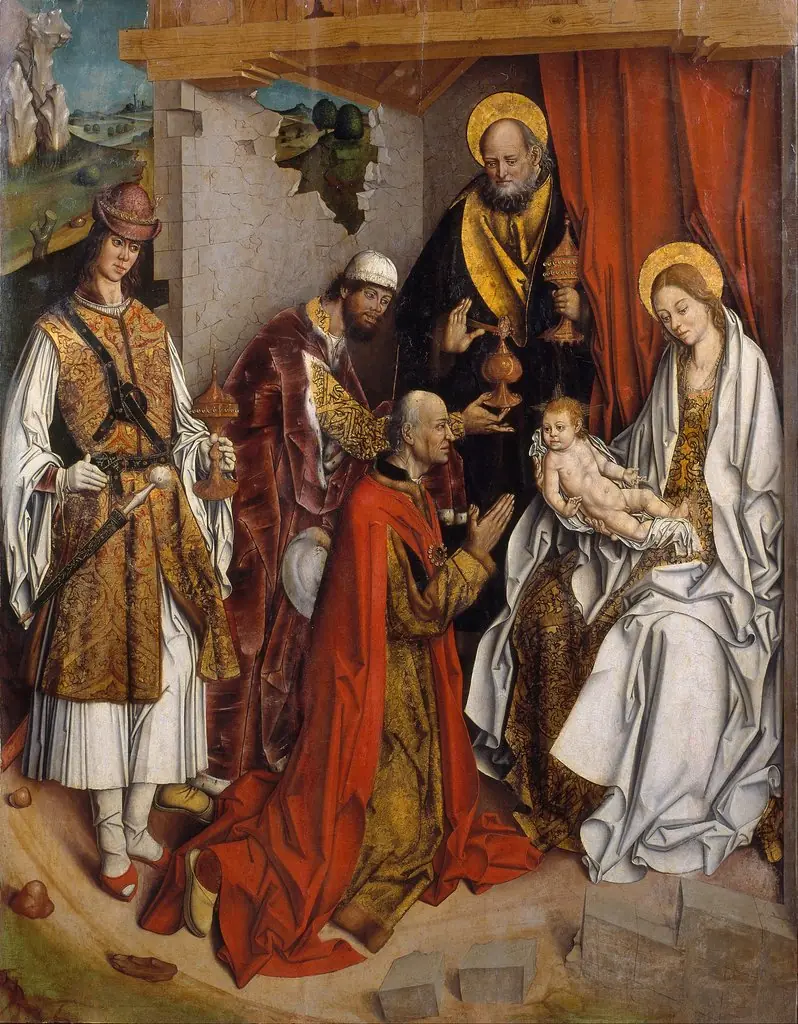
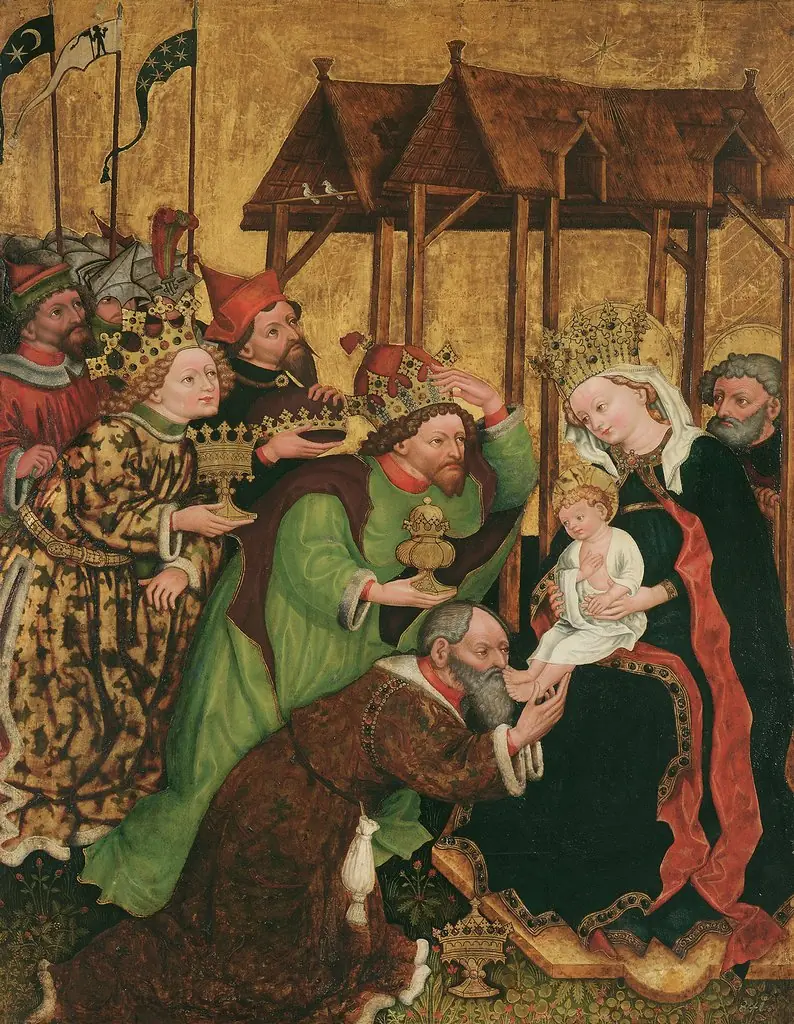
Anbetung der Hl. Drei Könige is an unspecified painting by the Northern Renaissance artist Meester van het Altaar van Friedrich. It dates from 1445 and is held in the collection of the Kunsthistorisches Museum. Created in 1445, the panel known as Anbetung der Hl.
About this work
Overview
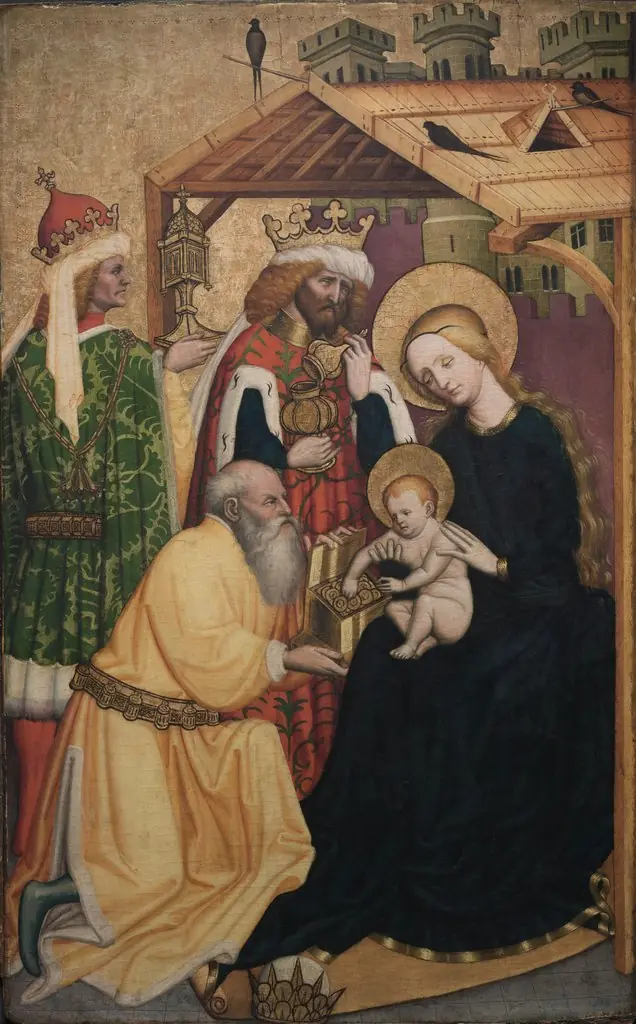
Created in 1445, the panel known as Anbetung der Hl. Drei Könige is a late‑medieval religious work attributed to the workshop of Meester van het Altaar van Friedrich. Executed in tempera on wood, it portrays a devotional scene centered on a woman cradling an infant, both surrounded by richly dressed figures. The painting is part of the collection of the Kunsthistorisches Museum in Vienna.
Subject & Meaning
Around them stand three men in vivid red, green and brown garments, each bearing symbols of royalty or offering: a box, a crown, and a staff.
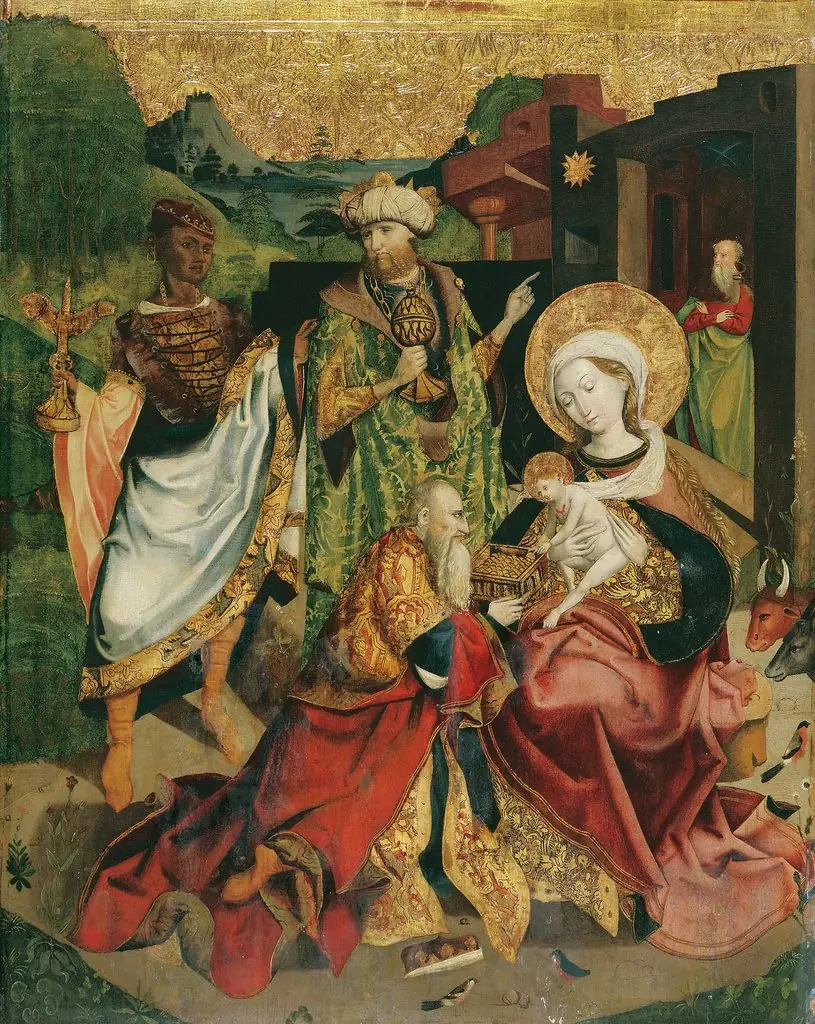
The central figures—a woman in a blue robe edged with gold and a swaddled child—are both encircled by halos, indicating their sacred status. Around them stand three men in vivid red, green and brown garments, each bearing symbols of royalty or offering: a box, a crown, and a staff. The composition suggests a narrative of adoration, likely referencing the biblical episode of the Magi’s homage to the infant Jesus.
Technique & Style
The work displays the characteristic precision of Northern European panel painting of the mid‑15th century. Fine brushwork renders the intricate patterns on the costumes, while the luminous halos contrast with a dark, muted background, drawing the viewer’s eye to the holy figures. The use of tempera allows for bright, saturated colors and a smooth surface that enhances the decorative details of the garments and the thatched‑roofed setting.
History & Provenance
Attributed to the workshop of Meester van het Altaar van Friedrich, the painting entered the Kunsthistorisches Museum’s holdings in the early 20th century, though its exact acquisition path remains undocumented. It has been catalogued as a representative example of devotional panels produced for private chapels in the Germanic regions during the late Gothic period.
Context
The panel reflects the devotional practices of the mid‑1400s, when private patrons commissioned intimate religious scenes for personal contemplation. The inclusion of richly colored attire and symbolic objects aligns with contemporary iconography that emphasized the wealth and piety of the patron, while the thatched‑roofed interior situates the sacred event within a familiar, domestic environment.
Own this work as a print
Artist & collection
Artist
Meester van het Altaar van Friedrich
Meester van het Altaar van Friedrich (1425–1475) was an artist.