Artwork
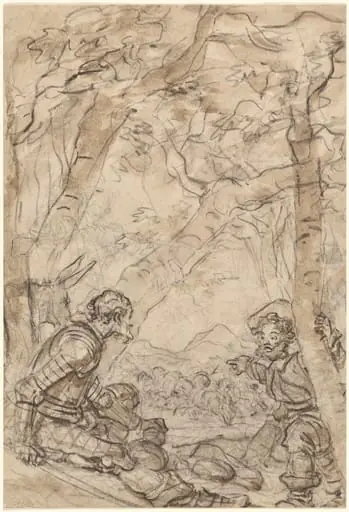
Lazarille de Tormes Stealing Drink from a Blind Man
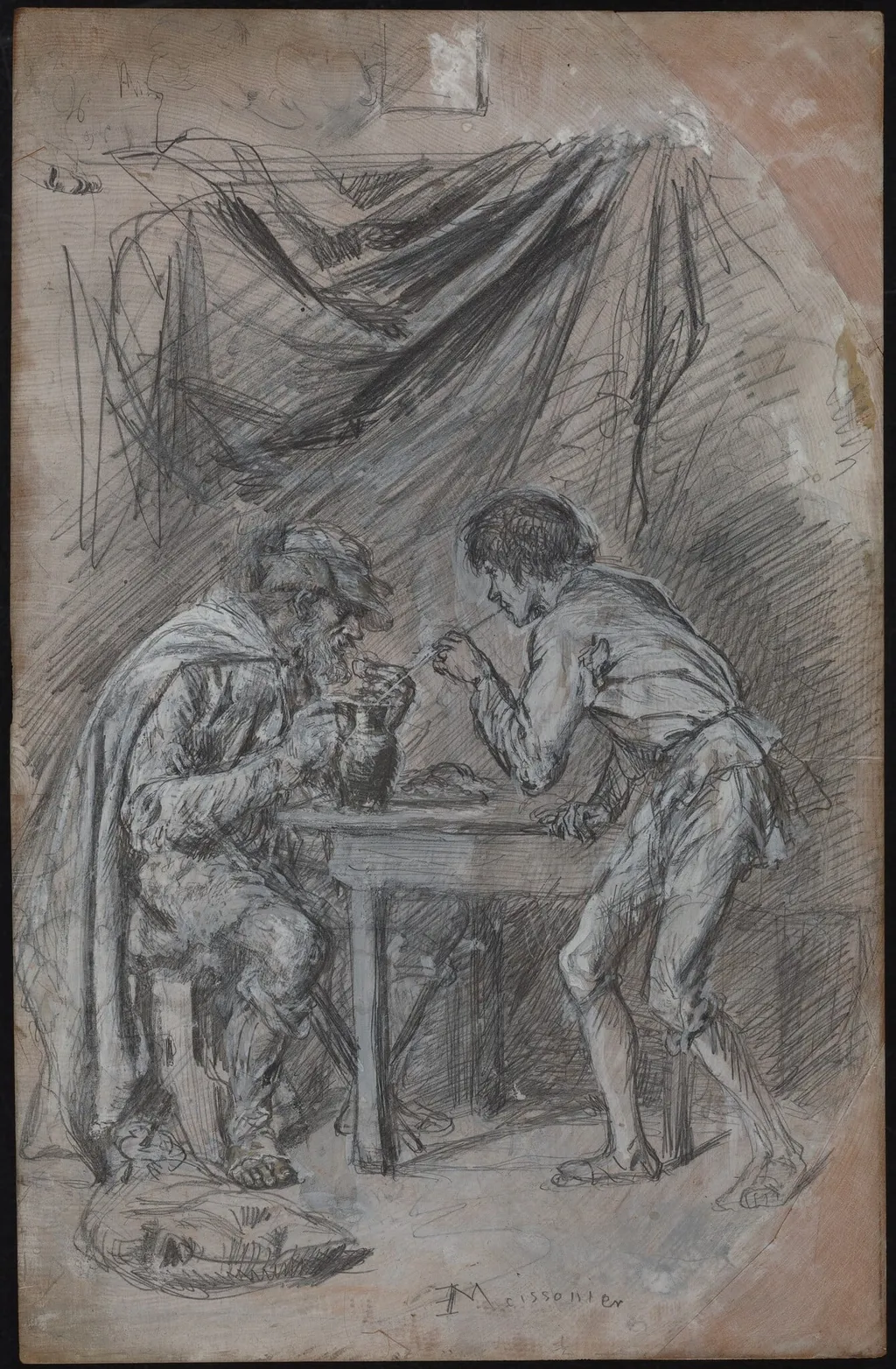
Lazarille de Tormes Stealing Drink from a Blind Man is a graphite drawing by the Romanticist artist Jean-Louis-Ernest Meissonier. It dates from 1846 and is held in the collection of the National Gallery of Art.
About this work
Overview
This graphite and white body color drawing on boxwood, dated around 1846, is a preparatory study by Jean-Louis-Ernest Meissonier.
This graphite and white body color drawing on boxwood, dated around 1846, is a preparatory study by Jean-Louis-Ernest Meissonier. It captures a moment from the picaresque novel Lazarillo de Tormes, depicting a boy stealing a drink from a blind man. The composition is intimate and unpolished, emphasizing gesture over detail. The medium and surface suggest a spontaneous, working sketch rather than a finished piece.
Subject & Meaning
The scene illustrates a moment of deception from the Spanish picaresque tradition, where survival hinges on cunning. The blind man, seated and unaware, is vulnerable; the boy, standing and reaching, moves with quiet stealth. Their proximity heightens the moral ambiguity—neither villain nor hero, the boy acts out necessity. The drawing distills the novel’s theme of social survival through subterfuge.
Technique & Style
Meissonier used rapid, layered graphite strokes to define form, with white body color applied sparingly to suggest highlights. The background is rendered in loose, ambiguous lines, possibly indicating fabric or shadow. Erasures and smudges reveal revision, while heavy shading anchors the figures in dim space. The technique prioritizes movement and mood over finish, reflecting a working method focused on emotional immediacy.
History & Provenance
Created in the mid-1840s, this drawing belongs to Meissonier’s early period, when he was exploring literary subjects before turning to historical scenes. It likely served as a study for a larger painting or illustration, though no finished version is known. The drawing remained in the artist’s possession until his death, later entering a private collection before being acquired by its current institution.
Context
In 1840s France, interest in Spanish literature and picaresque tales was growing among artists and writers. Meissonier, influenced by realism and narrative detail, turned to Lazarillo de Tormes as a source of human drama. This drawing reflects a broader trend of illustrating literary characters with psychological nuance, moving away from idealized historical themes toward everyday moral complexity.
Legacy
Though not widely exhibited, this sketch exemplifies Meissonier’s early engagement with narrative realism. Its rawness contrasts with his later polished historical works, offering insight into his creative process. The drawing remains a quiet testament to his ability to convey tension and character through minimal means, influencing later illustrators who valued emotional truth over technical finish.
Artist & collection


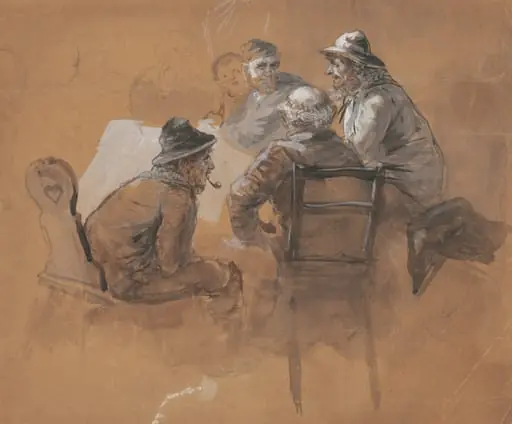 Fishermen
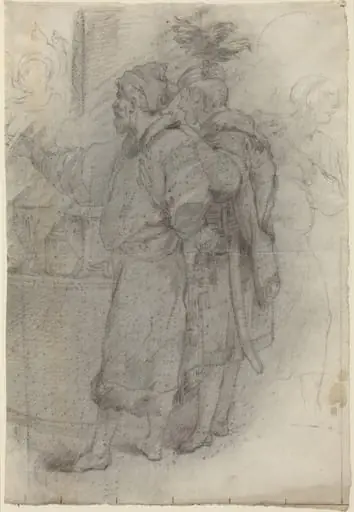 Two Standing Courtiers
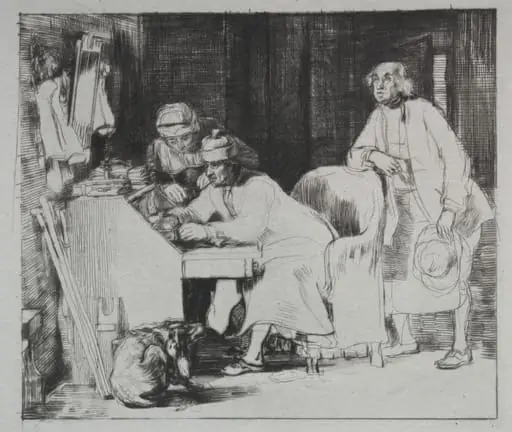 The Lost Receipt
 Faust and Wagner
 Christ Disputing with the Doctors: A Sketch
 Self-Portrait Writing with a Companion
 Don Quixote about to Strike the Helmet
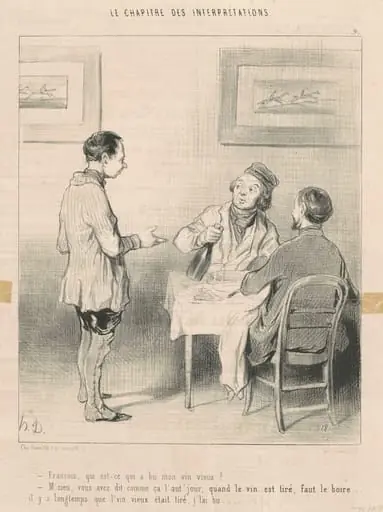 François, qui est-ce qui a bu mon vin ...
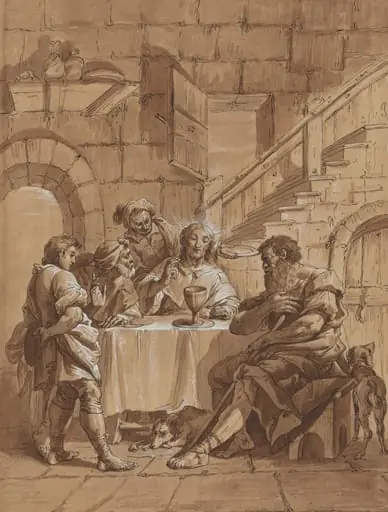 Supper at Emmaus
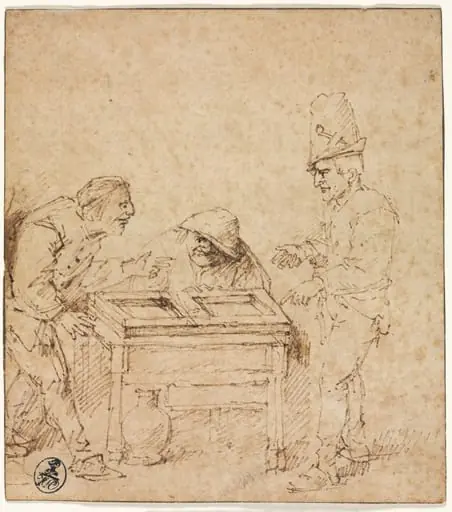 The Tric-Trac Players
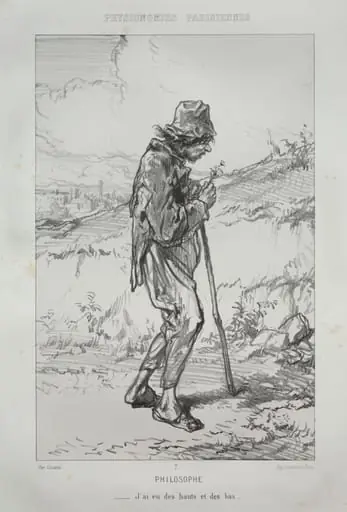 Philosophe
 Don Quixote and Sancho Panza Witness the Attack on Rocinante