Artwork
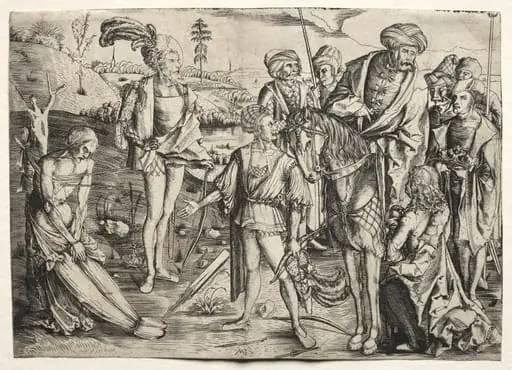
Le pere mort et ses trois fils
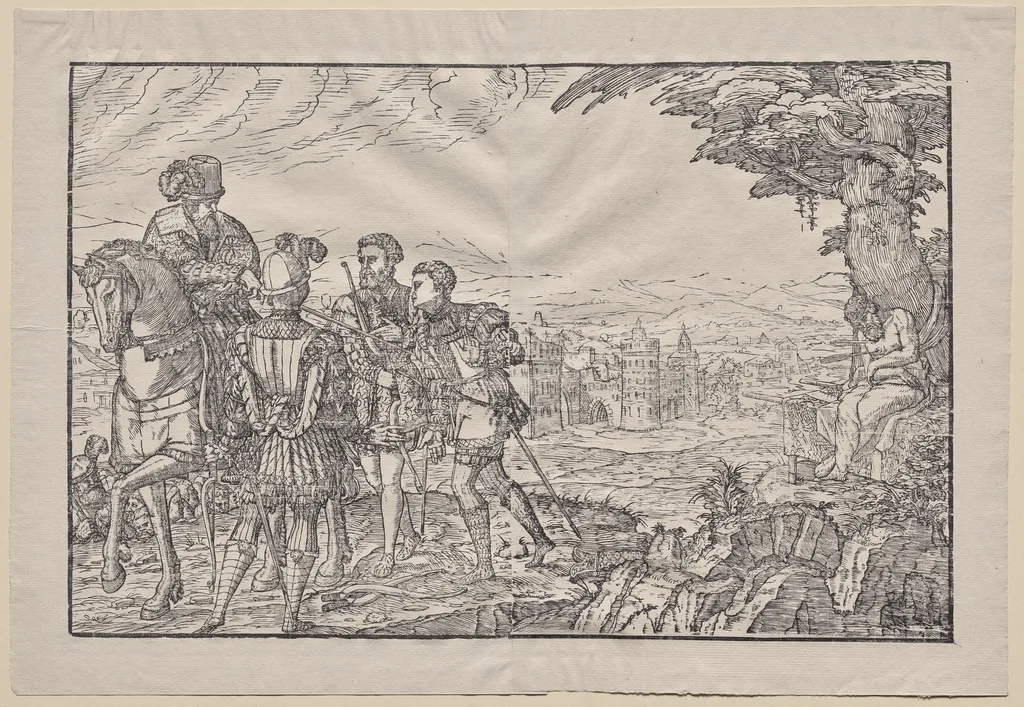
Le pere mort et ses trois fils is a print by the Renaissance artist Melchior Lorck. It dates from 1551 and is held in the collection of the Cleveland Museum of Art.
About this work
Overview
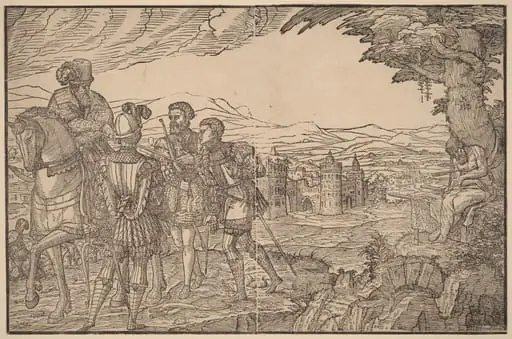
The composition portrays four male figures in a dynamic arrangement, with one mounted rider and three on foot, set against a distant urban landscape.
Le pere mort et ses trois fils is a 1551 print by Melchior Lorck, executed in engraving rather than painting. It is part of the collection at The Cleveland Museum of Art. The composition portrays four male figures in a dynamic arrangement, with one mounted rider and three on foot, set against a distant urban landscape. The work reflects Northern Renaissance printmaking traditions, emphasizing narrative clarity and detailed observation over idealized form.
Subject & Meaning
The title suggests a deceased father and his three sons, though the scene does not depict mourning directly. Instead, it shows a procession or military escort, possibly symbolizing inheritance, duty, or the transition of authority. The armored figures on foot may represent sons in service, while the mounted man, distinguished by attire, could signify leadership or status. The ambiguity invites interpretation without explicit narrative resolution.
Technique & Style
Lorck employed fine-line engraving to render texture and movement with precision. Bold contours define figures and armor, while delicate hatching models light and shadow, creating subtle depth. The background cityscape is rendered with architectural detail, contrasting with the energetic posture of the riders. The absence of vivid color is typical of prints of the period, where tonal variation and line quality carried expressive weight.
History & Provenance
Created in 1551 during Lorck’s time in Central Europe, the print likely circulated among educated elites familiar with humanist themes. It entered The Cleveland Museum of Art’s collection in the 20th century, having passed through private holdings in Europe. Its survival in good condition reflects its value as a rare example of Lorck’s narrative prints, which were less common than his portraits and topographical works.
Context
Lorck worked amid the religious and political upheavals of the Reformation, producing images that blended documentary realism with allegorical undertones. This print aligns with contemporary Northern European traditions that favored secular narratives in print form, often commissioned by patrons interested in civic order, lineage, or military life. The scene’s tension between individual figures and structured environment reflects broader cultural concerns about authority and succession.
Legacy
Though not widely reproduced, Le pere mort et ses trois fils remains a significant example of Lorck’s ability to convey complex human relationships through precise draftsmanship. It contributes to understanding how printmakers in the mid-16th century engaged with moral and familial themes without overt religious symbolism. Scholars cite it as evidence of the expanding scope of print subjects beyond biblical or mythological subjects.
Artist & collection
Artist
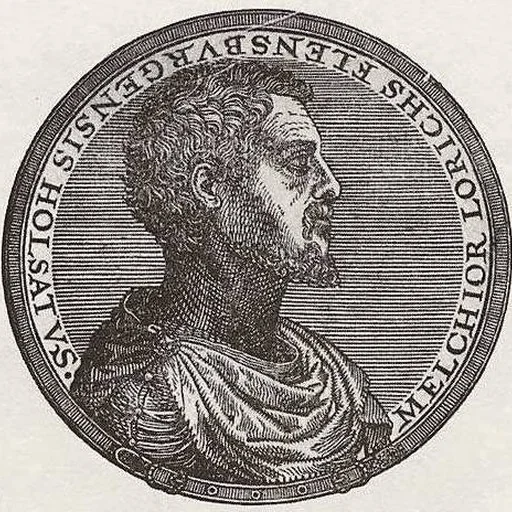
Melchior Lorck (also Lorch, Lorichs and Lorich; 1526/27 – 1583) was a Renaissance painter, draughtsman, and printmaker of Danish-German origin.

 The King's Son
 Christ Tells His Disciples of the Last Judgment
 Five Soldiers and a Turk on Horseback
 Predigt Johannes des Täufers
 St. John on the Island of Patmos
 The Story of the Dead King and his Three Sons
 The Adoration of the Magi
 Triumph of Caesar: The Senators
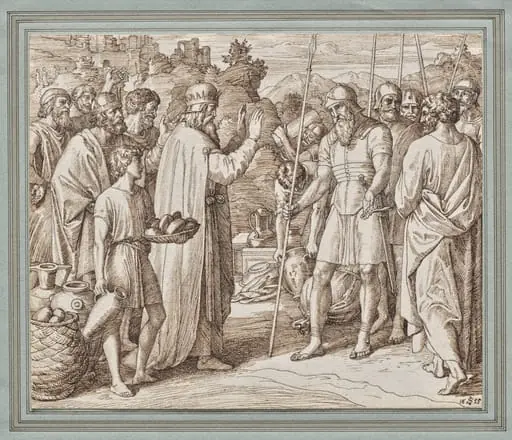 Melchizedek Blessing Abraham
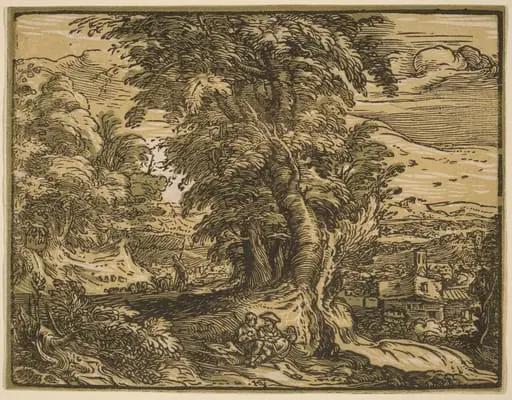 Landscape with a Shepherd Couple
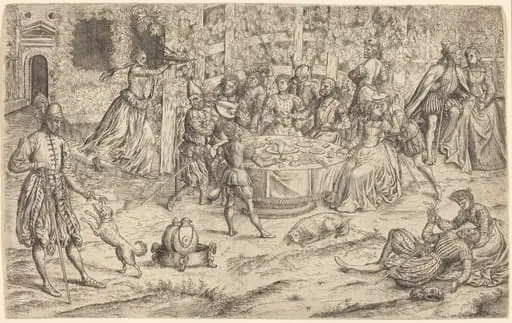 Banquet in the Park of a French Castle
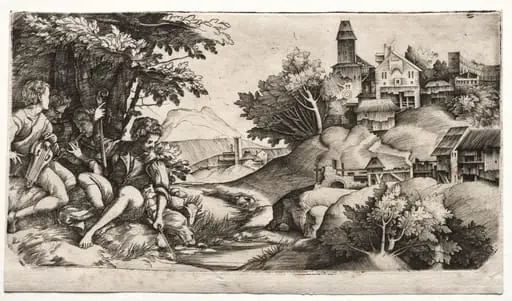 Shepherds in a Landscape