Artwork
Henriette Anne of England, Duchess of Orléans
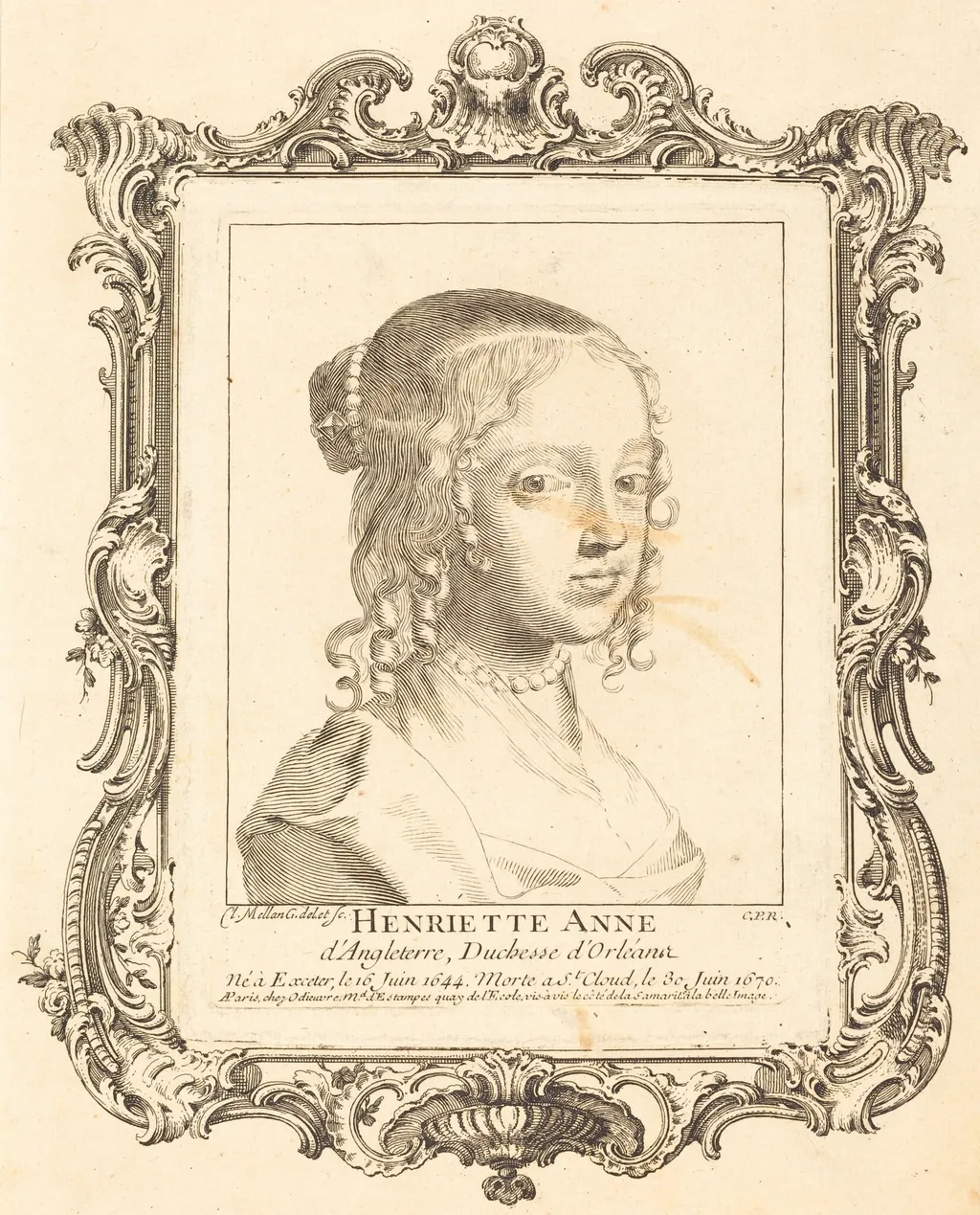
Henriette Anne of England, Duchess of Orléans is an ink print by the Renaissance artist Claude Mellan. It dates from 1643 and is held in the collection of the National Gallery of Art.
About this work
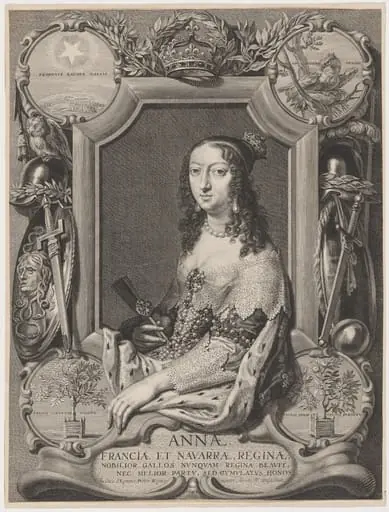
The background is plain, but the edges of the frame are packed with swirling, ornate designs—like vines and scrolls—that look carved from stone.
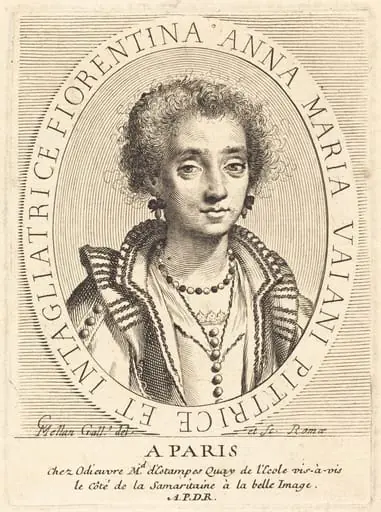
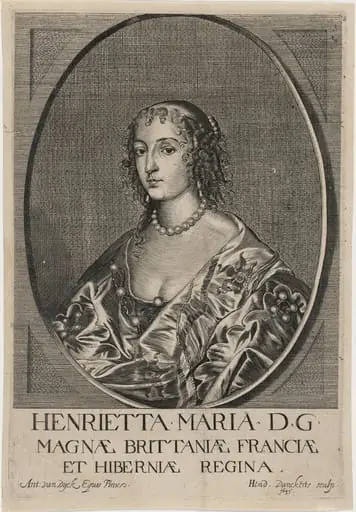
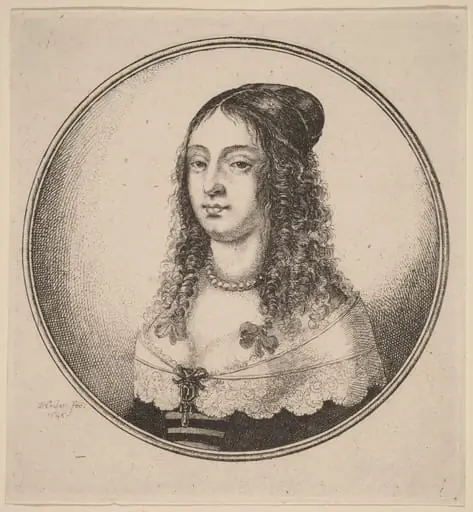
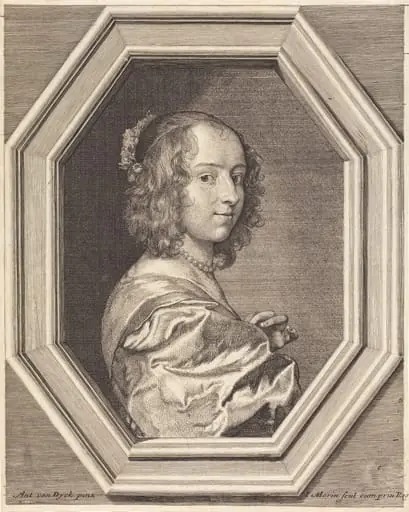
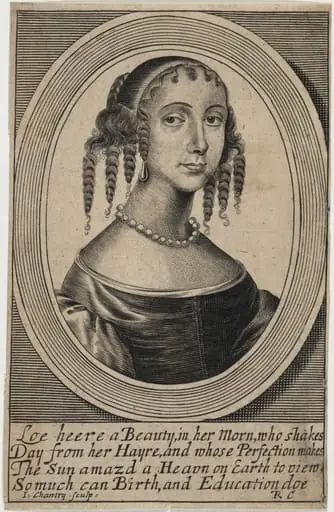
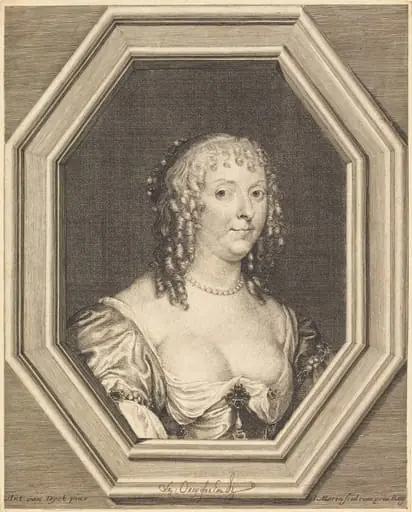
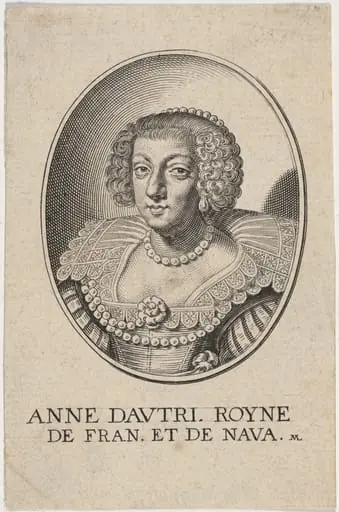
This is a black-and-white portrait of a woman with a serious expression. She wears a high collar and loose curls framing her face. The background is plain, but the edges of the frame are packed with swirling, ornate designs—like vines and scrolls—that look carved from stone.
The name below reads *Henriette Anne d’Angleterre*, and the dates say she was born in 1644 and died in 1670. The artist’s mark reads *Mellan*, and the technique uses fine lines to build up shadows and details.
Next, check out engraving to see how artists like this create depth with just ink and paper.
Overview
Claude Mellan’s 1643 engraving presents Henriette‑Anne of England, later Duchess of Orléons, in a restrained, monochrome portrait. The sitter’s solemn gaze is framed by a high collar and loosely arranged curls, set against an unadorned background that isolates her figure.
Subject & Meaning
The work records Henriette‑Anne, daughter of Charles I of England, emphasizing her noble status through dignified attire and composed expression. The decorative border of intertwined vines and scrolls, reminiscent of stone carving, reinforces her aristocratic lineage and the ceremonial nature of the portrait.
Technique & Style
Mellan employs his characteristic fine‑line stippling, building tonal variation through densely packed parallel strokes. The engraving on laid paper achieves subtle gradations of shadow without cross‑hatching, demonstrating the artist’s skill in rendering volume and texture solely with ink.
History & Provenance
Created in 1643, the print bears the inscription “Henriette Anne d’Angleterre” and dates the sitter’s life as 1644–1670. Mellan’s signature appears beneath the image, confirming authorship. The engraving circulated among collectors of royal portraiture in the mid‑seventeenth century, reflecting contemporary interest in the English royal family.
Context
Mellan’s portrait aligns with the French court’s taste for refined, linear portraiture during the early reign of Louis XIV. By portraying an English princess who married into the French Orléans branch, the work underscores diplomatic ties between England and France in the turbulent pre‑Restoration era.
Artist & collection