Artwork
A Young Nun
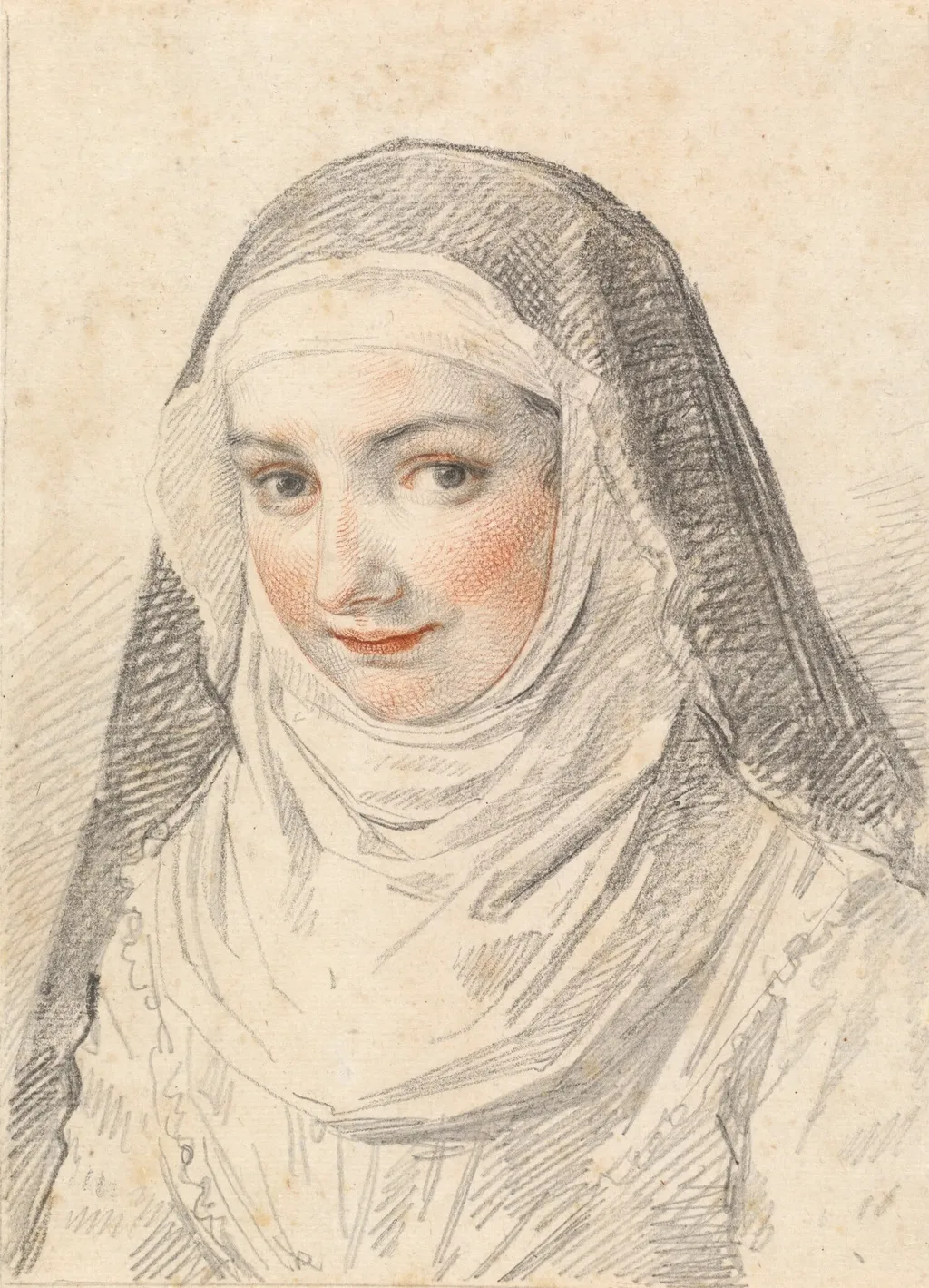
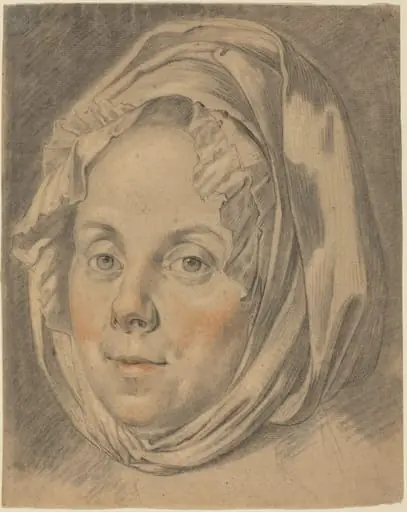
A Young Nun is a graphite drawing by the Renaissance artist Claude Mellan. It dates from 1643 and is held in the collection of the National Gallery of Art.
About this work
Overview
This drawing, dated 1643, is attributed to Claude Mellan and depicts a young woman in religious attire. Executed in graphite, black chalk, and red chalk on laid paper, the work emphasizes the subject’s facial features through delicate modeling. The composition minimizes background details, directing attention to the figure’s expression and the subtle interplay of light and shadow.
Subject & Meaning
The figure wears a white head covering and modest neckline consistent with a nun’s habit, suggesting a religious subject. Her gentle expression—marked by soft shading and a faint smile—conveys quiet contemplation or devotion. The absence of contextual elements reinforces the focus on her inward state, possibly reflecting ideals of piety or spiritual serenity in 17th-century European convent life.
Technique & Style
Mellan employs fine, controlled strokes of graphite and chalk to render the subject’s features with precision. The use of red chalk on the cheeks introduces a subtle warmth, contrasting with the cooler tones of the graphite. Light shading defines volume without heavy contouring, a technique that aligns with the period’s emphasis on naturalism and restrained elegance in portraiture.
History & Provenance
Created in 1643, the drawing’s early history remains undocumented. Its survival on laid paper, a common support for sketches of the era, suggests it may have been a preparatory study or an independent work. The absence of later inscriptions or stamps limits knowledge of its ownership prior to modern collections, though its attribution to Mellan has been maintained.
Context
During the mid-17th century, French artists increasingly explored secular and religious portraiture in drawings, often using chalk to achieve lifelike effects.
During the mid-17th century, French artists increasingly explored secular and religious portraiture in drawings, often using chalk to achieve lifelike effects. Mellan, known for both his engravings and studies of figures, participated in this trend. Works like this reflect the era’s interest in capturing individual character while adhering to conventions of modesty and restraint, particularly in depictions of women.
Artist & collection

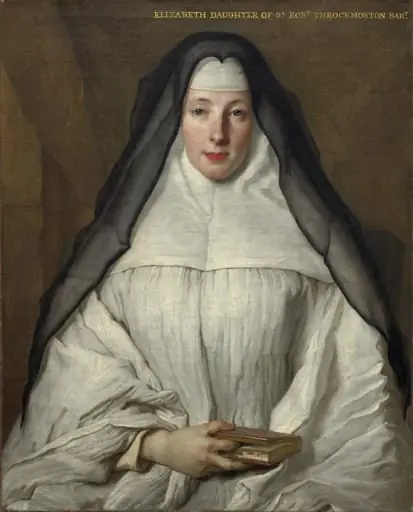 Elizabeth Throckmorton, Canoness of the Order of the Dames Augustines Anglaises
 Head of a Matron
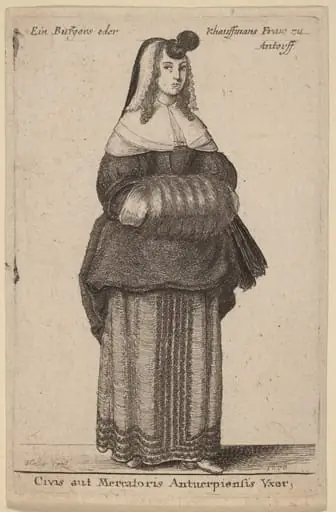 Ciuis aut Mercatoris Antuerpiensis Vxor
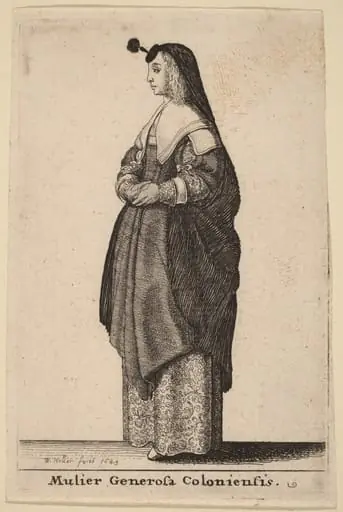 Mulier Generosa Coloniensis
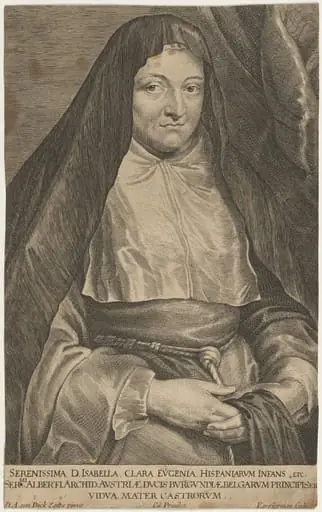 Isabella Clara Eugenie as a Nun
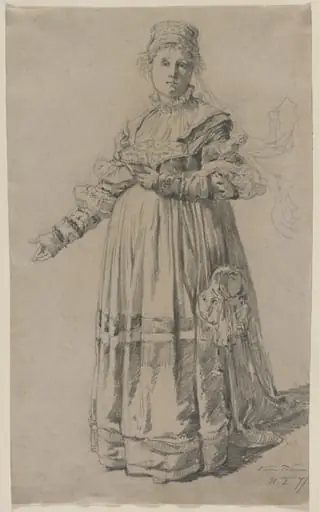 Standing Woman
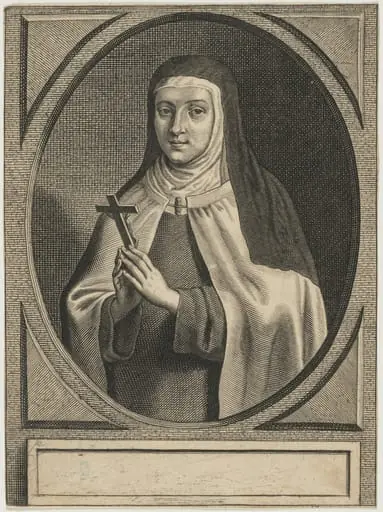 Portrait of a Nun Holding Crucifix
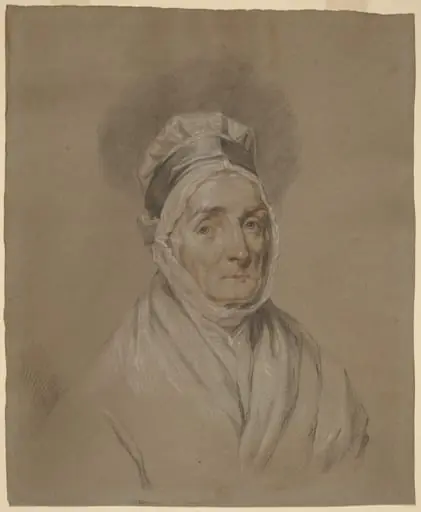 Mrs. Benjamin Fisher
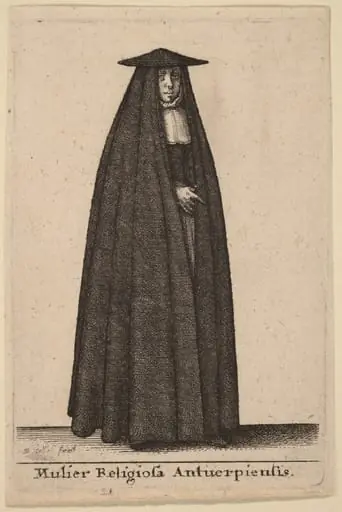 Mulier Religiosa Antuerpiensis
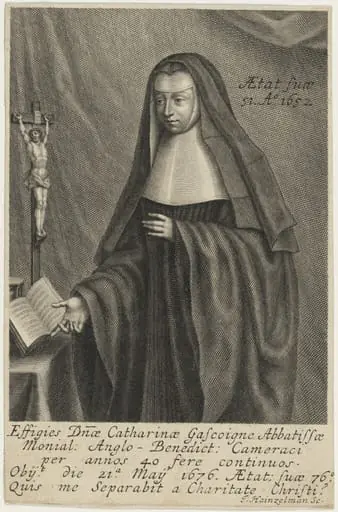 Catherine Gascoigne
 Mulier ex Ducatu Wirttembergensi
 Portrait of a praying nun