Artwork
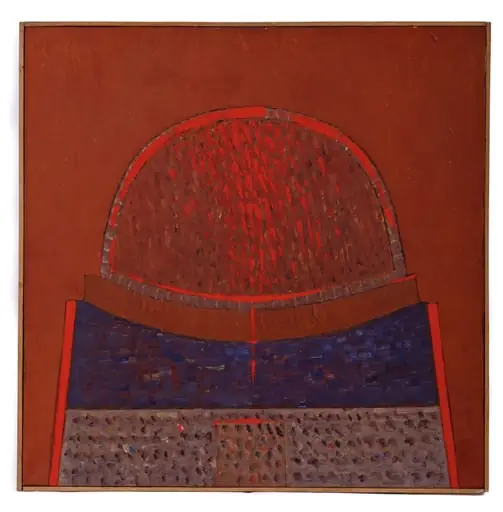
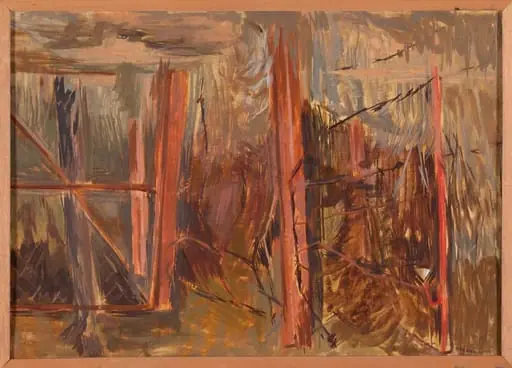
Poartă veche
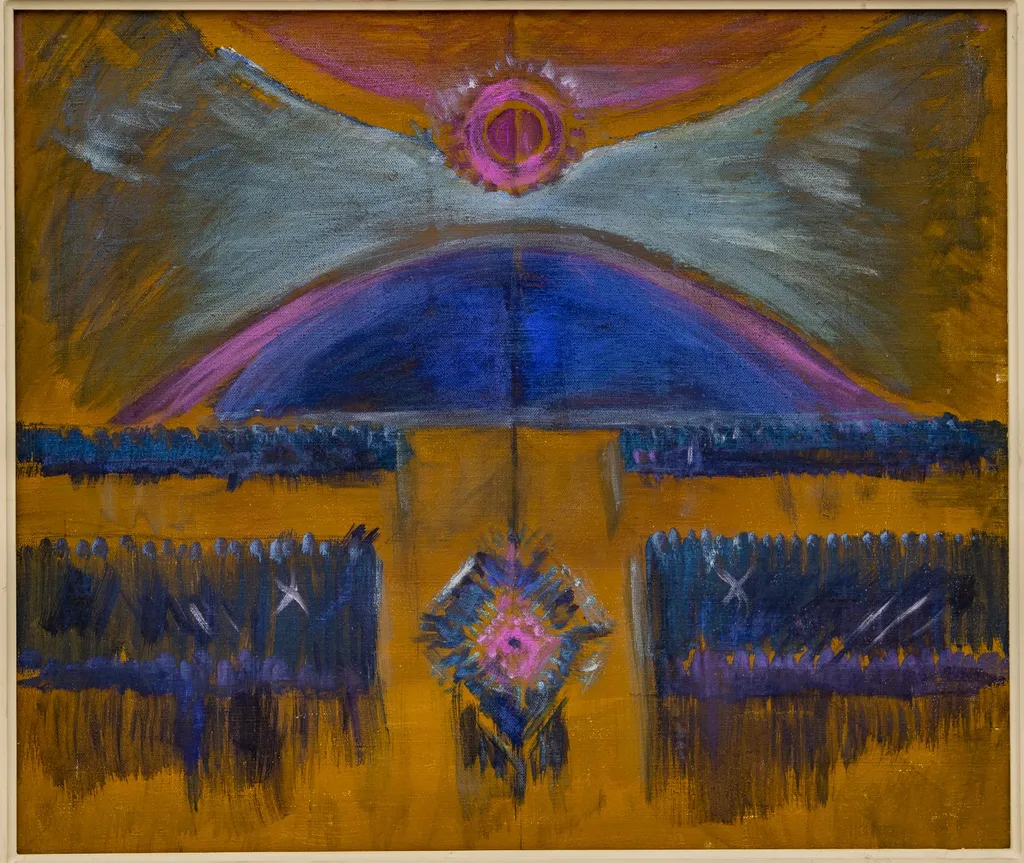
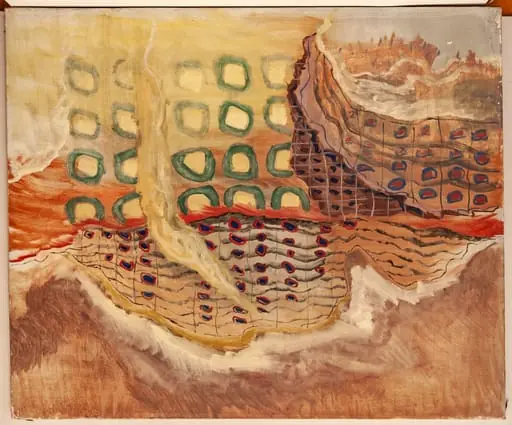
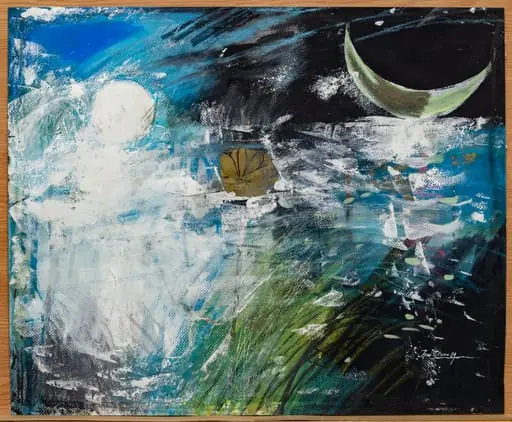
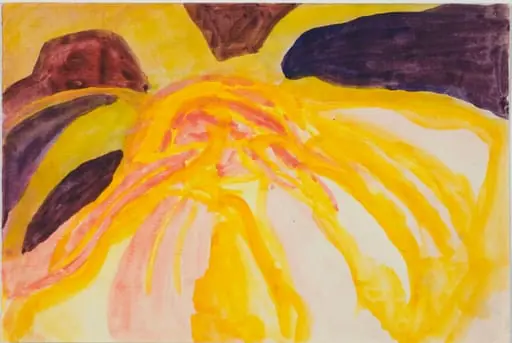
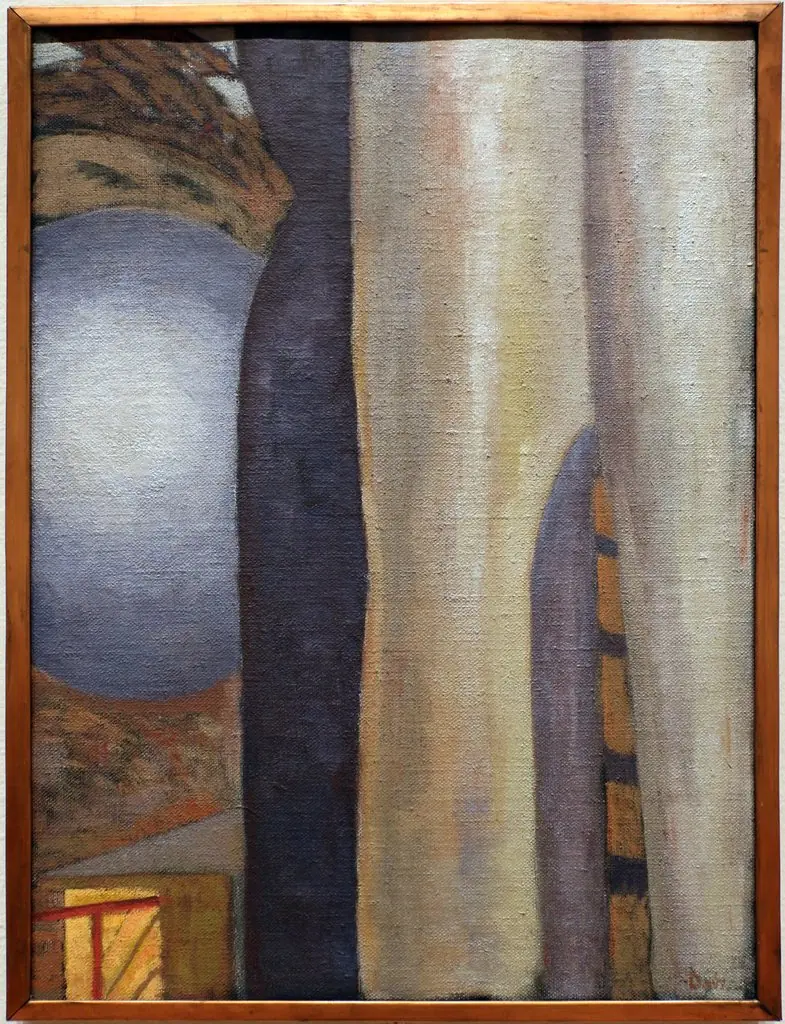
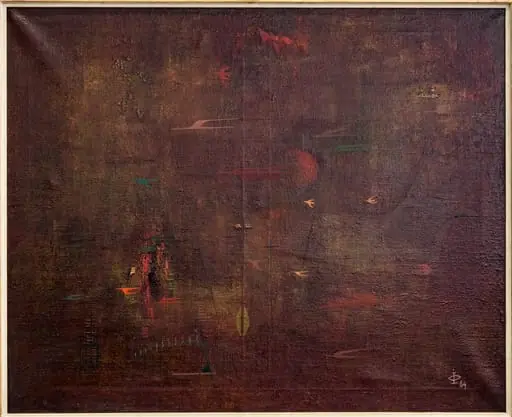
Poartă veche is an unspecified painting by Cornel Mermeze. It is held in the collection of the Gavrila Simion Eco-Museum Research Institute Tulcea. This image depicts an interior space rendered in muted tones, dominated by deep brown walls and a single luminous archway at the rear.
About this work
Overview
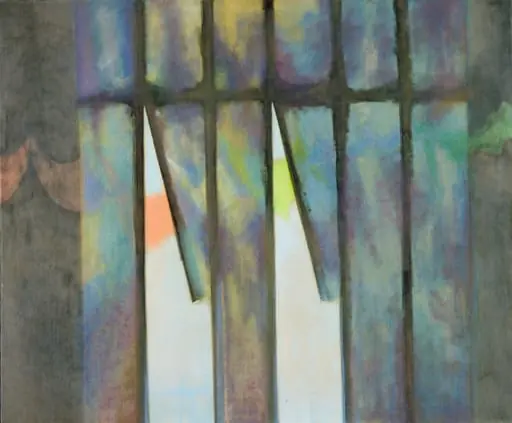
This image depicts an interior space rendered in muted tones, dominated by deep brown walls and a single luminous archway at the rear.
This image depicts an interior space rendered in muted tones, dominated by deep brown walls and a single luminous archway at the rear. The arch emits a soft, colored glow—pink and blue—contrasting with the surrounding shadows. Two slender windows flank the arch, their surfaces suggesting diffused light through wavy, linear patterns. The composition emphasizes stillness and ambiguity, drawing attention to the arch as a focal point of unseen significance.
Subject & Meaning
The subject is an architectural threshold, not a literal doorway but a symbolic passage. The radiant arch, centered with a star-like form, suggests a hidden source of light or spiritual presence. The dim, enclosed room implies secrecy or introspection, while the windows, though present, offer no view outward. The scene evokes contemplation rather than narrative, inviting interpretation as a metaphor for transition or inner revelation.
Technique & Style
The work employs subtle gradations of tone to create depth, with the arch’s glow achieved through layered, translucent washes of pink and blue. The walls are rendered in dark, earthy browns, enhancing the luminosity of the central form. Wavy lines within the windows suggest light filtering through textured glass or moisture. The absence of sharp detail and the emphasis on atmospheric effect align with a quiet, tonalist approach, prioritizing mood over realism.
History & Provenance
No documented history or provenance is available for this image. It is cataloged as an unattributed visual work, likely produced in the late 20th or early 21st century. Its classification as an 'IMAGE' without medium specification suggests it may be a digital rendering or reproduction, though its aesthetic echoes traditional painting techniques. Its origin remains unidentified.
Context
The composition resonates with late 19th- and early 20th-century tonalist and symbolist traditions, where light functioned as emotional or metaphysical signifier. Similar treatments appear in works by artists like James McNeill Whistler or Fernand Khnopff, who used dim interiors and ethereal glows to convey psychological states. The absence of figures or narrative anchors the piece in abstraction, aligning it with modernist tendencies toward ambiguity and silence.
Legacy
Though not part of a known artistic movement or canon, the image contributes to a broader visual language of threshold and light in contemporary visual culture. Its quiet intensity has been referenced in digital art and film stills exploring liminal spaces. The suggestion of impasto, though unconfirmed, points to an interest in tactile texture, even in non-traditional media, influencing minimalist and atmospheric digital aesthetics.
Artist & collection
Artist
Museum
Gavrila Simion Eco-Museum Research Institute Tulcea
Continue through works from the same source collection.