Artwork
Bazargic
Bazargic is a print by Sever Mermeze. It is held in the collection of the Gavrila Simion Eco-Museum Research Institute Tulcea.
About this work
Overview
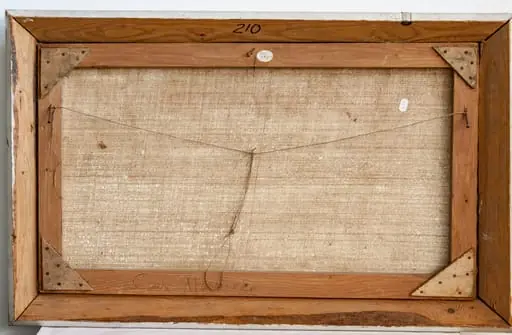
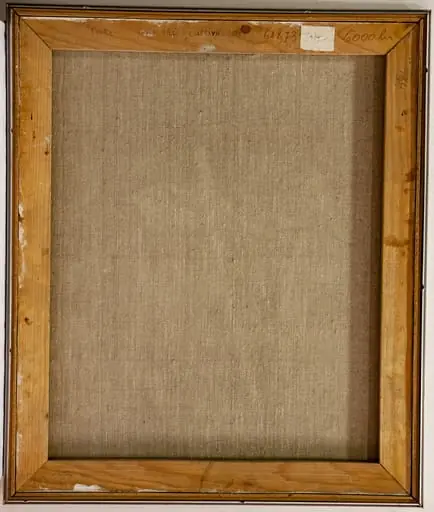
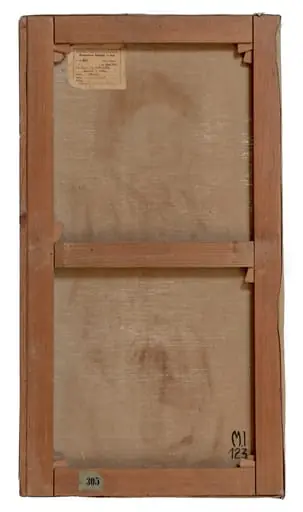
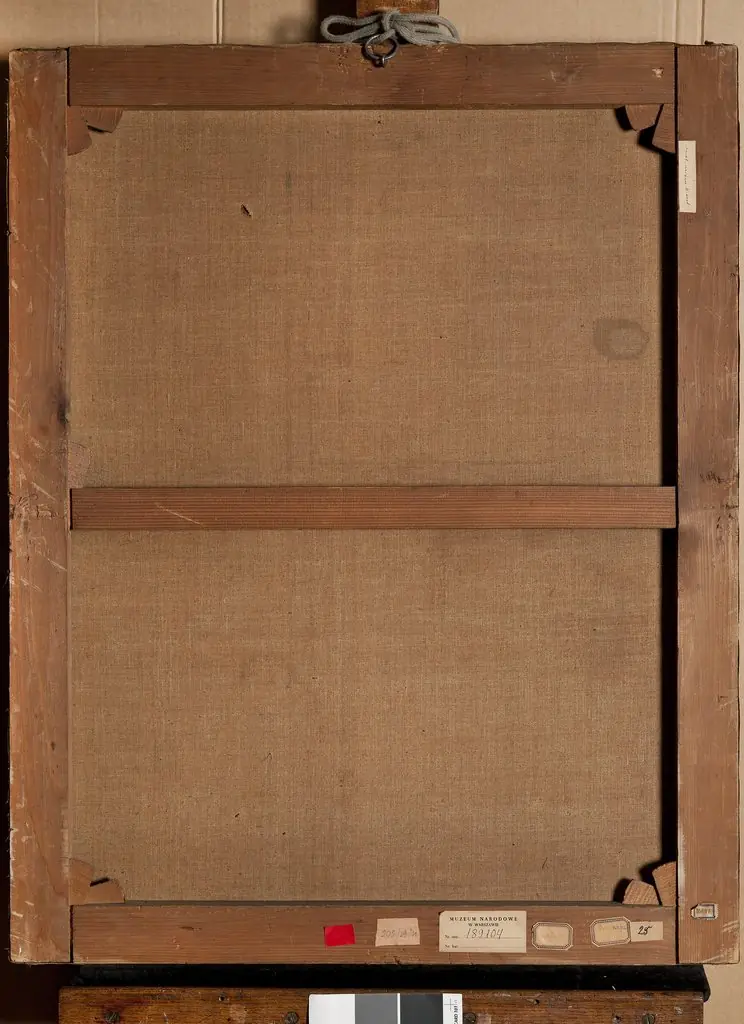
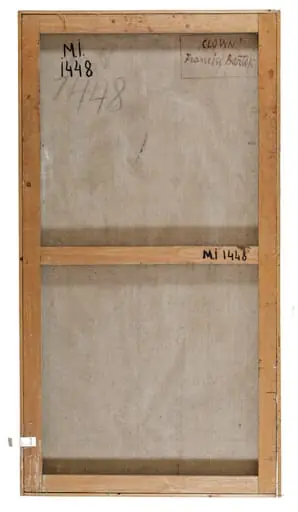
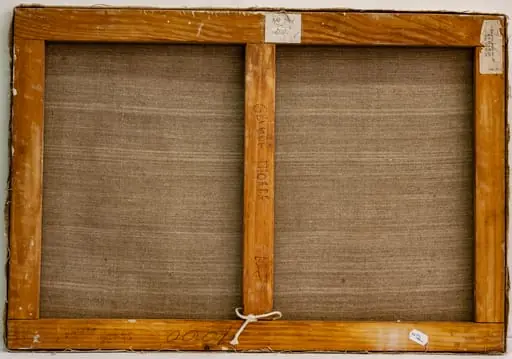
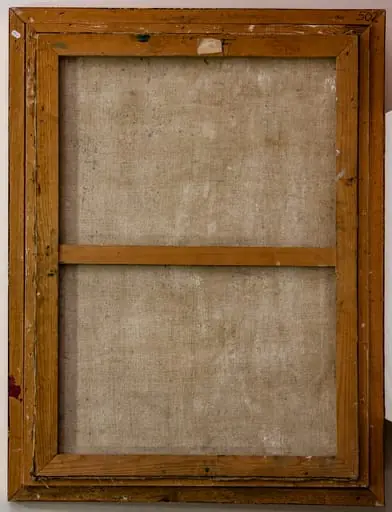
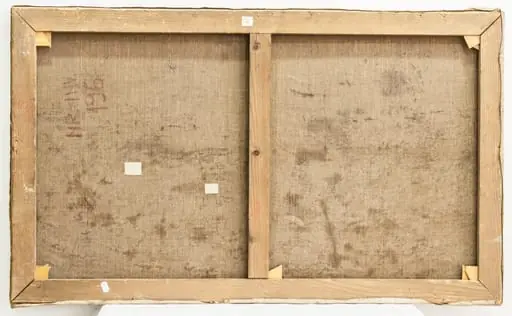
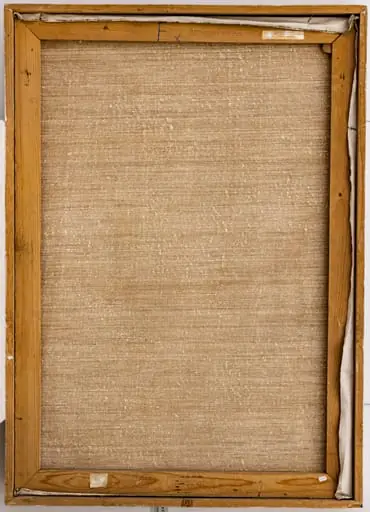
Small labels and handwritten numbers are affixed to the inner edges, likely from galleries or handlers.
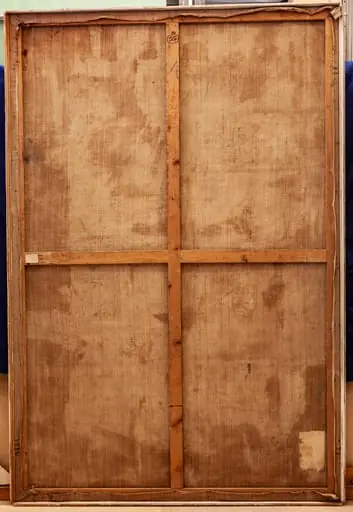
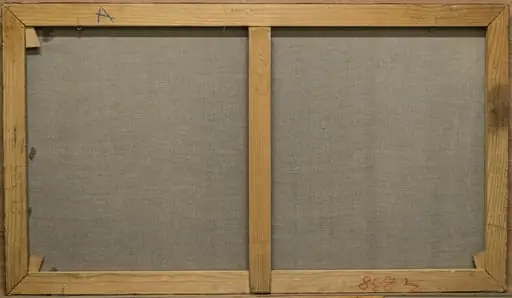
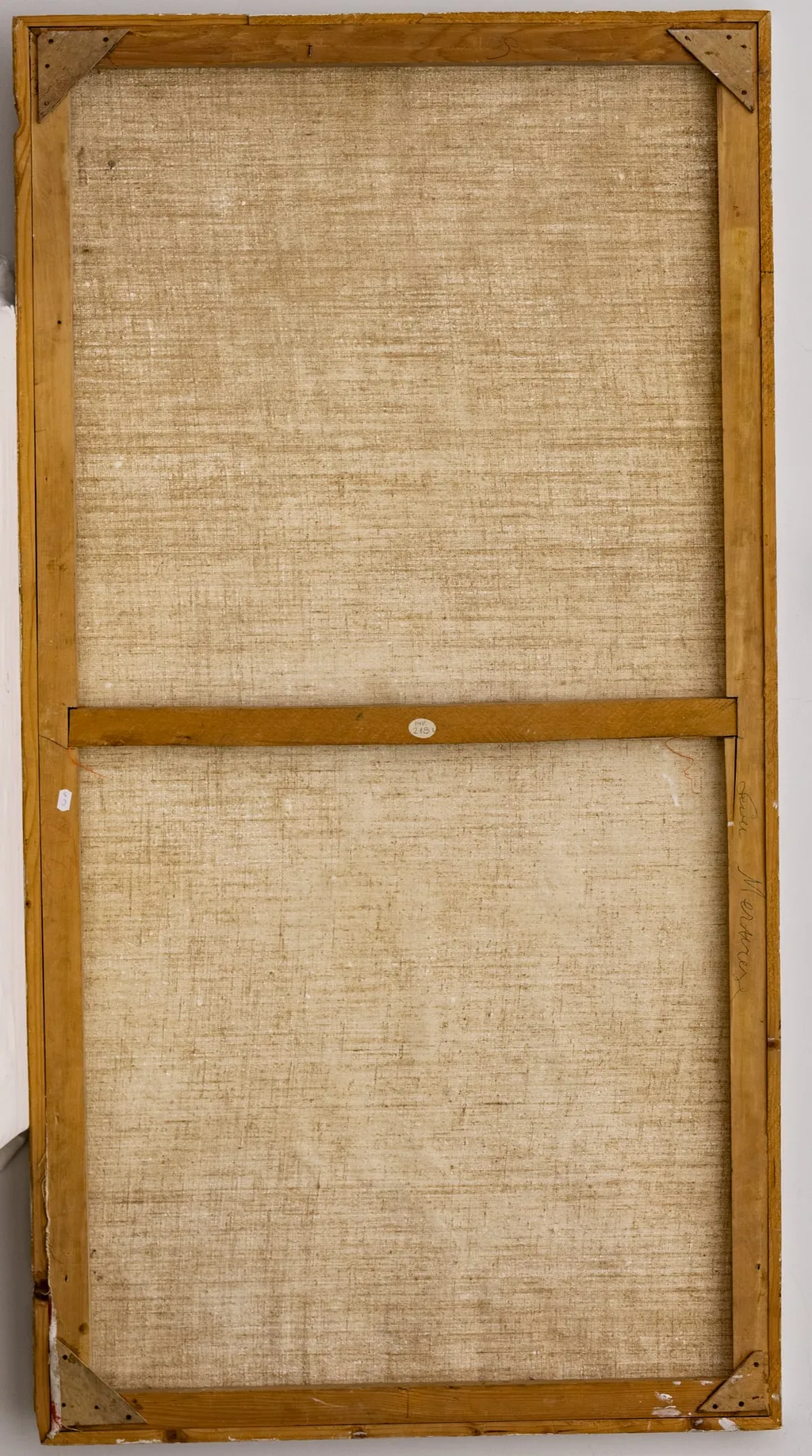
The reverse of a framed painting reveals its structural foundation: a tightly stretched canvas covered in a plain, neutral fabric, secured to a light brown wooden frame. Small labels and handwritten numbers are affixed to the inner edges, likely from galleries or handlers. The fabric shows signs of age—faint discolorations and minor wear—evidence of time and handling. This side, typically unseen, holds the physical history of the artwork’s construction and movement.
Subject & Meaning
No imagery is visible on this side; the subject lies entirely on the front. The reverse serves only as a support, devoid of narrative or symbolic content. Its significance lies not in what it depicts, but in what it preserves: the material trace of the artwork’s physical existence, from studio to storage to exhibition.
Technique & Style
The canvas is stretched evenly over a simple wooden frame, a standard method for mounting paintings. The fabric covering is likely a traditional lining or backing, applied to protect the paint layer and stabilize the support. The absence of decorative elements or elaborate framing suggests a utilitarian approach, consistent with practical studio practices rather than aesthetic display.
History & Provenance
The labels and numbers on the frame’s interior indicate past ownership or institutional handling. Their presence suggests the work has moved through collections or storage systems, each mark a record of its journey. The worn fabric and aging wood imply decades of environmental exposure, though no specific dates or locations are visible here.
Context
This reverse view reflects common conservation practices in 20th-century painting. Many artists and framers prioritized structural integrity over visible decoration on the back. The simplicity of the materials aligns with modest studio conditions, contrasting with the often elaborate fronts of works by artists like Mermeze, Sever, whose public-facing pieces may carry more complex visual languages.
Legacy
Though unadorned, the reverse preserves evidence of the artwork’s material life. These hidden details—labels, fabric wear, frame joints—are critical to conservators and historians seeking to trace origins, verify authenticity, and understand how artworks were handled over time. This side, though silent, speaks through its physical traces.
Artist & collection
Artist
A Romanian artist who focused on the rugged Apuseni Mountains, Sever Mermeze left us prints and paintings that capture the region’s sharp peaks and deep forests.
Museum
Gavrila Simion Eco-Museum Research Institute Tulcea
Continue through works from the same source collection.