Artwork
Moliere's Tomb
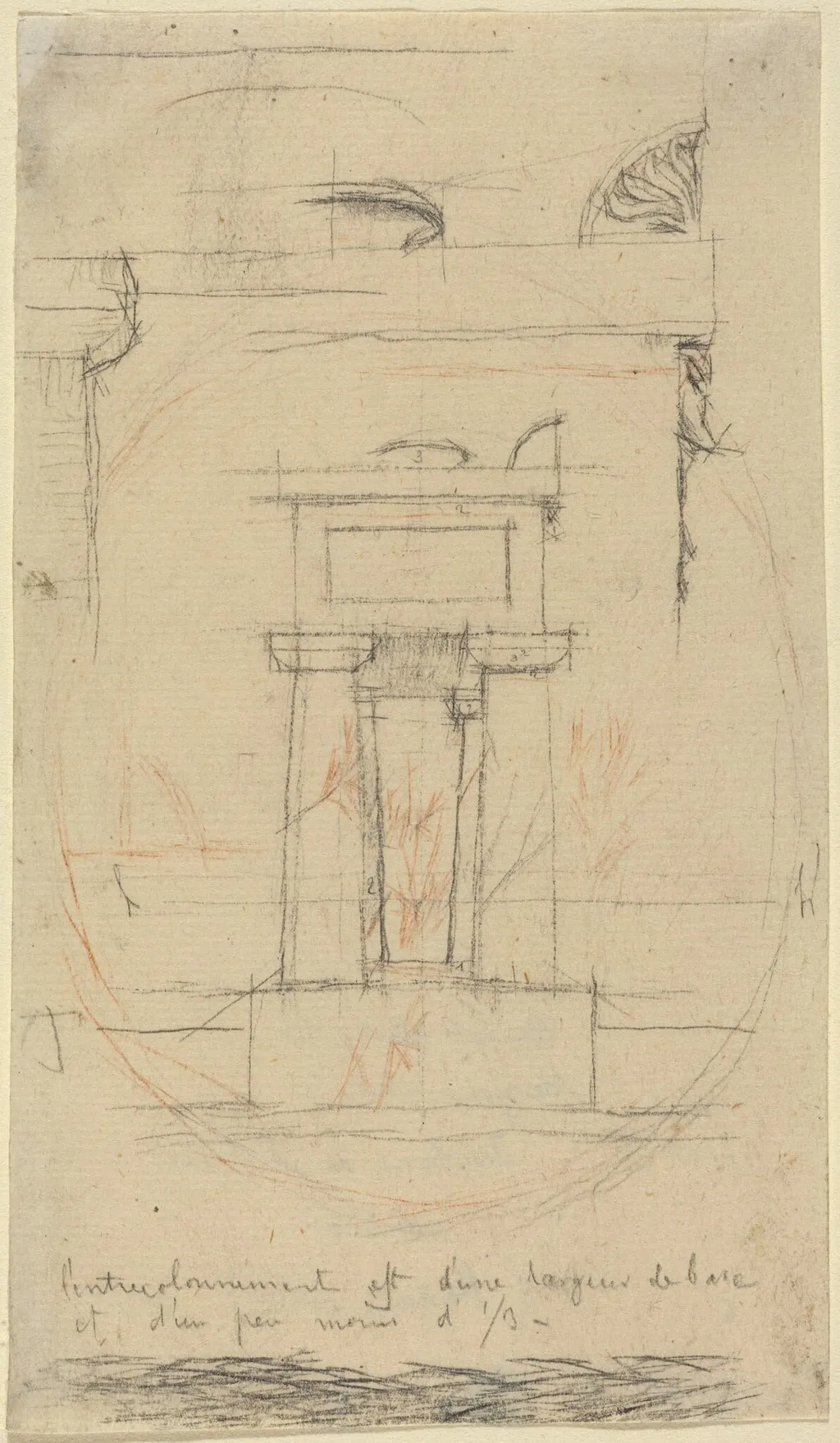
Moliere's Tomb is a graphite drawing by the Impressionist artist Charles Meryon. It dates from 1854 and is held in the collection of the National Gallery of Art.
About this work
Overview
Charles Meryon created this graphite and red chalk drawing around 1854, capturing the tomb of the French playwright Molière. Executed on laid paper, the work reflects his interest in architectural detail and memorial spaces. Though best known for his etchings of Paris, Meryon also produced intimate sketches like this one, often made on-site with careful attention to form and proportion.
Subject & Meaning
The drawing portrays the modest stone tomb of Molière, located in the Church of Saint-Joseph in Paris. Unlike grand monuments, the structure is rendered plainly, emphasizing its quiet dignity. Meryon’s focus on this unadorned site may reflect a personal engagement with legacy and mortality, themes that resonated with him during a period of increasing psychological strain.
Technique & Style
Meryon used loose, rapid graphite lines to define the tomb’s form, with selective red chalk accents to suggest shadow and texture. The sketch’s spontaneity contrasts with its precise annotations—measured dimensions written in French at the base—indicating a methodical approach beneath the apparent haste. This blend of immediacy and documentation characterizes his observational practice.
History & Provenance
Created during Meryon’s active years in Paris, the drawing predates his institutionalization in 1865. It likely stems from his habit of sketching monuments and urban details during walks. After his death in 1868, his works gradually entered public collections, where their quiet intensity earned recognition among specialists of 19th-century graphic art.
Context
Meryon’s interest in tombs and ruins aligned with broader 19th-century European fascination with historical memory and Gothic aesthetics. His drawings of Parisian monuments often conveyed a sense of solitude and decay, reflecting both his artistic vision and personal struggles. This sketch, like others in his oeuvre, bridges topographical record and emotional resonance.
Legacy
Though overshadowed in popular memory by his etchings, Meryon’s drawings, including this one, reveal his disciplined eye and sensitivity to architectural presence. They remain important for understanding his process and the quiet, introspective side of his art. Scholars value these works as direct records of his engagement with place and history.
Artist & collection
Artist
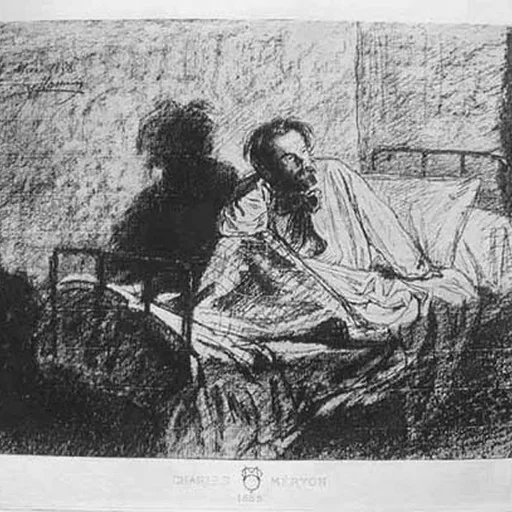
Charles Meryon (sometimes Méryon, 23 November 1821 – 14 February 1868) was a French artist who worked almost entirely in etching, as he had colour blindness.

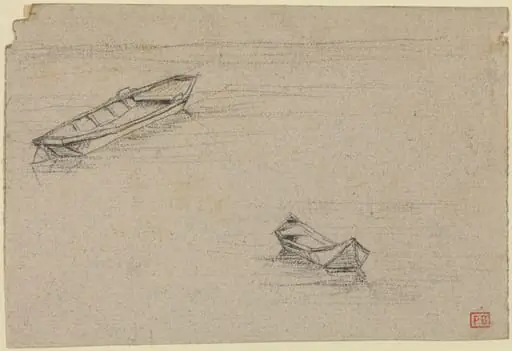
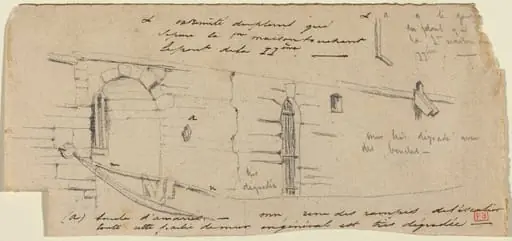
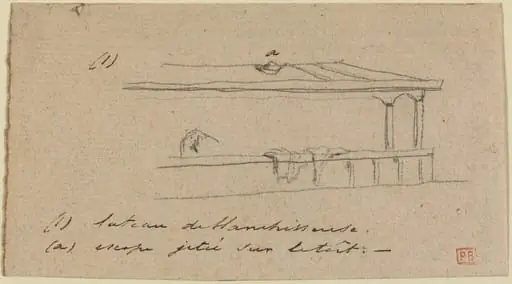
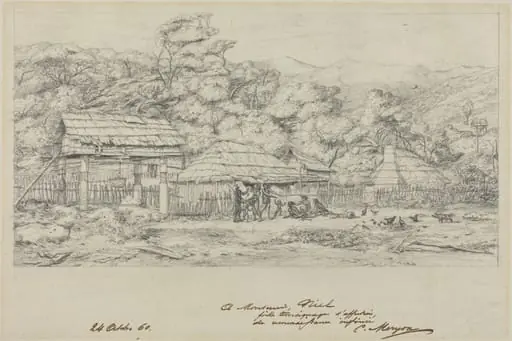
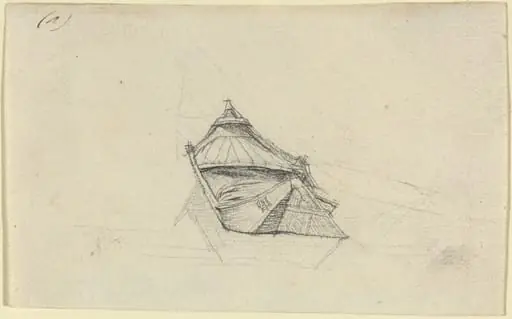
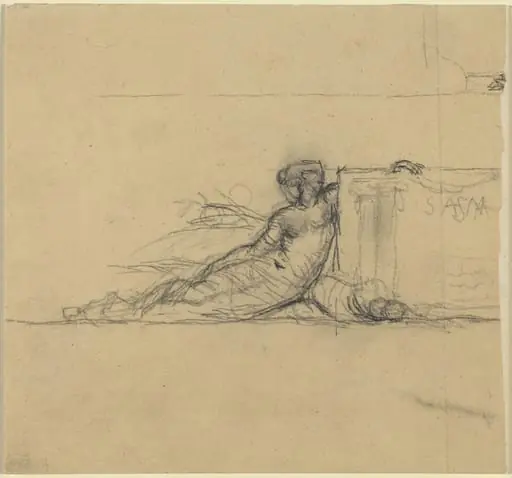
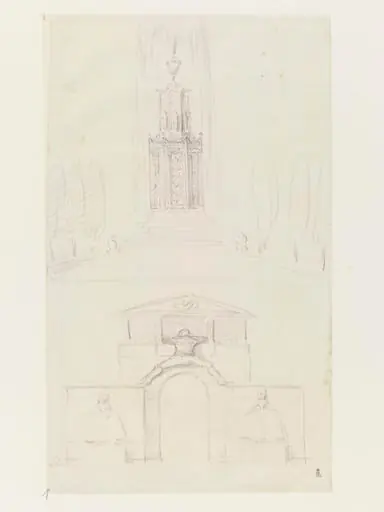 Pencil drawing of a fountain and entryway
![Sheet of Studies [recto and verso], by John Flaxman](https://artifactworldgallery.com/img/john-flaxman--sheet-of-studies-recto-and-verso--624ac0ec758f08e5-w320.webp) Sheet of Studies [recto and verso]
Sheet of Studies [recto and verso]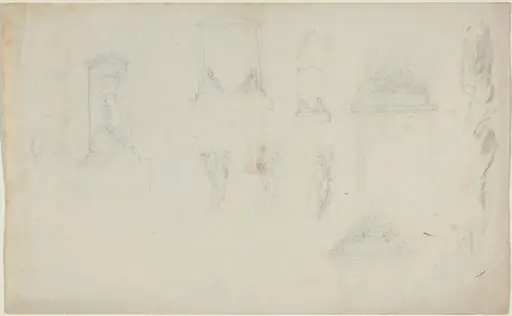 Studies for a Monument
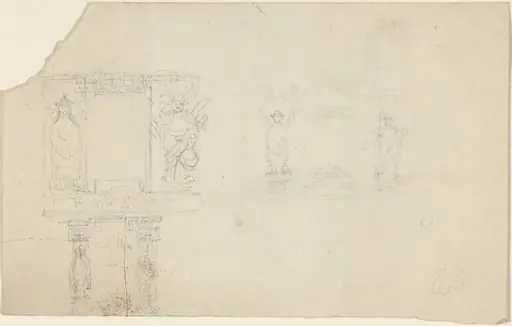 Structure with Figures in Asian Dress (Illustration for “The Casket”?)
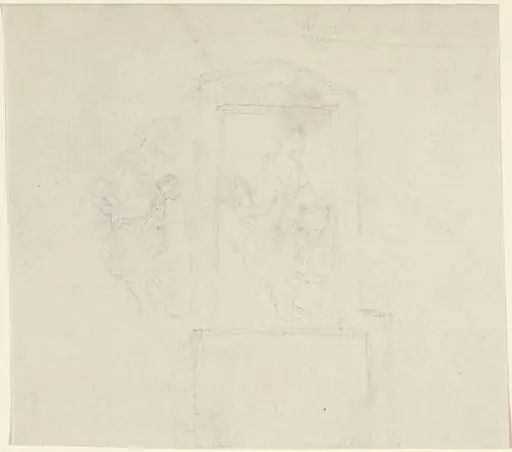 Monument to Agnes Cromwell (?)
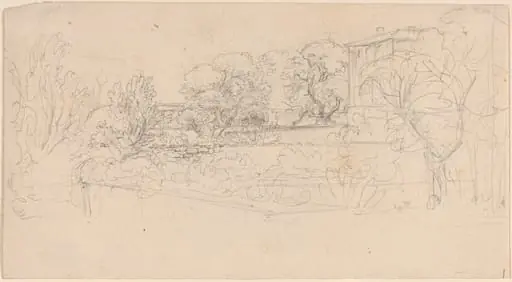 A Terraced Garden by a Villa
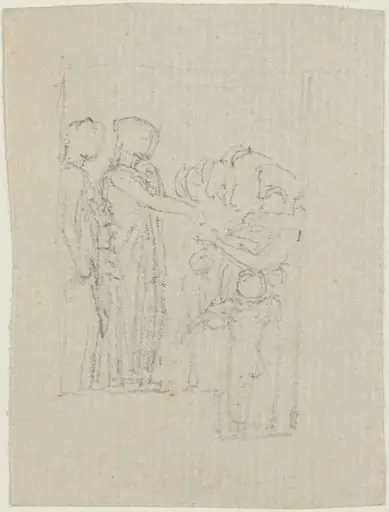 Beggars at a Door (Study for the Yarborough Monument)
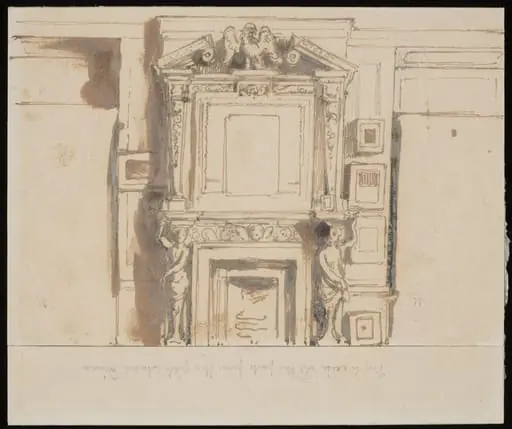 Ornamental Fireplace
![An Ornate Ewer [recto], by David, Sir Wilkie](https://artifactworldgallery.com/img/david-sir-wilkie--an-ornate-ewer-recto--d9c2dee3024c55f9-w320.webp) An Ornate Ewer [recto]
An Ornate Ewer [recto]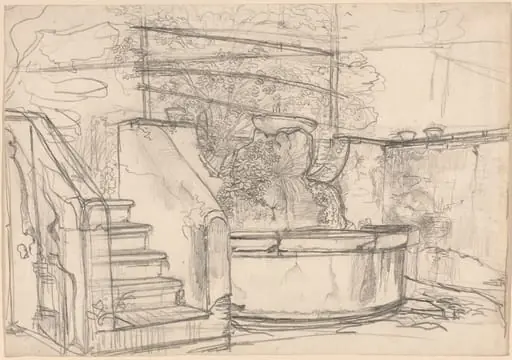 Corner of a Garden Court
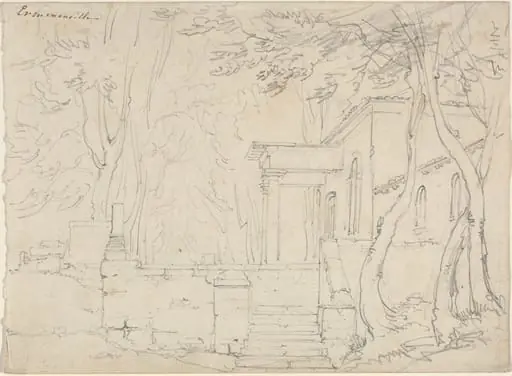 House with a Portico at Ermenonville
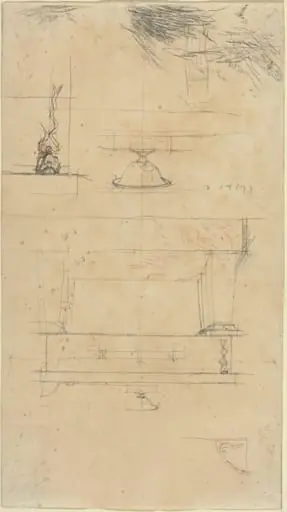 Moliere's Tomb