Artwork
Greniers indigenes et habitations a Akaroa, presqu'Ile de Banks
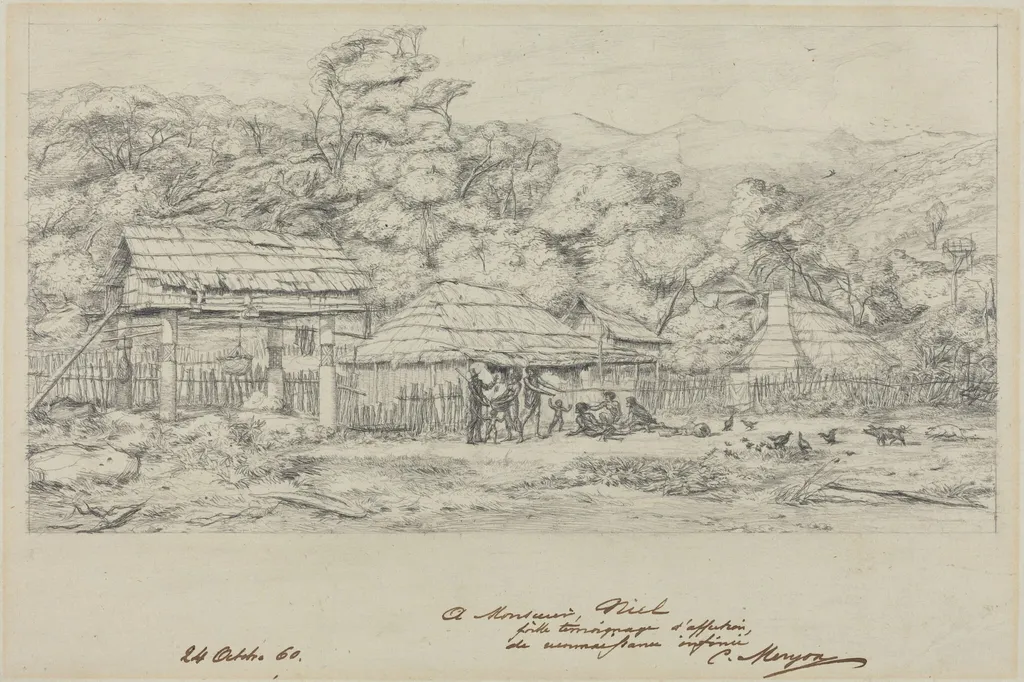
Greniers indigenes et habitations a Akaroa, presqu'Ile de Banks is a graphite drawing by the Impressionist artist Charles Meryon. It dates from 1860 and is held in the collection of the National Gallery of Art.
About this work
Overview
Greniers indigenes et habitations a Akaroa, presqu'Ile de Banks is a 1860 graphite drawing on green wove paper by French artist Charles Meryon, depicting a rural indigenous village scene near Akaroa, Banks Peninsula.
Subject & Meaning
The drawing shows a small, serene indigenous village with thatched and bamboo huts, inhabited by people engaged in everyday activities amidst a natural backdrop of tall trees and water, capturing a moment of quiet, rural life.
Technique & Style
Executed in graphite on green wove paper, the work features soft, sketchy lines characteristic of travel drawings from the period, with Meryon's colour blindness potentially influencing the monochromatic choice.
History & Provenance
Created in 1860 by Charles Meryon, a prominent 19th-century French etcher (notably working in etching due to colour blindness), with recognition more established in France than in the English-speaking world.
Context
This piece aligns with the Realist movement's focus on everyday life, though its creation as a travel sketch also situates it within the tradition of documentary drawings from journeys.
Legacy
As part of Meryon's oeuvre, it contributes to his status as a significant 19th-century French etcher, despite his broader international recognition being somewhat limited.
Artist & collection
Artist
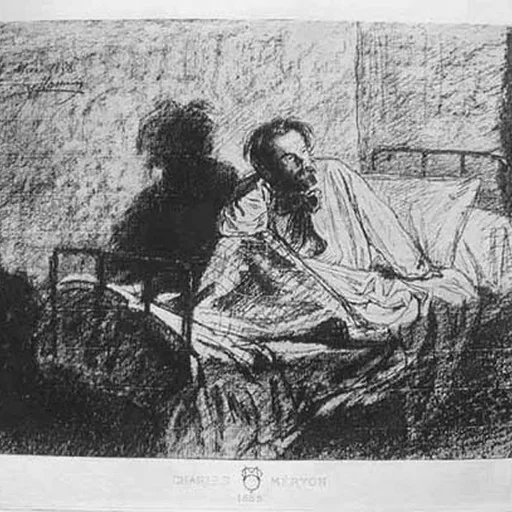
Charles Meryon (sometimes Méryon, 23 November 1821 – 14 February 1868) was a French artist who worked almost entirely in etching, as he had colour blindness.

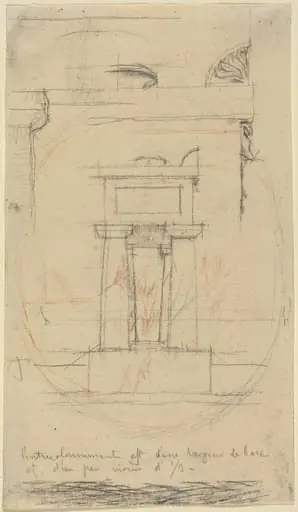
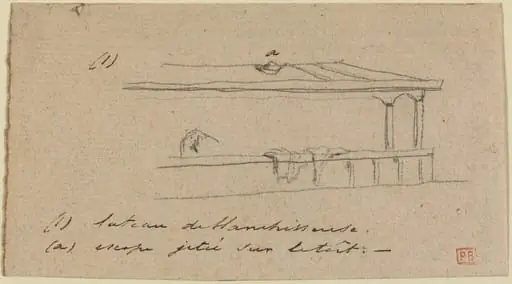
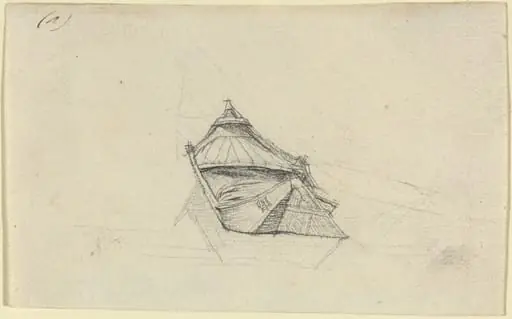
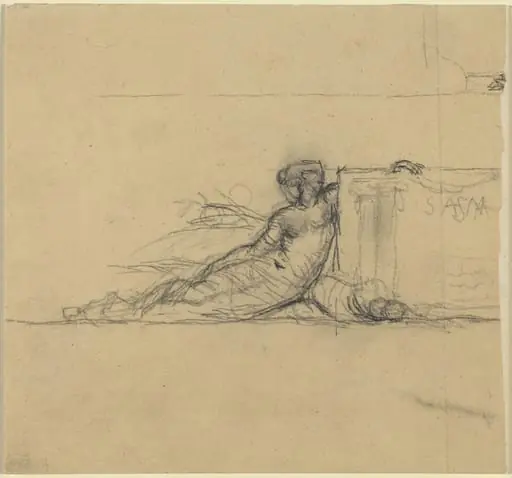
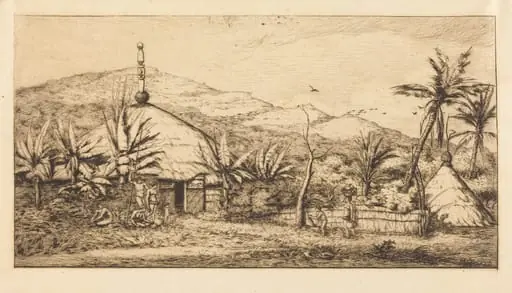 Nouvelle-Calédonie: Grande case indigène sur le chemin de Ballade à Poepo, 1845 (New Caledonia: Large Native Hut on the Road from Balade to Puebo, 1845)
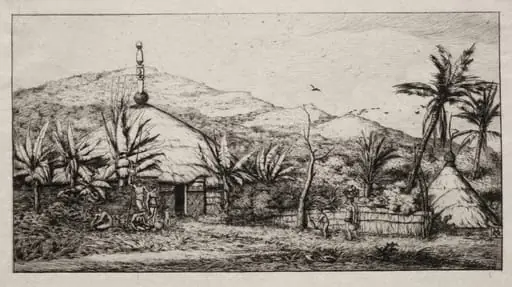 New Caledonia: Large Native Hut on the Road from Balade to Puebo, 1845
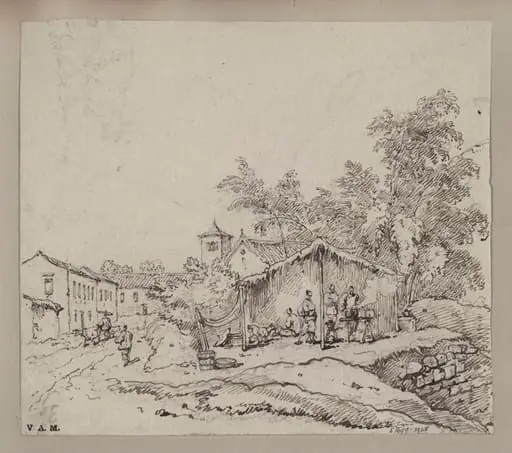 Blacksmiths beneath a thatched shelter, with the church of S. Antonio, Macau
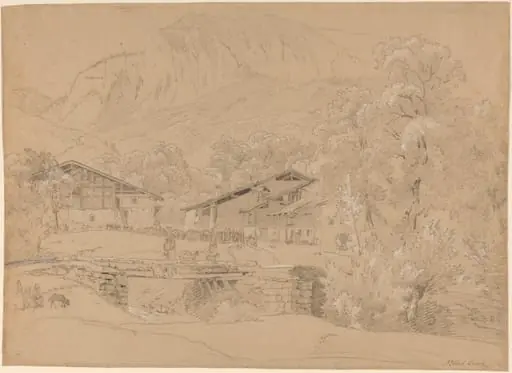 An Alpine Village in Summertime
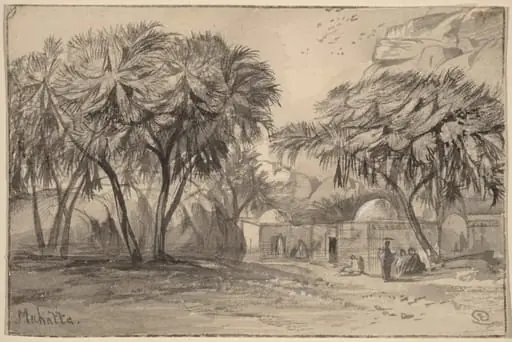 Mahatta
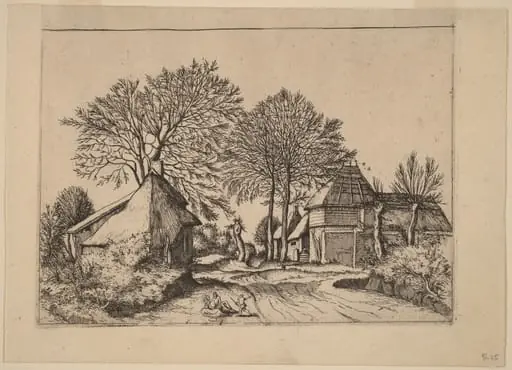 Road with Barn and Cottages
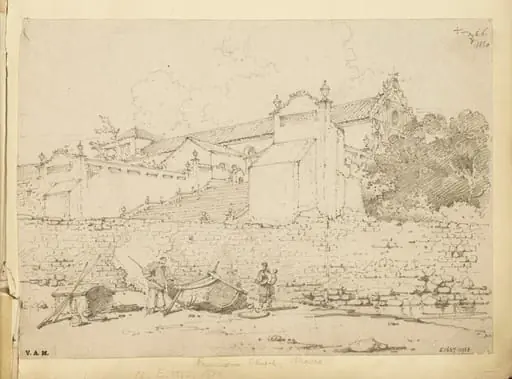 The church of S. Francisco, Macau
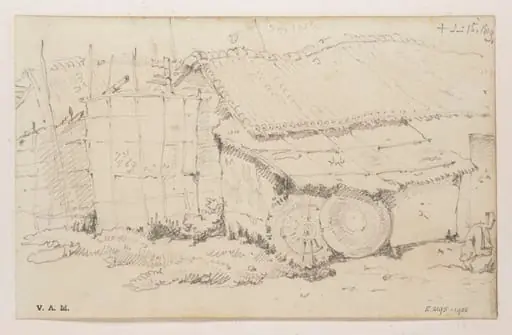 Thatched village dwellings, Bengal
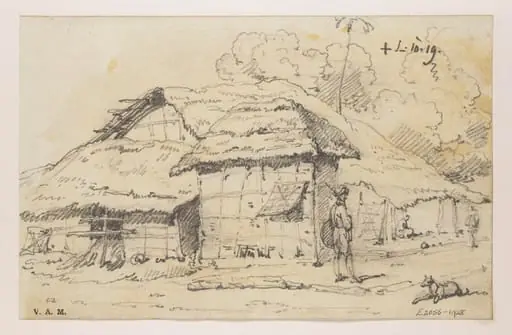 Village huts, Bengal
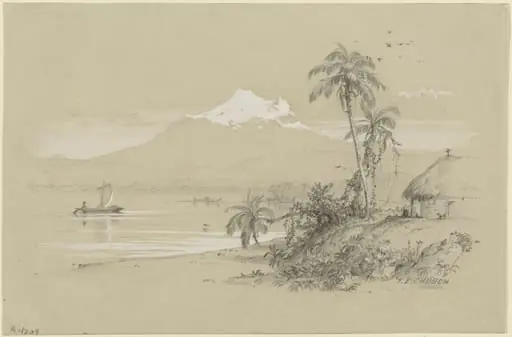 Magdalena River, New Granada, Equador