Artwork
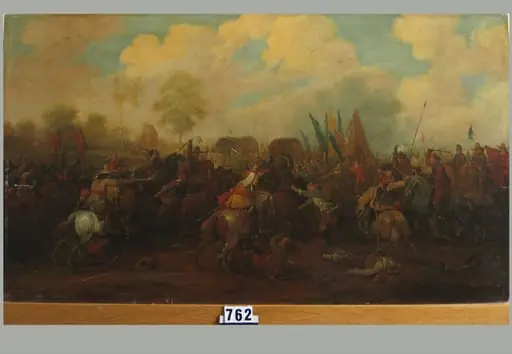
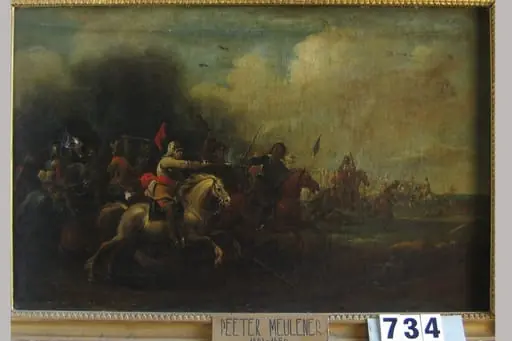
Luptă de cavalerie lângă un oraș. Pandant: Luptă de cavalerie lângă o capelă
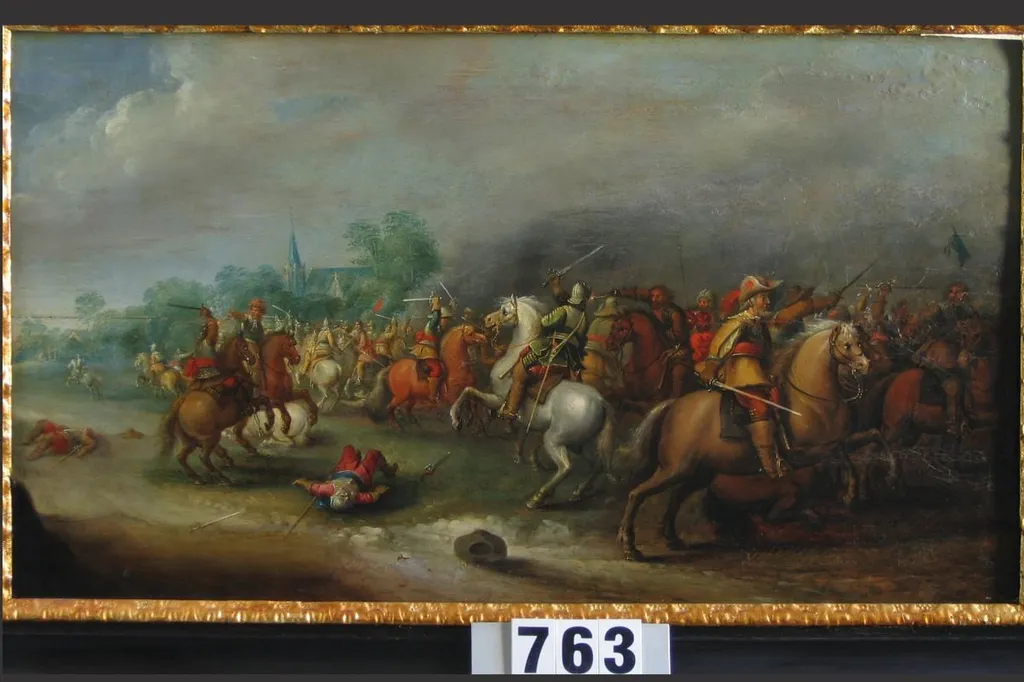
Luptă de cavalerie lângă un oraș. Pandant: Luptă de cavalerie lângă o capelă is a print by the Baroque artist Pieter Meulener. It dates from 1650 and is held in the collection of the Brukenthal National Museum.
About this work
Overview
The pair reflects a common practice in Flemish art of creating matched compositions to explore variations on a theme.
Painted in 1650 by Pieter Meulener, these two companion works depict cavalry battles in distinct yet related settings—one near a town, the other beside a chapel. Meulener, active in Antwerp, was recognized for his detailed renderings of military conflict, blending dynamic action with carefully observed landscape elements. The pair reflects a common practice in Flemish art of creating matched compositions to explore variations on a theme.
Subject & Meaning
The scenes portray chaotic cavalry engagements, with soldiers in motion, swords raised, and horses rearing or collapsing under the weight of battle. The presence of a church steeple and nearby buildings situates the violence within inhabited spaces, suggesting the intrusion of war into civilian life. No clear allegory or political message is evident; the focus remains on the immediacy and disorder of combat.
Technique & Style
Meulener employs strong chiaroscuro to heighten the drama of the fray, with light catching armor and muscle, while shadows deepen the chaos. Brushwork is precise yet energetic, capturing the tension in horse limbs and the staggered postures of fallen riders. The composition directs the eye through layered space—from the foreground melee to the distant architecture—creating depth without sacrificing the urgency of the moment.
History & Provenance
These works originate from Meulener’s mature period in Antwerp, where he was among the leading specialists in battle painting during the mid-17th century. Though specific early ownership records are sparse, their pairing suggests they were commissioned or intended as a set, possibly for a private collector interested in military themes. Their survival as a matched pair is relatively uncommon for works of this genre.
Context
Created during the Thirty Years’ War, Meulener’s paintings respond to a broader Flemish interest in depicting warfare as both spectacle and social reality. While not documenting specific events, they align with regional traditions that fused historical subject matter with genre-like details—soldiers, horses, and ruined buildings rendered with observational accuracy rather than idealized heroism.
Legacy
Meulener’s battle scenes contributed to the development of Flemish military painting, influencing later artists who sought to capture motion and disorder with realism. Though less celebrated today than contemporaries like Rubens, his focused specialization and technical control ensured his works remained valued within their time as vivid records of cavalry warfare’s visceral intensity.
Artist & collection
Artist
Pieter Meulener or Peter Meulenaer (Antwerp, baptised 18 February 1602 – Antwerp, 27 November 1654), Antwerp), was one of the leading Flemish painters of battle scenes in the mid-17th century. He also painted landscapes with genre scenes.

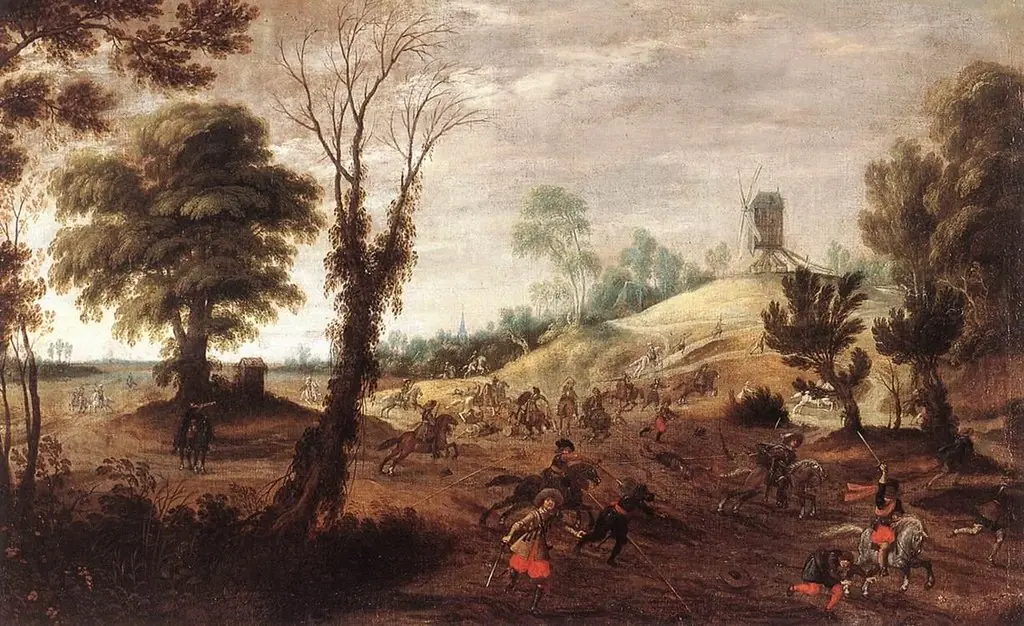
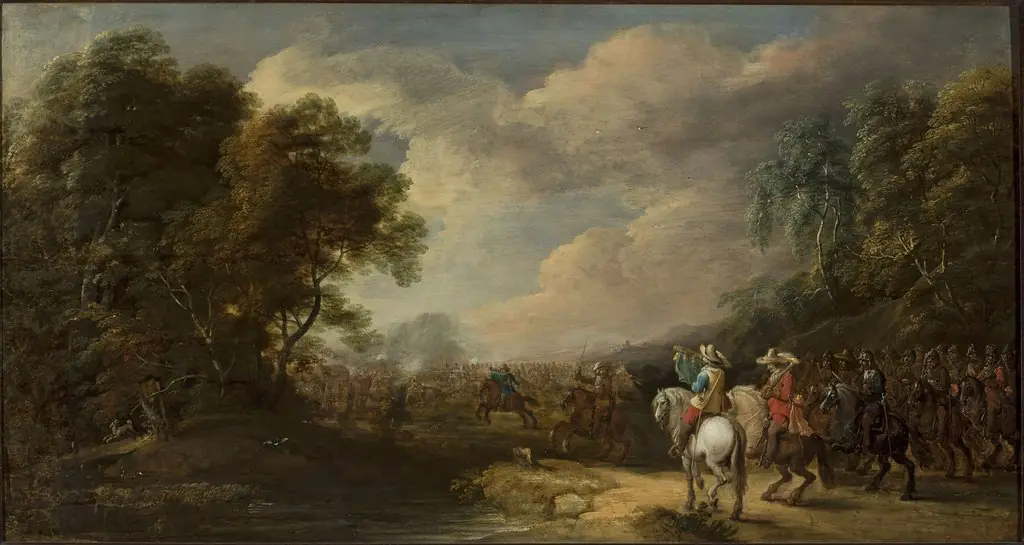
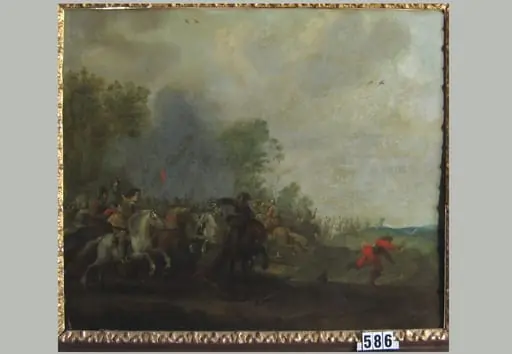 Luptă de cavalerie la marginea codrului
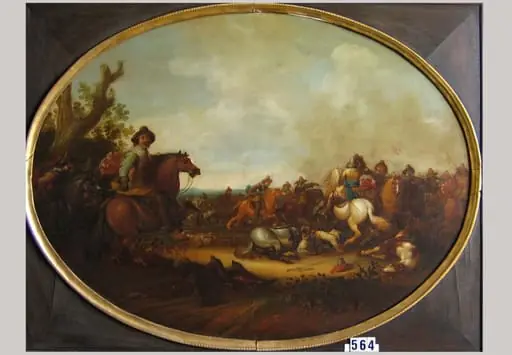 Matthias Gallas în luptă contra suedezilor (în Reg. Inv.: Luptă de cavalerie între austrieci și suedezi)
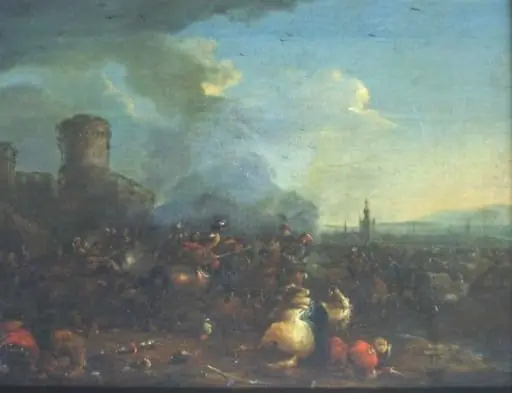 Luptă de cavalerie lângă un castel
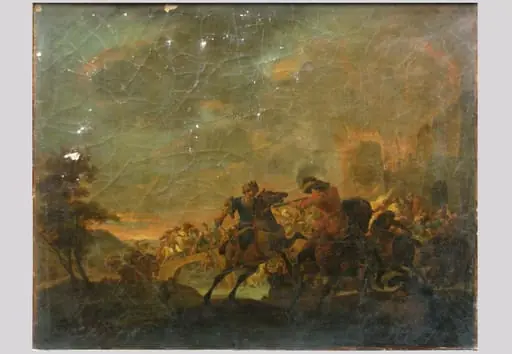 Luptă lângă o cetate (în Reg. Inv.: Atac dintr-o cetate) (pandant: Luptă de cavalerie lângă pietre antice, în Reg. Inv.: Luptă de cavalerie între pietre antice)
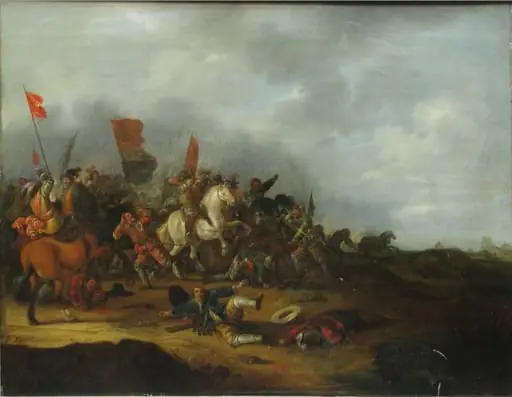 Luptă între cavalerie și pedestrime
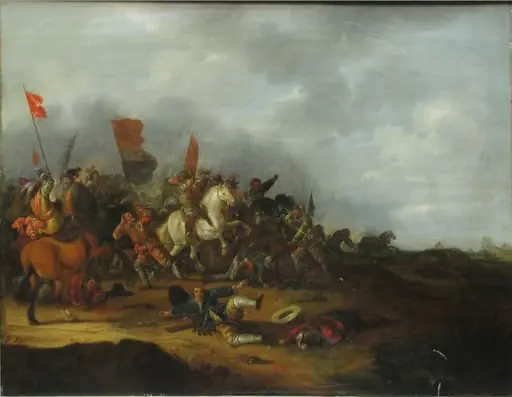 Societate veselă cu vânat (pandant: Societate cu vânat)
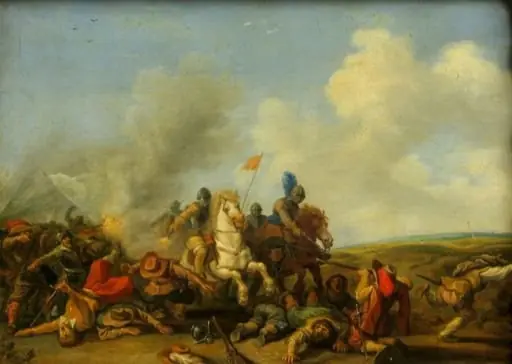 Luptă de cavalerie și infanterie
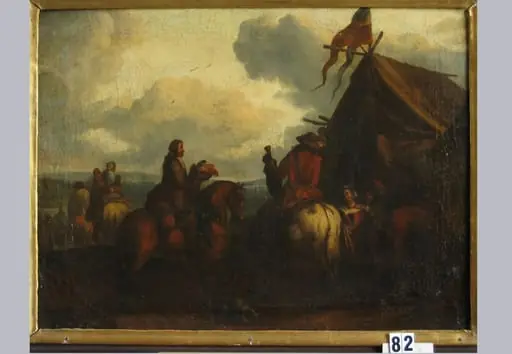 Cort de vivandieră cu drapel (în Reg. Inv.: Cort de cantinieri cu drapel). Pandant: Cort de vivandieră cu cunună de frunze (în Reg. Inv.: Cort de cantinier cu cunună de frunze)
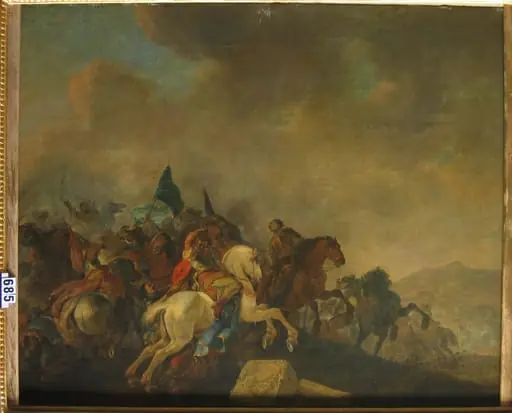 Luptă de cavalerie lângă pietre antice (în Reg. Inv.: Luptă de cavalerie între pietre antice) (pandant: Luptă lângă o cetate, în Reg. Inv: Atac dintr-o cetate)
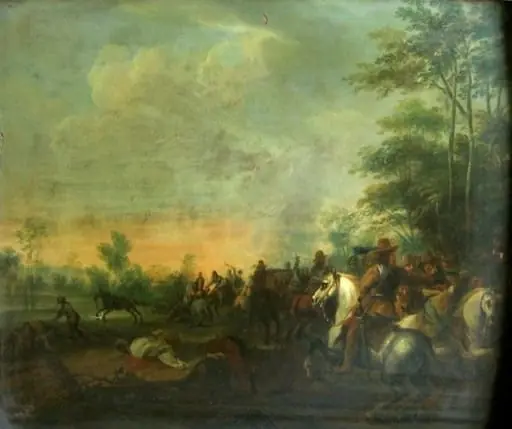 Luptă de cavalerie