Artwork
Luptă de cavalerie
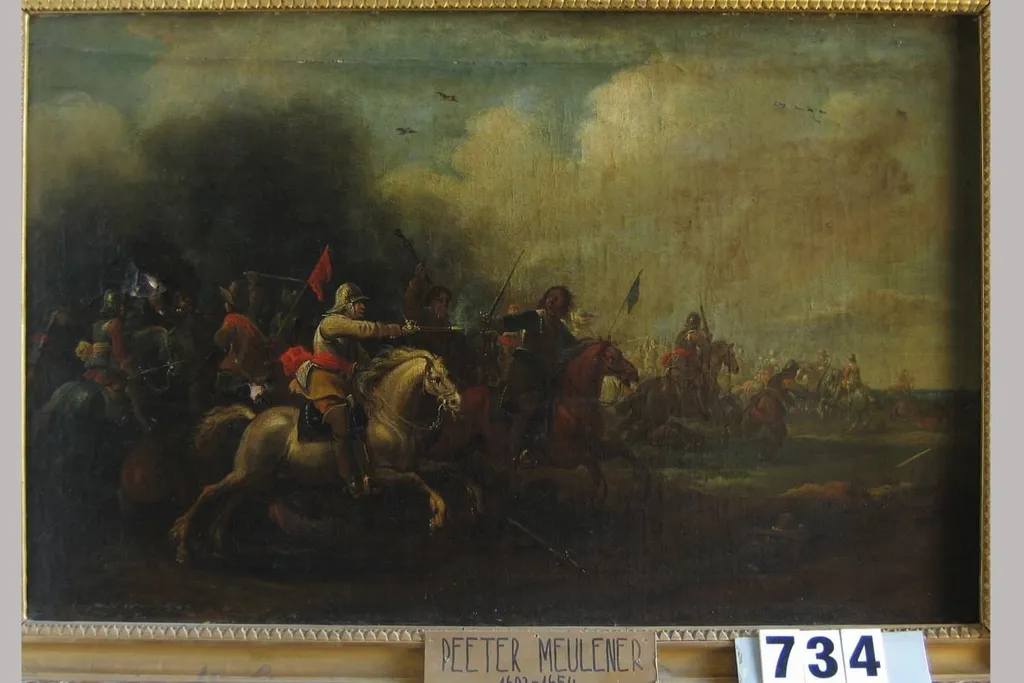
Luptă de cavalerie is a print by the Baroque artist Pieter Meulener. It dates from 1652 and is held in the collection of the Brukenthal National Museum.
About this work
Overview
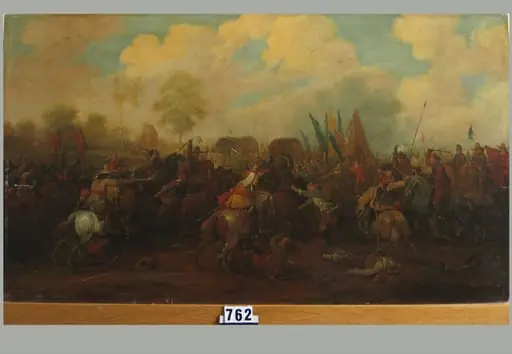
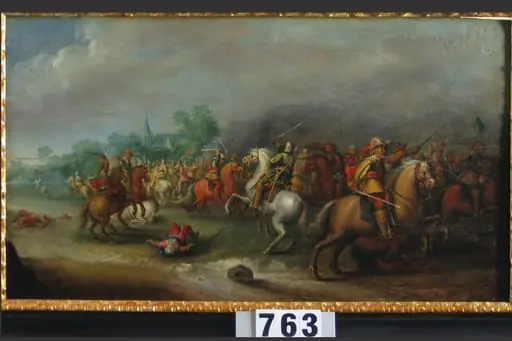
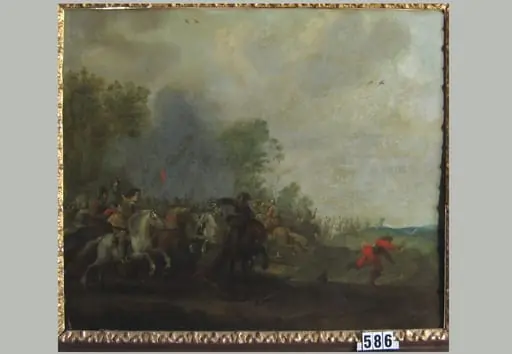
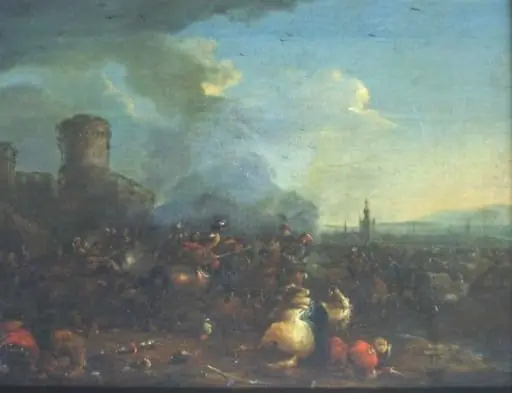
Created in 1652, *Luptă de cavalerie* is an oil painting by Pieter Meulener, a prominent Flemish artist known for his battle scenes. Executed in the mid‑17th century, the work depicts a tumultuous cavalry engagement, rendered with the vigorous movement and dramatic lighting typical of the period’s Flemish Baroque.
Subject & Meaning
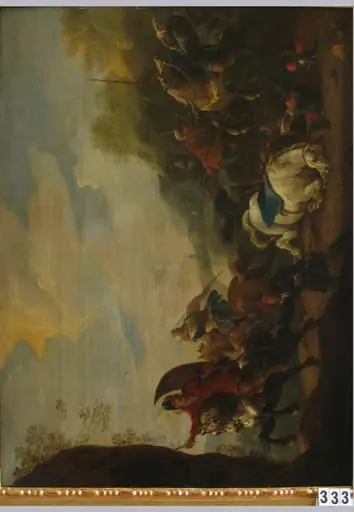
The composition centers on a chaotic skirmish of mounted troops. Riders in armor and red coats brandish flags and firearms, while their horses rear and stir up dust. The turbulent sky and scattered birds amplify the sense of conflict, emphasizing the disorder and intensity of 17th‑century warfare.
Technique & Style
Meulener employs a dynamic brushwork that captures the rapid motion of horse and rider. The palette of muted earth tones contrasted with vivid reds and the stormy background creates depth and drama. The painting follows the visual conventions of Pieter Molenaer’s workshop, reflecting a shared stylistic lineage within Flemish battle painting.
History & Provenance
Born in Antwerp in 1602, Meulener spent his career in the city, producing numerous military scenes until his death in 1654. *Luptă de cavalerie* remains a representative example of his late output, illustrating the artist’s mature handling of complex, multi‑figure compositions.
Context
The work belongs to a broader Flemish tradition that favored large‑scale depictions of warfare, often infused with genre details. Such paintings served both as records of contemporary conflicts and as visual celebrations of martial valor, aligning with the Baroque era’s preference for dramatic, emotionally charged subjects.
Artist & collection
Artist
Pieter Meulener or Peter Meulenaer (Antwerp, baptised 18 February 1602 – Antwerp, 27 November 1654), Antwerp), was one of the leading Flemish painters of battle scenes in the mid-17th century. He also painted landscapes with genre scenes.

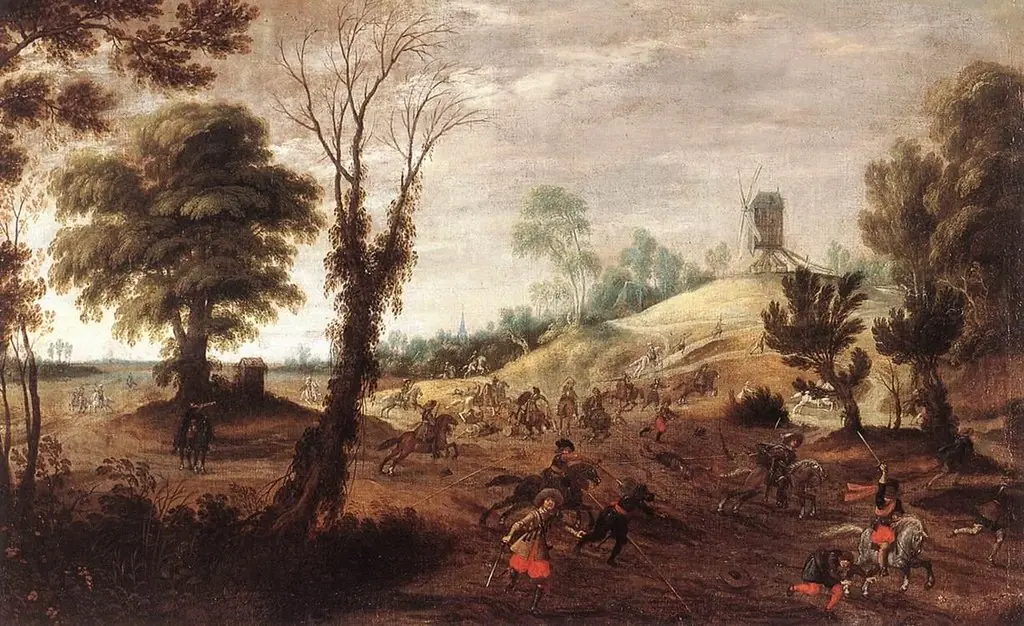
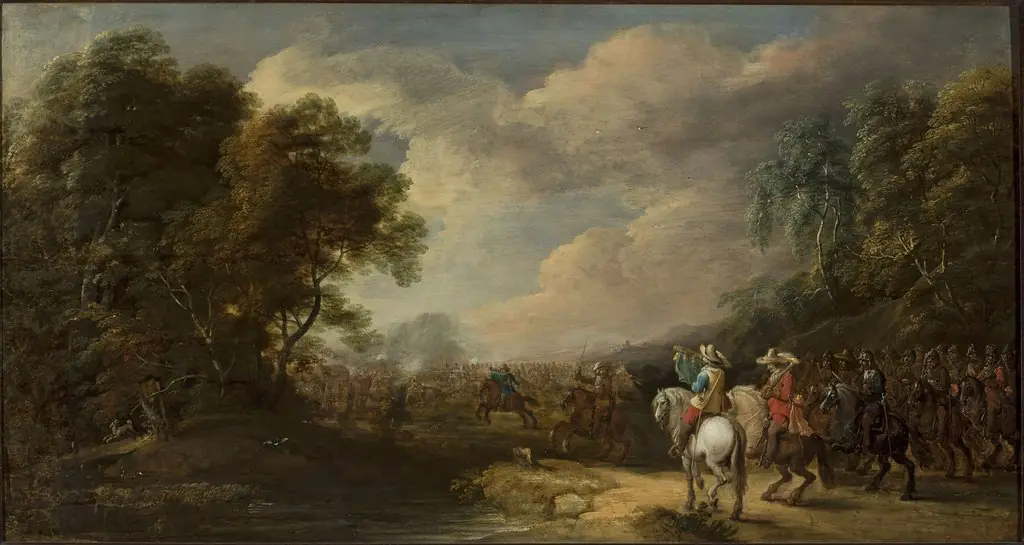
 Luptă de cavalerie la marginea codrului
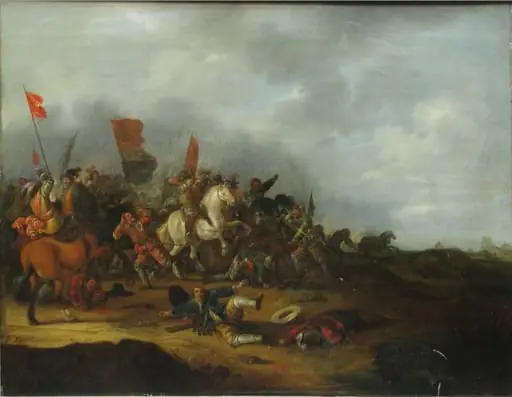 Luptă între cavalerie și pedestrime
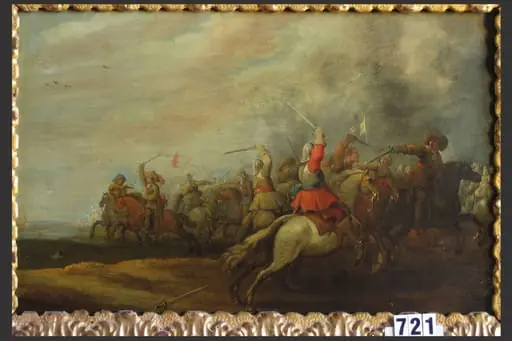 Urmărire după luptă
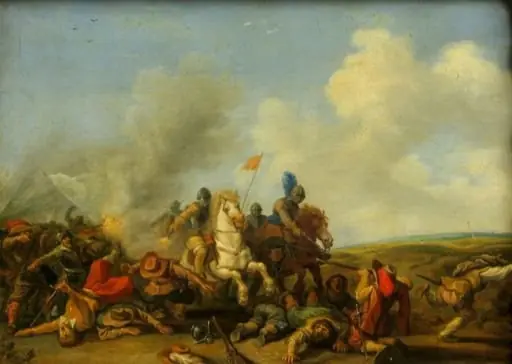 Luptă de cavalerie și infanterie
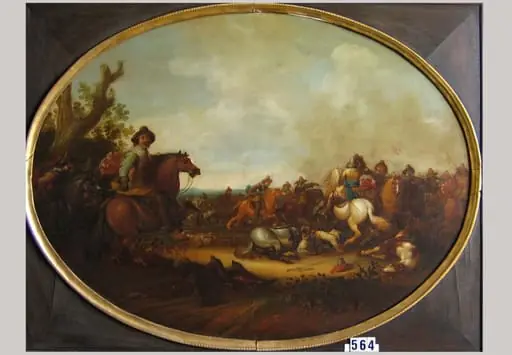 Matthias Gallas în luptă contra suedezilor (în Reg. Inv.: Luptă de cavalerie între austrieci și suedezi)
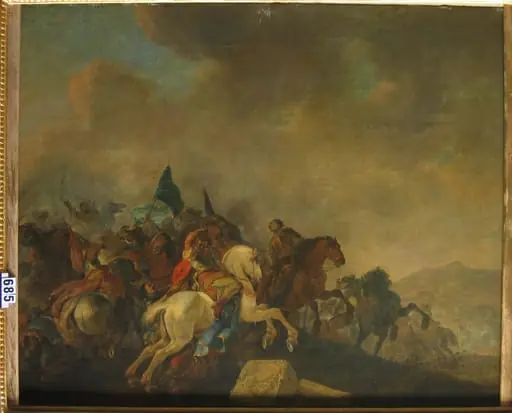 Luptă de cavalerie lângă pietre antice (în Reg. Inv.: Luptă de cavalerie între pietre antice) (pandant: Luptă lângă o cetate, în Reg. Inv: Atac dintr-o cetate)
 Luptă de cavalerie lângă un castel
 Luptă în defileu