Artwork
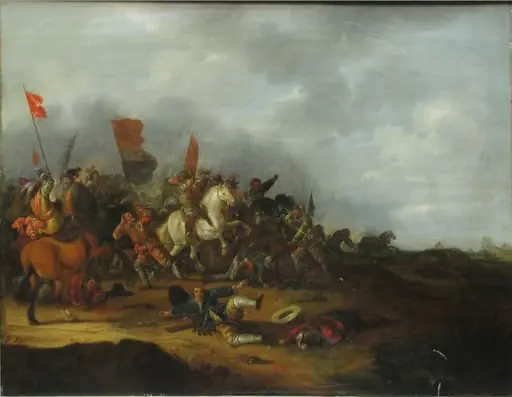
Matthias Gallas în luptă contra suedezilor (în Reg. Inv.: Luptă de cavalerie între austrieci și suedezi)
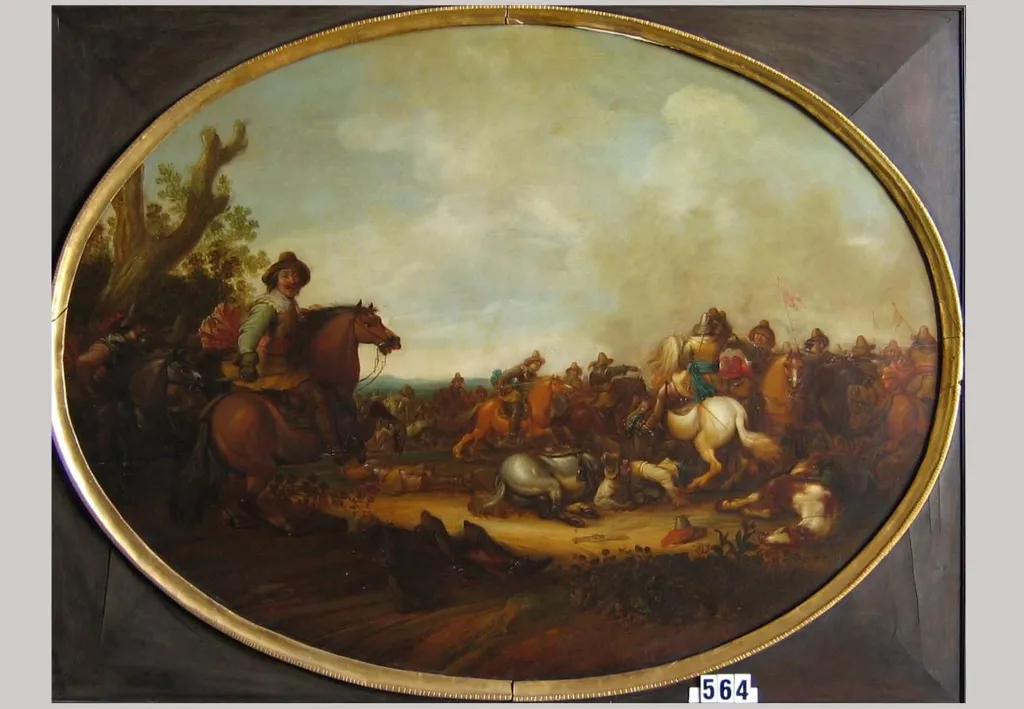
Matthias Gallas în luptă contra suedezilor (în Reg. Inv.: Luptă de cavalerie între austrieci și suedezi) is an unspecified painting by the Baroque artist Abraham Van der Hoef. It is held in the collection of the Brukenthal National Museum. The work titled *Matthias Gallas în luptă contra suedezilor* depicts a tumultuous cavalry engagement between Austrian and Swedish forces.
About this work
Overview
The work titled *Matthias Gallas în luptă contra suedezilor* depicts a tumultuous cavalry engagement between Austrian and Swedish forces. Central to the composition is a rider wearing a broad-brimmed hat, mounted on a brown horse, surrounded by a swirl of combatants, a fallen soldier, a dog, and scattered equipment.
Subject & Meaning
The painting captures a moment of close‑quarter battle, emphasizing the chaos of 17th‑century warfare. By placing the central figure amid the fray, the artist highlights the personal peril of commanders and the broader disorder that defines such encounters.
Technique & Style
A soft, blended palette renders light and shadow across the scene, creating a subtle chiaroscuro that models the figures while allowing the background to dissolve into a misty sky. Detailed rendering of horses and armor contrasts with the atmospheric, almost dreamlike treatment of the distant horizon.
History & Provenance
The piece is catalogued as an image, with the alternate title *Luptă de cavalerie între austrieci și suedezi* recorded in the Royal Inventory. No further documentation of its creation date, artist, or ownership history is provided.
Context
The subject references the campaigns of Field Marshal Matthias Gallas, a notable commander in the Thirty Years’ War, where Austrian troops frequently clashed with Swedish armies. The depiction aligns with a tradition of military genre paintings that dramatize historic battles for commemorative purposes.
Artist & collection
Artist
This 17th-century painter spent his days in the Dutch army, not the studio—he was a soldier who painted on the side.

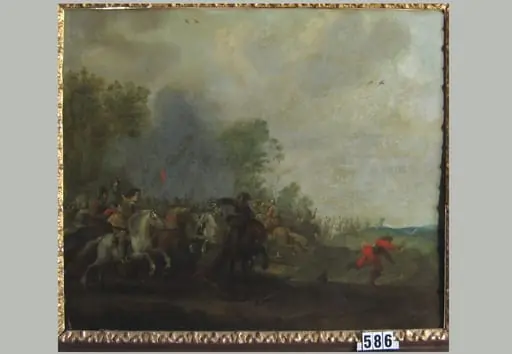 Luptă de cavalerie la marginea codrului
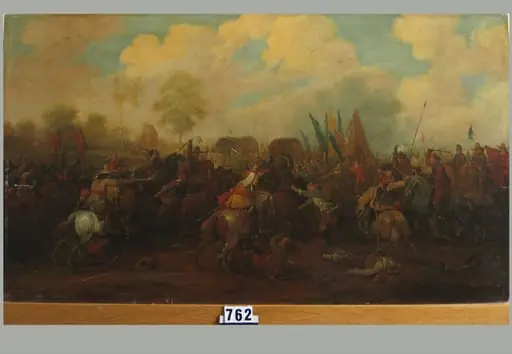 Luptă de cavalerie lângă o capelă. Pandant: Luptă de cavalerie lângă un oraș
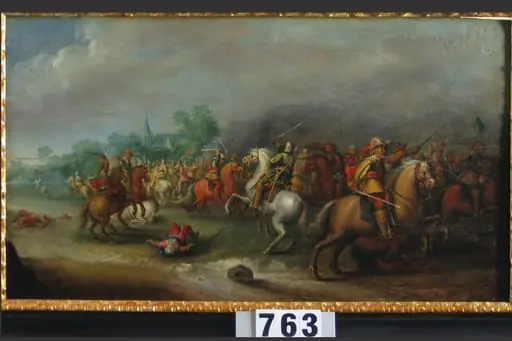 Luptă de cavalerie lângă un oraș. Pandant: Luptă de cavalerie lângă o capelă
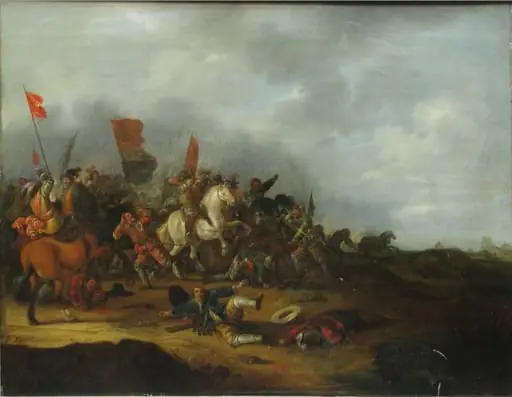 Luptă între cavalerie și pedestrime
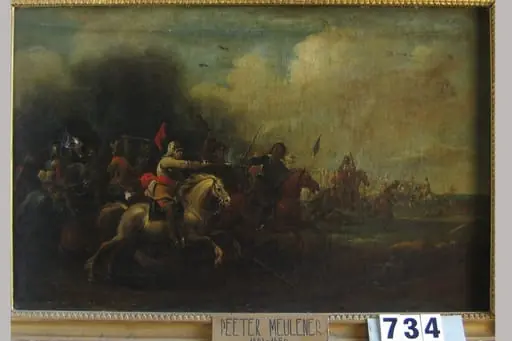 Luptă de cavalerie
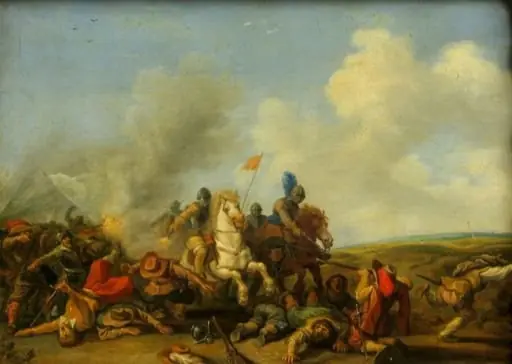 Luptă de cavalerie și infanterie
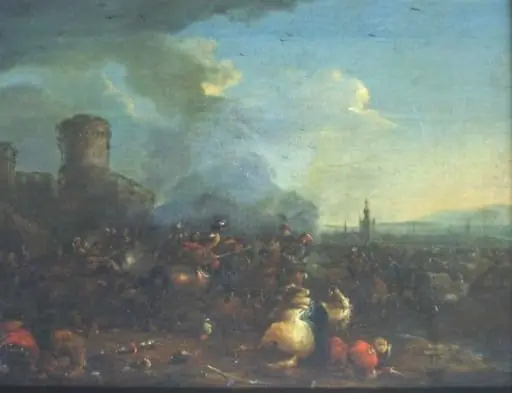 Luptă de cavalerie lângă un castel
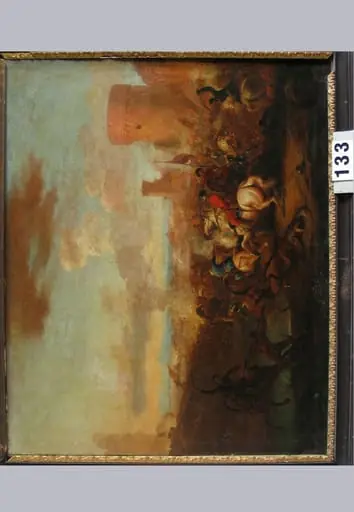 Turci luptând în fața fortificațiilor
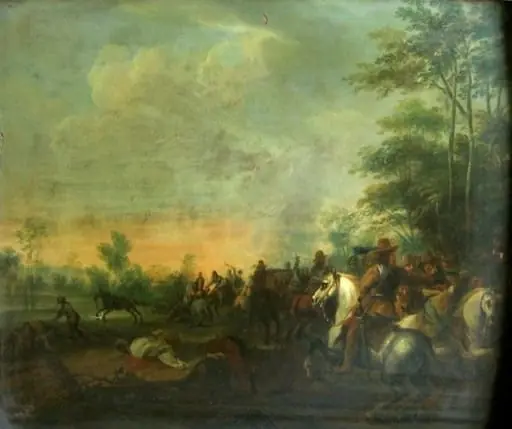 Luptă de cavalerie
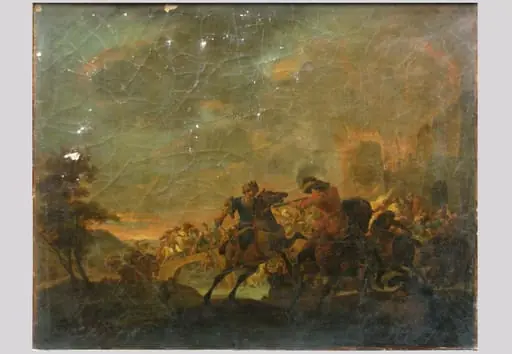 Luptă lângă o cetate (în Reg. Inv.: Atac dintr-o cetate) (pandant: Luptă de cavalerie lângă pietre antice, în Reg. Inv.: Luptă de cavalerie între pietre antice)
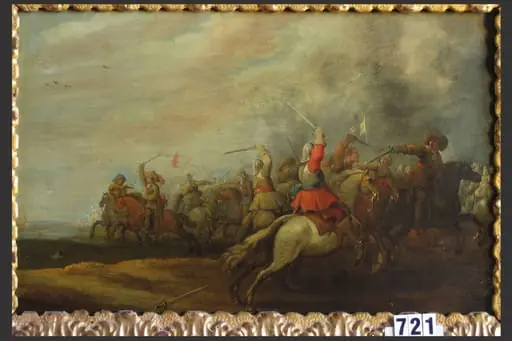 Urmărire după luptă
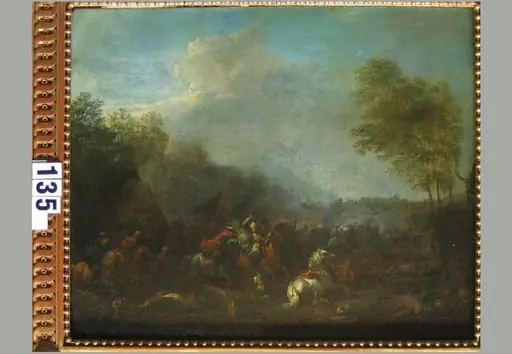 Încăierare într-un defileu. Pandant: În luptă
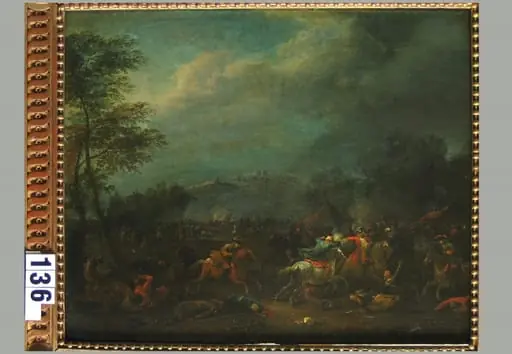 In luptă. Pandant: Încăierare într-un defileu
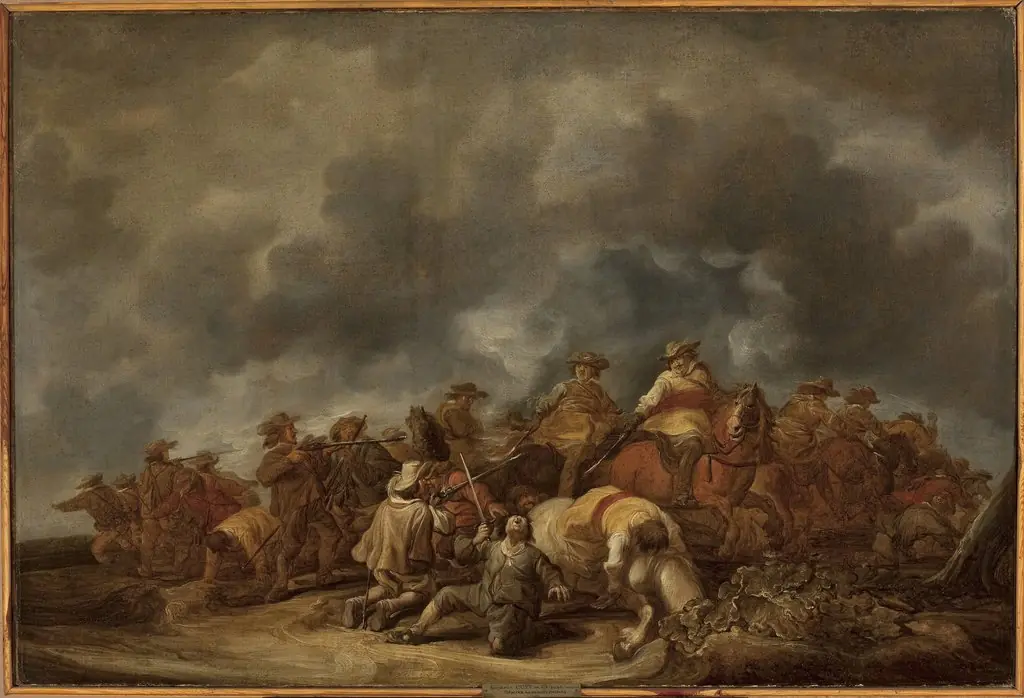 Skirmish of cavalry and infantry
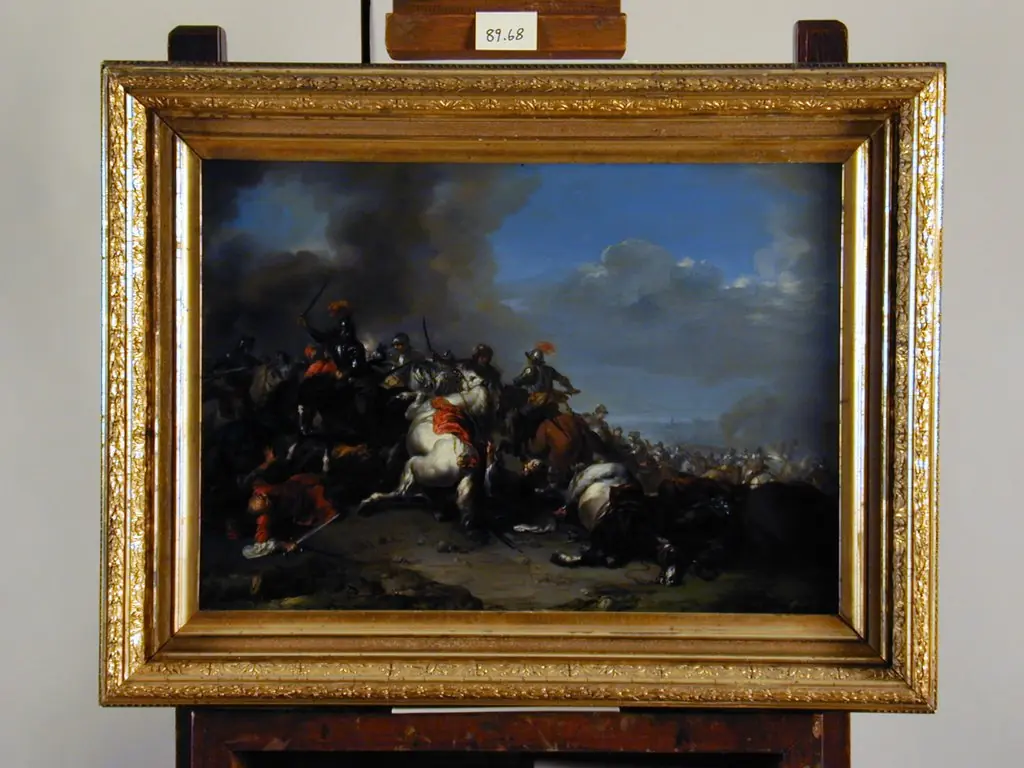 Cavalry
 Societate veselă cu vânat (pandant: Societate cu vânat)
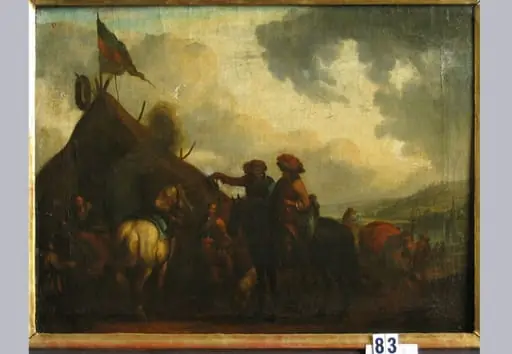 Cort de vivandieră cu cunună de frunze (în Reg. Inv.: Cort de cantinier cu cunună de frunze). Pandant: Cort de vivandieră cu drapel (în Reg. Inv.: Cort de cantinieri cu drapel).
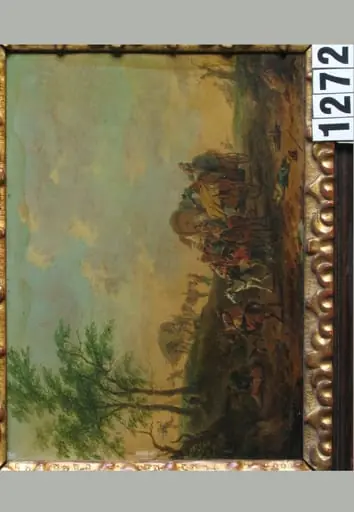 Atacul hoților (în registrul inventar: Hoți atacând pe neașteptate)