Artwork
View into the Court of the Lions at the Alhambra
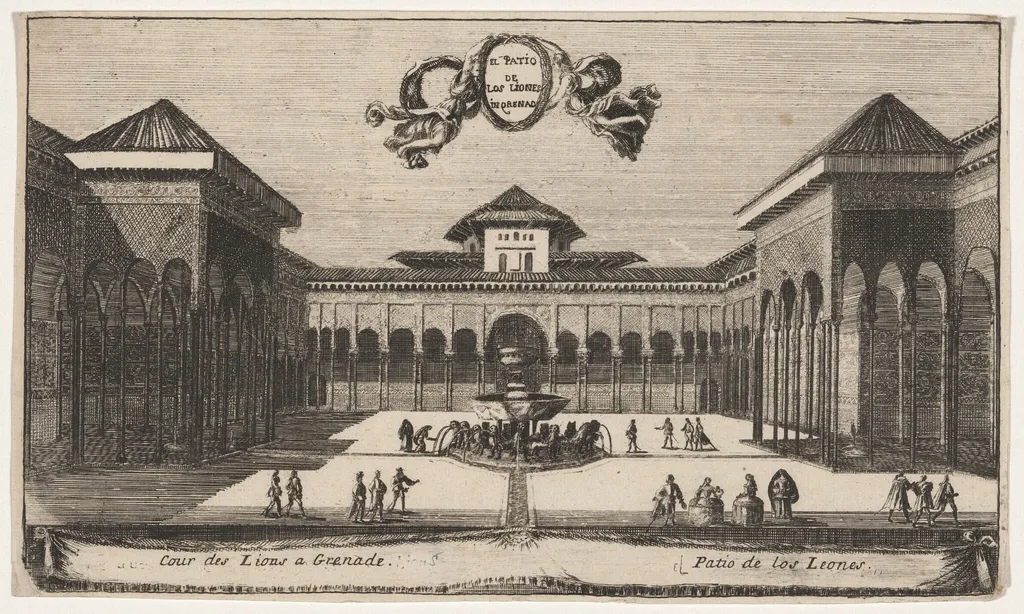
View into the Court of the Lions at the Alhambra is an ink print by the Baroque artist Louis Meunier. It is held in the collection of the National Gallery of Art.
About this work
Overview
Rendered on laid paper, the work is a detailed architectural view that reflects European interest in Islamic structures during the 17th century.
Created around 1664 by Louis Meunier, this etching captures the Court of the Lions within the Alhambra palace in Granada. Rendered on laid paper, the work is a detailed architectural view that reflects European interest in Islamic structures during the 17th century. It is part of the National Gallery of Art’s collection in Washington, D.C., where it serves as a record of early topographical printmaking focused on non-European sites.
Subject & Meaning
The scene depicts the central courtyard with its arcaded galleries, slender columns, and a fountain surrounded by figures moving along the periphery. The inclusion of people suggests daily life within the space, grounding the architecture in human activity. Bilingual inscriptions—Spanish and French—indicate the print’s intended audience and its role as a cultural document, bridging Iberian heritage with Northern European curiosity.
Technique & Style
Meunier employed etching to achieve fine linear detail, capturing the play of light and shadow across stone surfaces. The composition emphasizes depth through receding arches and careful tonal gradation, with minimal use of cross-hatching. The restrained palette and precise lines reflect a topographical approach, prioritizing accuracy over dramatic effect, typical of early travel-inspired prints of the period.
History & Provenance
The print likely originated as part of a broader European effort to document Islamic architecture following increased contact with Spain. Its presence in the National Gallery of Art suggests it was collected during the 19th or early 20th century as an example of early architectural documentation. No earlier ownership records are widely documented, but its survival indicates sustained scholarly interest in Alhambra imagery.
Context
In the mid-17th century, European travelers and artists increasingly turned to the Iberian Peninsula to study Moorish design. Meunier’s etching aligns with a trend of producing accurate views of foreign monuments, often for private collectors or academic use. Unlike later romanticized depictions, this work avoids embellishment, offering a sober, observational record of a site then still relatively unknown in Northern Europe.
Legacy
This print contributes to the historical record of how Western audiences encountered Islamic architecture before widespread tourism. It influenced later topographical studies and helped shape early perceptions of the Alhambra as a site of refined craftsmanship. While not widely reproduced, its preservation underscores its value as a primary source for understanding 17th-century visual documentation practices.
Artist & collection

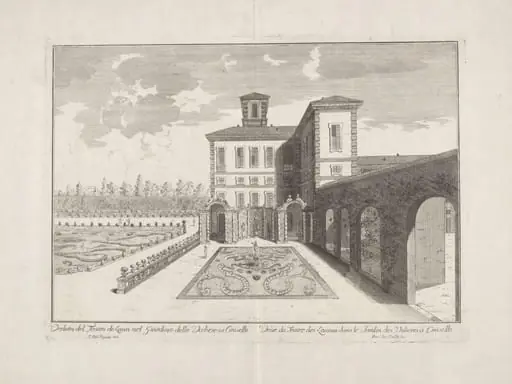 H Beard Print Collection
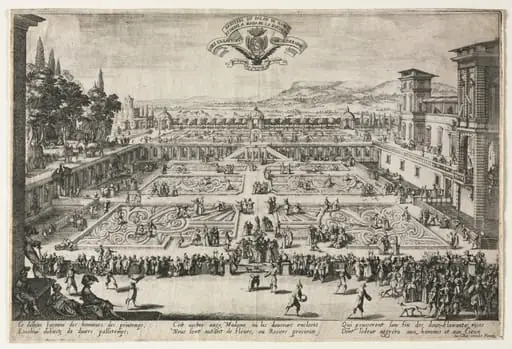 The Palace Gardens at Nancy
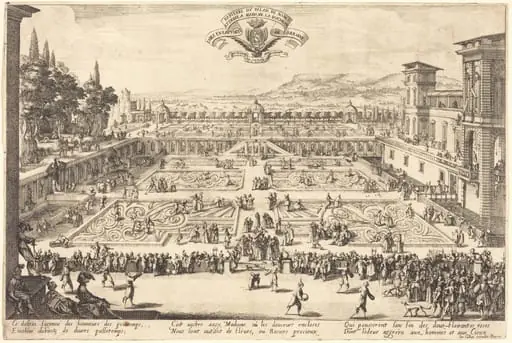 The Palace Gardens at Nancy
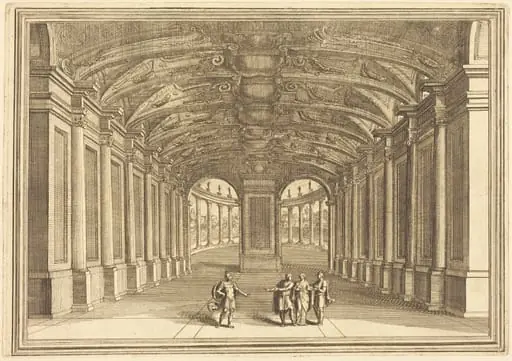 Il Greco in Troia: Plate 10
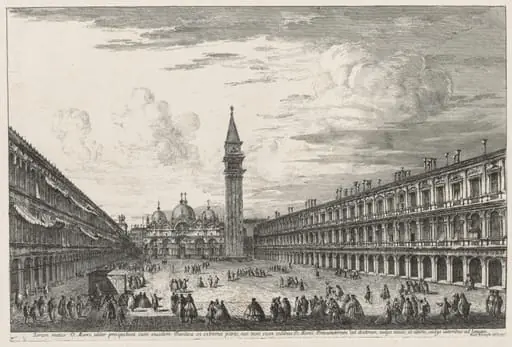 Views of Venice: Piazzo S. Marco
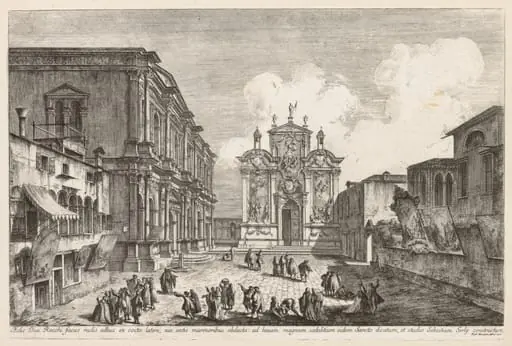 Views of Venice: Campo S. Rocco
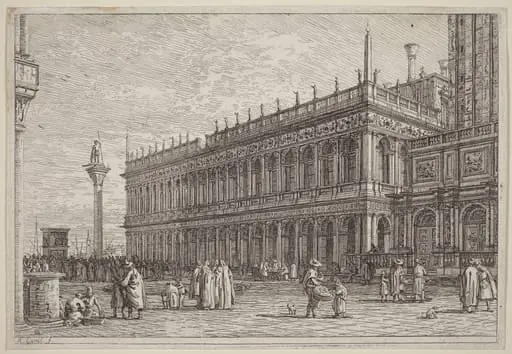 La libreria. V.
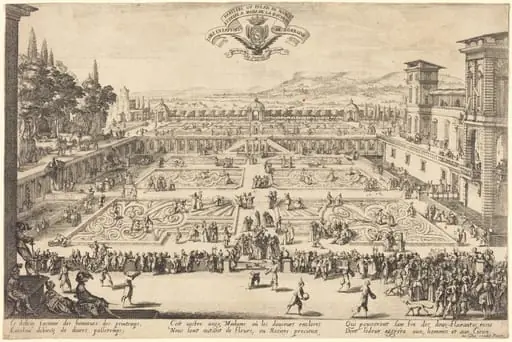 The Palace Gardens at Nancy
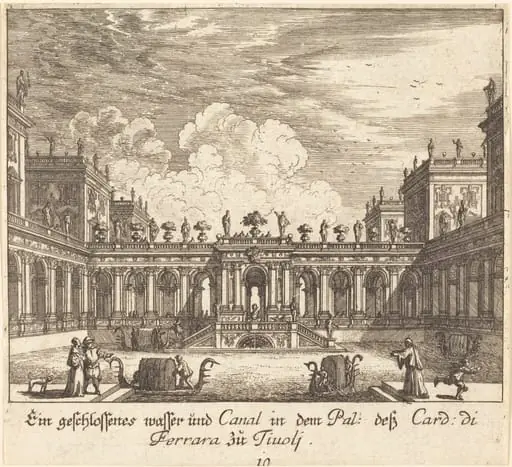 Palace and Canal, Cardinal di Ferrara, Tivoli
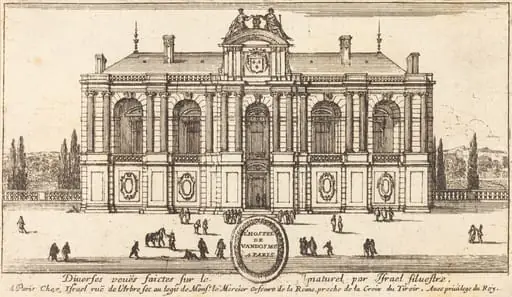 L'Hostel de Vandosme a Paris
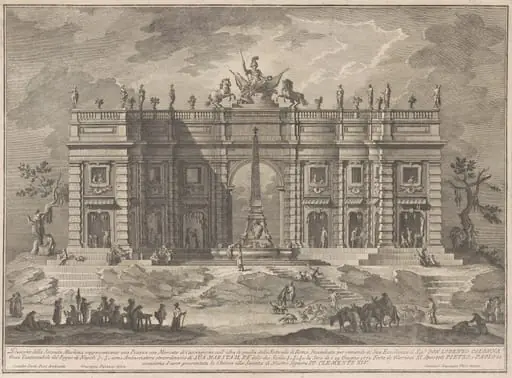 The Seconda Macchina for the Chinea of 1772: A Square with a Game Market and the Pantheon Fountain
 A View of the Piazza San Marco in Florence