Artwork
Il Greco in Troia: Plate 10
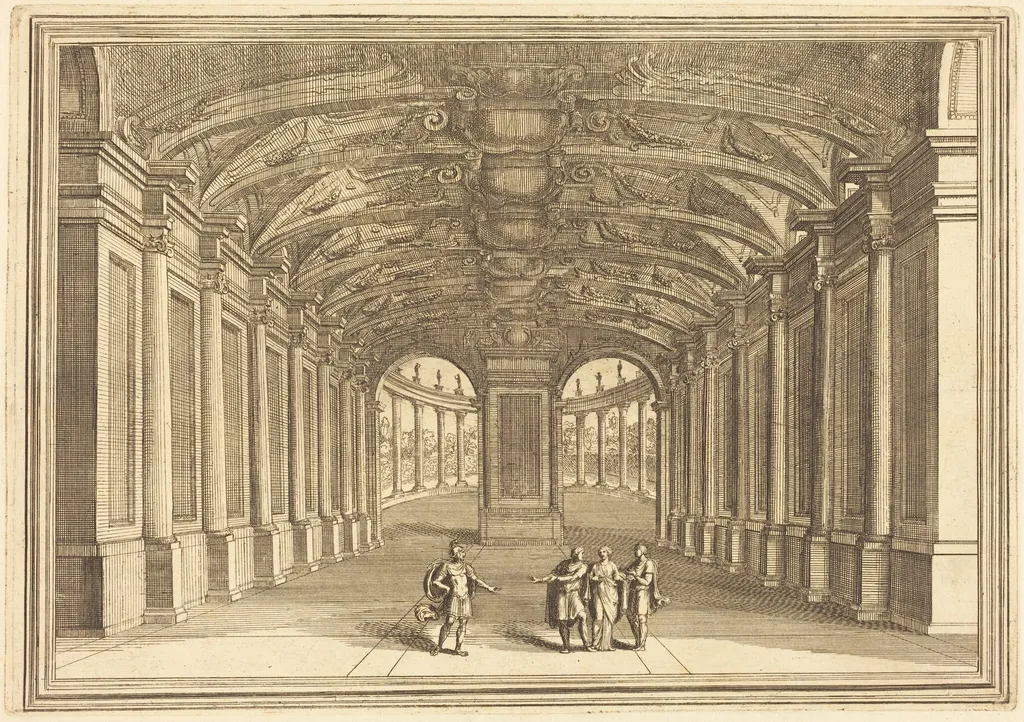
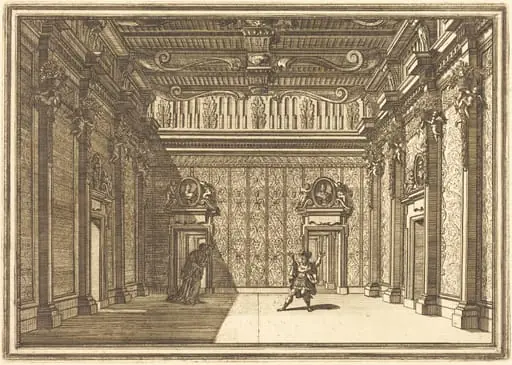
Il Greco in Troia: Plate 10 is an ink print by the Baroque artist Arnold von Westerhout. It dates from 1688 and is held in the collection of the National Gallery of Art.
About this work
Overview
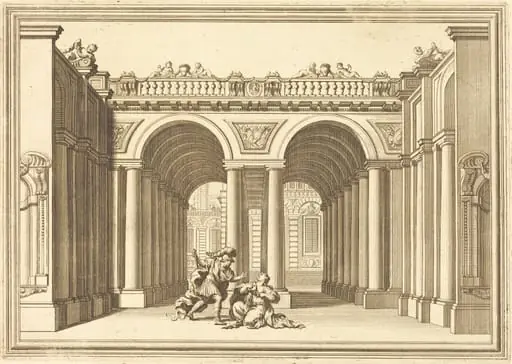
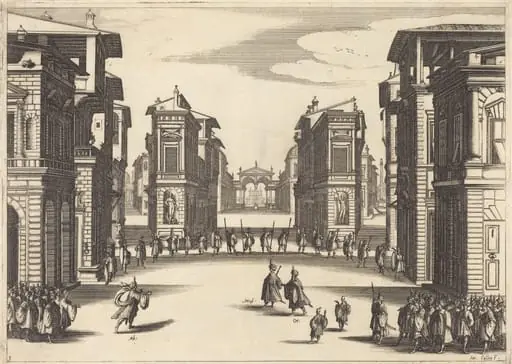
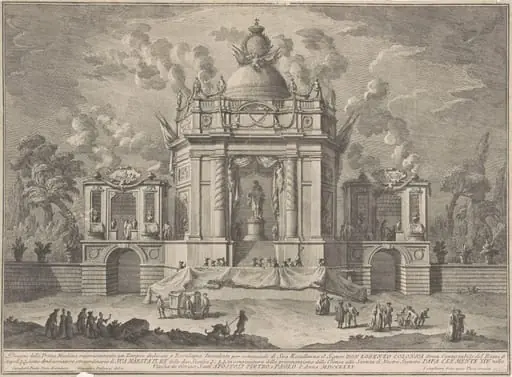
This print, Plate 10 from the series *Il Greco in Troia*, is a 1688 etching and engraving by Arnold von Westerhout. Executed on laid paper, it depicts an architectural interior rendered with meticulous detail. The composition centers on a grand courtyard, its structural elements and decorative motifs suggesting a setting of elevated status, possibly a palace or temple.
Subject & Meaning
The architectural surroundings—columns, arches, and carved reliefs—evoke classical antiquity, reinforcing themes of grandeur and cultural legacy.
The scene presents three figures engaged in conversation within an ornate courtyard. One individual holds a leashed dog, adding a humanizing element to the otherwise formal space. The architectural surroundings—columns, arches, and carved reliefs—evoke classical antiquity, reinforcing themes of grandeur and cultural legacy. The interaction among the figures remains ambiguous, inviting interpretation of their roles or narrative significance.
Technique & Style
Von Westerhout employed etching and engraving to achieve precise linear detail and tonal variation. Cross-hatching and stippling create depth, particularly in the rendering of stone textures and architectural ornamentation. The print’s style reflects Baroque sensibilities, balancing intricate craftsmanship with a sense of spatial clarity, while the use of light and shadow enhances the three-dimensionality of the scene.
History & Provenance
Created in 1688, *Il Greco in Troia: Plate 10* forms part of a series exploring classical themes. The print’s survival as a restrike indicates its continued relevance or aesthetic appeal beyond its initial production. Little is documented about its early ownership, though its preservation suggests it circulated among collectors or institutions interested in historical or mythological subjects.
Context
The work emerges from a period in which European artists frequently revisited Greco-Roman antiquity, both as a source of inspiration and as a means of asserting cultural authority. Von Westerhout’s series aligns with this tradition, offering visual interpretations of classical narratives. The print’s architectural precision may also reflect contemporary interest in archaeological accuracy or the idealization of ancient spaces.
Artist & collection


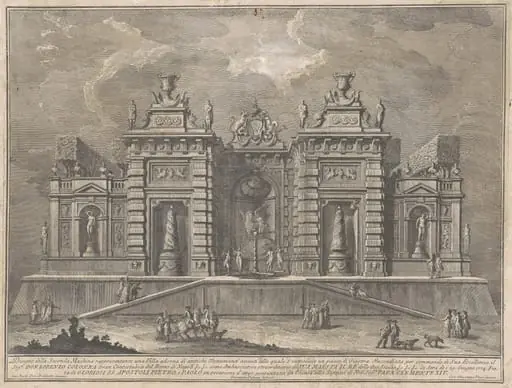 The Seconda Macchina for the Chinea of 1774: A Villa with Ancient Monuments and a Game of "Giostra"
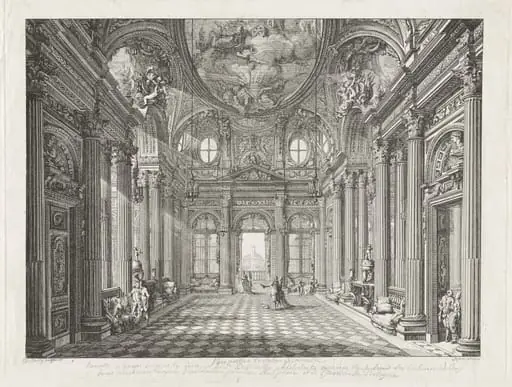 Perspectival View of the Salon of the Palazzo Spinola, Genoa
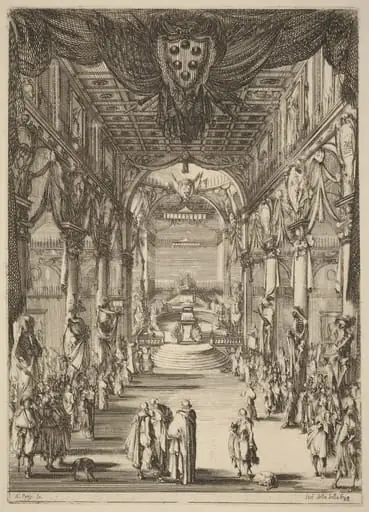 Funeral of Prince Francesco de Medici
 The Prima Macchina for the Chinea of 1764: A Capitol Building
 The Prima Macchina for the Chinea of 1769: A "Deliziosa"
 Fantasy of a Great Hall with Basketweave Columns
 Il Solimano, Act III
 The Prima Macchina for the Chinea of 1771: The Temple of Asclepius