Artwork
Palace and Canal, Cardinal di Ferrara, Tivoli
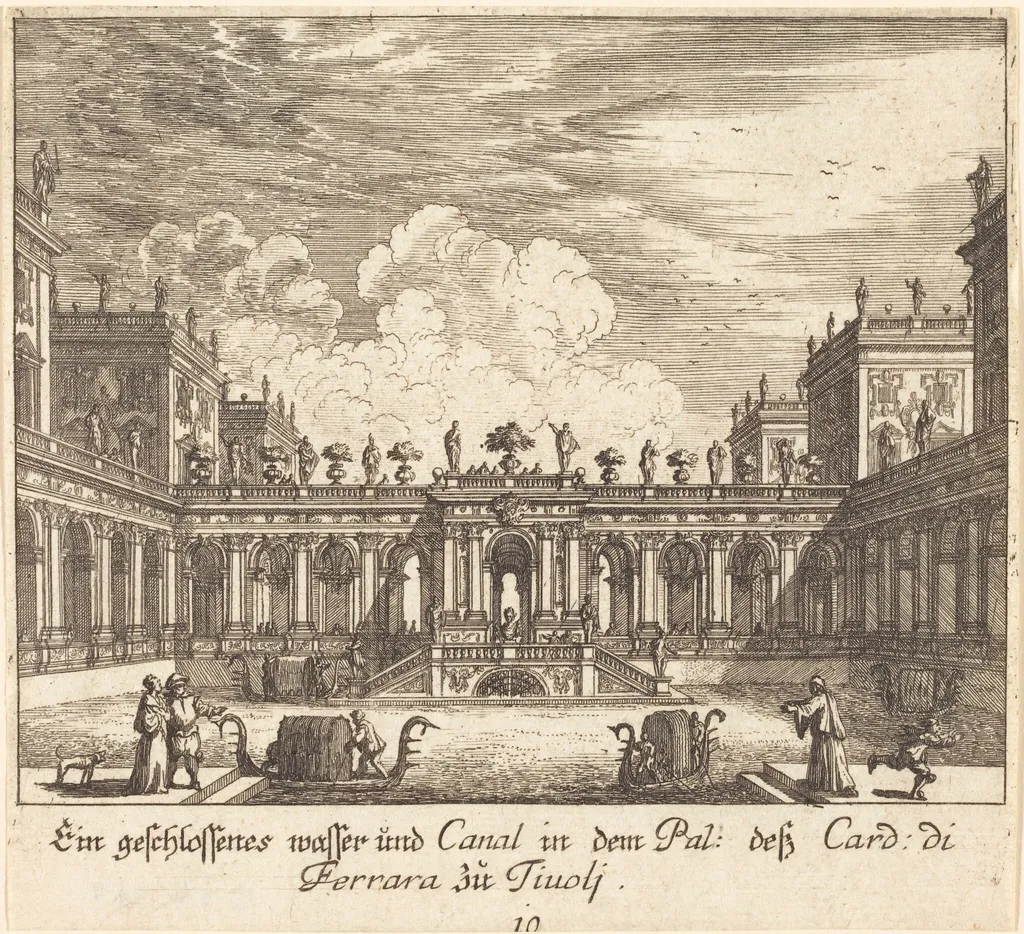
Palace and Canal, Cardinal di Ferrara, Tivoli is an ink print by the Baroque artist Melchior Küsel. It dates from 1681 and is held in the collection of the National Gallery of Art.
About this work
Overview
The composition centers on the building’s elevated terrace, where figures are gathered, while smaller figures attend to two elephants near the water’s edge.
Created in 1681 by Melchior Küsel, this etching depicts a Renaissance-style palace in Tivoli, Italy, situated beside a calm canal. The composition centers on the building’s elevated terrace, where figures are gathered, while smaller figures attend to two elephants near the water’s edge. The scene combines architectural precision with quiet human activity, framed by a softly rendered sky and the reflective surface of the canal.
Subject & Meaning
The palace is associated with Cardinal di Ferrara, a noble patron of the region. The presence of elephants—rare in Italy—suggests a display of wealth or exotic curiosity, possibly referencing a private menagerie. The figures on the balcony imply leisure or observation, reinforcing the estate’s role as a place of status and contemplation. The canal, a common feature of Tivoli’s landscape, ties the scene to its geographic and cultural context.
Technique & Style
Küsel employed fine, controlled etching lines to render texture and depth, characteristic of 17th-century printmaking. Shadows are built through cross-hatching, while delicate strokes define architectural details like columns, arches, and statuary. The sky is lightly stippled to suggest cloud cover, and the water’s surface is rendered with horizontal lines to imply stillness. The precision reflects the artist’s training in topographical and architectural representation.
History & Provenance
The print was produced in 1681, during a period when European artists documented Italian landmarks for collectors and travelers. Küsel, a German engraver active in Nuremberg, specialized in reproducing Italian views. This work likely circulated in private collections as part of a broader interest in Italian architecture and antiquities. Its title and subject indicate it was intended as a record of a specific site, not a fictional scene.
Context
Tivoli was renowned for its villas and water features, attracting aristocrats and artists since antiquity. The Cardinal di Ferrara’s estate would have been one of many noble retreats in the area. Elephants, though uncommon, were occasionally kept by elite families as symbols of power. Küsel’s print aligns with a trend of topographical prints that served both documentary and decorative purposes in Northern Europe.
Legacy
Though not widely exhibited today, the print contributes to the corpus of early modern European topographical prints. It reflects the era’s fascination with Italian landscapes and the role of printmaking in disseminating visual knowledge. Küsel’s work remains a quiet example of how skilled engravers translated architectural grandeur into intimate, detailed records for a cultured audience.
Artist & collection


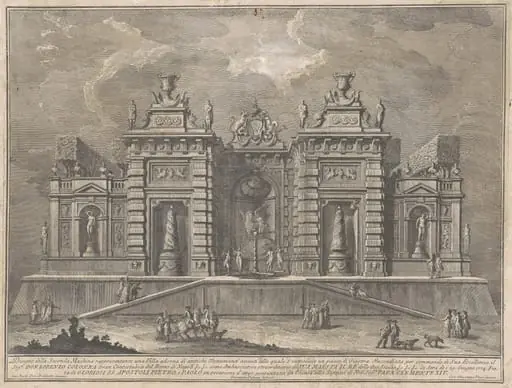 The Seconda Macchina for the Chinea of 1774: A Villa with Ancient Monuments and a Game of "Giostra"
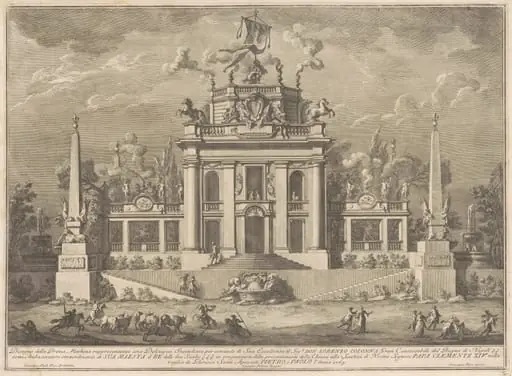 The Prima Macchina for the Chinea of 1769: A "Deliziosa"
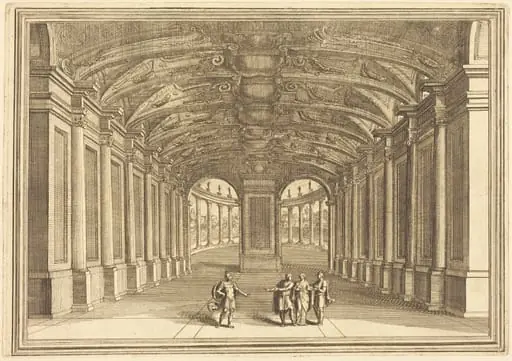 Il Greco in Troia: Plate 10
 The Prima Macchina for the Chinea of 1764: A Capitol Building
 The Prima Macchina for the Chinea of 1762: The Farnese Bull and Other Antiquities from Palazzo Farnese
 The Seconda Macchina for the Chinea of 1775: A Bull-fight
 The Seconda Macchina for the Chinea of 1764: A Magnificent Gallery Illuminated at Night
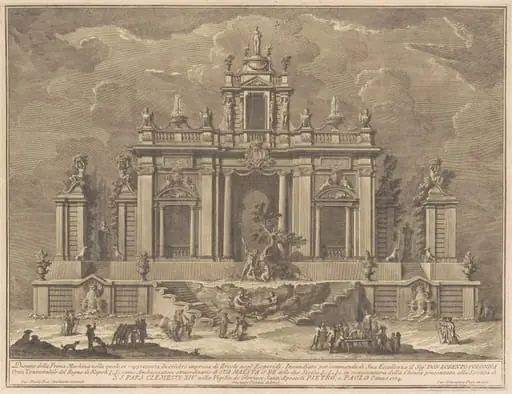 The Prima Macchina for the Chinea of 1774: Hercules and the Dragon in the Garden of the Hesperides
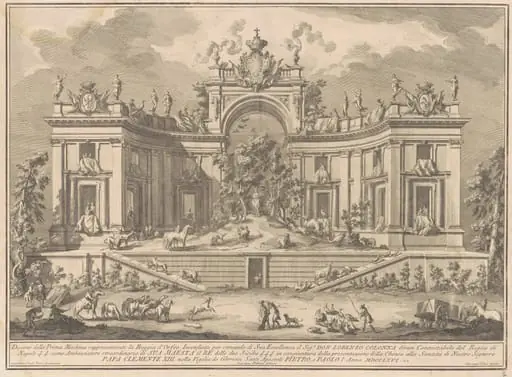 The Prima Macchina for the Chinea of 1766: The Palace of Orpheus
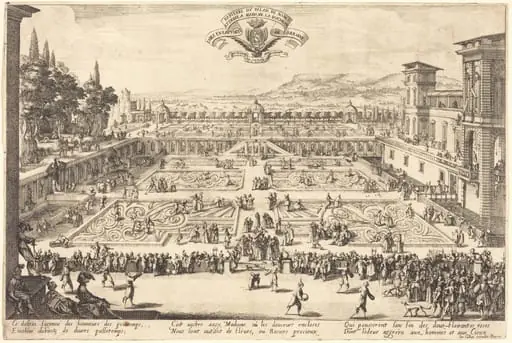 The Palace Gardens at Nancy