Artwork
Lectură
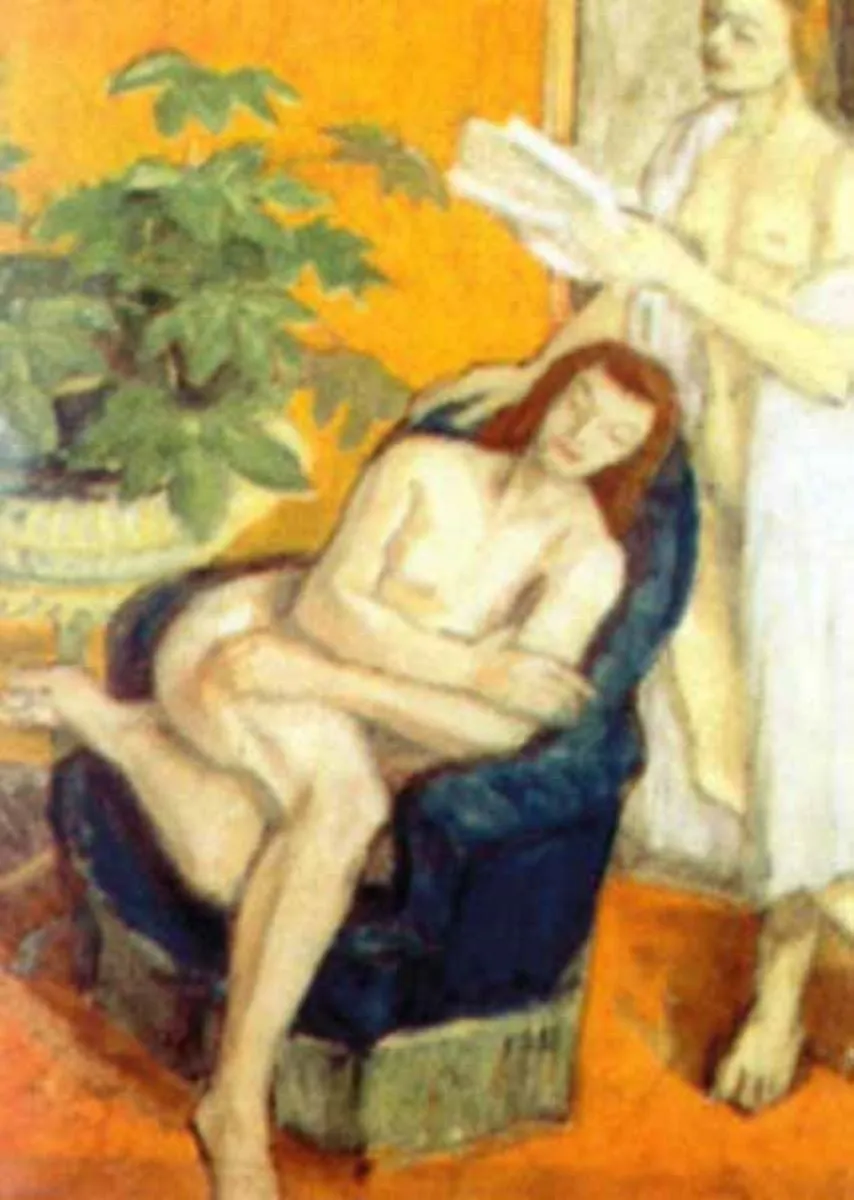
Lectură is an unspecified painting by Theodor Pallady. It dates from 1940 and is held in the collection of the Art Museum of Constanta.
About this work
Overview
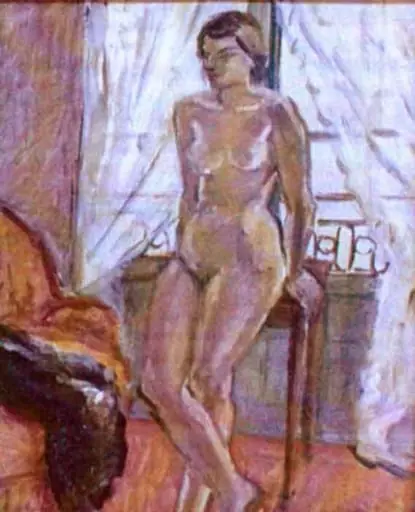
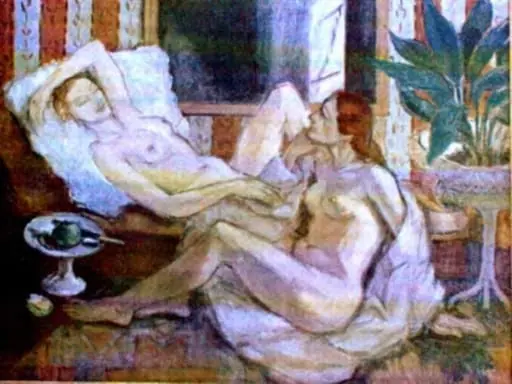
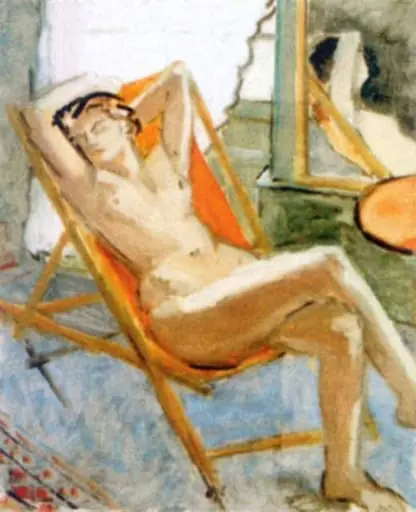
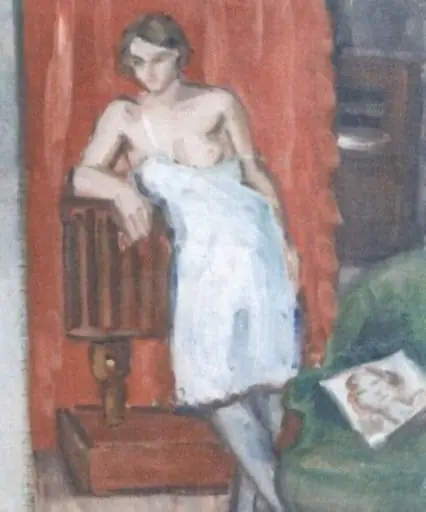
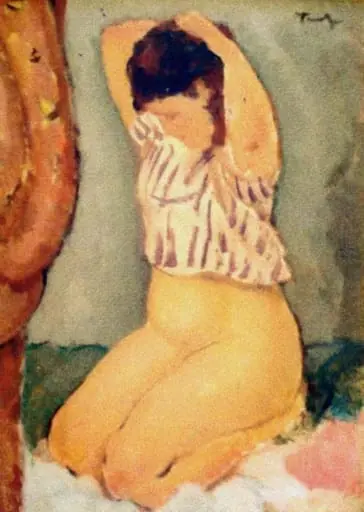
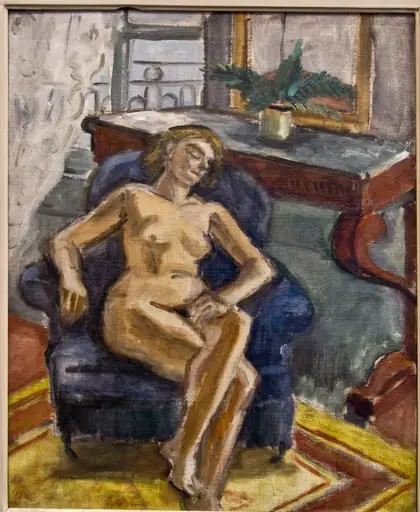
Its composition centers on a relaxed, nude figure seated in a dark blue chair, framed by a warm yellow background and a potted plant to the left.
Lectură, painted by Theodor Pallady in 1940, is a quiet interior scene depicting a woman engaged in solitary reading. Executed in oil, the work belongs to the collection of the Museum of Ethnography. Its composition centers on a relaxed, nude figure seated in a dark blue chair, framed by a warm yellow background and a potted plant to the left. The painting captures a moment of stillness, emphasizing introspection over narrative.
Subject & Meaning
The subject is a woman absorbed in a book, her posture loose and her expression serene. Her nudity is not theatrical but natural, suggesting intimacy rather than sensuality. The act of reading implies private thought, and the absence of other figures or objects heightens the sense of solitude. The scene invites contemplation, presenting reading as a personal, almost ritualistic act of inner engagement.
Technique & Style
Pallady employs soft, blended brushwork to render the figure and surroundings with subtle tonal shifts. The warm yellow background contrasts gently with the cool blue of the chair and the green of the plant, creating a harmonious palette. Light falls evenly, avoiding dramatic shadows, which reinforces the calm atmosphere. The rendering is neither hyperreal nor abstract, but restrained, aligning with Pallady’s broader tendency toward lyrical realism.
History & Provenance
Created in 1940, Lectură entered the collection of the Museum of Ethnography shortly after its completion. The museum, focused on cultural artifacts and daily life, acquired the painting as an example of modern Romanian domestic imagery. Its presence there reflects an interest in how art captures private, everyday moments, rather than public or historical themes.
Context
Painted during wartime, Lectură stands apart from the political and social turbulence of its time. Pallady, long associated with Romanian modernism, often turned to intimate scenes as a counterpoint to external chaos. The painting’s tranquility may reflect a personal retreat or a deliberate assertion of cultural continuity through quiet, domestic rituals.
Legacy
Lectură remains a representative example of Pallady’s later work, where emotional restraint and formal harmony prevail. While not widely exhibited outside its home institution, it contributes to the understanding of Romanian interwar painting’s quieter currents. Its preservation in an ethnographic context underscores its value as a document of personal and cultural habit, not merely aesthetic form.
Artist & collection
Artist
Theodor Pallady made still lifes and interiors in early 20th-century Bucharest. His Place Dauphine shows a quiet Parisian square, while Natură moartă (Ulcică cu flori și chibrituri) piles everyday objects on a table.…