Artwork
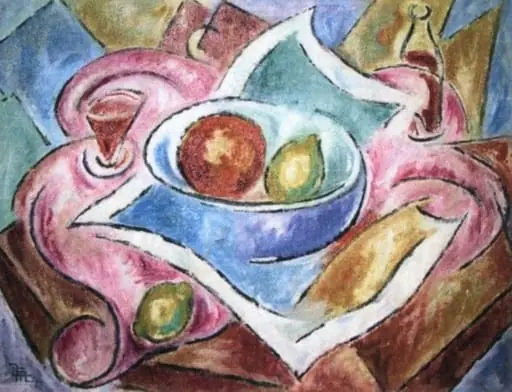
Natură statică cu fructieră
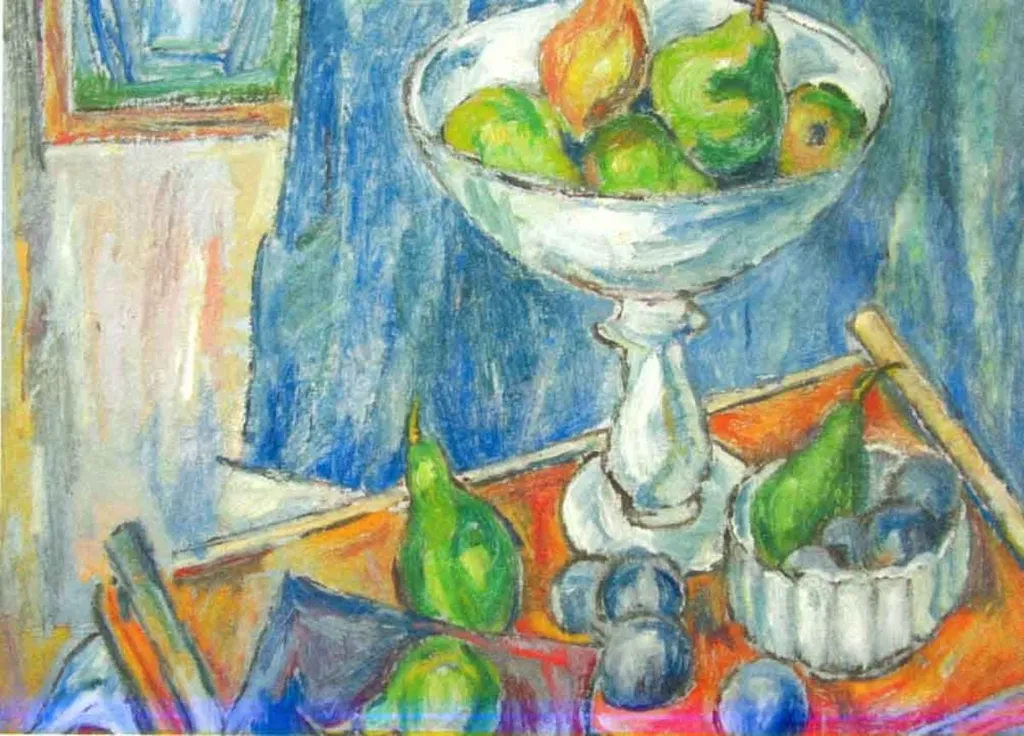
Natură statică cu fructieră is an unspecified painting by Corneliu Michăilescu. It dates from 1936 and is held in the collection of the Octavian Moșescu Râmnicu Sărat Municipal Museum.
About this work
Overview
Corneliu Michăilescu’s still‑life, dated around 1936, is part of the collection of the Museum of Ethnography.
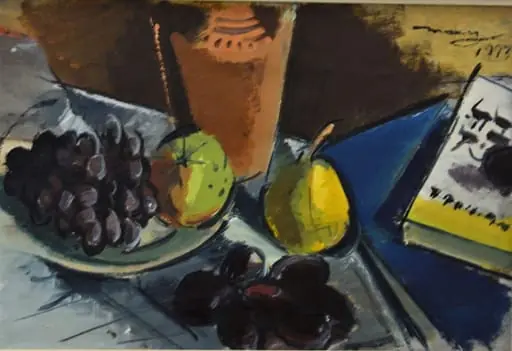
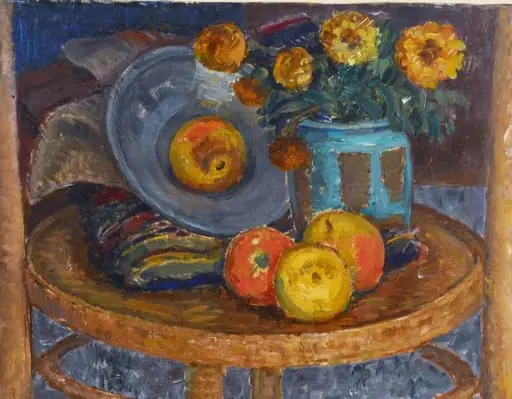
Corneliu Michăilescu’s still‑life, dated around 1936, is part of the collection of the Museum of Ethnography. The composition centers on a table draped with a red‑orange cloth, upon which a polished metal bowl brims with green pears and a few plums, accompanied by a basket of additional fruit and a smaller bowl of dark‑blue plums. The backdrop is a muted blue wall with an indistinct suggestion of a window or painting.
Subject & Meaning
The work presents a modest assortment of seasonal fruit, emphasizing the tactile qualities of the pears and plums. By arranging the objects on a simple table and using a restrained background, the artist draws attention to the materiality of the produce, inviting contemplation of abundance, domesticity, and the fleeting nature of fresh harvests.
Technique & Style
Michăilescu employs a loose, sketch‑like brushwork that conveys immediacy while retaining vivid coloration. Light falls sharply on the metal bowl and the glossy surfaces of the fruit, creating a contrast with the softer, blurred tones of the wall and cloth. This handling of illumination echoes chiaroscuro principles, using bright highlights to model form against a more subdued setting.
History & Provenance
Created circa 1936, the painting entered the Museum of Ethnography’s holdings at an unspecified date, where it remains on display. Its acquisition reflects the museum’s broader interest in documenting Romanian visual culture of the early twentieth century, particularly works that intersect fine art with ethnographic themes.
Context
The piece belongs to a period when Romanian artists were exploring national identity through everyday subjects. Still‑life compositions such as this allowed painters to experiment with light, color, and texture while grounding their work in familiar, locally sourced motifs, aligning with contemporary trends in European modernism.
Artist & collection
Museum
Octavian Moșescu Râmnicu Sărat Municipal Museum
Continue through works from the same source collection.