Artwork
Peisaj la Settignano (Florența)
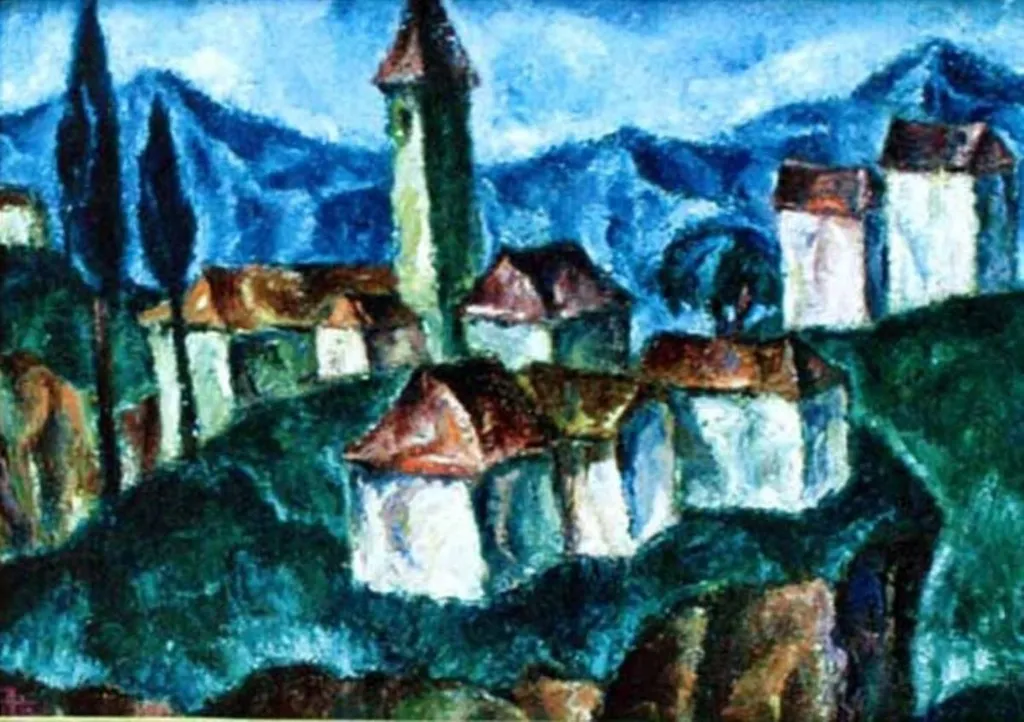
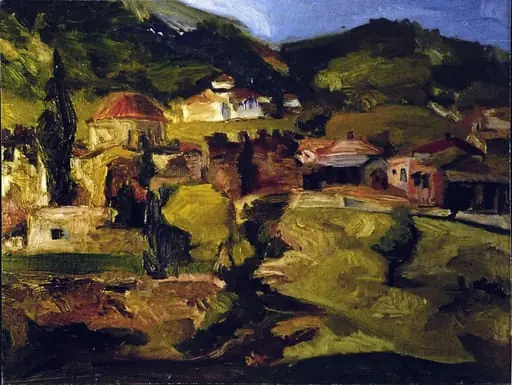
Peisaj la Settignano (Florența) is an unspecified painting by Corneliu Michăilescu. It dates from 1920 and is held in the collection of the National Museum of Art of Romania.
About this work
Overview
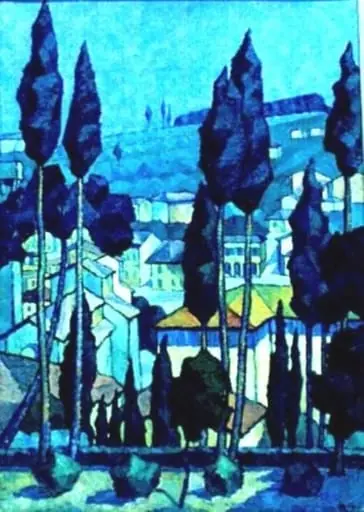
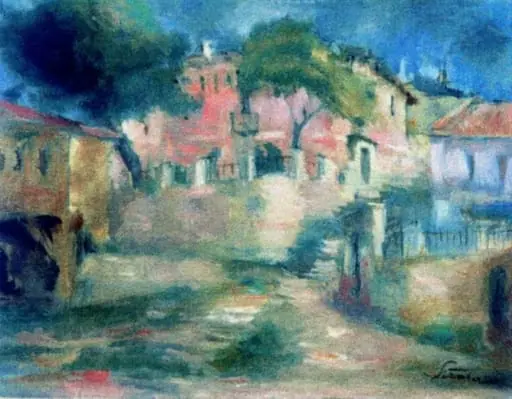
Corneliu Michăilescu’s landscape, dated around 1920, depicts the village of Settignano near Florence. The composition centers on a cluster of modest dwellings set within a narrow valley, their white façades and sharply angled, rust‑colored roofs contrasting with the surrounding foliage and distant mountains.
Subject & Meaning
The scene captures a tranquil rural settlement, emphasizing the relationship between human habitation and the natural environment. The tightly grouped houses suggest a close‑knit community, while the looming, mist‑shrouded peaks convey a sense of isolation and the enduring presence of the Tuscan landscape.
Technique & Style
Michăilescu employs a pronounced impasto technique, laying on thick layers of paint that give the surface a tactile quality. Bold, saturated strokes of green, blue, and earth tones create depth, while the textured application accentuates the rugged roofs and the atmospheric haze of the distant mountains.
History & Provenance
Created circa 1920, the work reflects Michăilescu’s early 20th‑century interest in Italian scenery. Its provenance traces back to private collections in Romania before entering public exhibition, though detailed ownership records remain limited.
Context
The painting belongs to a period when Romanian artists frequently traveled to Italy, seeking inspiration from its historic towns and landscapes. Settignano, known for its stone‑carving tradition, offered a picturesque subject that aligned with contemporary interests in regional authenticity and atmospheric landscape painting.
Artist & collection