Artwork
Flora
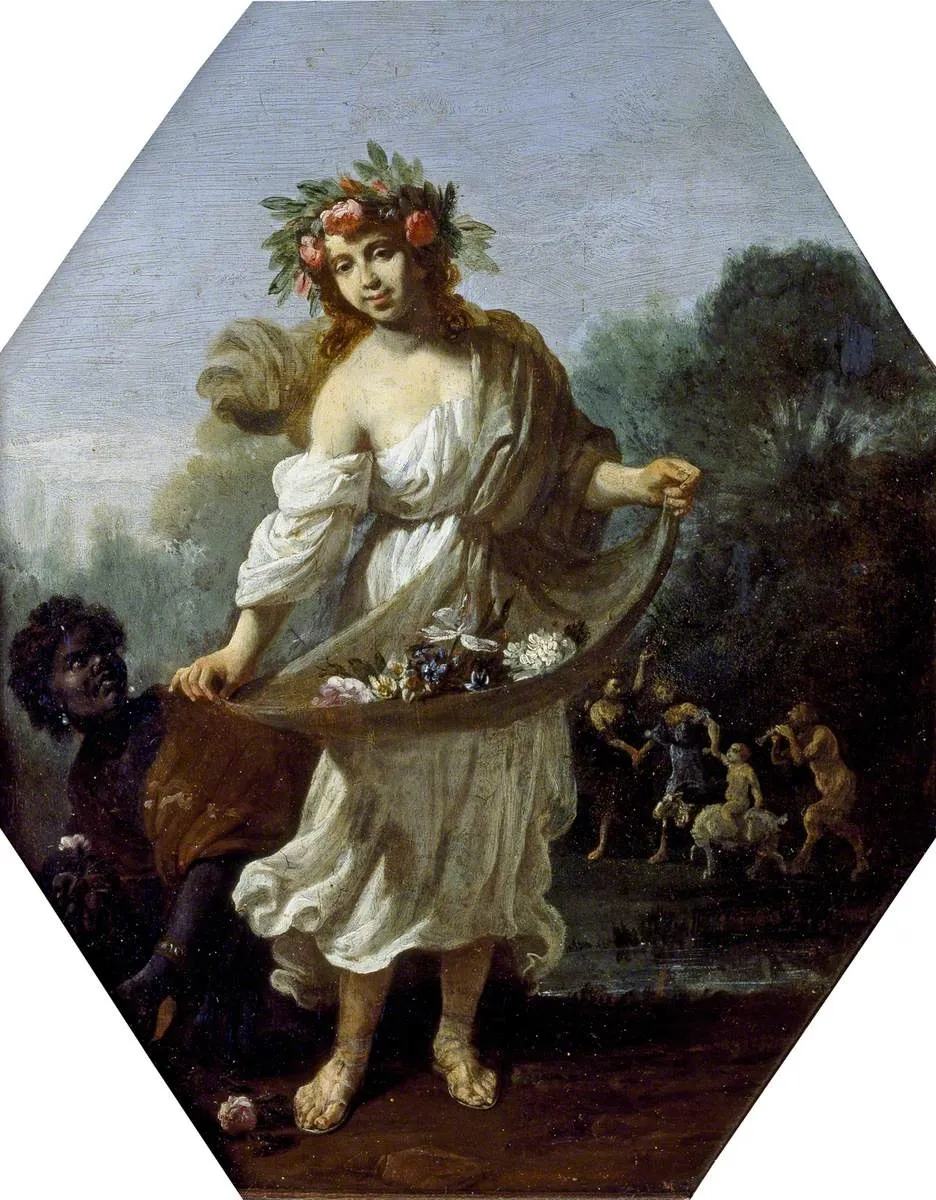
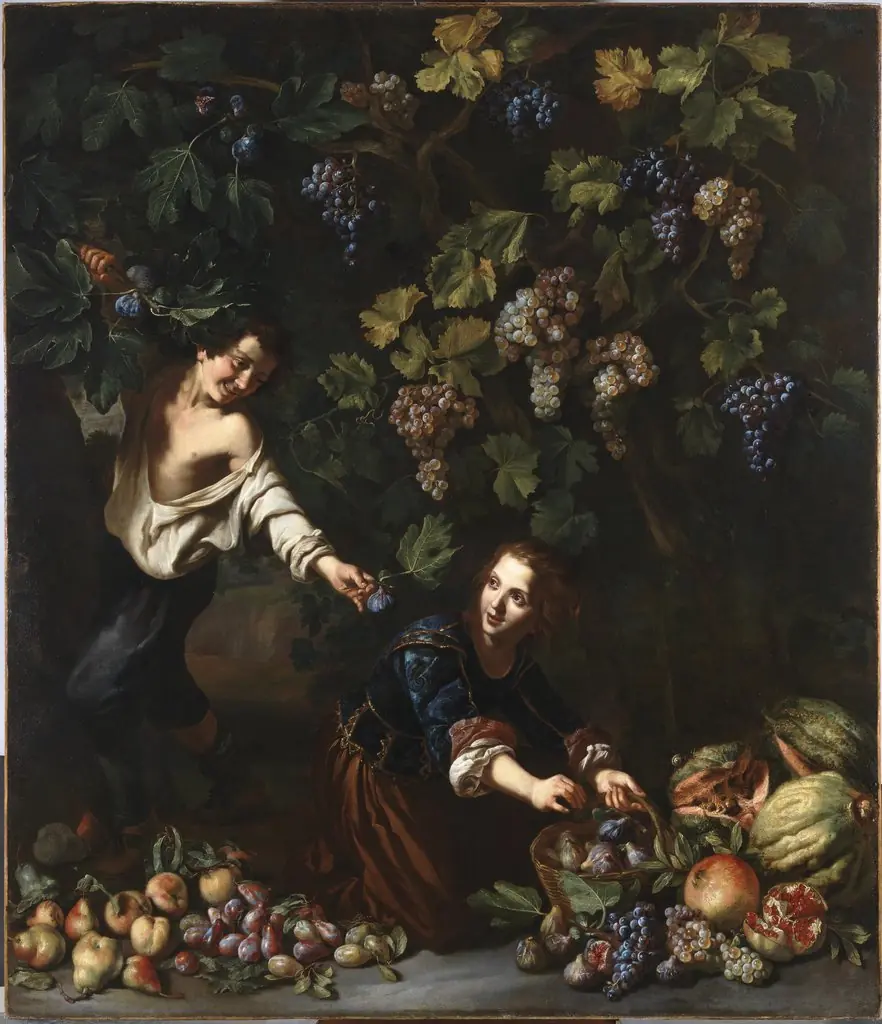
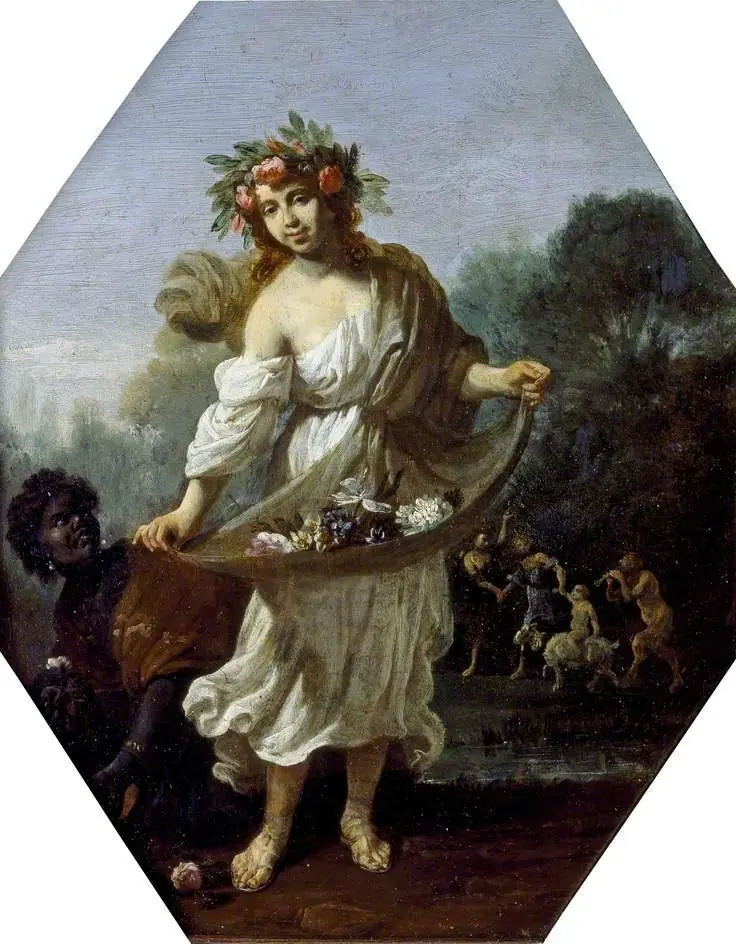
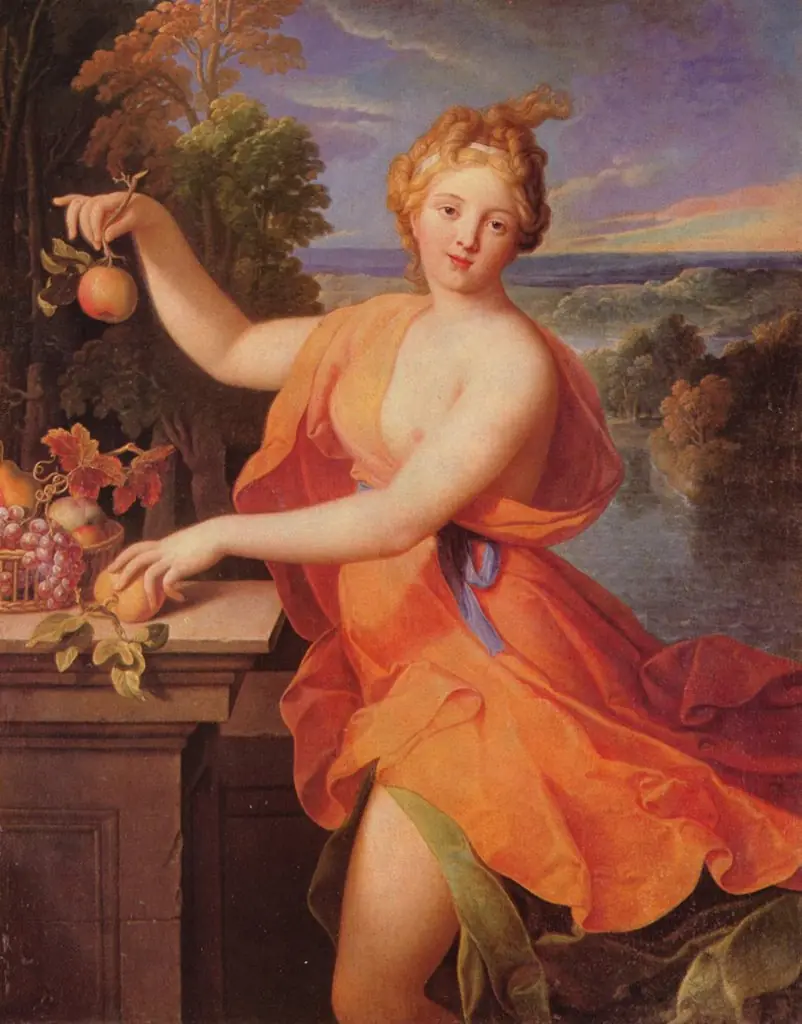
Flora is an oil painting by the Early Baroque Italian artist Michelangelo Cerquozzi. It dates from 1650 and is held in the collection of the Ashmolean Museum.
About this work
Overview
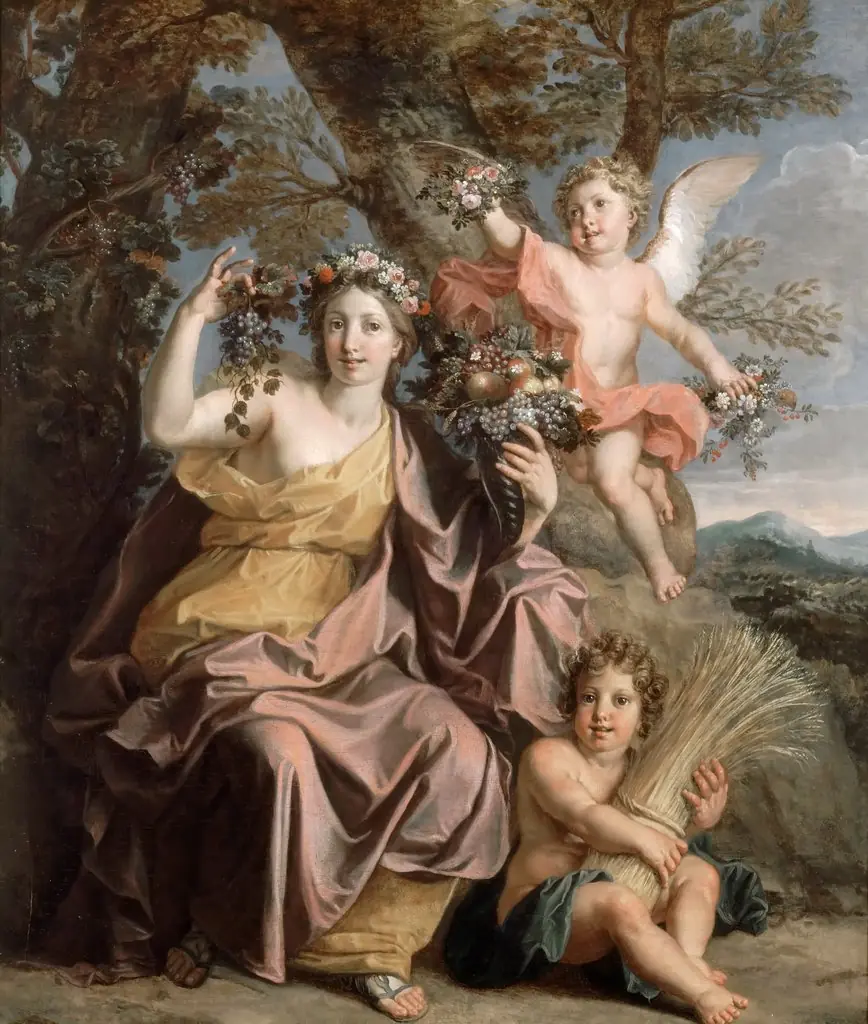
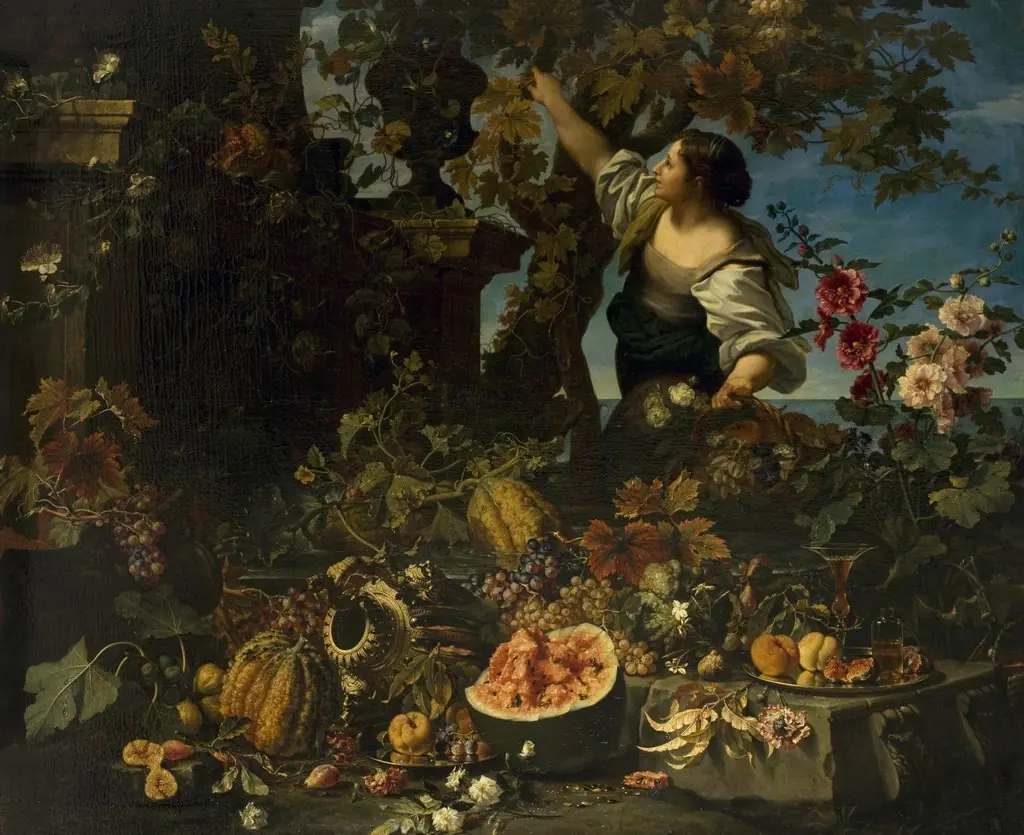
Flora, executed in oil around 1650, is a work by the Roman Baroque painter Michelangelo Cerquozzi. The canvas presents a solitary female figure set against a softened landscape, her white dress and floral wreath drawing immediate attention. The painting is part of the Ashmolean Museum’s collection.
Subject & Meaning
The central figure represents the classical goddess Flora, associated with spring and blossoms. She holds a basket brimming with flowers, reinforcing her role as a personification of nature’s renewal. The surrounding foliage and distant trees frame her within an idealized pastoral scene.
Technique & Style
Cerquozzi employs a naturalistic approach, rendering the folds of the dress and the delicate petals with meticulous detail. The background is rendered with a gentle atmospheric blur, a technique that emphasizes the figure while suggesting depth. The composition reflects the early Baroque interest in dynamic yet controlled representation.
History & Provenance
Created in the mid‑17th century, the painting remained in private hands before entering the Ashmolean Museum’s holdings. Its attribution to Cerquozzi aligns with his known production of mythological subjects during his Roman period.
Context
Cerquozzi’s oeuvre often blended Italian Baroque sensibilities with influences from Flemish and Dutch genre painters active in Rome. Flora exemplifies this synthesis, combining a classical theme with a detailed, genre‑like observation of everyday textures and light.
Artist & collection
Artist
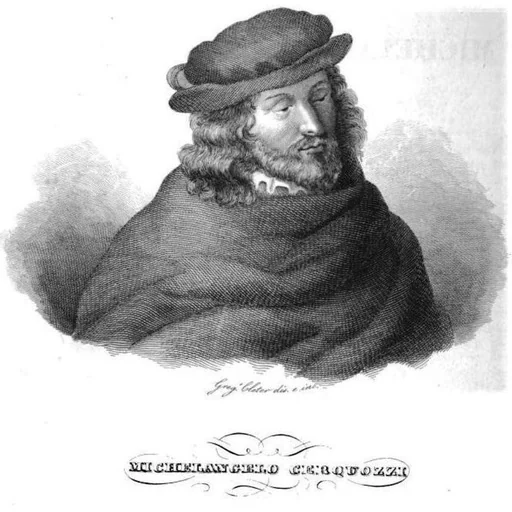
Michelangelo Cerquozzi, known as Michelangelo delle Battaglie (18 February 1602 – 6 April 1660) was an Italian Baroque painter known for his genre scenes, battle pictures, small religious and mythological works and still lifes.