Artwork
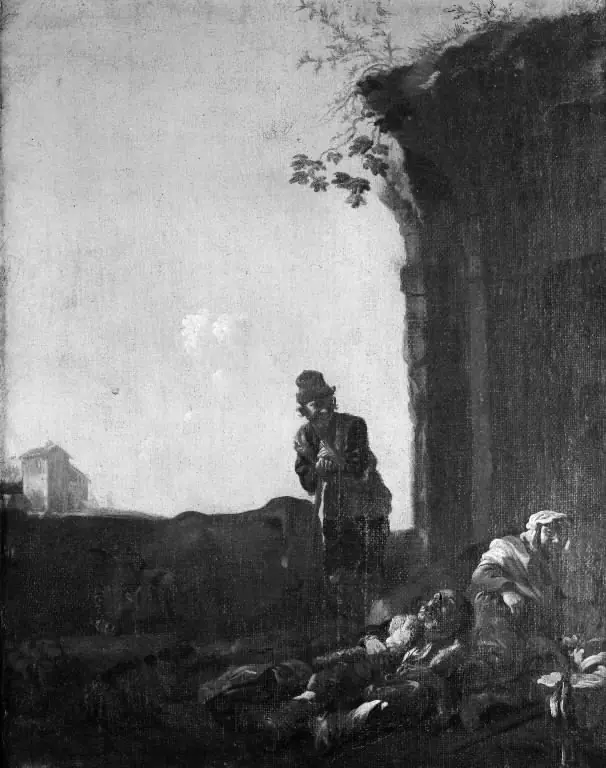
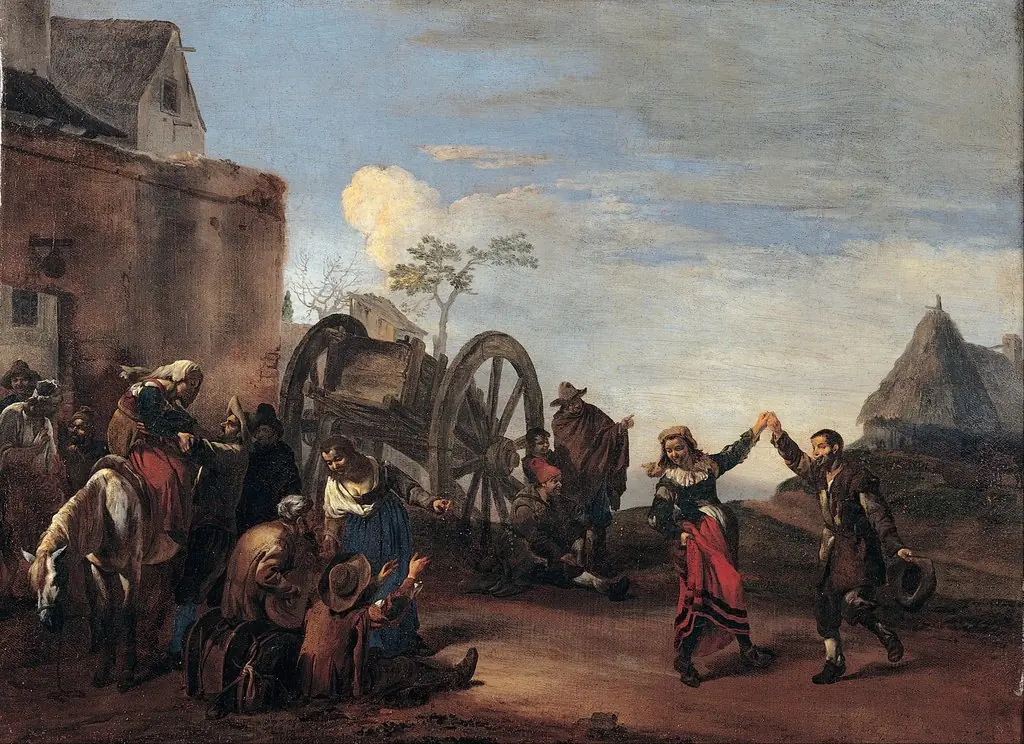
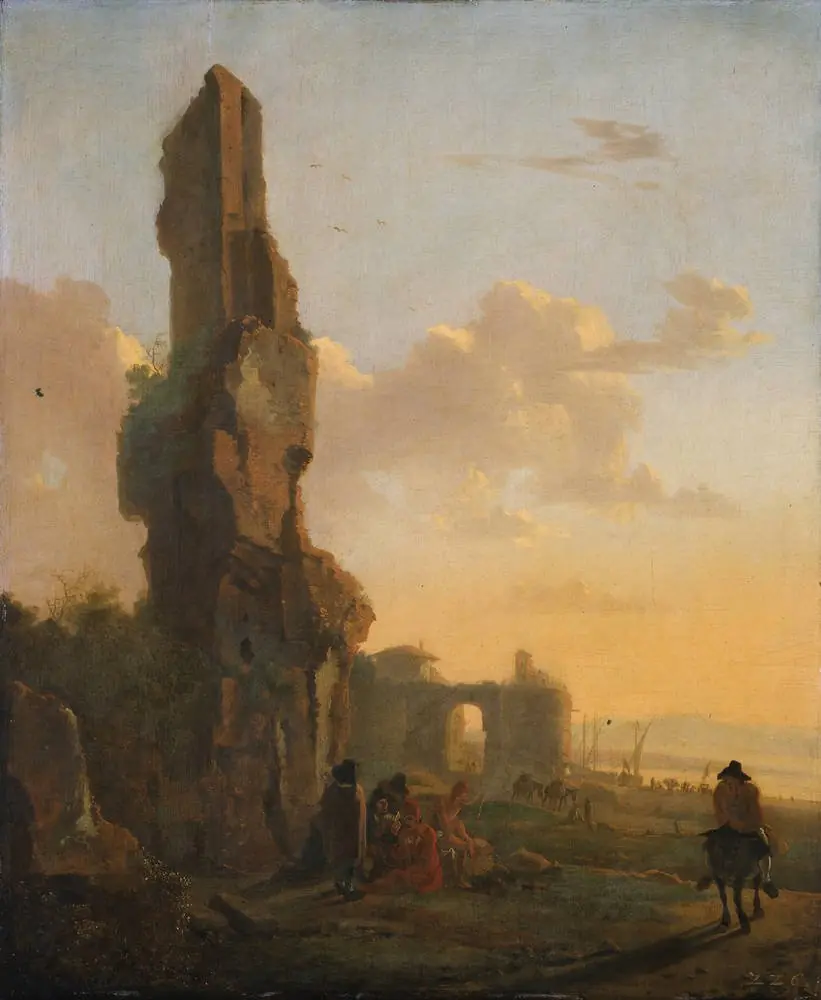
Vagabonds resting in the ruins of the Colosseum
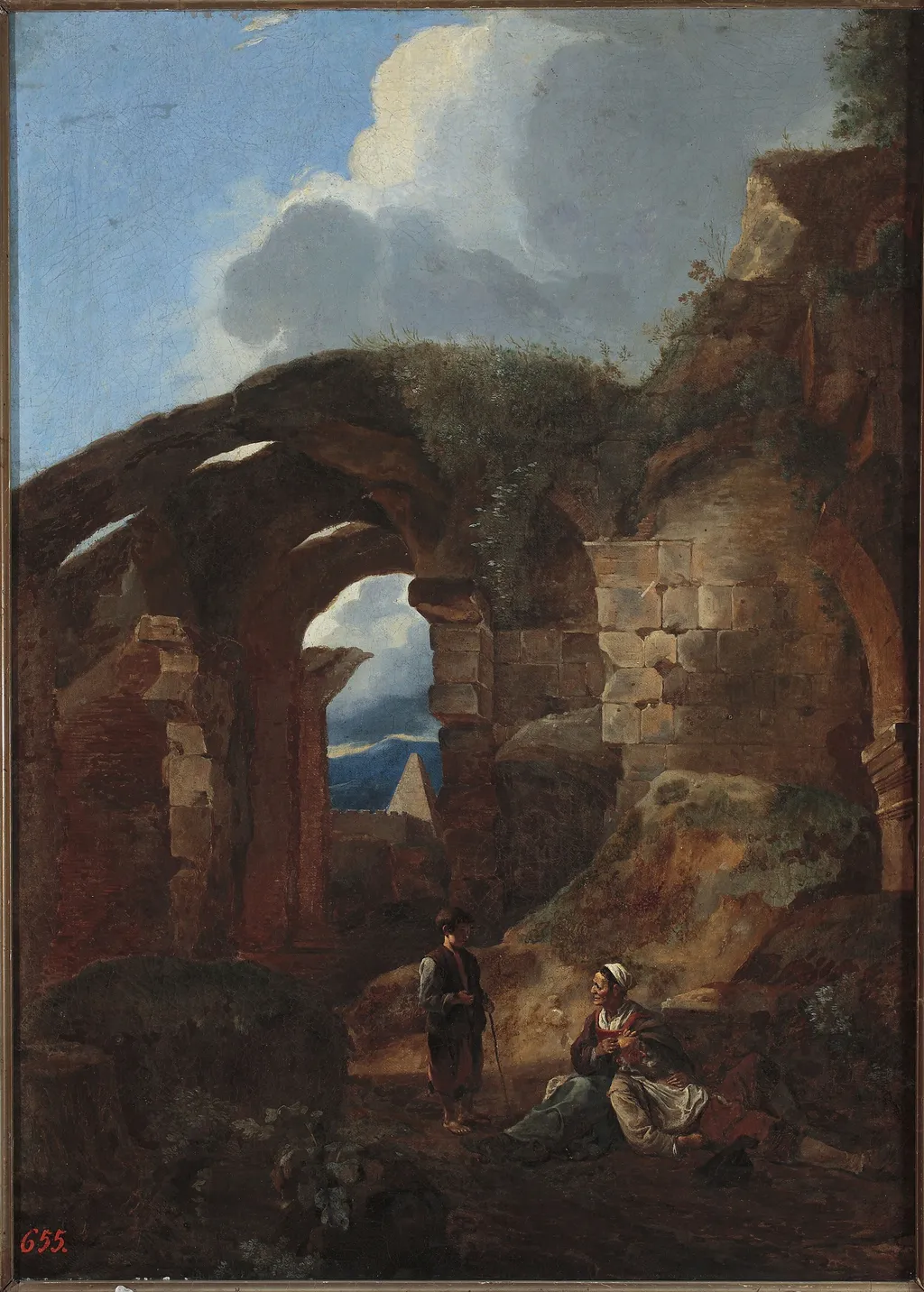
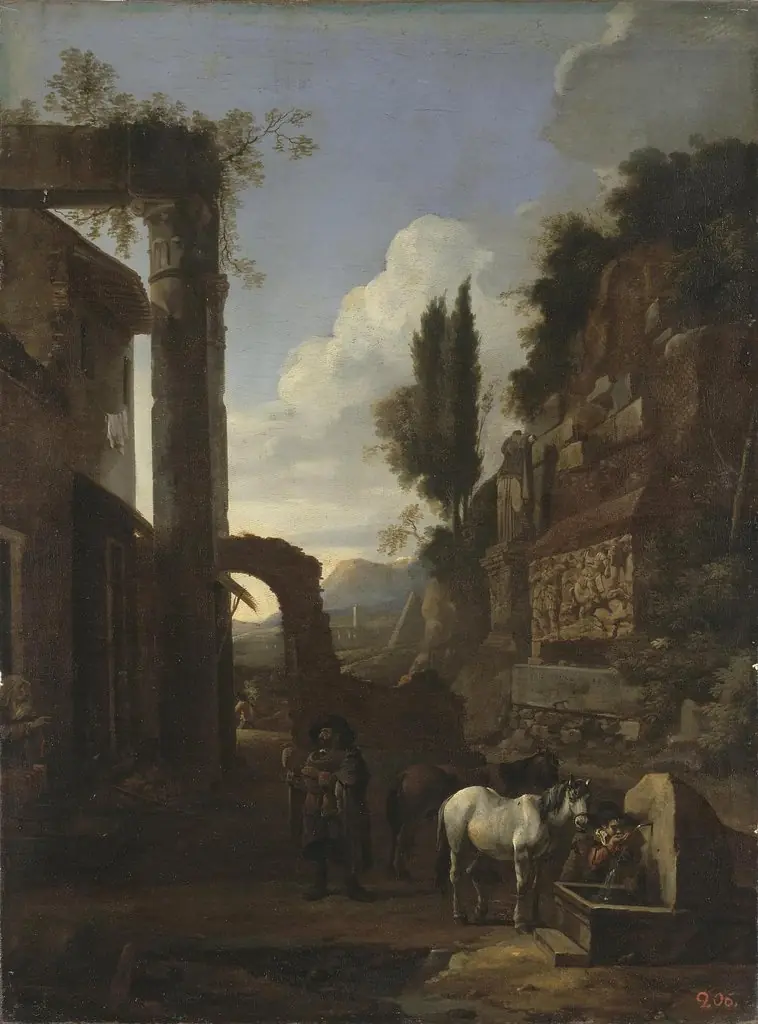
Vagabonds resting in the ruins of the Colosseum is an oil painting by Michelangelo Cerquozzi. It dates from 1641 and is held in the collection of the National Museum in Warsaw.
About this work
Overview
Painted around 1641 by Michelangelo Cerquozzi, this oil-on-canvas work depicts a quiet moment of rest among ruins near the Colosseum.
Painted around 1641 by Michelangelo Cerquozzi, this oil-on-canvas work depicts a quiet moment of rest among ruins near the Colosseum. Cerquozzi, a Roman artist of the Baroque period, specialized in scenes of everyday life, particularly among the urban poor. The composition avoids grandeur, focusing instead on the stillness of two travelers amid the decay of ancient architecture, reflecting a shift in artistic interest toward the marginalized.
Subject & Meaning
Two itinerant figures—a woman holding a child and a man with a staff—pause in the shadow of crumbling arches. Their worn clothing and weary postures contrast with the enduring monumentality of the ruins. The scene suggests displacement and resilience, framing classical antiquity not as a symbol of glory but as a silent witness to contemporary hardship. The absence of narrative action invites contemplation of social conditions in 17th-century Rome.
Technique & Style
Cerquozzi employs muted earth tones—browns, grays, and soft ochres—to unify the figures with their environment. Detailed brushwork renders the texture of stone, fabric, and skin with quiet precision. The lighting is even and diffuse, avoiding dramatic contrasts, which enhances the painting’s subdued mood. His approach aligns with the Bamboccianti tradition, favoring intimate, unidealized observations over theatricality.
History & Provenance
The painting entered the collection of the National Museum in Warsaw in the 19th century, likely through European art acquisitions during the period of Polish cultural revival. Its journey from Rome to Poland reflects broader patterns of art movement across borders in the early modern era. While little is documented about its early ownership, its presence in Warsaw underscores its recognition as a representative work of Roman genre painting.
Context
In mid-17th-century Rome, artists like Cerquozzi turned from religious and mythological themes to depict the city’s underclass, influenced by Northern European genre painting. The Colosseum, then a ruin inhabited by the poor and used for informal labor, became a symbolic backdrop for these scenes. Such works offered a counter-narrative to idealized antiquity, revealing the lived reality beneath Rome’s monumental past.
Legacy
Cerquozzi’s painting contributes to a broader Baroque interest in social realism, influencing later depictions of urban poverty in European art. Though not widely celebrated in his time, his focus on ordinary lives helped expand the scope of acceptable subjects in painting. Today, the work remains a quiet testament to the intersection of history, memory, and marginal existence in early modern Italy.
Artist & collection
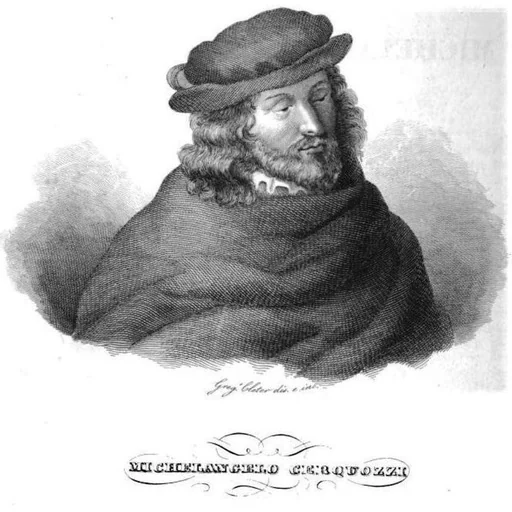
Artist
Michelangelo Cerquozzi, known as Michelangelo delle Battaglie (18 February 1602 – 6 April 1660) was an Italian Baroque painter known for his genre scenes, battle pictures, small religious and mythological works and still lifes.