Artwork
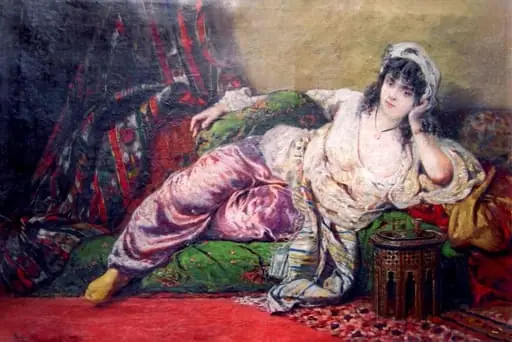
Cadână cu narghilea
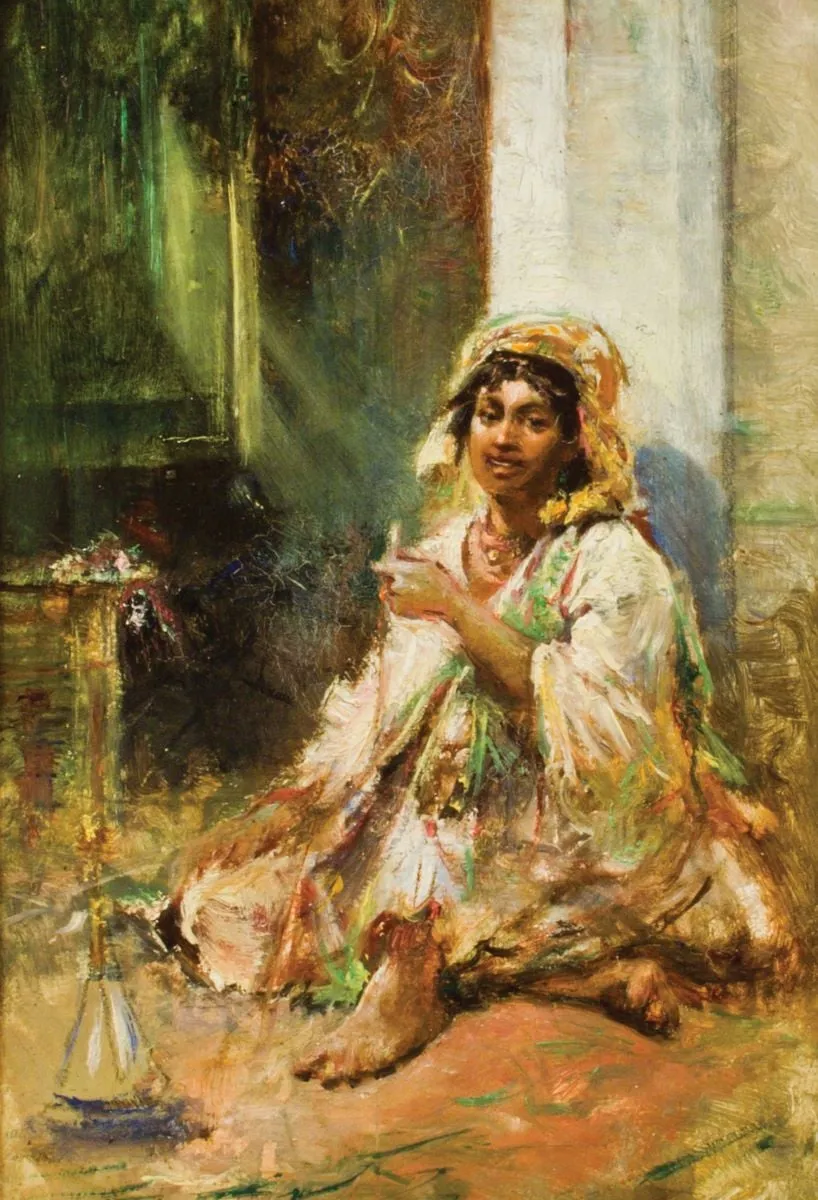
Cadână cu narghilea is an unspecified painting by Theodor Aman. It dates from 1850 and is held in the collection of the Bucharest Municipality Museum.
About this work
Overview
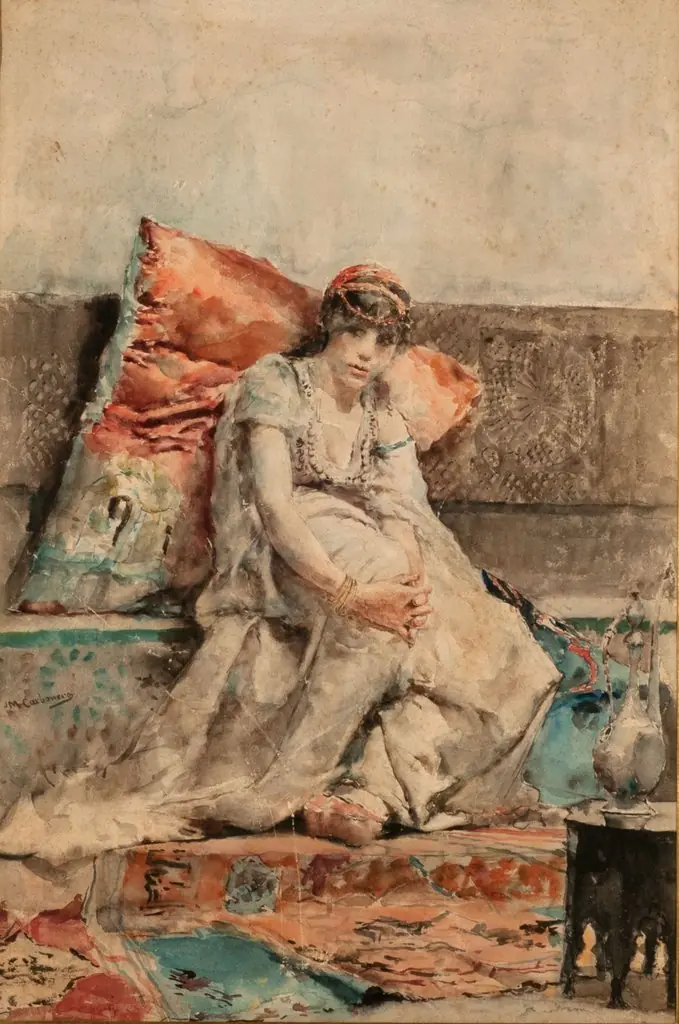
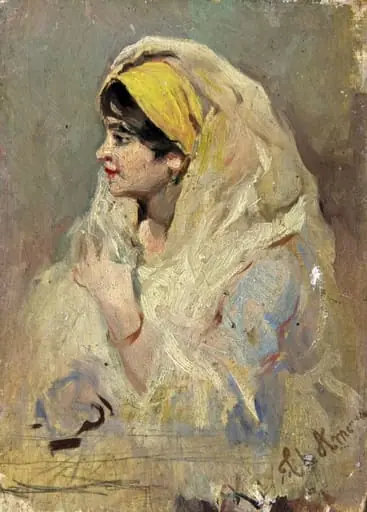
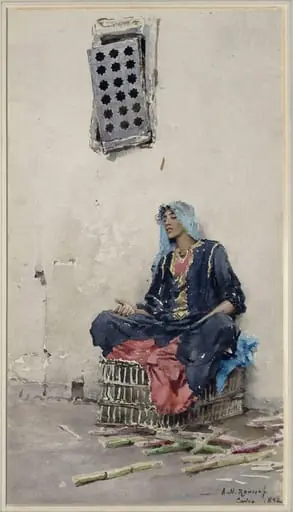
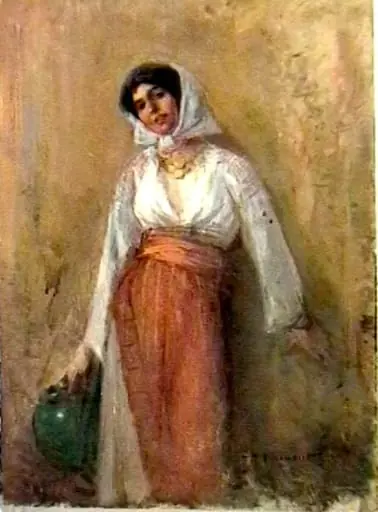
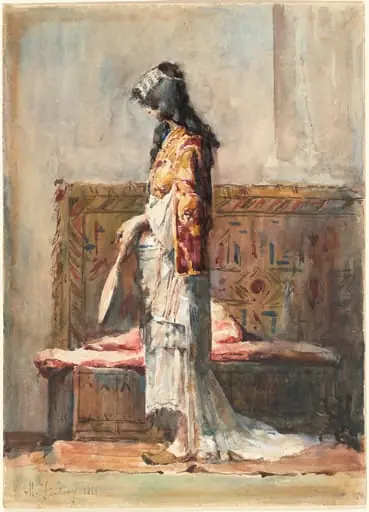
Created around 1850 by Romanian painter Theodor Aman, “Cadână cu narghilea” is an oil work now in the collection of the Museum of Ethnography. The composition centers on a solitary woman seated on the floor, her white robe and headscarf contrasting with a warm, earth‑toned backdrop. A decorative hookah rests beside her, completing a quiet domestic scene.
Subject & Meaning
The figure appears absorbed in contemplation, her gaze lowered and a faint smile on her lips suggesting introspection. The presence of the narghilea, a social smoking device, hints at moments of leisure and private reflection within a traditional interior, inviting viewers to consider the everyday rituals of 19th‑century life.
Technique & Style
Aman employs a restrained palette of warm ochres, muted greens and browns, allowing the white of the woman's garments to stand out. Soft lighting models the forms, while delicate brushwork renders the texture of the fabric and the ornate metalwork of the hookah, creating a sense of intimacy and tactile realism.
History & Provenance
The painting was produced circa 1850, during Aman’s early career when he was exploring genre scenes of Romanian culture. It entered the Museum of Ethnography’s holdings at an unspecified date, where it is displayed as an example of visual documentation of domestic customs.
Context
At the mid‑19th century, Romanian artists like Aman began to depict local customs and everyday life, moving beyond academic history painting. The inclusion of a narghilea reflects the diffusion of Ottoman‑influenced leisure practices in the region, situating the work within broader cultural exchanges of the period.
Artist & collection
Artist