Artwork
Still Life with Flowers and Jug
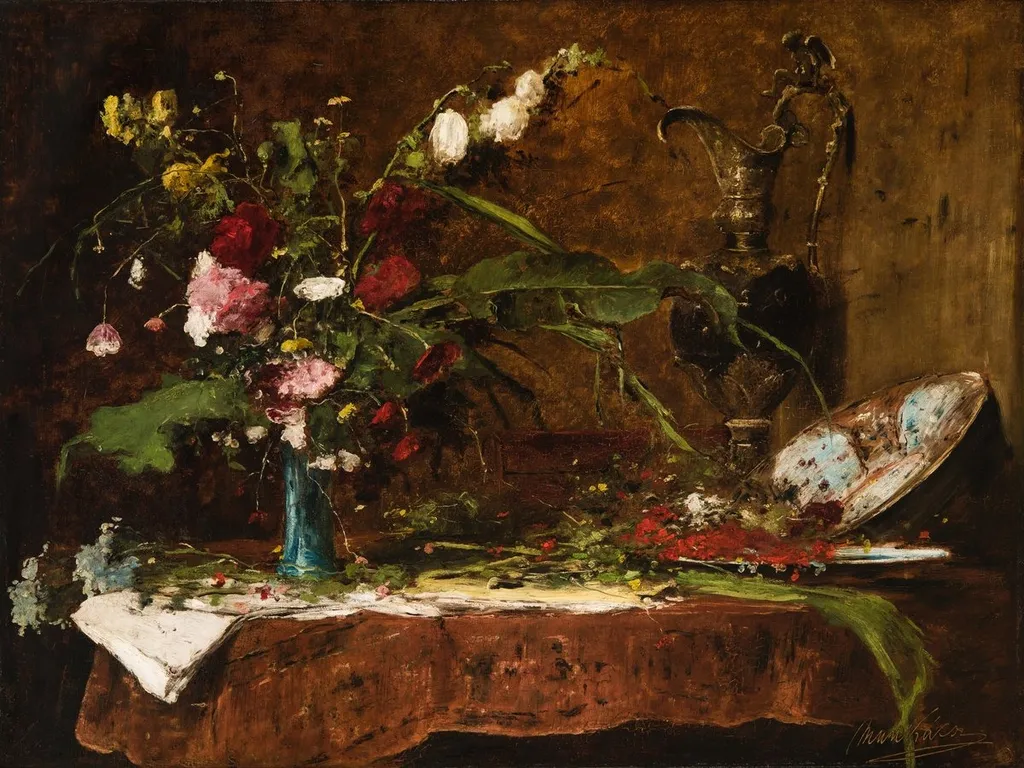
Still Life with Flowers and Jug is an oil painting by the Realist artist Mihály Munkácsy. It dates from 1891 and is held in the collection of the Hungarian National Gallery.
About this work
Overview
Painted in 1891 by Hungarian artist Mihály Munkácsy, this oil-on-canvas still life departs from his larger narrative works to focus on quiet domestic objects.
Painted in 1891 by Hungarian artist Mihály Munkácsy, this oil-on-canvas still life departs from his larger narrative works to focus on quiet domestic objects. It presents a simple arrangement of flowers and a jug, rendered with attention to natural detail and atmospheric tone. The composition reflects Munkácsy’s engagement with realism, emphasizing ordinary subjects through careful observation rather than idealization.
Subject & Meaning
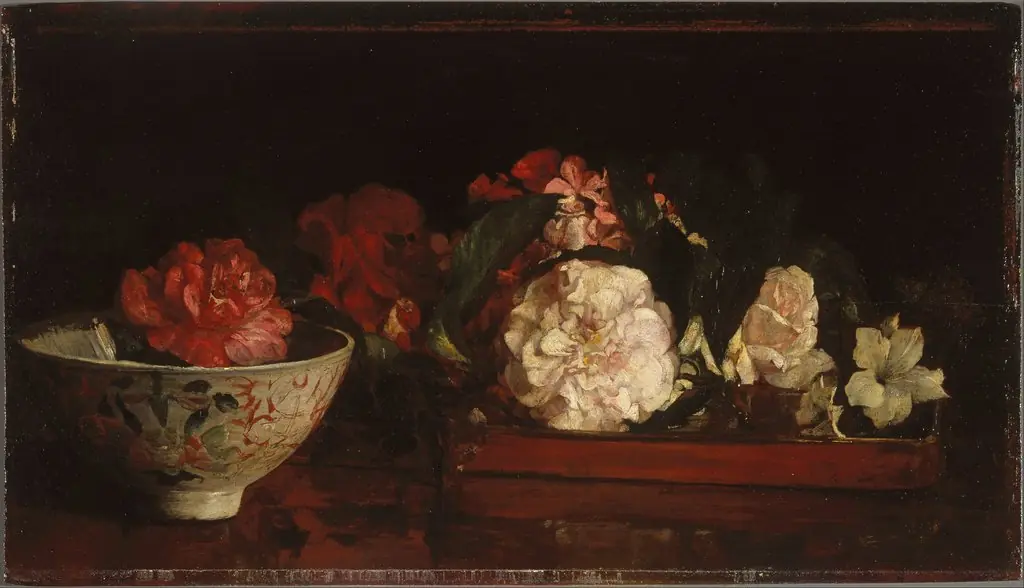
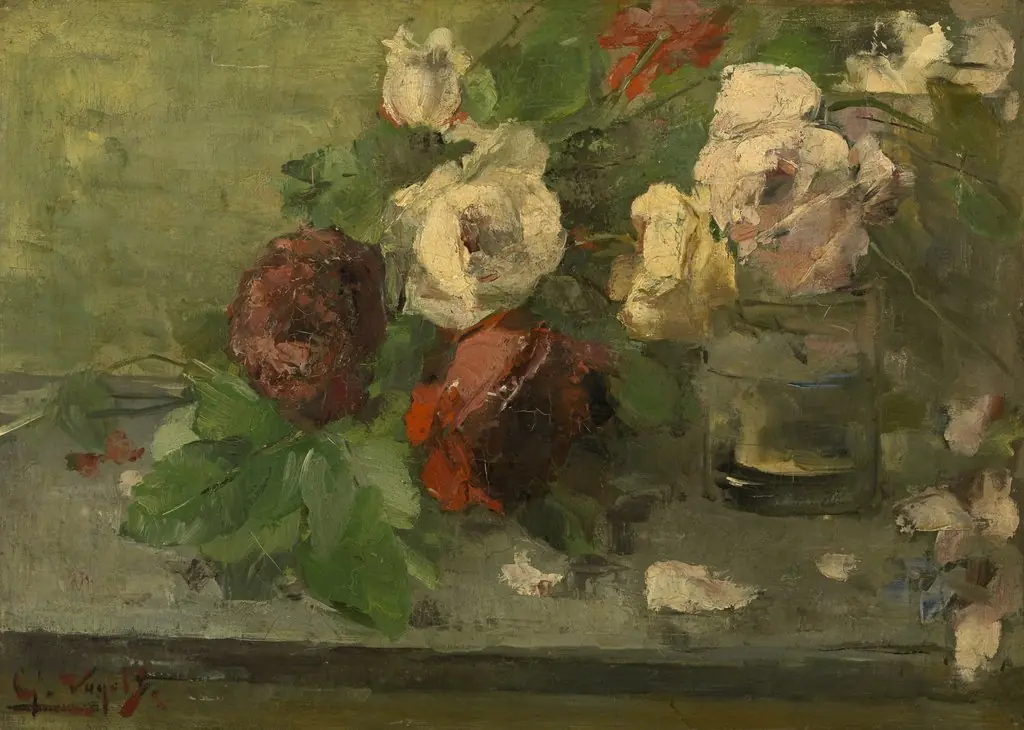
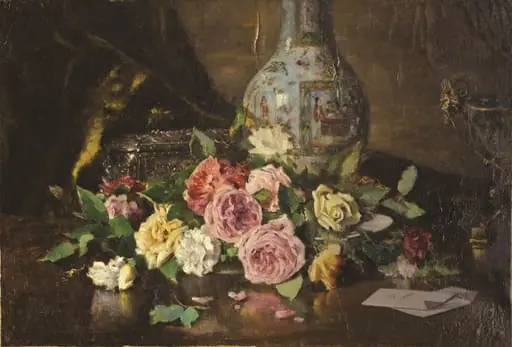
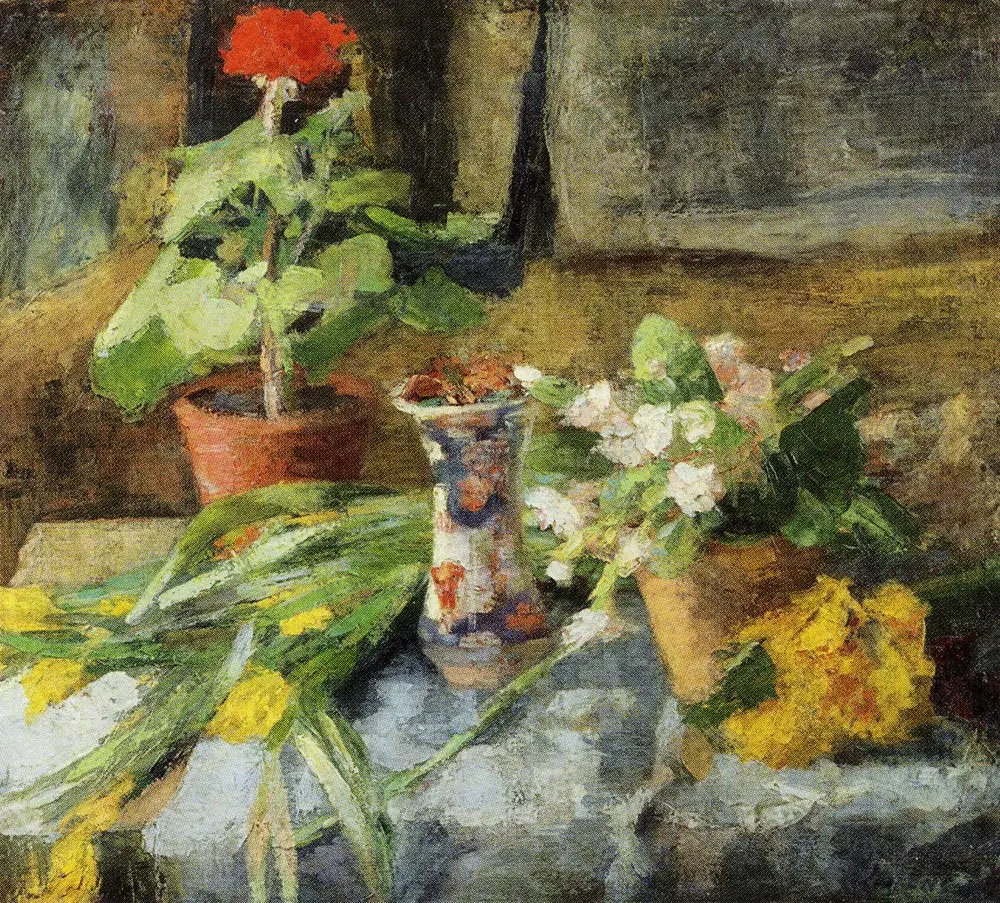
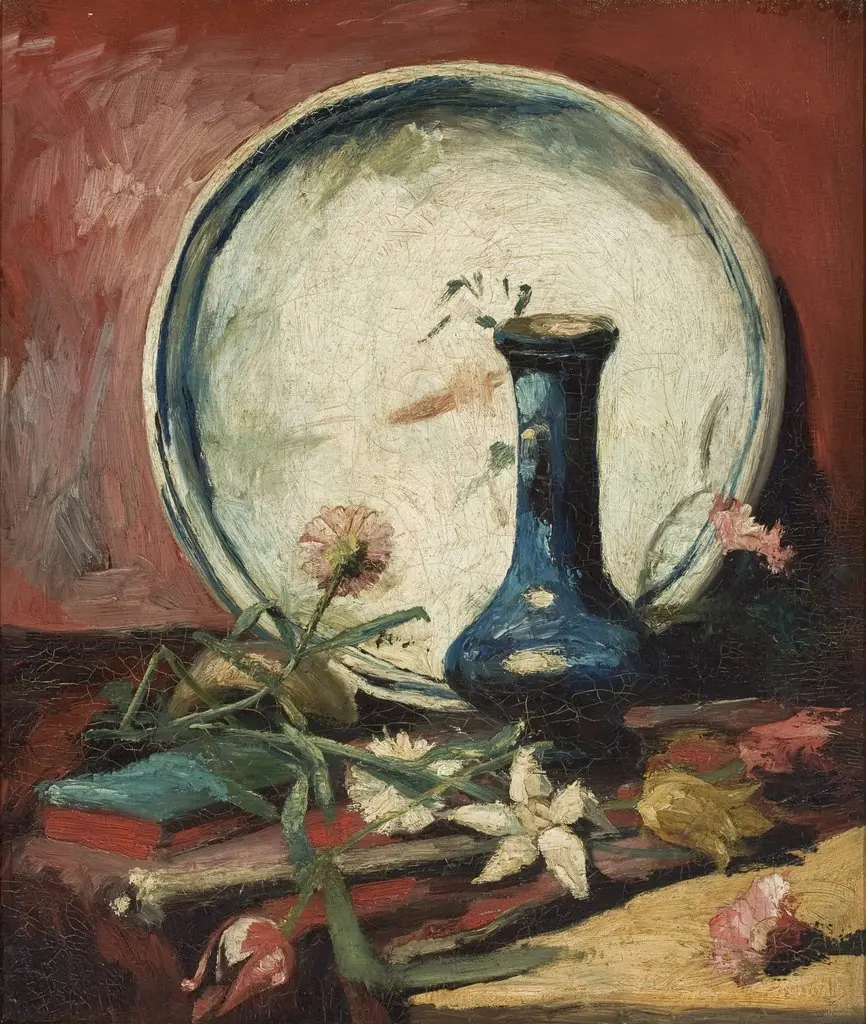
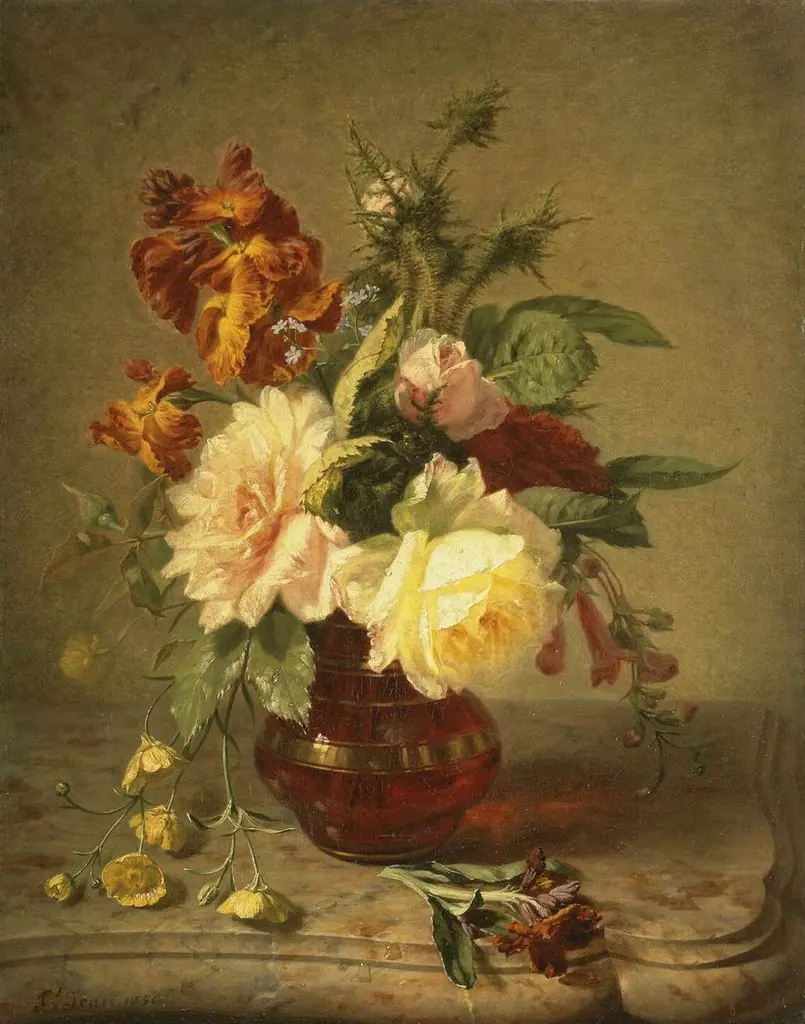
The painting features a vibrant bouquet of red, pink, white, and yellow blooms in a blue vase, accompanied by scattered petals and leaves on a wooden surface. A silver jug rests in the background beside a muted brown wall. These elements suggest a moment of stillness in daily life, evoking transience through the fleeting nature of cut flowers. No symbolic narrative is imposed; meaning arises from the quiet dignity of the scene itself.
Technique & Style
Munkácsy employed loose, energetic brushwork to capture the texture of petals and leaves, allowing strokes to suggest form rather than define it precisely. The palette leans toward warm earth tones, with the blue vase and silver jug providing subtle contrast. Light falls naturally across the surface, enhancing the tactile quality of the objects. The technique balances realism with a painterly immediacy that conveys vitality.
History & Provenance
Created in 1891, the painting remained within Munkácsy’s circle before entering the Hungarian National Gallery’s collection. It was not exhibited widely during his lifetime, unlike his more famous historical and religious paintings. Its presence in the national collection reflects a later recognition of his versatility beyond large-scale genre scenes, affirming its value as a personal, intimate work.
Context
In late 19th-century Europe, still life was often seen as a minor genre, yet artists like Munkácsy used it to explore light, texture, and composition away from public expectations. His choice to paint this subject during a period dominated by monumental themes reveals a quieter artistic impulse. The work aligns with broader European trends that valued everyday observation, even among painters known for grand narratives.
Legacy
Though overshadowed by Munkácsy’s larger works, this still life endures as evidence of his technical range and sensitivity to quiet moments. It contributes to the understanding of Hungarian realism beyond its social themes, showing how even modest subjects could be rendered with emotional resonance. Today, it remains a key example of his lesser-known but significant contributions to domestic still life in Central European art.
Artist & collection
Artist
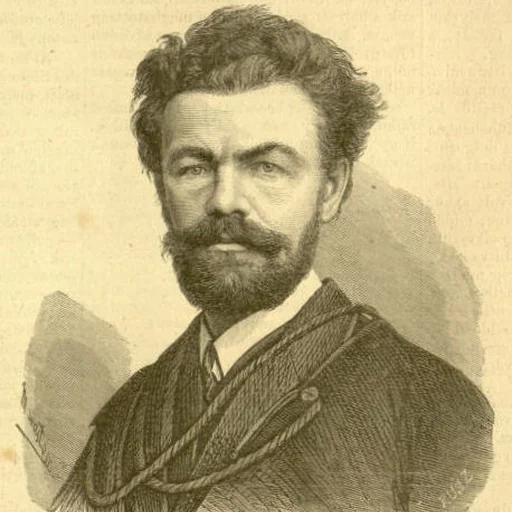
Mihály Munkácsy (Hungarian pronunciation: ; 20 February 1844 – 1 May 1900) was a Hungarian painter. He earned international reputation with his genre pictures and large-scale biblical paintings.