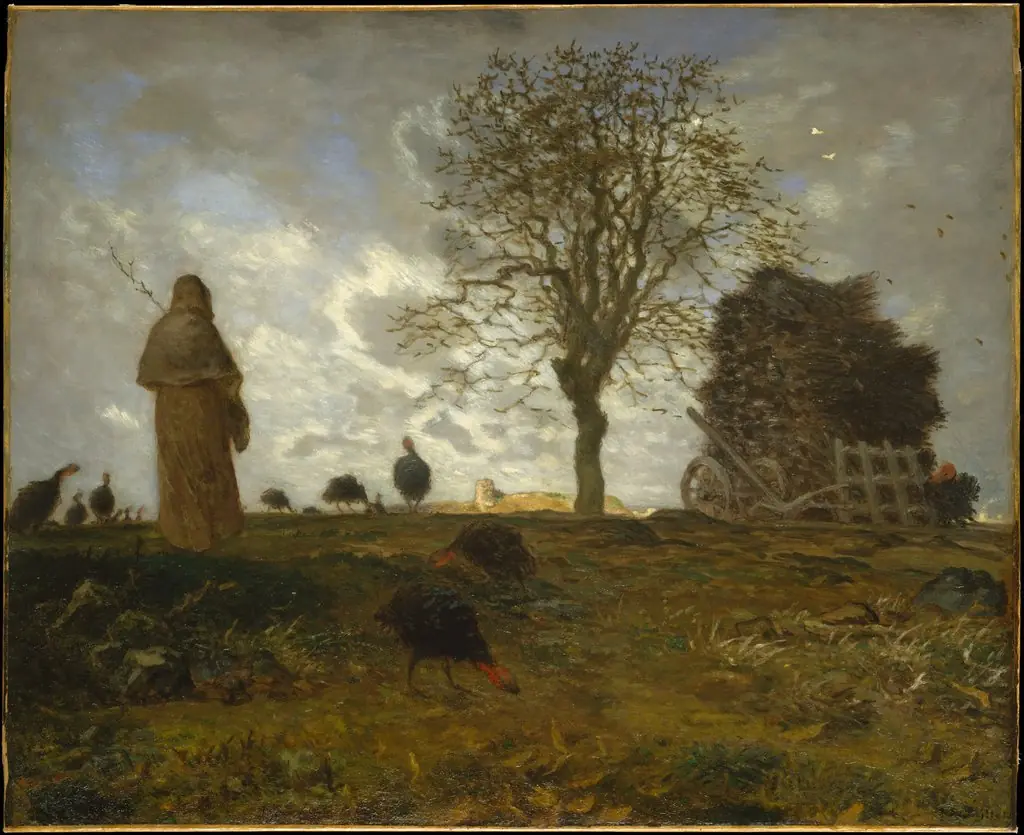
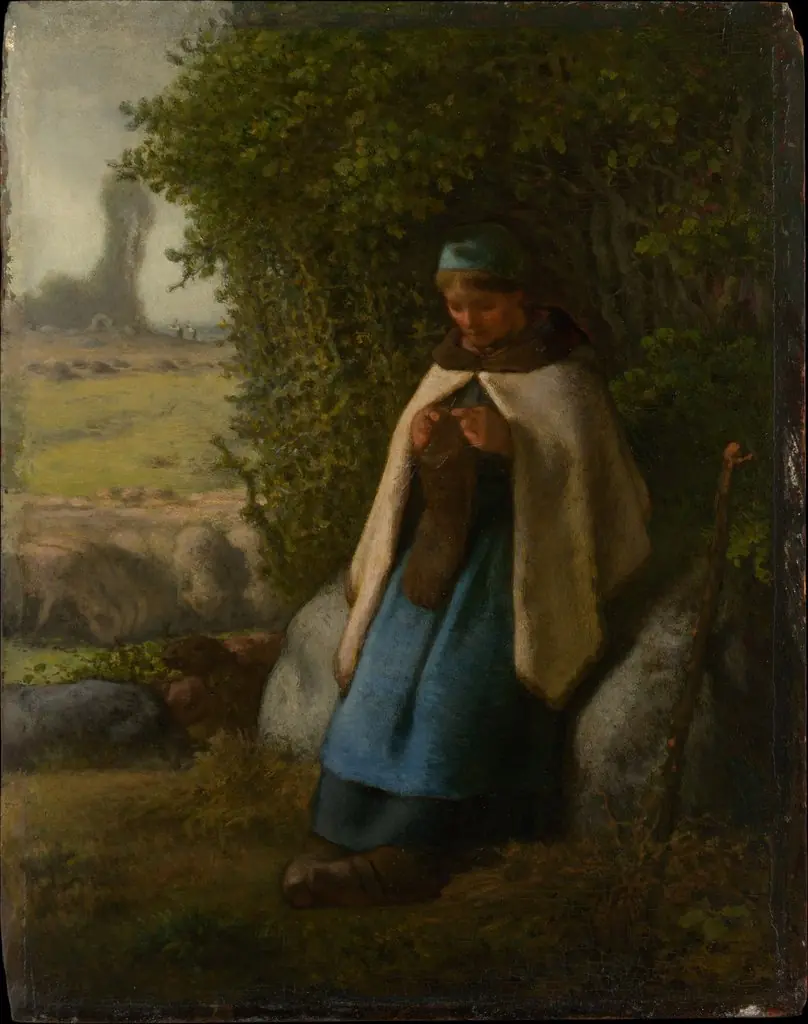
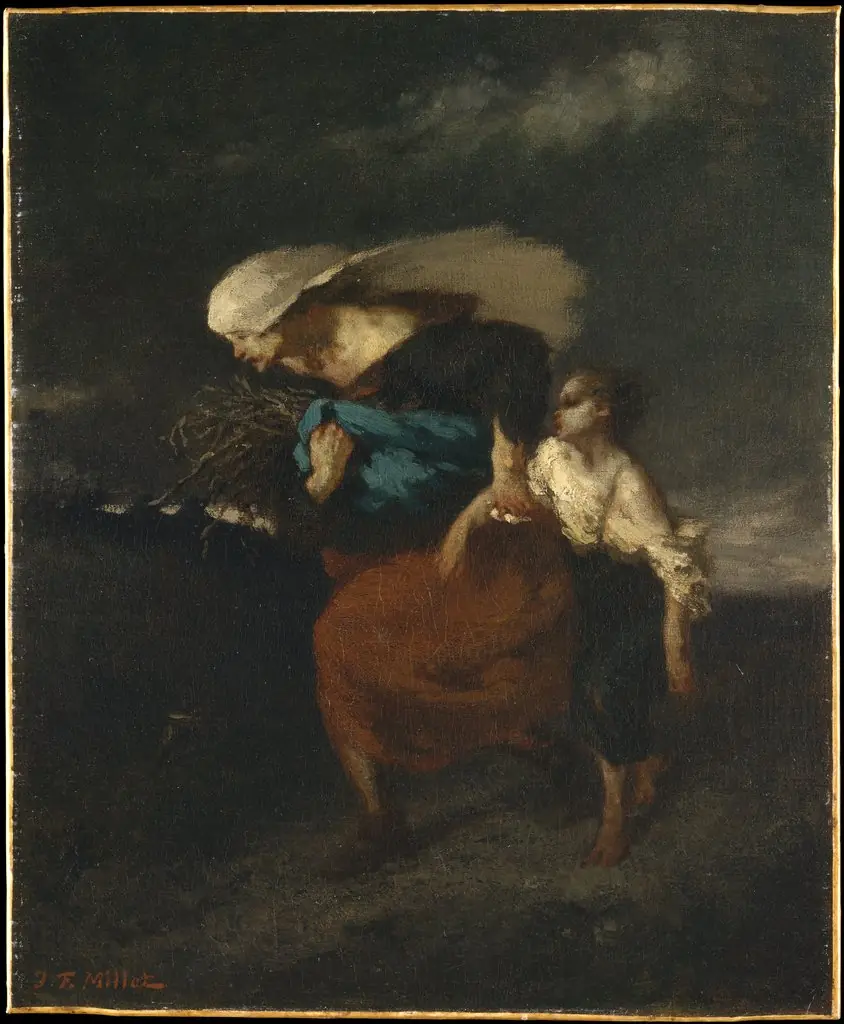
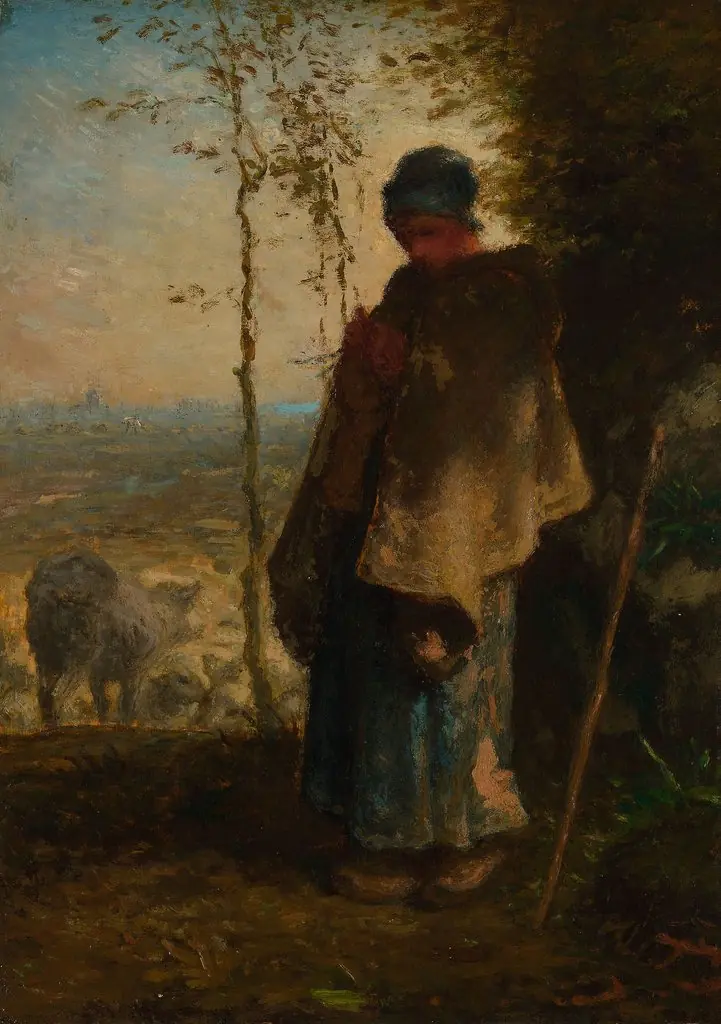
Artwork
The Shepherdess
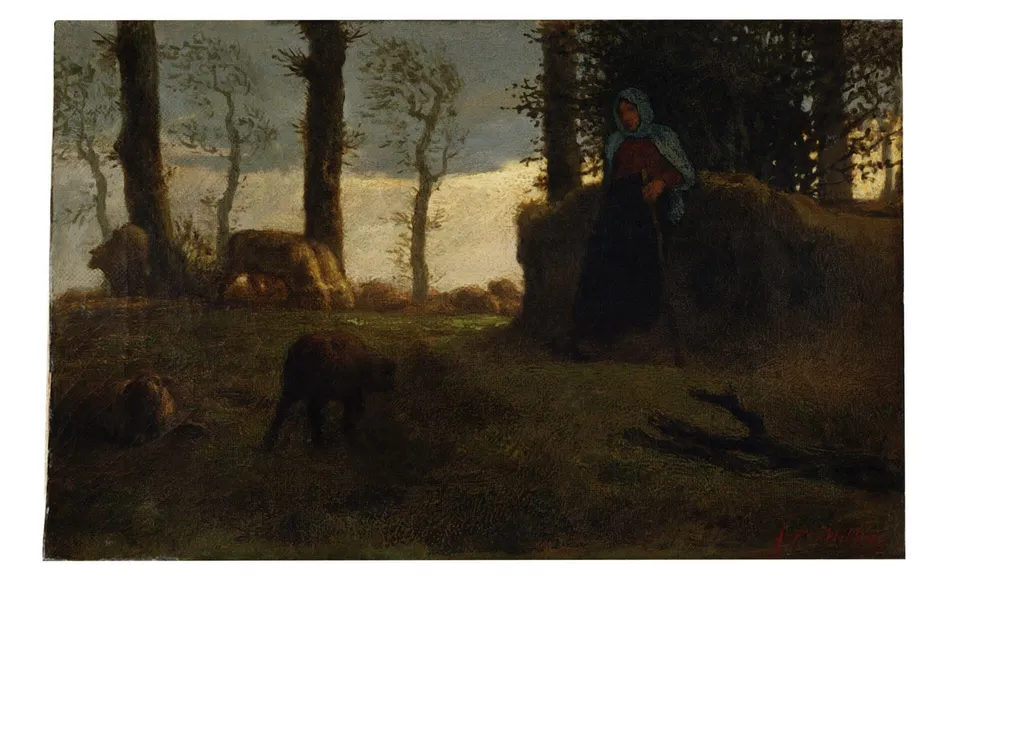
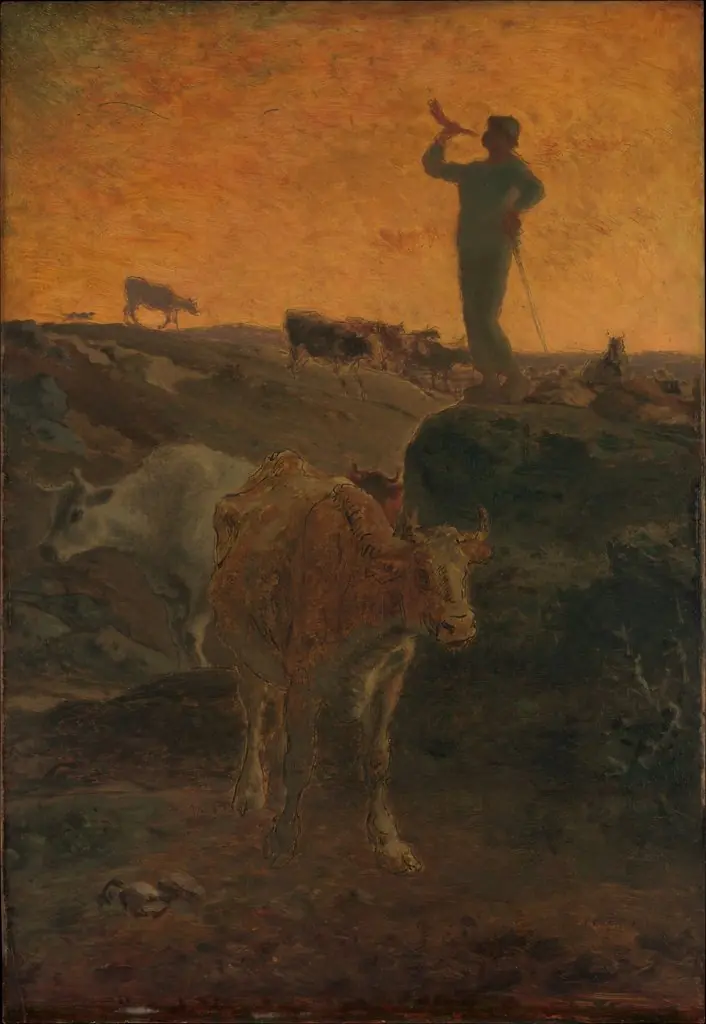
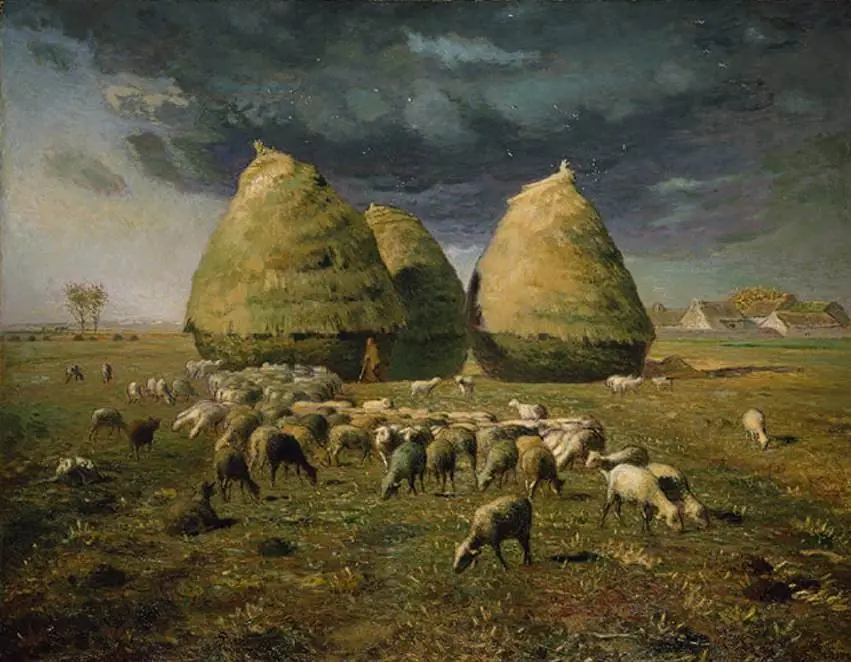
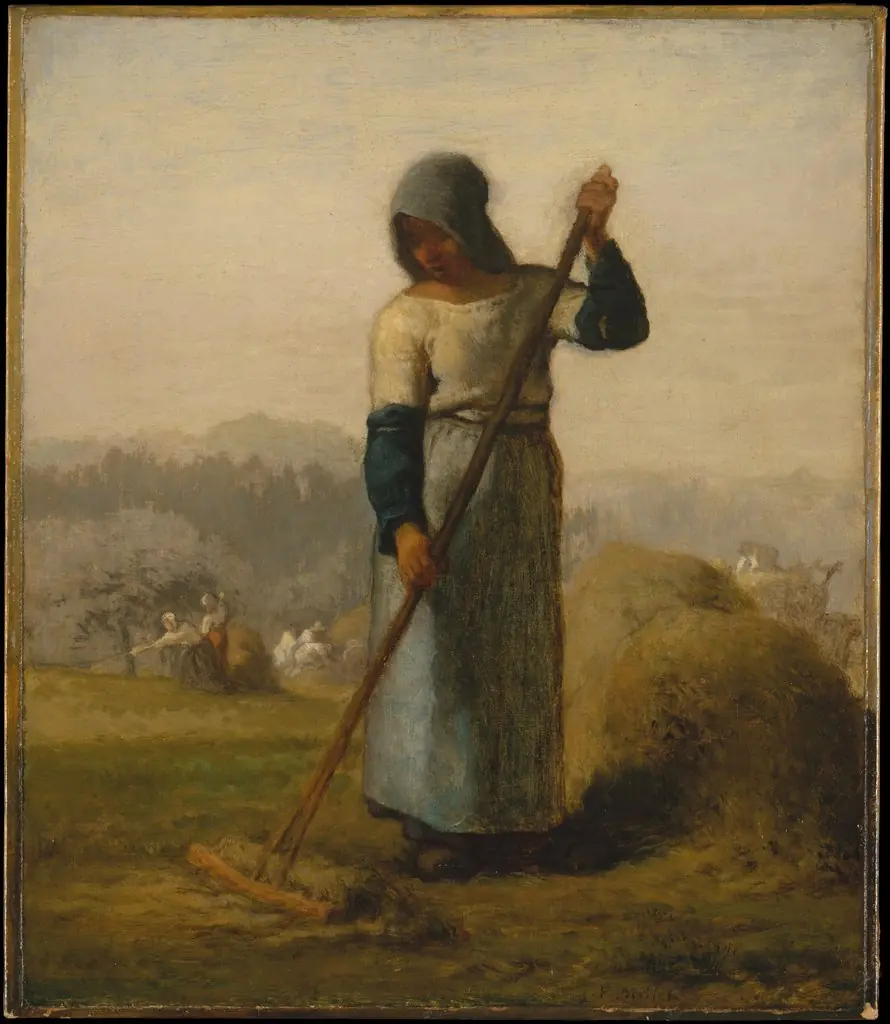
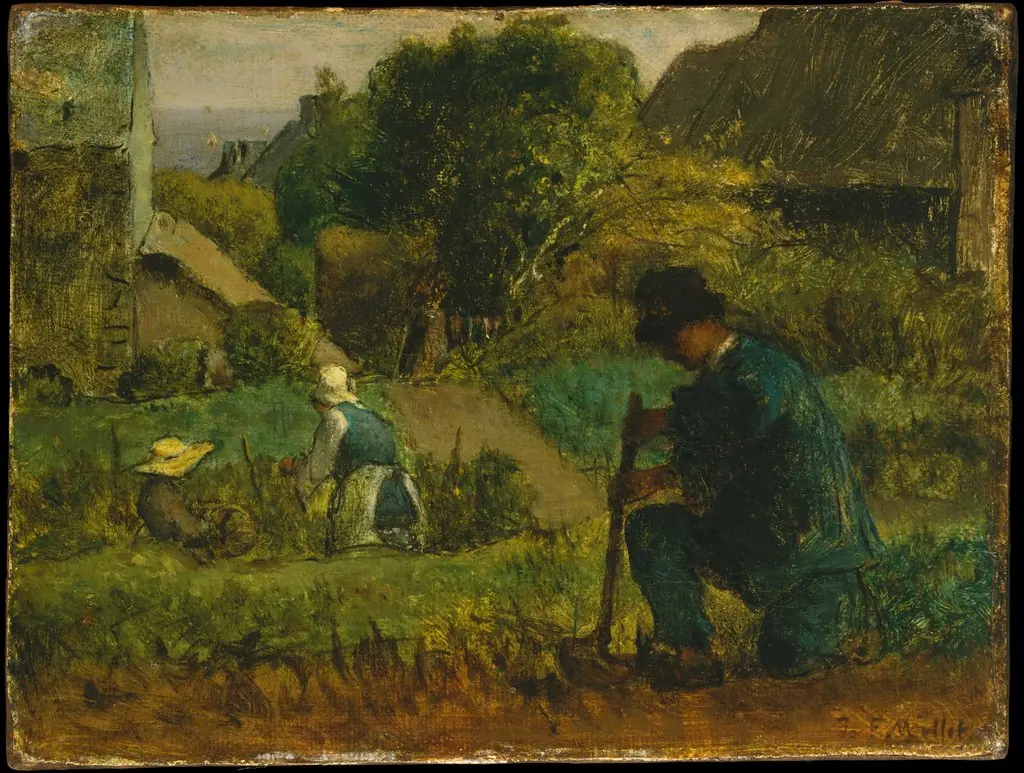
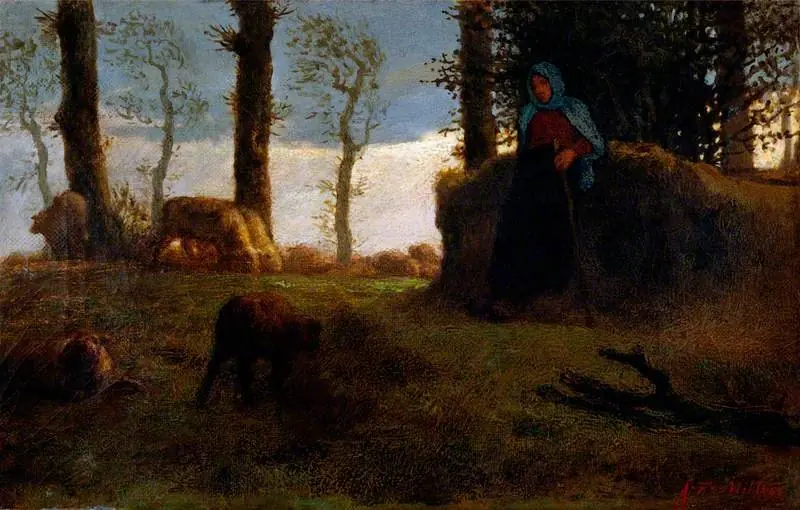
The Shepherdess is an oil painting by the Impressionist artist Jean François Millet. It dates from 1851 and is held in the collection of the Victoria and Albert Museum. Painted by Jean-François Millet in the early phase of his career, this oil work captures a quiet moment of rural life.
About this work
Overview
It reflects his shift from portraiture toward scenes of peasant labor, a direction solidified after his training in Paris and exposure to the Barbizon region.
Painted by Jean-François Millet in the early phase of his career, this oil work captures a quiet moment of rural life. It reflects his shift from portraiture toward scenes of peasant labor, a direction solidified after his training in Paris and exposure to the Barbizon region. The painting’s subdued tone and focus on ordinary figures mark a departure from academic grandeur, aligning with emerging realist tendencies in mid-19th-century French art.
Subject & Meaning
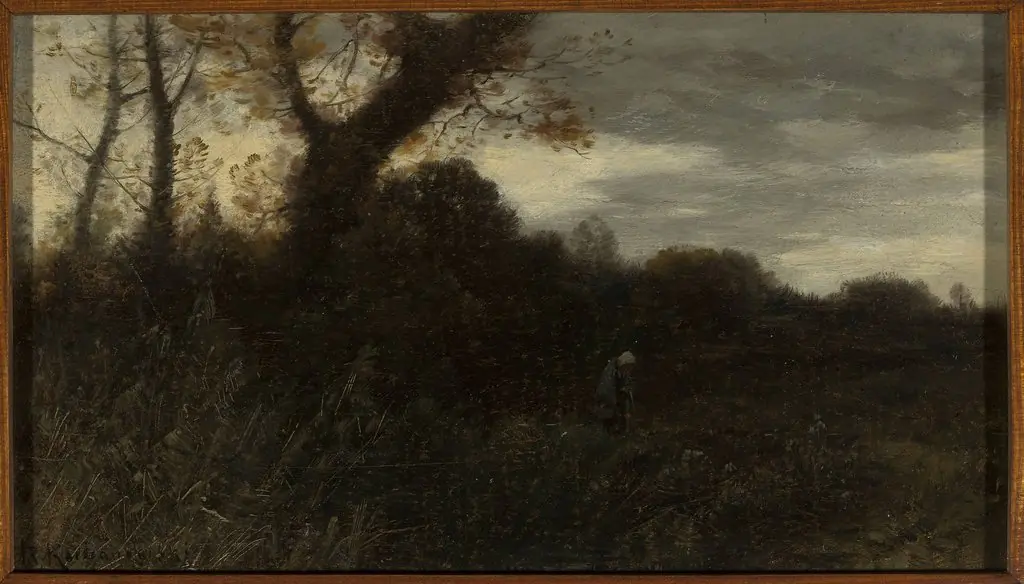
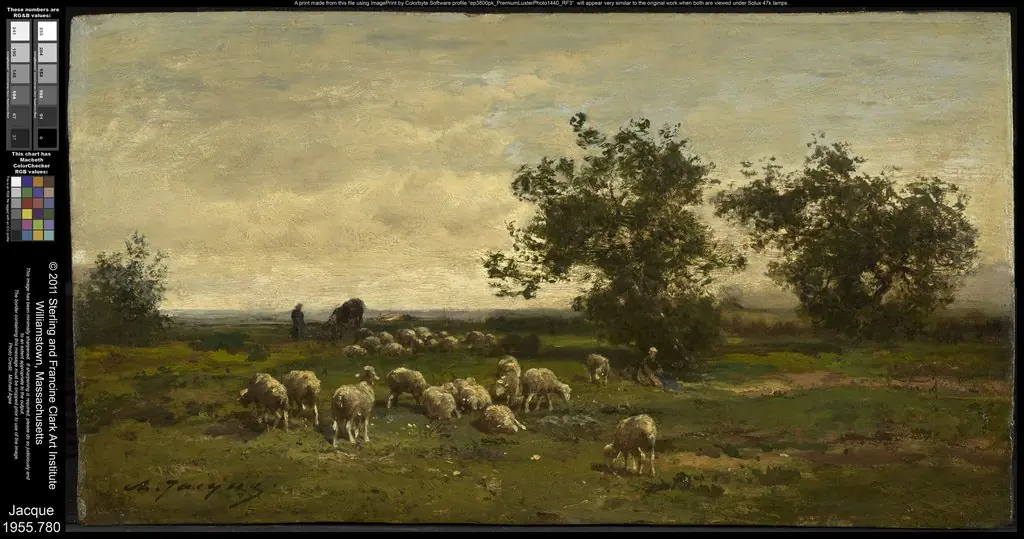
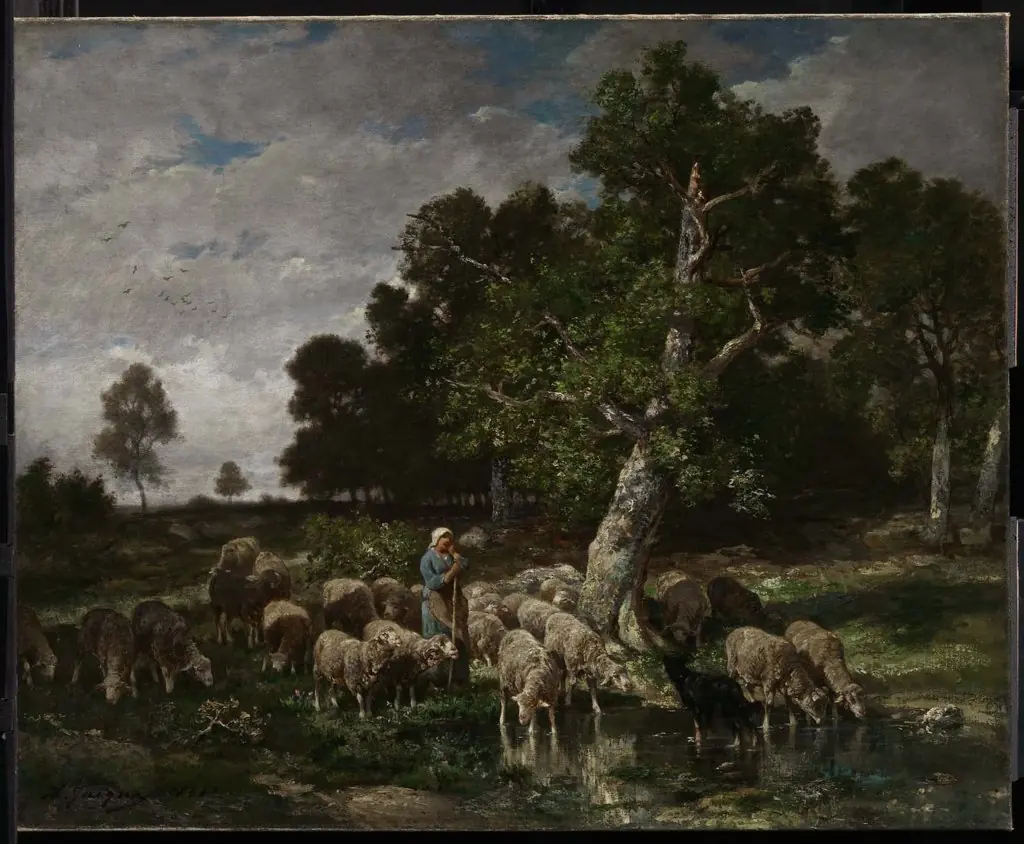
The painting portrays a shepherdess standing still amid an open field, accompanied by a single sheep and a dog. Her posture is unassuming, her gaze directed outward, suggesting contemplation rather than action. This quietude elevates daily rural existence into a subject worthy of artistic attention, subtly challenging the hierarchy of genres that privileged historical or mythological themes over the lives of laborers.
Technique & Style
Millet employs a restrained palette and loose, tactile brushwork to render the landscape and figures with a sense of immediacy. Light falls gently across the scene, modeling forms without dramatic contrast, avoiding the theatricality of chiaroscuro. The texture of wool, fabric, and earth is suggested rather than meticulously detailed, emphasizing atmosphere over precision—a hallmark of his Barbizon-influenced approach.
History & Provenance
Created during Millet’s formative years after leaving Paul Delaroche’s atelier, this work belongs to his early output before he settled in Barbizon. It reflects his transition from commissioned portraiture to independent studies of rural subjects. While specific ownership records from this period are sparse, the painting’s style and subject align with works he produced in the 1840s and early 1850s, before gaining wider recognition.
Context
In the decades following the 1848 Revolution, France experienced rapid urbanization and agricultural decline. Millet’s focus on shepherds, reapers, and field workers responded to this shift, offering a visual counterpoint to industrial progress. His depictions were not idealized but grounded in observation, resonating with a growing interest in social realism and the dignity of manual labor among artists and intellectuals of the time.
Legacy
Though less celebrated than his later works like 'The Gleaners,' this painting exemplifies the foundation of Millet’s artistic identity. Its quiet intensity influenced later realists and even early modernists drawn to his emphasis on form and emotional restraint. The shepherdess became a recurring motif in his oeuvre, symbolizing endurance and connection to the land, themes that continued to resonate in 20th-century depictions of rural life.
Artist & collection
Artist
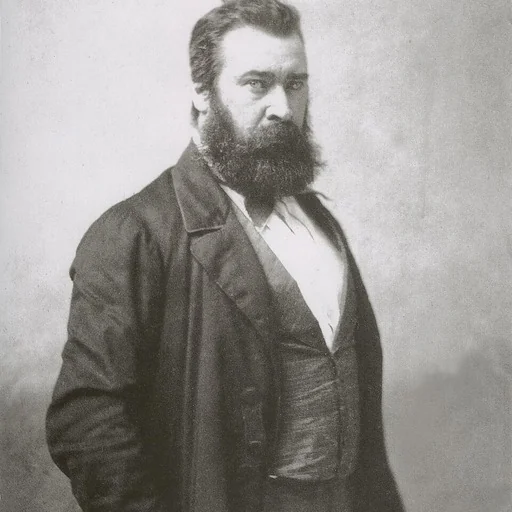
Jean-François Millet (French pronunciation: ; 4 October 1814 – 20 January 1875) was a French painter and one of the founders of the Barbizon school in rural France.