Artwork
Dragon amid Clouds
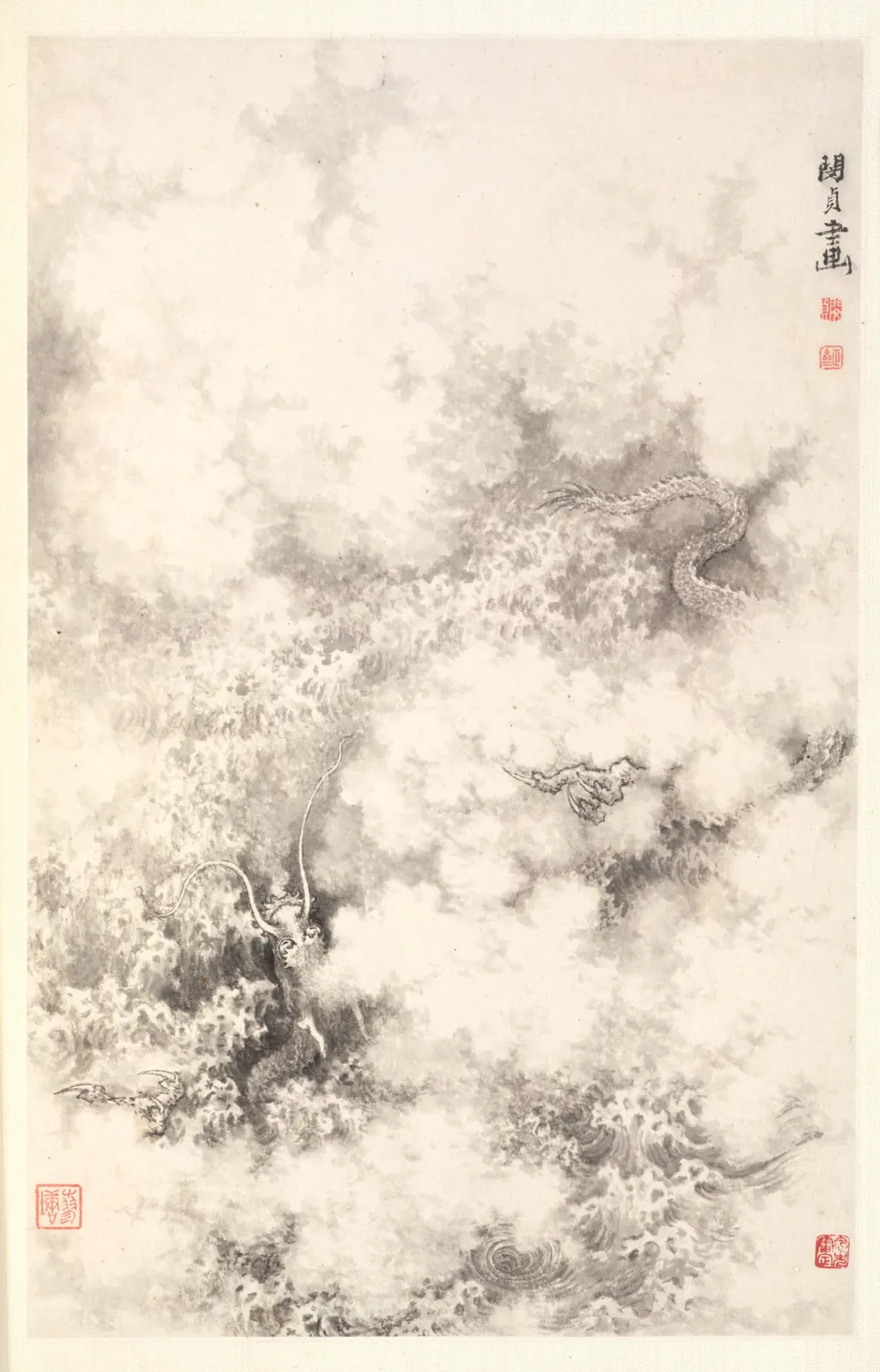
Dragon amid Clouds is an unspecified painting by the Chinese Orthodox School artist Min Zhen. It dates from 1788 and is held in the collection of the Cleveland Museum of Art.
About this work
That job gave him time in Beijing, but his style feels loose and wild—more like the artists of Yangzhou, a city known for rebels.
A dragon twists through swirling clouds, claws outstretched like lightning. The ink is dark and wet, the brushstrokes quick and sure.
Min Zhen painted this in 1788, late in his life. He was an orphan who learned to paint from a man who ran the imperial porcelain kilns. That job gave him time in Beijing, but his style feels loose and wild—more like the artists of Yangzhou, a city known for rebels.
If you like this, look up *china, qing dynasty (1644-1911)* for more paintings of dragons and storms.
Overview
Min Zhen, orphaned in childhood, became a painter under the tutelage of Tang Yin, who oversaw imperial porcelain production in Jingdezhen. This connection likely facilitated Min’s decade-long stay in Beijing beginning around 1773. Though his residence in Yangzhou remains unconfirmed, his brushwork echoes the unrestrained energy of Yangzhou’s artistic circle. Painted in 1788, this album leaf reflects his mature, idiosyncratic style during the final years of his life.
Subject & Meaning
The painting depicts a dragon coiling through turbulent clouds, its limbs extended with dynamic force, as if caught mid-motion. The creature, a traditional symbol of imperial power and cosmic energy, is rendered not with rigid formality but with visceral motion. The swirling atmosphere suggests elemental chaos, aligning the dragon with natural forces rather than courtly decorum, hinting at a personal, almost defiant interpretation of authority.
Technique & Style
Min employed bold, wet ink strokes with rapid, confident brushwork, creating a sense of immediacy and turbulence. The ink’s density varies from deep blacks to diluted washes, enhancing the illusion of depth and movement within the clouds. His technique departs from meticulous courtly traditions, favoring expressive spontaneity. This loose, gestural approach aligns more closely with the literati aesthetics of Yangzhou than with formal imperial conventions.
History & Provenance
Min Zhen’s early life was marked by loss and isolation, yet his association with Tang Yin provided access to Beijing’s cultural circles. The painting dates to 1788, near the end of his life, and is part of a larger album that showcases his technical range. While his exact movements between cities remain unclear, the work’s stylistic affinities suggest a deliberate engagement with the rebellious artistic currents of southern China, distinct from official Northern traditions.
Context
During the Qing dynasty, dragon imagery was tightly regulated in imperial art, often symbolizing the emperor’s mandate. Yet in the 18th century, artists in Yangzhou increasingly subverted these norms, embracing individual expression over official restraint. Min’s work, though possibly created in Beijing, resonates with this southern trend, reflecting a broader shift toward personal vision in late Qing painting, where tradition was reinterpreted through emotional intensity.
Legacy
Min Zhen’s later works, including this dragon painting, stand as examples of how artists outside the imperial academy redefined classical motifs through personal expression. His fusion of ink technique and emotional vigor influenced later literati painters who valued spontaneity over precision. Though not widely documented, his oeuvre contributes to the understated but significant evolution of Qing ink painting beyond courtly expectations.
Artist & collection

Artist
Min Zhen was a Chinese painter and seal carver born in Nanchang, Jiangxi, who spent most of his life in Hubei.