Artwork
Su Dongpo
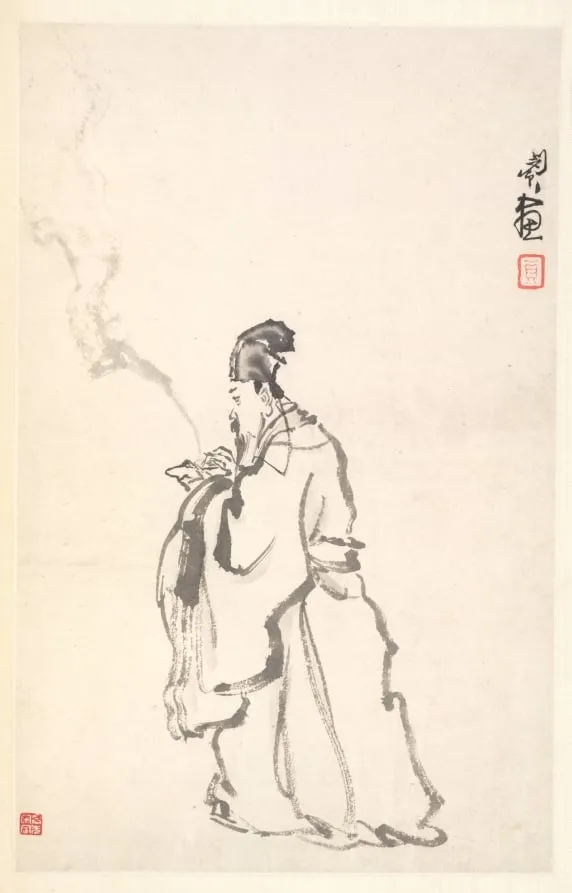
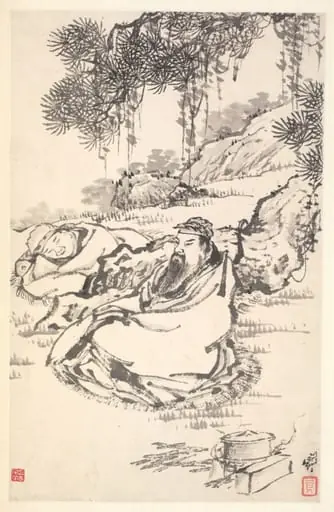
Su Dongpo is an unspecified painting by the Chinese Orthodox School artist Min Zhen. It dates from 1788 and is held in the collection of the Cleveland Museum of Art.
About this work
The artist used soft ink washes to create depth without sharp lines—almost like the figure is emerging from the paper.
You see a man in a loose robe, sitting under a pine tree with a scroll in his lap.
This is Su Dongpo, a famous Chinese poet from the 11th century. Min Zhen painted him nearly 700 years later, giving the poet a quiet, thoughtful look. The artist used soft ink washes to create depth without sharp lines—almost like the figure is emerging from the paper.
To see more works like this, look up china, qing dynasty (1644-1911).
Overview
Min Zhen, an artist orphaned in childhood, developed a distinctive style through training under Tang Yin and extended stays in Beijing. This album, created near the end of his life, reflects his refined command of ink painting. It features a portrait of Su Dongpo, the renowned Song dynasty poet, rendered with subtle tonal gradations rather than defined contours, emphasizing introspection over narrative detail.
Subject & Meaning
The figure depicted is Su Dongpo, a celebrated literary figure of the Northern Song dynasty, revered for his poetry and philosophical depth. Min Zhen portrays him seated beneath a pine tree, holding a scroll, embodying the scholar’s quiet contemplation. The choice of subject aligns with Ming and Qing traditions that idealized literary figures as moral and aesthetic exemplars, linking past wisdom to contemporary artistic identity.
Technique & Style
Min Zhen employed soft, layered ink washes to model form and space, avoiding sharp outlines in favor of atmospheric suggestion. The figure appears to emerge from the paper, blending with the surrounding environment. This technique, reminiscent of Yangzhou school artists like Huang Shen, reflects a preference for expressive spontaneity over rigid draftsmanship, characteristic of late Qing literati painting.
History & Provenance
Min Zhen’s association with Tang Yin, a prominent figure in imperial porcelain administration, likely facilitated his prolonged residence in Beijing beginning around 1773. While his connection to Yangzhou remains unconfirmed, stylistic parallels with local artists suggest cultural exchange across regional centers. The album stands as a testament to his mature phase, produced in the final years of his life, though its exact provenance prior to modern collection remains undocumented.
Context
During the Qing dynasty, literati painters frequently revisited historical figures like Su Dongpo to express personal ideals of integrity and intellectual solitude. Min Zhen’s work fits within this tradition, where portraiture served as a vehicle for cultural memory rather than biographical accuracy. His style reflects broader trends in 18th-century China, where ink painting balanced restraint with emotional resonance.
Legacy
Min Zhen’s Su Dongpo portrait exemplifies the quiet persistence of literati ideals in late Qing art. Though not widely known today, his work contributes to a broader understanding of how regional artists synthesized influences from Beijing and Yangzhou. His use of ink wash to evoke inner life influenced later generations seeking alternatives to academic formalism in Chinese painting.
Artist & collection

Artist
Min Zhen was a Chinese painter and seal carver born in Nanchang, Jiangxi, who spent most of his life in Hubei.

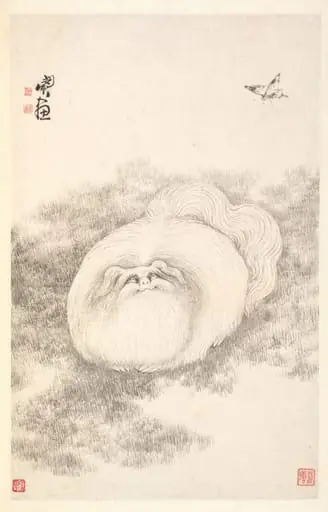
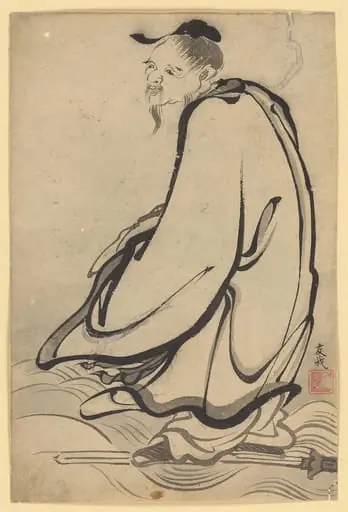 Untitled
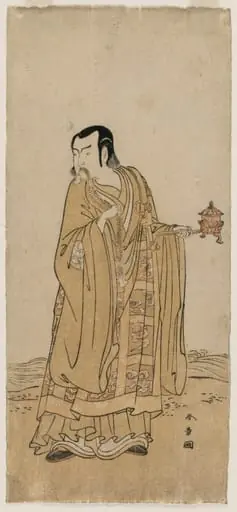 Ichimura Uzaemon IX as Shingen in “A String of Prayer Beads Shaken at a Ribbon of Waterfall”
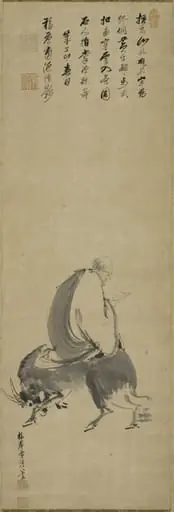 Weizheng Riding on an Ox
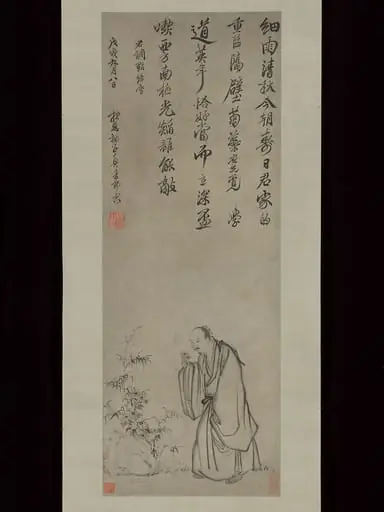 清 佚名 仿張風 摘菊圖 軸|Plucking Chrysanthemums
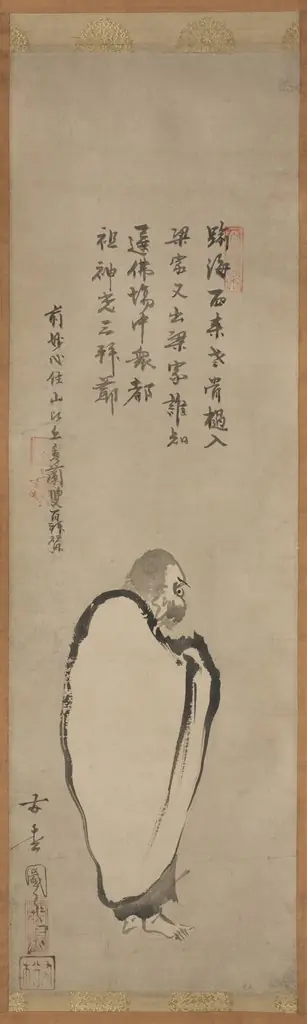 Figure of Daruma
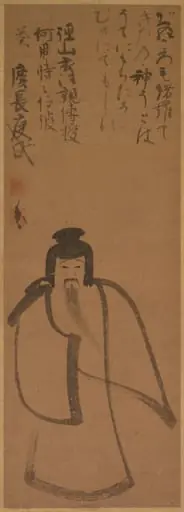 Tenjin Traveling to China
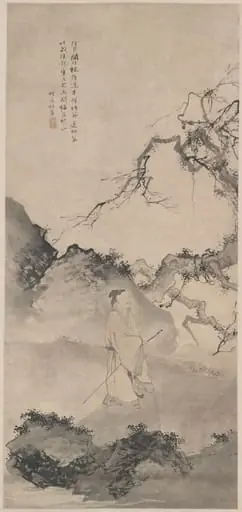 The Poet Lin Bu Wandering in the Moonlight
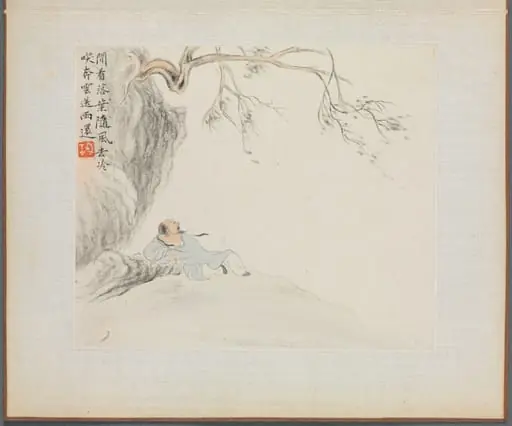 Album of Landscape Paintings Illustrating Old Poems: A Man Reclining and Enjoying the View
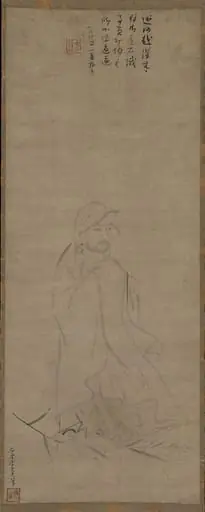 元 李堯夫,一山一寧題贊 達摩渡江圖 軸|Bodhidharma crossing the Yangzi River on a reed
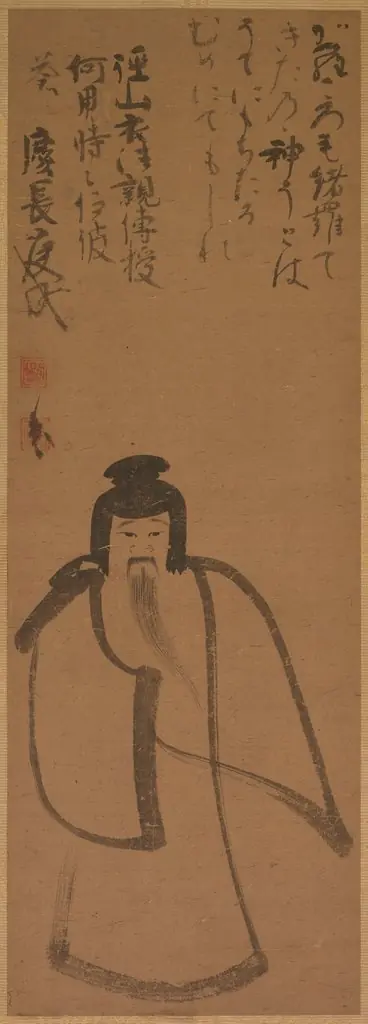 Tenjin Traveling to China