Artwork
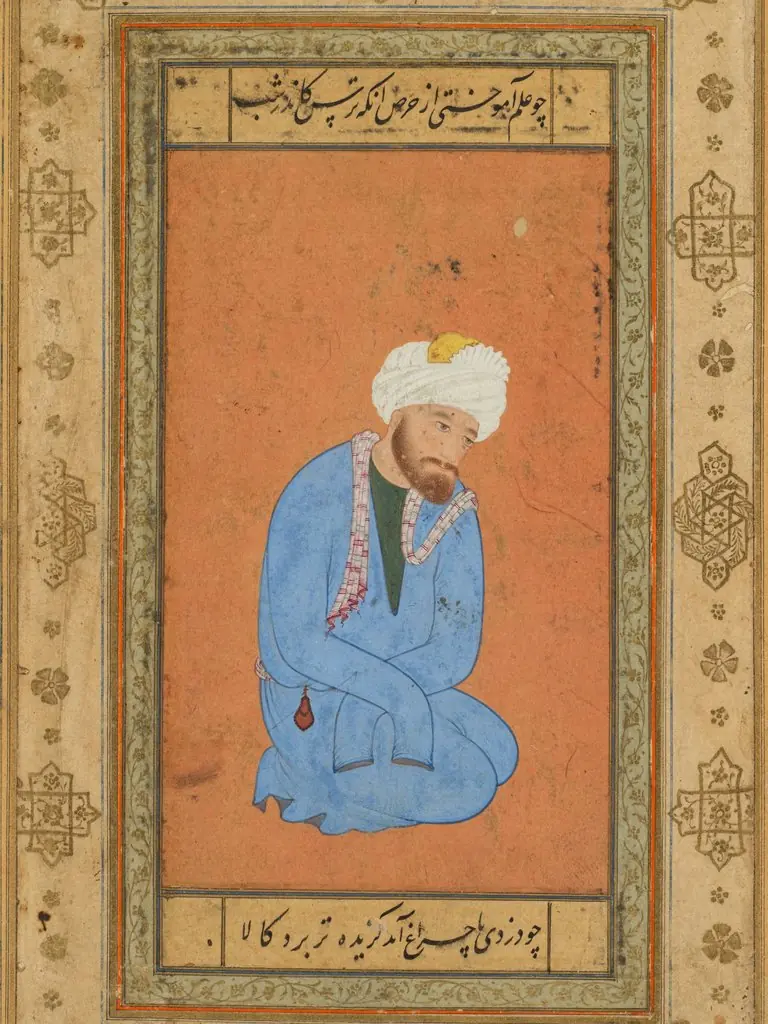
Portrait of a kneeling holy man, from the Prince Salim Album
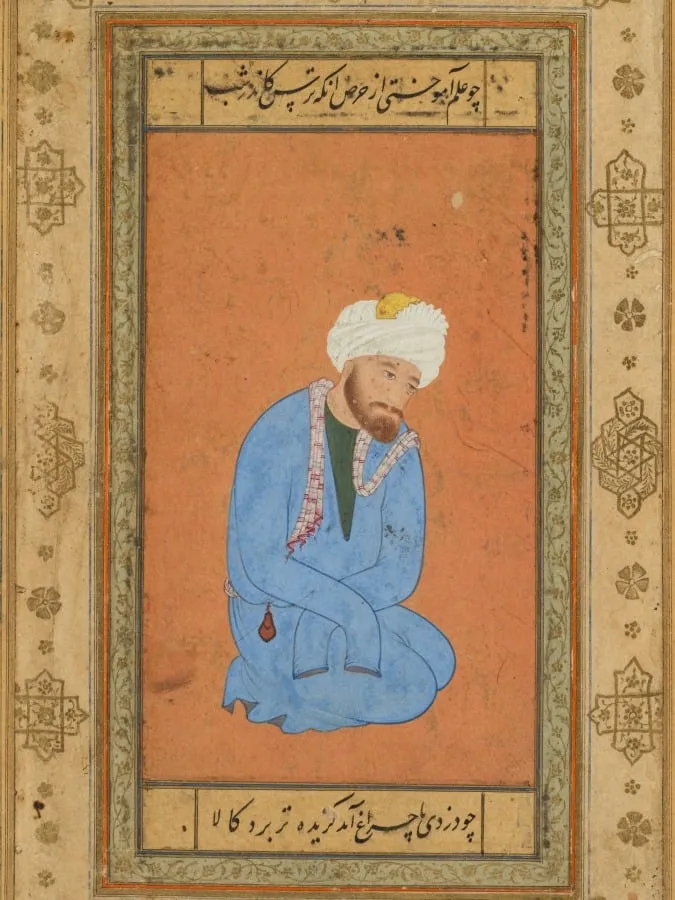
Portrait of a kneeling holy man, from the Prince Salim Album is an unspecified painting by the Mughal Painting artist Mir Sayyid Ali. It dates from 1558 and is held in the collection of the Cleveland Museum of Art.
About this work
If you like this kind of storytelling, look up *mughal india, court of akbar (reigned 1556–1605), indian art*.
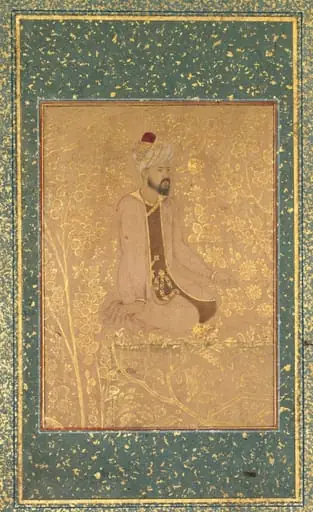
A man kneels on a patterned rug, hands pressed together in prayer. He wears a blue robe with a long white beard, but his eyes look sharp and calculating.
This isn’t a saint—it’s a fake holy man. The writing above and below the painting calls him out for pretending to be pious just to get money. Mughal artists often showed these frauds, turning a critical eye on religious hypocrisy.
If you like this kind of storytelling, look up *mughal india, court of akbar (reigned 1556–1605), indian art*. (88 words)
Overview
This 16th-century Mughal painting depicts a kneeling figure in a blue robe, identified by inscriptions as a hypocritical holy man motivated by financial gain rather than spiritual devotion.
Subject & Meaning
The subject is a charlatan Sufi mystic, exposed by the accompanying text as pretending piety for monetary rewards. His sharp, calculating gaze contrasts with his outward display of humility and prayer.
Technique & Style
Executed in the Mughal workshop under Mir Sayyid Ali, the painting reflects the adoption of Persian sensibilities in Indian art, characteristic of the period under Akbar's rule.
History & Provenance
Part of the Prince Salim Album, this work is attributed to the Mughal court during Akbar's reign (1556-1605), with Mir Sayyid Ali overseeing the blend of Indian and Persian artistic traditions.
Context
The critique of religious hypocrisy in this piece is not isolated; Mughal art, as seen in the Cleveland Tuti-Nama, frequently featured charlatan holy men, offering social commentary.
Artist & collection

Artist
Mir Sayyid Ali was a Persian miniature painter who was a leading artist of Persian miniatures before working under the Mughal dynasty in India, where he became one of the artists responsible for developing the style of Mughal painting…