Artwork
Judith with the Head of Holofernes
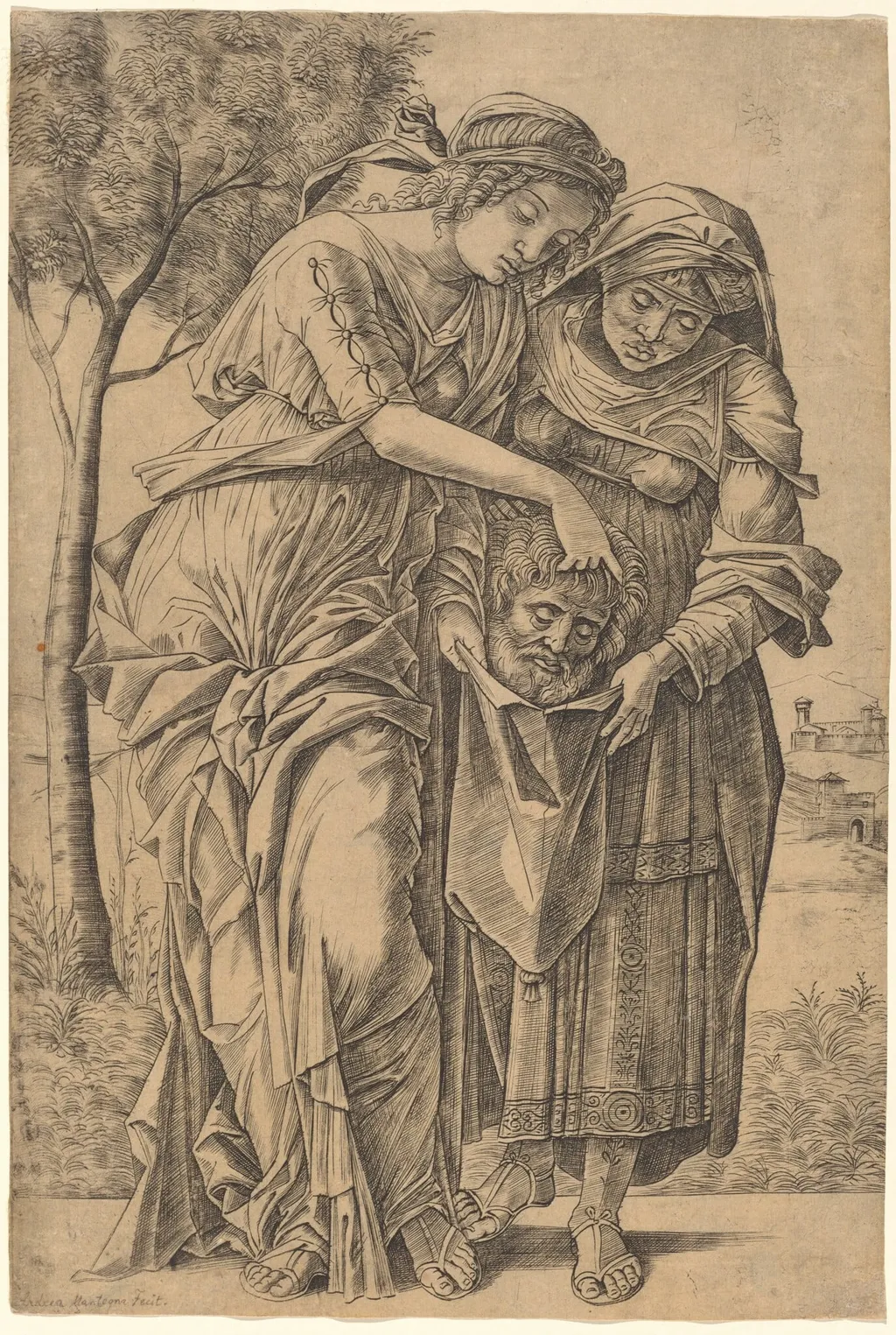
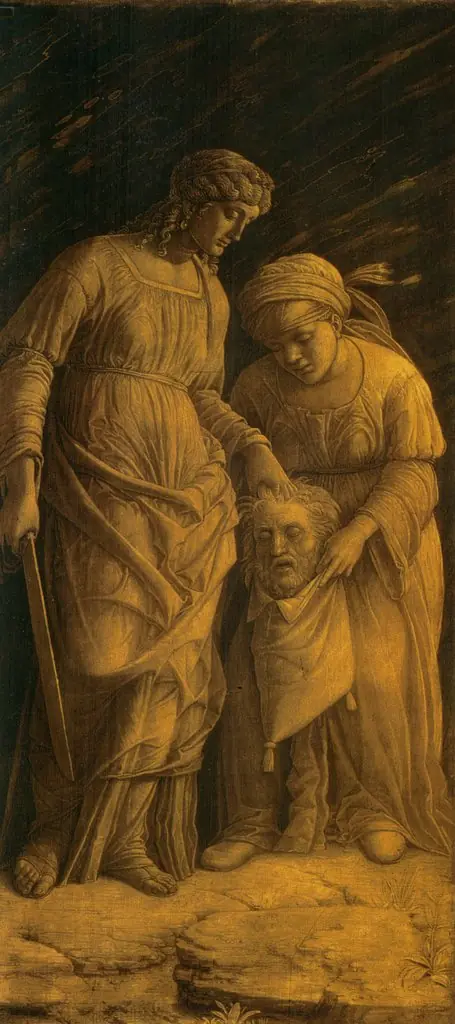
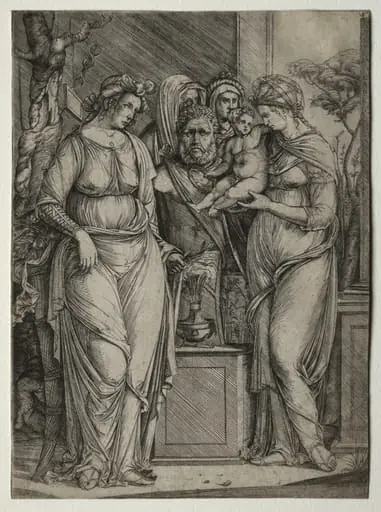
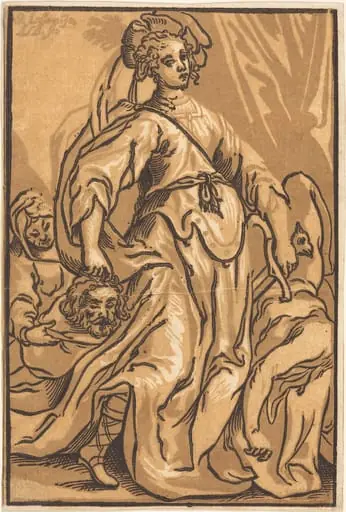
Judith with the Head of Holofernes is an ink print by the Renaissance artist Girolamo Mocetto. It dates from 1502 and is held in the collection of the National Gallery of Art.
About this work
Overview
Though primarily known as a painter and stained glass designer, Mocetto also worked in printmaking, adapting compositions from contemporaries.
Girolamo Mocetto, an Italian artist active in Venice between 1490 and 1530, produced this engraving around 1502. Though primarily known as a painter and stained glass designer, Mocetto also worked in printmaking, adapting compositions from contemporaries. This piece is one of several engravings that illustrate his engagement with the visual language of northern Italian art, particularly the dramatic figure arrangements favored by artists like Mantegna.
Subject & Meaning
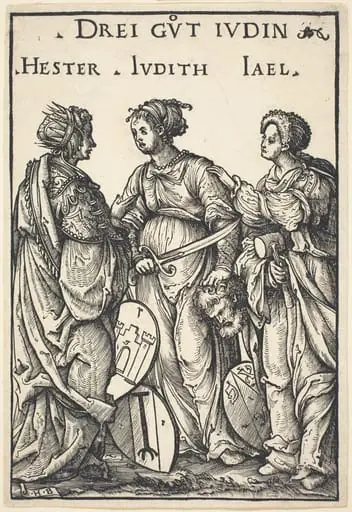
The engraving portrays Judith, a biblical heroine, holding the severed head of Holofernes, the Assyrian general she slew to save her people. The narrative, drawn from the Book of Judith, was a popular subject in Renaissance art for its themes of courage and divine justice. Mocetto presents the moment with restrained drama, focusing on Judith’s composed demeanor rather than graphic violence, emphasizing moral triumph over physical brutality.
Technique & Style
Mocetto employed fine, controlled lines typical of early Renaissance engraving to define form and texture. His rendering of Judith’s elaborate garments and the crisp contours of the head reflects a deliberate adaptation of Mantegna’s sculptural figures and linear precision. The composition is tightly framed, minimizing background detail to concentrate attention on the two central figures, showcasing Mocetto’s skill in translating painted compositions into the medium of print.
History & Provenance
Created around 1502, the engraving likely circulated among collectors and artists in northern Italy, where printmaking was gaining prominence as a means of disseminating artistic ideas. While no early ownership records are well documented, the work survives in several institutional collections, suggesting it was reproduced and valued within Mocetto’s lifetime. Its survival reflects the broader Renaissance interest in biblical narratives rendered through print.
Context
During the early 16th century, Venetian artists increasingly turned to printmaking to reach wider audiences and engage with the compositional innovations of their peers. Mocetto’s work aligns with this trend, borrowing from Mantegna and other Paduan and Venetian masters. The choice of Judith as subject also reflects a broader cultural fascination with female heroism and moral virtue, themes that resonated in both religious and humanist circles of the time.
Legacy
Mocetto’s engraving of Judith contributed to the visual vocabulary of biblical heroines in print, influencing later artists who adapted similar compositions. Though not as widely recognized as his contemporaries, his work exemplifies the role of lesser-known engravers in transmitting stylistic ideas across regions. His prints remain studied for their technical precision and their place in the network of Renaissance artistic exchange.
Artist & collection

Artist
Girolamo Mocetto was an Italian Renaissance painter, engraver, and stained glass designer.